

Join English speaking WhatsApp groups made for learners who want regular speaking practice after watching lessons from the Vocabineer English Speaking Course. These groups help learners practice voice notes, sentence structures, pronunciation, and everyday English conversation in a simple, lesson-based way.
The course is taught in Urdu and is useful for beginners who find English grammar difficult. Instead of memorizing many grammar rules first, learners practice useful sentence structures and improve their speaking step by step.

In This Page
English Speaking Course in Urdu
The English Speaking Course in Urdu teaches spoken English through sentence structures. Each lesson explains one useful structure, and learners can use that structure to make many spoken English sentences.
This method is helpful for students who feel confused by grammar books. By learning one sentence pattern at a time, learners can express ideas, ask questions, answer others, and start speaking English with more confidence.
Join Our Official WhatsApp Channels First
Before joining the practice groups, follow our official WhatsApp channels for spoken English lessons, course updates, practice material, and announcements. These WhatsApp channels have 130K+ followers and share regular English learning content in Urdu.
| WhatsApp Channel | Channel Link |
|---|---|
| Spoken English Course in Urdu | Follow Channel 1 |
| Spoken English Course in Urdu | Follow Channel 2 |
Follow the channels first to receive lesson updates, then join the related practice groups to use those lessons in speaking practice.
WhatsApp Channels vs WhatsApp Groups
WhatsApp channels are best for receiving course updates, lesson links, announcements, and practice material. They work like a broadcast space where learners can follow updates without joining a discussion group.
WhatsApp groups are best for speaking practice, voice notes, questions, and lesson-based interaction with other learners. If you want to practice spoken English actively, join the groups after following the official channels.
Quick Details
- Purpose: Spoken English practice through WhatsApp
- Course Language: Urdu
- Best For: Beginners, students, and Urdu-speaking English learners
- Practice Style: Sentence structures, pronunciation, voice notes, and daily-use English
- Main Links: Official WhatsApp channels, general speaking groups, and class-wise groups
- Privacy Note: Your phone number may be visible to other WhatsApp group members
English Speaking Course in Urdu
The English Speaking Course in Urdu teaches spoken English through sentence structures. Each lesson explains one useful structure, and learners can use that structure to make many English sentences.
This method is helpful for students who feel confused by grammar books. Instead of memorizing long grammar rules first, learners can understand one pattern, make examples, and speak with more confidence.
Who Should Join These English Speaking Groups?
These groups are useful for learners who want simple and regular English speaking practice. Beginners, students, job seekers, and Urdu-speaking learners can use them to practice lesson-based English.
You can join if you want to improve spoken English, practice pronunciation, send short voice notes, revise English lessons, or build confidence before speaking with others.
Who Should Not Join These Groups?
These groups are not for promotion, spam, unrelated videos, political discussion, business advertising, or personal chatting. Members should join only for English learning and respectful practice.
Anyone who sends fake links, abusive messages, repeated promotions, or unrelated content may be removed by the group admins.
How These WhatsApp Groups Work
These WhatsApp groups are connected with spoken English practice. Learners can watch a lesson, join the related group, and practice the same sentence structure through short voice notes.
- Watch the related English speaking lesson carefully.
- Join the matching WhatsApp practice group.
- Send a short voice note using the lesson structure.
- Listen to other learners and notice sentence patterns.
- Practice regularly with respect, patience, and consistency.
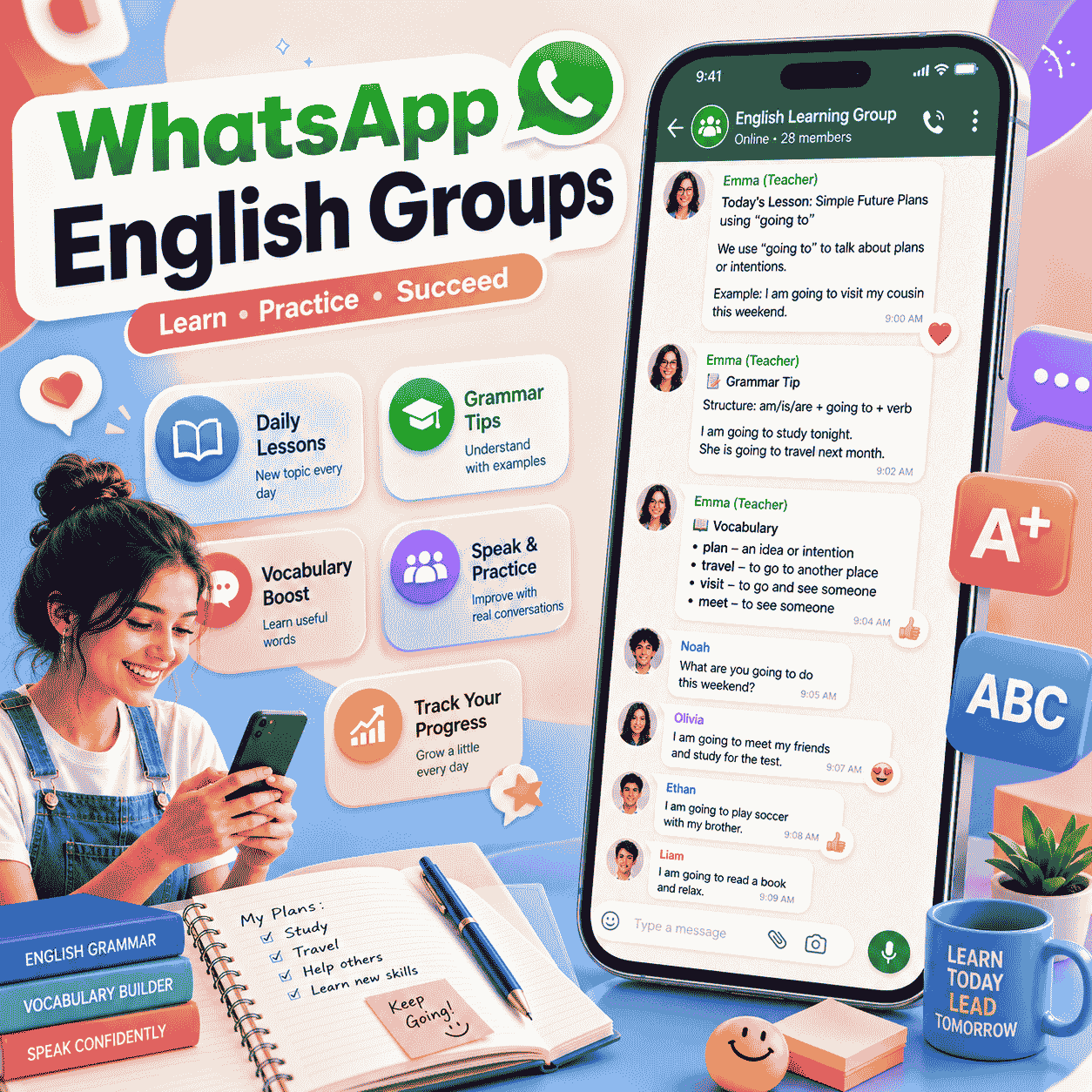
New Spoken English Groups 2026
Use the WhatsApp group links below to join an available English speaking practice group for 2026. If one group is full, try another group from the list.
| Group Name | WhatsApp Group Link |
|---|---|
| English Speaking Group 81 | Join Group 81 |
| English Speaking Group 82 | Join Group 82 |
| English Speaking Group 83 | Join Group 83 |
| English Speaking Group 84 | Join Group 84 |
| English Speaking Group 85 | Join Group 85 |
| English Speaking Group 86 | Join Group 86 |
| English Speaking Group 87 | Join Group 87 |
| English Speaking Group 88 | Join Group 88 |
| English Speaking Group 90 | Join Group 90 |
If a WhatsApp Group Is Full
Some WhatsApp groups may become full because many learners join at the same time. If one link does not work, try another group from the list.
A group link may also stop working if the admin resets the invite link, changes group settings, or closes the group for new members.
Separate Group for Female Learners
Female learners who prefer a separate girls’ English speaking group can contact +923066010010 and send a short voice introduction request.
In your request, mention your name, city, English level, and learning goal. This helps the admin understand your request and add you to a suitable practice group.
Spoken English Class Groups
Class-wise groups are useful when learners want to practice the exact structure taught in a specific spoken English lesson. Join the group related to your class and use it for lesson practice.
| Spoken English Lesson | WhatsApp Practice Group |
|---|---|
| Spoken English Class 1 | Join Class 1 |
| Spoken English Class 1B | Join Class 1B |
| Spoken English Class 2 | Join Class 2 |
| Spoken English Class 3 | Join Class 3 |
| Spoken English Class 4 | Join Class 4 |
| Spoken English Class 5 | Join Class 5 |
| Spoken English Class 6 | Join Class 6 |
| Spoken English Class 7 | Join Class 7 |
What to Practice in Each Class Group
Each class group should be used for lesson-related speaking practice. Start with short examples and repeat the lesson pattern until you can use it more naturally.
- Class 1: Introductions and basic sentence practice
- Class 1B: Extra practice for Class 1 patterns
- Class 2: Short daily-use English sentences
- Class 3: Simple questions and answers
- Class 4: Daily routine speaking practice
- Class 5: Common conversation patterns
- Class 6: Sentence flow and confidence building
- Class 7: Review, fluency practice, and correction
English Pronunciation Practice
Pronunciation practice helps learners speak more clearly. You can use the class groups above to practice English sounds, word stress, sentence rhythm, and short speaking exercises.
Start with short words and simple sentences. Record your voice, listen once before sending, and try to improve your pronunciation slowly.
What to Practice After Joining
English speaking improves when learners practice small tasks every day. You do not need to send long speeches at the beginning; short and clear practice is enough.
- Introduce yourself in English.
- Repeat the sentence structure from the lesson.
- Make 3 to 5 new sentences using the same pattern.
- Ask one simple question in English.
- Answer another learner’s question politely.
- Record a short daily-life sentence.
- Listen to your own recording and improve it.
Voice Note Examples for Beginners
These short examples can help you start speaking in the group. Keep your message simple, clear, and related to the lesson.
- My name is Ahmed, and I am learning spoken English.
- I want to improve my English speaking confidence.
- Today I watched class one and practiced five sentences.
- I can make simple English sentences now.
- I want to practice pronunciation with other learners.
- Can anyone help me practice this sentence structure?
- I will send one voice note every day.
- I am learning English through sentence structures.
- I want to speak English slowly and correctly.
- I will practice today’s lesson in this group.
Simple Voice Note Practice Format
Use this format when you join a group for the first time. It keeps your practice short, clear, and useful.
| Practice Step | Example |
|---|---|
| Introduction | My name is Ali. I am learning English speaking. |
| Learning Goal | I want to improve my fluency and confidence. |
| Daily Practice | Today I will practice five sentences. |
| Lesson Sentence | I am learning English through sentence structures. |
| Question | Can anyone practice this structure with me? |
7-Day Spoken English Practice Plan
A small daily plan can help you use the groups properly. Practice one task each day and keep your speaking simple.
- Day 1: Introduce yourself in English.
- Day 2: Practice five sentences from the first lesson.
- Day 3: Ask one simple question.
- Day 4: Answer another learner’s question.
- Day 5: Record the same sentence twice and improve pronunciation.
- Day 6: Speak for 30 seconds about your daily routine.
- Day 7: Repeat your best practice more clearly.
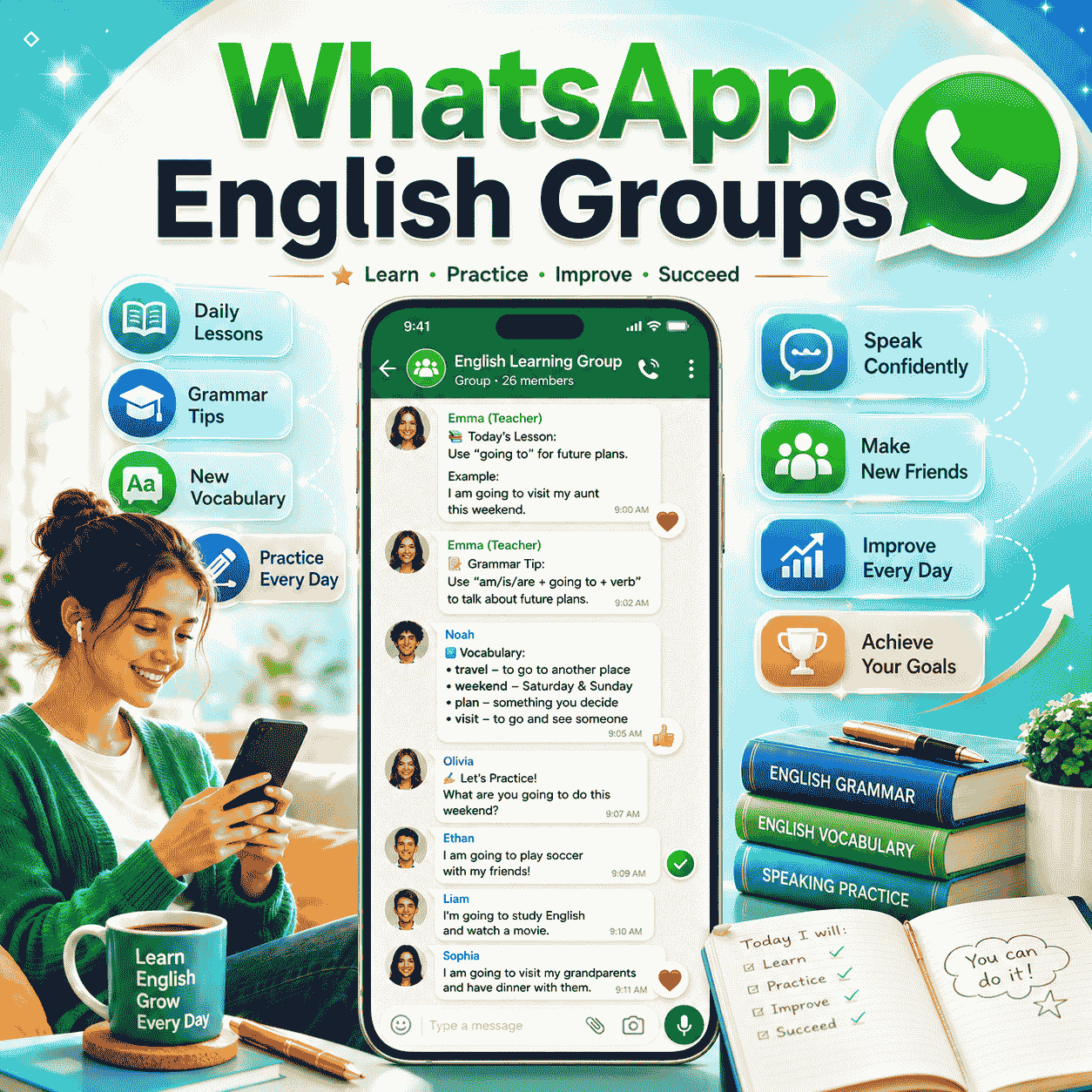
Group Rules for English Learners
These groups are made for learning, so every member should follow respectful communication rules. Good behavior keeps the group useful for beginners, students, and regular learners.
- Speak politely with all members.
- Use English as much as possible during practice.
- Do not send spam, unrelated videos, or fake links.
- Do not insult, tease, or discourage other learners.
- Avoid political, religious, or personal arguments.
- Send short recordings instead of very long messages.
- Follow the lesson topic when practicing.
- Respect group admins and their instructions.
Group Admin and Moderation Note
Group admins may remove members who send spam, unrelated content, abusive messages, fake links, or personal promotion. These rules help keep the groups safe, respectful, and useful for English learners.
Admins may also close a group, reset an invite link, or limit new members if the group becomes full or difficult to manage.
Safety Rules Before Joining WhatsApp Groups
WhatsApp groups are public spaces, so your phone number, profile name, and profile photo may be visible to other members. Join only if you are comfortable with this.
- Do not share your CNIC, bank details, passwords, home address, or private photos.
- Do not send money to anyone claiming to offer shortcuts or certificates.
- Leave any group that shares abusive, harmful, or inappropriate content.
- Report spam or unsafe behavior to the group admin.
- Keep your WhatsApp privacy settings safe if needed.
- Never trust unknown links shared by random members.
WhatsApp Privacy Tips for Learners
Before joining public WhatsApp groups, check your privacy settings. You can limit who can see your profile photo, about section, last seen, and who can add you to groups.
Avoid sharing private documents, payment details, passwords, addresses, or personal photos in any public learning group.
Warning About Fake Offers
Do not trust anyone who asks for money, promises instant fluency, offers fake certificates, or sends suspicious links. Real speaking improvement takes regular practice, listening, correction, and patience.
If someone sends unsafe messages, report the issue to the group admin, block the sender, and leave the group if needed.
Best Way to Improve Spoken English
The best way to improve spoken English is to practice daily with small, clear goals. Watching lessons is useful, but speaking practice makes the lesson active.
Start with one structure, make your own examples, and record your voice. Then listen again and notice your pronunciation, pauses, and sentence order. Regular practice helps you speak more naturally over time.
Start the English Speaking Course First
Before joining a practice group, watch the related lesson from the English Speaking Course in Urdu. The lesson will help you understand the sentence structure before you use it in the WhatsApp group.
After watching the lesson, join the matching class group, send a short practice message, and repeat the same structure with new examples.

FAQs
Most practice groups are free to join through the shared WhatsApp invite links. A group may become full or unavailable if many learners join.
A WhatsApp channel is mainly for receiving updates and lessons. A WhatsApp group is used for practice, voice notes, questions, and interaction with other learners.
Yes. Beginners can join and start with simple introductions, short sentences, and basic structures from the spoken English lessons.
A link may stop working if the group is full, the invite link is reset, or the admin changes the group settings.
They can be useful, but public groups may show your phone number to other members. Keep your privacy settings safe and avoid sharing personal information.
Read More
- Free WhatsApp English Learning Groups
- 30 Days Spoken English Course in Urdu
- Best 6 Spoken English Books PDF in Urdu
- Best English WhatsApp Groups by Sir Asim
