

Learning the antonyms for beautiful helps readers understand how appearance, style, and impression change when beauty or attraction is missing. Beautiful often connects to visual appeal, pleasant qualities, or pleasing impressions, while its opposites point to unattractiveness, rough appearance, or lack of charm. These contrasts appear frequently in reading passages, classroom descriptions, and everyday language where looks or impressions matter.
This article explains how antonyms for beautiful work in different situations involving people, objects, places, and impressions. Knowing these opposite words helps learners talk about unattractive scenes, plain appearance, unpleasant looks, and unappealing designs in school and daily communication.
In This Page
What Does Beautiful Mean in English?
The word beautiful is used in English to describe something that is very pleasing to look at or experience. It can refer to a beautiful person, beautiful place, beautiful object, or beautiful idea. A beautiful scene looks attractive, beautiful art is pleasing, and a beautiful moment feels enjoyable. Because the meaning of beautiful changes by context, its opposite words also change depending on use.
Common Antonyms for Beautiful With Meanings
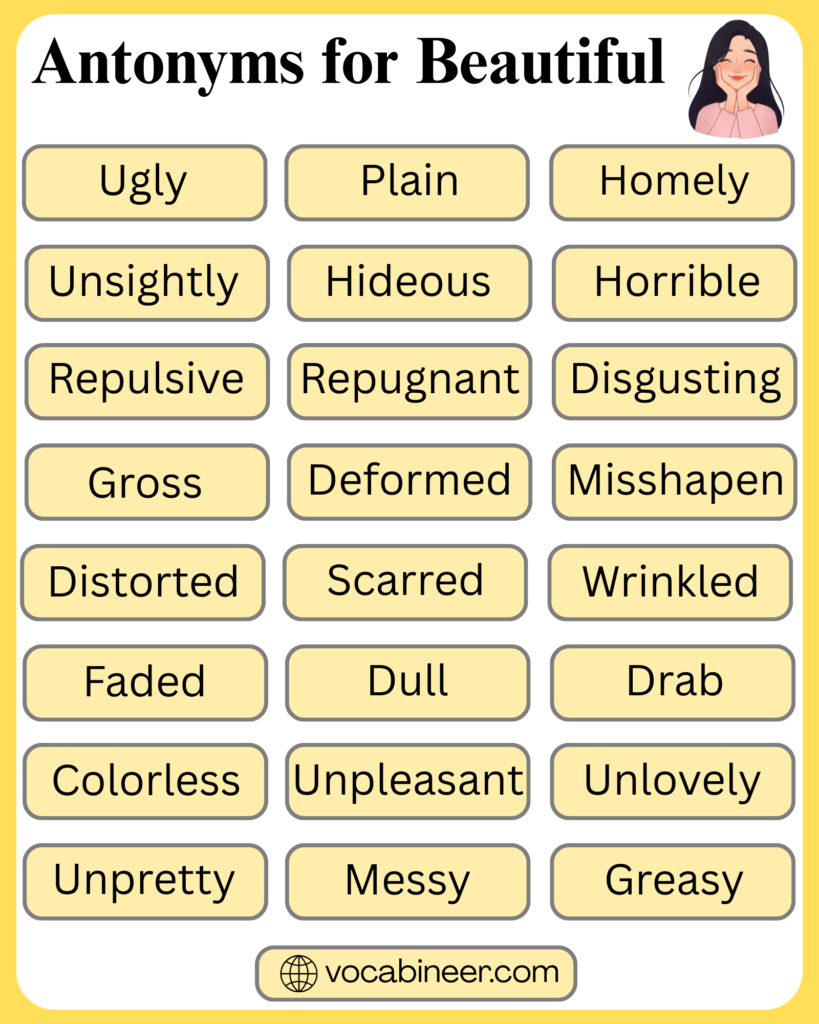
Understanding opposites of beautiful helps readers describe people, objects, places, and impressions that lack visual appeal or charm. These words are commonly used in reading passages and daily descriptions when something does not look pleasing.
- Ugly: Unpleasant or unattractive to look at.
- Unattractive: Lacking visual appeal or charm.
- Plain: Simple in appearance and not visually appealing.
- Hideous: Extremely ugly or shocking in appearance.
- Unappealing: Not pleasant or attractive to see.
- Homely: Plain or unattractive in appearance.
- Awkward: Lacking grace or visual balance.
- Rough: Not smooth or pleasing to the eye.
- Unsightly: Unpleasant or offensive to look at.
- Drab: Dull and lacking color or interest.
- Dull: Not bright, lively, or attractive.
- Grotesque: Odd, distorted, and unpleasant in appearance.
- Messy: Untidy and visually unappealing.
- Shabby: Worn out and unattractive.
- Unlovely: Not beautiful or pleasing in appearance.
Antonyms for Beautiful by Context
The opposite of beautiful can change depending on what kind of beauty you’re talking about, such as physical appearance, objects, places, or impressions. Choosing the right antonym helps your meaning stay clear and accurate.
People and Physical Appearance
When beautiful refers to people or looks, antonyms describe lack of attractiveness.
- Ugly – unpleasant in appearance
- Plain – not attractive
- Homely – unattractive or simple looking
- Awkward – lacking grace
- Unattractive – not visually pleasing
Objects and Design
When beautiful describes objects or design, antonyms focus on poor appearance or style.
- Drab – dull and colorless
- Shabby – worn and unattractive
- Rough – not smooth or polished
- Messy – untidy in appearance
- Unsightly – unpleasant to see
Places and Surroundings
When beautiful refers to places or scenery, antonyms describe unattractive surroundings.
- Ugly – visually unpleasant
- Unappealing – not inviting
- Grotesque – oddly unpleasant
- Dull – lacking interest
- Barren – empty and unattractive
Impressions and Effects
When beautiful refers to impressions or ideas, antonyms describe lack of appeal.
- Unlovely – not pleasing
- Awful – very unpleasant
- Displeasing – not enjoyable
- Harsh – unpleasant in effect
- Crude – lacking refinement
Beautiful vs Similar Words
Understanding beautiful vs similar words helps readers choose the most accurate word based on appearance, style, or impression. Some words describe gentle attractiveness, while others express strong visual impact or refined charm. The table below explains how these words differ in meaning and use.
| Word | Meaning & Usage |
|---|---|
| Beautiful | Very pleasing to look at or experience. |
| Pretty | Attractive in a soft or delicate way. |
| Attractive | Pleasing in appearance or appeal. |
| Lovely | Pleasant and charming in a warm way. |
| Gorgeous | Extremely beautiful and eye-catching. |
| Handsome | Attractive in a strong, neat, or dignified way. |
| Elegant | Graceful, refined, and stylish. |
| Stunning | Very impressive or striking in appearance. |
| Charming | Pleasant and likable, often through personality. |
| Appealing | Attractive or interesting to look at or consider. |
How to Choose the Right Antonym for Beautiful
Choosing the right antonym for beautiful depends on context. For people, words like ugly, plain, or unattractive fit best. When describing objects or design, drab, shabby, or rough are more accurate. For places or scenery, unappealing or ugly works naturally. Thinking about what makes something unattractive helps select the correct opposite.
Conclusion
Understanding antonyms for beautiful helps you describe people, objects, places, and impressions that lack visual appeal or charm. Whether you are talking about an ugly object, a plain appearance, an unappealing place, or a dull design, knowing the right opposite words makes communication clearer and more precise in everyday learning and communication.
Read More
