

Learning the antonyms for hard helps readers understand how firmness, difficulty, and strictness change when pressure or effort is reduced. Hard often connects to solid surfaces, demanding tasks, or strict behavior, while its opposites point to softness, ease, and gentler treatment. These contrasts appear frequently in reading passages, classroom instructions, and learning activities where describing touch, effort, or behavior matters.
This article explains how antonyms for hard work in different situations involving objects, tasks, people, and conditions. Knowing these opposite words helps learners talk about soft materials, easy work, gentle behavior, and relaxed rules in school and daily communication.
In This Page
What Does Hard Mean in English?
The word hard is used in English to describe something firm, solid, difficult, strict, or demanding. It can refer to a hard surface, a hard question, hard work, or a hard attitude. A hard object feels solid, a hard task requires effort, and a hard person may seem strict or unkind. Because the meaning of hard changes depending on the situation, its opposite words also change based on whether you are talking about touch, difficulty, behavior, or rules.
Common Antonyms for Hard With Meanings
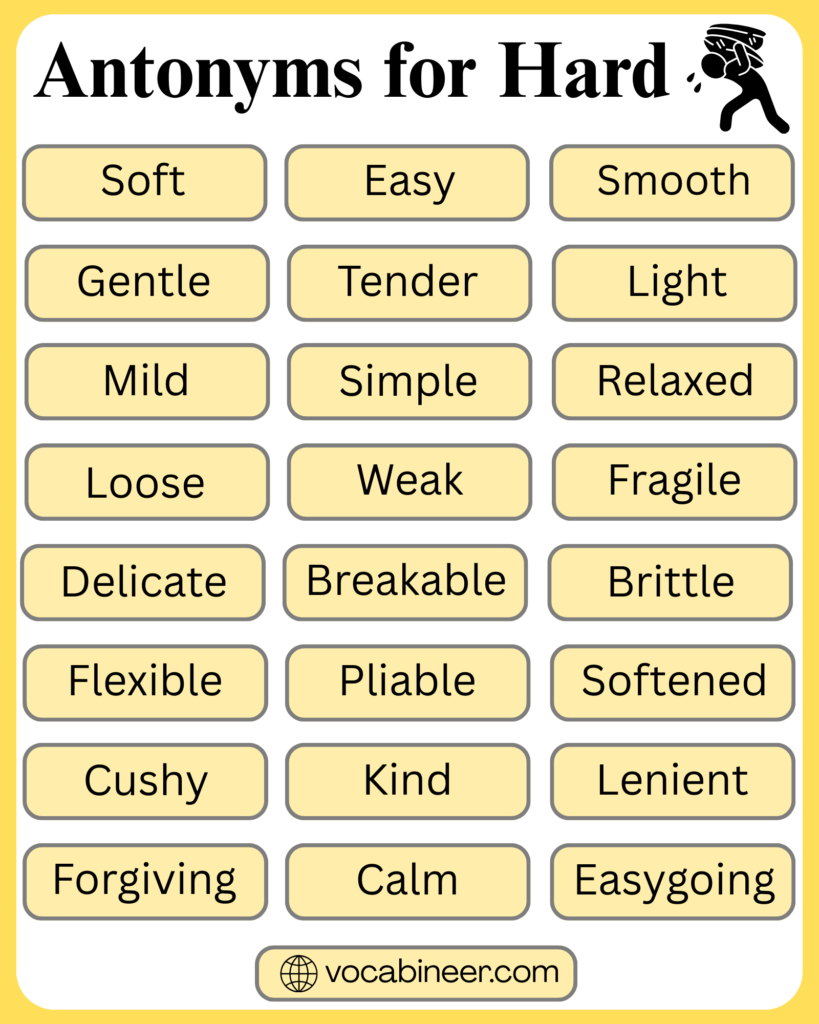
Understanding opposites of hard helps learners notice how firmness, effort, and strictness shift in daily communication. These words appear often in reading passages and classroom tasks. Below is a list of commonly used antonyms for hard with clear explanations.
- Soft: Not firm or solid and easy to press or touch.
- Easy: Not difficult to do, understand, or complete.
- Gentle: Mild, kind, and not harsh in action or tone.
- Flexible: Able to bend or change without breaking.
- Smooth: Not rough and pleasant to touch.
- Tender: Soft or easily hurt by pressure or feeling.
- Mild: Not strong, strict, or severe.
- Loose: Not tight or firmly fixed.
- Simple: Easy to understand or deal with.
- Kind: Caring and not harsh toward others.
- Comfortable: Not painful or difficult to experience.
- Forgiving: Willing to excuse mistakes instead of punishing them.
- Lenient: Not strict with rules or discipline.
- Pliable: Easy to bend, shape, or move.
- Relaxed: Not demanding or strict in attitude.
Antonyms for Hard by Context
The opposite of hard can change depending on what kind of hardness you are talking about, such as touch, difficulty, behavior, rules, or conditions. Choosing the right antonym helps your meaning feel clear and natural.
Physical Texture and Material
When hard refers to firmness or texture, its antonyms describe softness and flexibility.
- Soft – easy to press or touch.
- Smooth – not rough or uneven.
- Tender – delicate to the touch.
- Pliable – bends without breaking.
- Cushioned – padded and comfortable.
- Supple – soft and flexible in movement.
Difficulty and Effort
When hard describes difficulty or effort, antonyms focus on ease.
- Easy – not difficult.
- Simple – easy to understand.
- Effortless – needing little effort.
- Manageable – easy to handle.
- Light – not demanding.
- Cushy – comfortable and easy.
Behavior and Personality
When hard describes people or behavior, antonyms show kindness and gentleness.
- Kind – caring and thoughtful.
- Gentle – not rough or harsh.
- Soft-hearted – emotionally caring.
- Easygoing – relaxed and flexible.
- Mild-mannered – calm and polite.
- Gentle-natured – kind in behavior.
Rules, Treatment, and Conditions
When hard refers to strict rules or tough conditions, antonyms suggest flexibility or comfort.
- Lenient – not strict.
- Forgiving – understanding mistakes.
- Comfortable – not painful.
- Relaxed – not demanding.
- Pleasant – easy to experience.
- Comforting – makes one feel at ease.
Hard vs Similar Words
Understanding hard vs similar words helps readers notice small meaning differences. Some words describe firmness, while others show difficulty or strictness. Knowing these differences helps learners choose the right word in sentences.
| Word | Meaning & Usage |
|---|---|
| Hard | Describes something firm, difficult, strict, or demanding depending on context. |
| Tough | Refers to something hard to break, endure, or deal with physically or mentally. |
| Harsh | Describes behavior, rules, or conditions that feel severe or unkind. |
| Rigid | Means stiff and unable to bend, either physically or in attitude. |
| Solid | Refers to something strongly built or firmly formed, not easily moved or changed. |
| Rough | Describes an uneven surface or treatment that feels unfriendly or unpleasant. |
| Severe | Refers to extreme strictness, seriousness, or intensity in rules or conditions. |
| Firm | Means strong and steady, often strict but not necessarily harsh. |
| Demanding | Describes tasks or situations that require a lot of effort or attention. |
| Grueling | Refers to work or experiences that are extremely tiring or difficult. |
How to Choose the Right Antonym for Hard
Choosing the right antonym for hard depends on the context. If you are describing physical objects, words like soft, smooth, or cushioned work best. For tasks or problems, easy, simple, or manageable fits naturally. When referring to people or rules, gentle, kind, lenient, or forgiving are more accurate. Considering the situation helps keep meaning clear and correct.
Conclusion
Understanding antonyms for hard helps you describe objects, tasks, people, and conditions that lack firmness, difficulty, or strictness. Whether you are talking about a soft surface, an easy assignment, a kind person, or relaxed rules, knowing the right opposite words makes communication clearer and more precise in everyday speech, writing, and learning contexts.
Read More
