

Antonyms for humble helps readers understand how English expresses pride, self-importance, and excessive confidence instead of modesty or simplicity. When humility fades, language shifts to show arrogance, boastfulness, or inflated self-worth, making changes in attitude easier to recognize. These opposite words appear often in stories, school texts, conversations, and descriptive writing, shaping how personalities, attitudes, and social behavior are clearly communicated and understood.
In This Page
Meaning of Humble in English
Humble describes having a modest view of one’s importance or abilities. A humble person does not seek attention or praise and does not place themselves above others. Humility often reflects politeness, self-awareness, and emotional balance.
The word humble appears frequently in character descriptions and moral discussions. When humility is missing, English uses different words to express self-importance, pride, or exaggerated confidence.
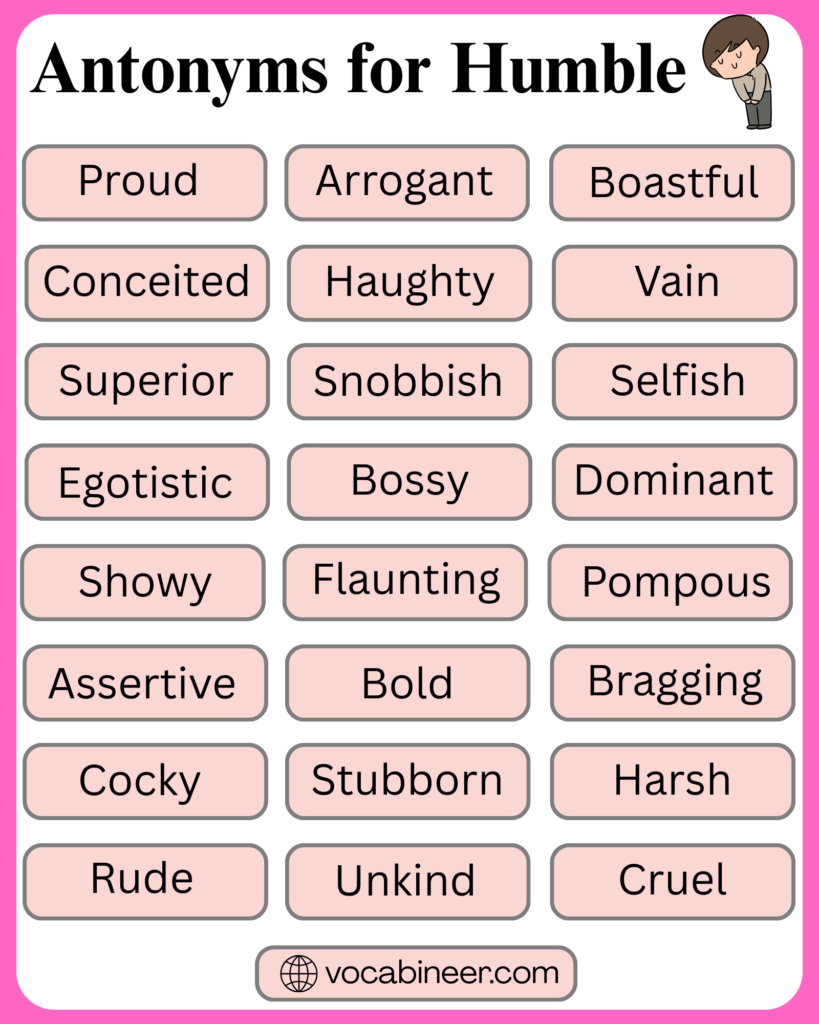
Common Antonyms for Humble
Some words clearly express the opposite of humble by showing pride, self-importance, or exaggerated confidence. These antonyms appear often in school texts, reading passages, conversations, and descriptive writing, especially when modest behavior is replaced by attention-seeking or superiority.
- Arrogant: Showing an exaggerated sense of self-importance.
- Conceited: Having an overly high opinion of oneself.
- Boastful: Talking with pride about achievements or abilities.
- Proud: Feeling strong satisfaction in oneself, sometimes excessively.
- Egotistical: Focused excessively on oneself and personal importance.
- Haughty: Acting superior and dismissive toward others.
- Vain: Excessively concerned with appearance or admiration.
- Self-important: Believing oneself to be more important than others.
- Pretentious: Trying to appear more impressive than reality supports.
- Overconfident: Showing more confidence than is justified.
- Smug: Self-satisfied in an unpleasant or superior way.
- Pompous: Displaying exaggerated dignity or importance.
- Grandiose: Having an inflated sense of importance or ability.
- Unmodest: Lacking modesty in behavior or attitude.
- Superior: Acting as if one is above others.
Emotional Antonyms of Humble
Some antonyms of humble focus mainly on emotional attitude. These words describe feelings of superiority or inflated self-worth.
- Smug: Self-satisfied in an unpleasant way.
- Pompous: Displaying exaggerated importance.
- Self-satisfied: Pleased with oneself excessively.
- Proud-hearted: Emotionally full of pride.
- Superior: Feeling emotionally above others.
Mental Antonyms of Humble
Some antonyms of humble describe mindset rather than emotion alone. These words focus on thinking patterns shaped by pride.
- Self-centered: Thinking mainly about oneself.
- Egocentric: Viewing everything from one’s own importance.
- Inflated: Mentally exaggerated sense of worth.
- Grandiose: Thinking oneself greater than reality supports.
- Unmodest: Lacking modest behavior or thought.
Words Related to Pride and Self-Importance
Some words do not directly mean the opposite of humble, but they are closely connected to pride, ego, and exaggerated self-importance. These words often appear in descriptions of attitude, behavior, or personality when humility is missing.
- Ego: A strong sense of one’s own importance or identity.
- Vanity: Excessive pride in appearance, abilities, or achievements.
- Egotism: Habit of talking about oneself and placing oneself at the center.
- Self-admiration: Taking pleasure in one’s own qualities or success.
- Status-consciousness: Strong awareness of rank, position, or social standing.
- Showiness: Desire to attract attention through display or behavior.
- Self-regard: Attention given to one’s own interests or image.
- Self-focus: Concentrating mainly on personal needs or importance.
- Inflated ego: An exaggerated sense of self-worth.
- Superiority: Belief that one is better than others.
- Self-promotion: Actively presenting oneself as impressive or important.
- Grandiosity: Unrealistic sense of greatness or importance.
Humble vs Similar Words
Humble describes having a modest view of one’s importance or abilities. It reflects respect for others and a balanced sense of self, without seeking praise or attention.
Humble vs Modest
Although modest focuses on avoiding praise or attention, humble goes further by showing emotional restraint and sincere respect for others, not just quiet behavior.
Humble vs Shy
In contrast, shy describes nervousness or discomfort in social situations. Humble reflects attitude and self-view, not fear or social anxiety.
Humble vs Meek
The word meek often carries a sense of weakness or submission. Humble, however, can exist alongside confidence and inner strength.
Humble vs Simple
A simple lifestyle refers to limited complexity in design or possessions. Humble relates to mindset and self-view rather than outward appearance.
Humble vs Polite
Showing good manners makes someone polite. Being humble reflects deeper character traits involving how a person sees themselves in relation to others.
Antonyms for Humble in Sentences
Seeing antonyms used in sentences helps learners understand how these words fit naturally into English.
- His arrogant tone upset others.
- She sounded boastful after the award.
- The manager appeared haughty during meetings.
- His conceited remarks annoyed the group.
- She became smug after the praise.
- The speech felt pretentious and forced.
How to Choose the Right Antonym for Humble
Choosing the right antonym for humble depends on the kind of attitude being described. When the focus is on excessive self-importance or pride, words like arrogant, conceited, or egotistical fit best. If the situation involves showing off or seeking attention, terms such as boastful or pretentious are more accurate.
When describing social behavior, words like haughty or self-important work well. Thinking about whether humility is replaced by pride, arrogance, or attention-seeking helps select the most natural antonym for humble.
Conclusion
Understanding antonyms for humble helps readers recognize how English expresses pride, arrogance, and self-importance instead of modesty. These words appear across stories, school texts, and conversations, shaping how attitudes and personalities are described. Learning them through explanation and sentence use builds clearer expression and stronger understanding of character traits.
Read More
