

Learning the antonyms for justice helps readers understand how fairness, law, and moral balance change when equality or right judgment is missing. Justice often connects to fairness, honesty, and lawful treatment, while its opposites point to unfairness, bias, or wrongdoing. These contrasts appear frequently in reading passages, civics lessons, and everyday situations where rights, rules, and decisions matter.
This article explains how antonyms for justice work in different situations involving law, behavior, society, and moral decisions. Knowing these opposite words helps learners talk about unfair treatment, biased actions, unlawful behavior, and unequal outcomes in school and daily communication.
In This Page
What Does Justice Mean in English?
The word justice is used in English to describe fairness, moral rightness, and lawful treatment. It can refer to justice in courts, justice in society, or justice in personal behavior. When justice exists, people are treated fairly and equally. When justice is missing, unfairness or wrongdoing appears. Because the meaning of justice changes by context, its opposite words also change depending on use.
Common Antonyms for Justice With Meanings
Understanding opposites of justice helps learners notice how fairness turns into unfairness or wrongdoing in daily communication. These words appear often in reading passages and classroom tasks.
Injustice
Injustice means the absence of fairness or right judgment. It describes situations where people are treated wrongly or unfairly.
Unfairness
Unfairness refers to unequal or biased treatment that goes against justice or equality.
Bias
Bias means showing unfair preference toward one person, group, or idea over others.
Partiality
Partiality describes favoring one side instead of treating everyone equally.
Prejudice
Prejudice is an unfair judgment formed without facts or proper understanding.
Wrongdoing
Wrongdoing refers to illegal or immoral actions that violate justice.
Oppression
Oppression means cruel or unjust control over people, denying their rights or freedom.
Corruption
Corruption describes dishonest or illegal behavior, especially by those in power.
Discrimination
Discrimination refers to unfair treatment of people based on differences such as race or gender.
Tyranny
Tyranny means harsh, unjust rule that ignores fairness and justice.
Lawlessness
Lawlessness describes a situation where laws and justice are ignored or absent.
Inequality
Inequality means lack of equal treatment or fair opportunities.
Exploitation
Exploitation refers to using others unfairly for personal benefit.
Abuse
Abuse means cruel, harmful, or unjust treatment of people.
Malpractice
Malpractice describes illegal or improper actions, especially in professional duties.
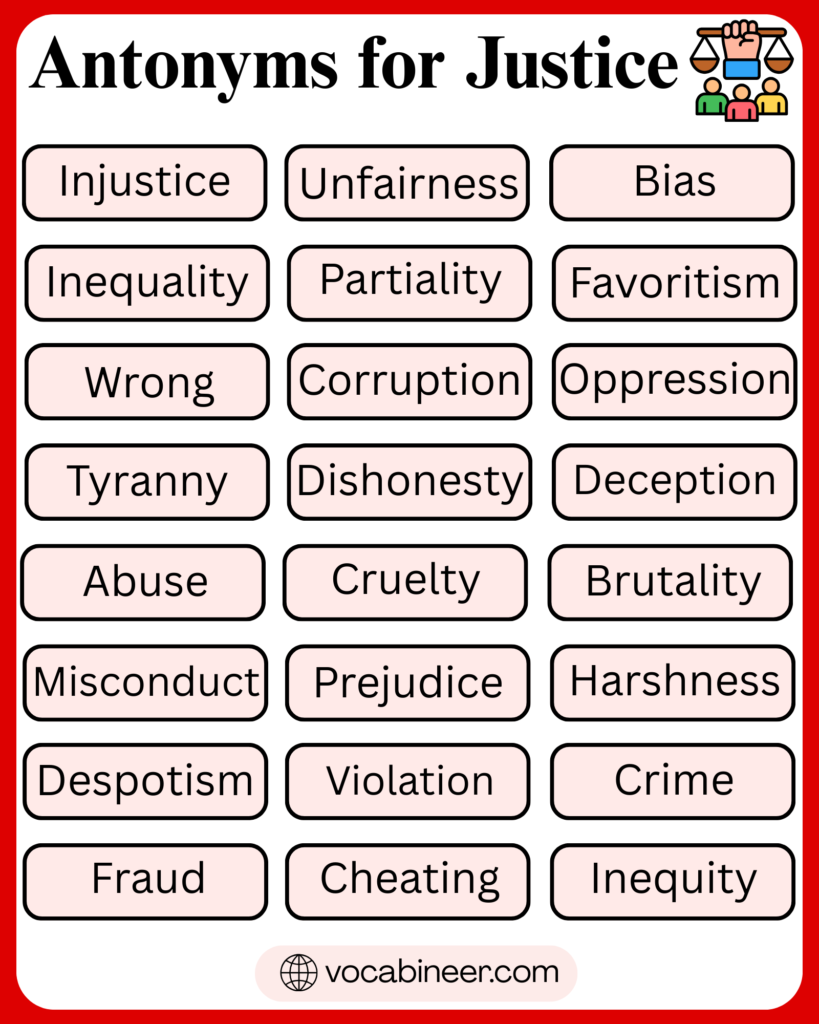
Antonyms for Justice by Context
The opposite of justice can change depending on what kind of justice you’re talking about, such as legal, social, or moral justice. Choosing the right antonym helps your meaning stay clear and accurate.
Law and Legal Systems
When justice refers to law, antonyms describe illegal or unfair legal actions.
- Injustice – unfair judgment
- Corruption – dishonest law practices
- Lawlessness – lack of legal order
- Tyranny – unjust rule
- Malpractice – unlawful conduct
Social and Moral Behavior
When justice refers to behavior, antonyms describe unfair or harmful actions.
- Unfairness – unequal treatment
- Bias – unfair preference
- Prejudice – unfair judgment
- Exploitation – misuse of people
- Abuse – cruel treatment
Equality and Rights
When justice refers to equality, antonyms focus on unequal treatment.
- Discrimination – unequal treatment
- Inequality – lack of fairness
- Oppression – denial of rights
- Partiality – favoritism
- Exclusion – unfair denial
Power and Authority
When justice refers to authority, antonyms describe misuse of power.
- Tyranny – cruel authority
- Corruption – misuse of power
- Oppression – harsh control
- Domination – unfair control
- Exploitation – abuse of authority
Justice vs Similar Words
Understanding justice vs similar words helps readers choose the correct term when talking about fairness, law, or moral judgment. Some words focus on equal treatment, while others describe legal systems or ethical behavior. The table below explains how these words differ in meaning and use.
| Word | Meaning & Usage |
|---|---|
| Justice | Fair and lawful treatment based on right and wrong. |
| Fairness | Equal and unbiased treatment of people. |
| Law | System of rules enforced by authority. |
| Equality | Same rights and opportunities for everyone. |
| Equity | Fairness based on individual needs or situations. |
| Integrity | Strong sense of honesty and moral values. |
| Impartiality | Absence of bias or favoritism. |
| Legality | State of being lawful or allowed by law. |
| Morality | Principles of right and wrong behavior. |
| Ethics | Moral rules guiding conduct and decisions. |
How to Choose the Right Antonym for Justice
Choosing the right antonym for justice depends on context. For legal matters, injustice or corruption fits best. When talking about behavior, bias, prejudice, or unfairness works naturally. For power or authority, tyranny or oppression is more accurate. Thinking about how fairness is missing helps select the correct opposite.
Conclusion
Understanding antonyms for justice helps you describe situations where fairness, equality, or moral rightness is absent. Whether you are talking about unfair laws, biased decisions, discrimination, or misuse of power, knowing the right opposite words makes communication clearer and more precise in everyday learning and communication.
Read More
