

Learning the antonyms for knowledge helps readers understand how awareness, understanding, and information change when learning or familiarity is missing. Knowledge often connects to education, awareness, skill, or information, while its opposites point to ignorance, misunderstanding, or lack of awareness. These contrasts appear frequently in reading passages, classroom discussions, and everyday situations where learning and understanding matter.
This article explains how antonyms for knowledge work in different situations involving learning, awareness, experience, and information. Knowing these opposite words helps learners talk about lack of information, misunderstanding, unfamiliar topics, and limited awareness in school and daily communication.
In This Page
What Does Knowledge Mean in English?
The word knowledge is used in English to describe information, understanding, or skill gained through learning or experience. It can refer to general knowledge, subject knowledge, practical knowledge, or awareness of facts. When someone has knowledge, they understand something well. When knowledge is missing, confusion or misunderstanding appears. Because the meaning of knowledge changes by context, its opposite words also change depending on use.
Common Antonyms for Knowledge With Meanings
Understanding opposites of knowledge helps learners notice how understanding turns into lack of awareness in daily communication. These words appear often in reading passages and classroom tasks.
Ignorance
Ignorance means a lack of knowledge, information, or awareness about a subject or situation.
Unawareness
Unawareness refers to not knowing that something exists, is happening, or is important.
Inexperience
Inexperience describes a lack of practical knowledge gained through direct involvement or practice.
Misunderstanding
Misunderstanding means having an incorrect or confused understanding of facts or ideas.
Illiteracy
Illiteracy refers to a lack of basic reading, writing, or educational knowledge.
Confusion
Confusion is a state of unclear thinking where understanding is mixed or disorganized.
Misconception
A misconception is a false idea or belief held because of incorrect knowledge.
Nescience
Nescience means complete lack of knowledge or awareness, often used in formal contexts.
Unfamiliarity
Unfamiliarity describes not knowing something well or having no prior knowledge of it.
Forgetfulness
Forgetfulness refers to the inability to remember learned information or facts.
Blindness
Blindness means a lack of awareness or understanding, especially of obvious facts.
Naivety
Naivety describes a lack of experience or worldly knowledge, often leading to poor judgment.
Uninformed
Uninformed refers to not being given necessary facts or information.
Uneducated
Uneducated means lacking formal education or structured learning.
Oblivion
Oblivion describes a state of being unaware or forgotten, where knowledge is absent.
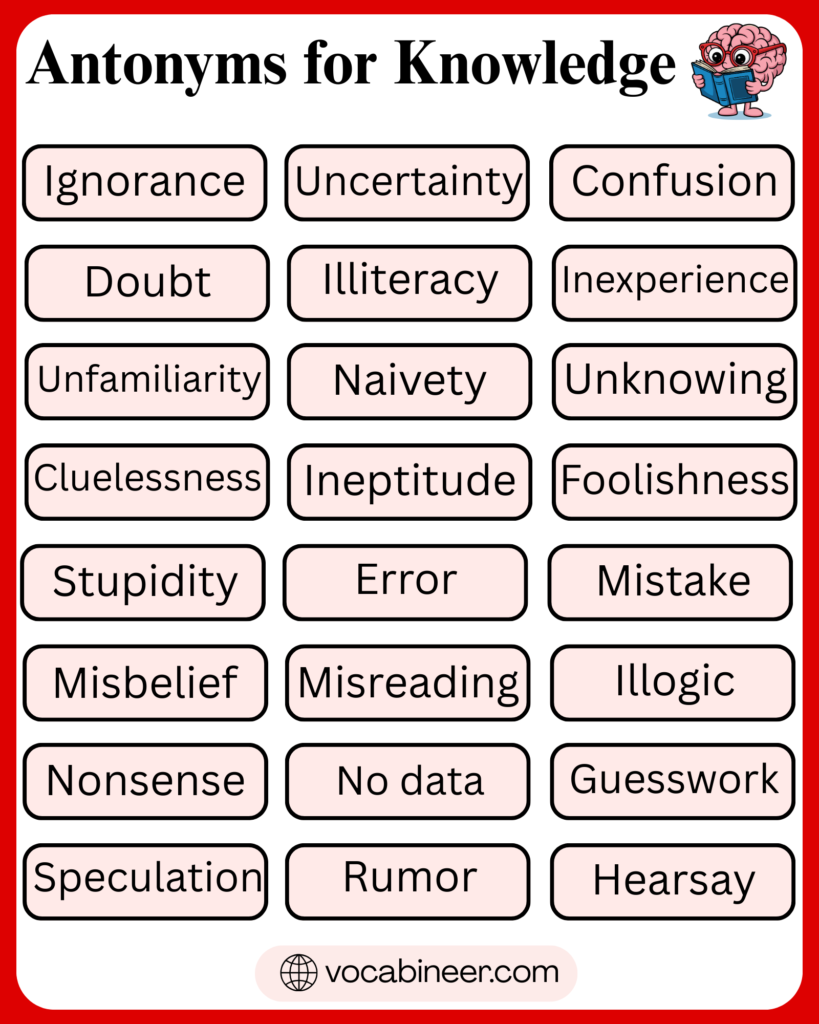
Antonyms for Knowledge by Context
The opposite of knowledge can change depending on what kind of knowledge you’re talking about, such as learning, awareness, experience, or education. Choosing the right antonym helps your meaning stay clear and accurate.
Learning and Education
When knowledge refers to learning or study, antonyms describe lack of education.
- Ignorance – lack of learning
- Illiteracy – lack of basic education
- Uneducated – no formal learning
- Uninformed – not taught
- Nescience – lack of knowledge
Awareness and Understanding
When knowledge refers to awareness, antonyms focus on not knowing.
- Unawareness – not conscious of facts
- Confusion – unclear understanding
- Misunderstanding – wrong interpretation
- Blindness – lack of awareness
- Oblivion – state of not knowing
Experience and Practice
When knowledge refers to experience, antonyms describe lack of practice.
- Inexperience – lack of practical exposure
- Naivety – lack of real understanding
- Unfamiliarity – not well known
- Forgetfulness – loss of remembered facts
- Misconception – incorrect belief
Information and Facts
When knowledge refers to information, antonyms describe absence or error.
- Uninformed – no information
- Ignorance – lack of facts
- Confusion – mixed understanding
- Error – wrong information
- Misbelief – false belief
Knowledge vs Similar Words
Understanding knowledge vs similar words helps readers choose the most accurate term when talking about learning, awareness, or information. Some words focus on facts, while others describe understanding, experience, or insight. The table below explains how these words differ in meaning and use.
| Word | Meaning & Usage |
|---|---|
| Knowledge | Information or understanding gained through learning or experience. |
| Understanding | Clear grasp of meaning or ideas. |
| Awareness | Being conscious of facts or situations. |
| Wisdom | Knowledge combined with good judgment. |
| Learning | Process of gaining knowledge. |
| Education | Formal instruction and schooling. |
| Expertise | High level of knowledge or skill in a field. |
| Insight | Deep or clear understanding of a situation. |
| Information | Facts or data given or learned. |
| Skill | Ability developed through practice. |
How to Choose the Right Antonym for Knowledge
Choosing the right antonym for knowledge depends on context. For education or learning, ignorance or illiteracy fits best. When talking about awareness, unawareness or confusion works naturally. For experience-based knowledge, inexperience or naivety is more accurate. Thinking about what kind of understanding is missing helps select the correct opposite.
Conclusion
Understanding antonyms for knowledge helps you describe situations where information, awareness, or understanding is missing. Whether you are talking about ignorance, confusion, inexperience, or lack of education, knowing the right opposite words makes communication clearer and more precise in everyday learning and communication.
Read More
