

Antonyms for loneliness helps readers understand how English expresses connection, belonging, and emotional warmth instead of isolation or emotional emptiness. When loneliness fades, language shifts to show companionship, comfort, or social closeness, making emotional changes easier to recognize. These opposite words appear often in stories, school texts, conversations, and descriptive writing, shaping how relationships, emotions, and situations are clearly communicated and helping readers describe social experiences with greater clarity.
In This Page
Meaning of Loneliness in English
Loneliness describes the feeling of being alone, isolated, or emotionally disconnected from others. It does not always mean physical isolation; a person can feel lonely even in a crowd if emotional connection is missing. Loneliness often carries a sense of sadness, emptiness, or lack of belonging.
The word loneliness appears frequently in literature, personal writing, and descriptive passages. When loneliness is absent, English uses different words to show togetherness, comfort, and emotional connection.
Common Antonyms for Loneliness
Some words clearly express the opposite of loneliness by showing connection, belonging, emotional warmth, or social presence. These antonyms appear often in reading passages, school writing, conversations, and descriptive texts, especially when isolation or emotional distance is replaced by closeness and support.
- Companionship: The state of having company or sharing time with others.
- Togetherness: Feeling emotionally or socially united with people around you.
- Belonging: Feeling accepted, valued, and included in a group.
- Connection: An emotional or social bond with others.
- Closeness: Strong personal or emotional relationship.
- Friendship: A caring relationship based on trust and shared experience.
- Community: A group where people feel connected and supported.
- Comfort: Emotional ease provided by the presence of others.
- Support: Care, help, or encouragement from people around you.
- Affection: Warm and caring feelings shared between people.
- Together: Being with others emotionally or physically.
- Company: Presence of others that removes the feeling of being alone.
- Acceptance: Feeling welcomed and not rejected by others.
- Unity: Sense of closeness and shared purpose.
- Attachment: Emotional bond that connects people.
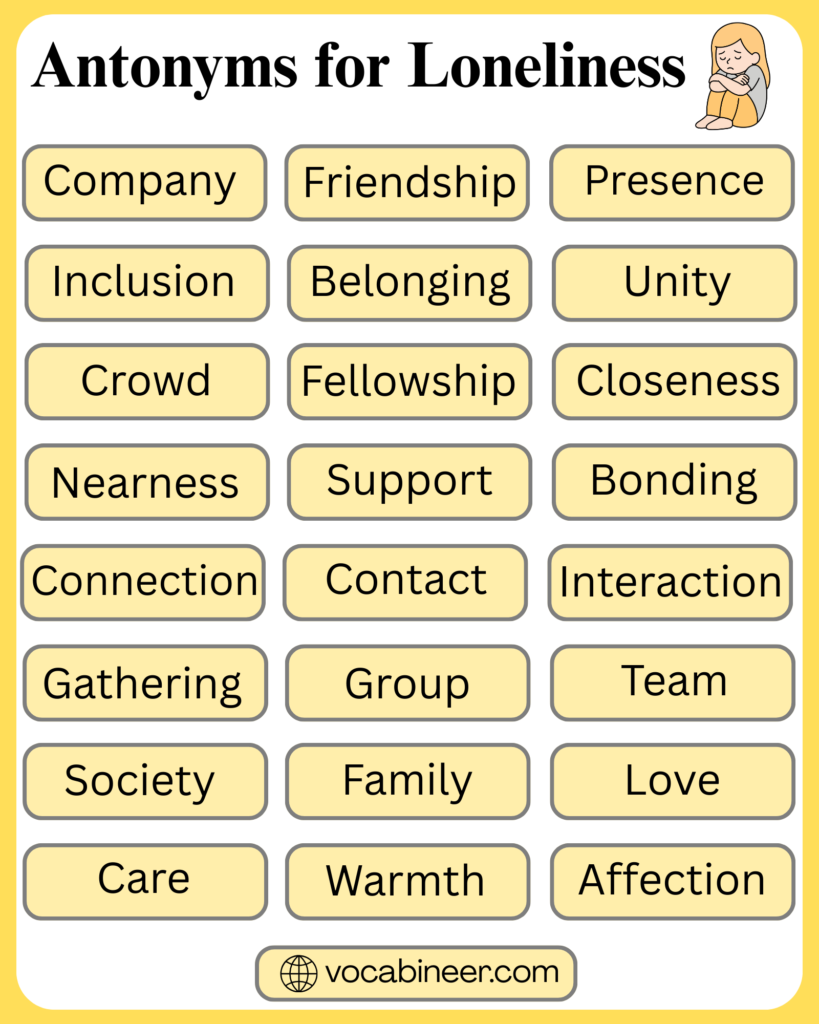
Emotional Antonyms of Loneliness
Some antonyms of loneliness focus mainly on feelings. These words describe emotions that replace emptiness with warmth or comfort.
- Loved: Feeling cared for and valued.
- Accepted: Feeling welcomed by others.
- Cared for: Feeling emotionally supported.
- Secure: Feeling emotionally safe with others.
- Comforted: Feeling soothed by presence or attention.
- Included: Feeling part of a group.
Mental Antonyms of Loneliness
Some antonyms of loneliness describe mindset rather than emotion alone. These words focus on how a person thinks about their social connection.
- Connected: Mentally aware of social bonds.
- Fulfilled: Feeling emotionally complete.
- Engaged: Mentally involved with others.
- Confident: Feeling socially secure.
- At ease: Comfortable in social presence.
Words Related to Social Connection and Belonging
Some words do not directly replace loneliness but support the same idea by describing social closeness and interaction.
- Company: Presence of others.
- Interaction: Social exchange between people.
- Together: Being with others physically or emotionally.
- Bond: Strong connection between people.
- Unity: Sense of shared purpose or closeness.
Loneliness vs Similar Words
Loneliness is an emotional state marked by a lack of connection or belonging. It reflects inner emptiness or emotional separation, even when other people are physically present. Loneliness focuses on how a person feels inside rather than where they are.
Loneliness vs Solitude
Solitude is being alone by choice and can feel peaceful or refreshing. Loneliness is unwanted and often painful, while solitude may be calming and intentional.
Loneliness vs Isolation
Isolation refers to physical or social separation from others. Loneliness describes the emotional experience that may result from isolation, but a person can feel lonely without being isolated.
Loneliness vs Aloneness
Aloneness simply means being by oneself. Loneliness adds emotional discomfort or sadness, while aloneness can be neutral or even positive.
Loneliness vs Seclusion
Seclusion suggests being set apart deliberately, often for privacy or focus. Loneliness suggests emotional lack rather than intentional separation.
Loneliness vs Alienation
Alienation involves feeling cut off or rejected by others, often due to conflict or misunderstanding. Loneliness is broader and may exist without clear rejection.
Loneliness vs Homesickness
Homesickness is sadness caused by being away from home or familiar people. Loneliness can exist anywhere and is not tied to a specific place.
Antonyms for Loneliness in Sentences
Seeing antonyms used in sentences helps learners understand how these words fit naturally into English.
- She felt a sense of belonging in the group.
- His companionship brought comfort.
- The event created real togetherness.
- Friendship replaced her loneliness.
- He found connection through shared interests.
- The community offered strong support.
How to Choose the Right Antonym for Loneliness
Choosing the correct antonym depends on the situation. If the focus is emotional warmth, words like affection, comfort, or loved work best. If the focus is social presence, words like companionship, community, or togetherness are more accurate.
Thinking about whether the situation shows emotional closeness, social interaction, or belonging helps select the most natural antonym.
Why Learning Antonyms for Loneliness Matters
Understanding antonyms for loneliness helps readers recognize emotional change in stories and conversations. These words explain how isolation turns into connection and how emotional distance becomes closeness. They also help writers describe relationships more clearly and avoid repetition.
Learning these opposites strengthens emotional vocabulary and improves descriptive clarity.
Conclusion
Understanding antonyms for loneliness helps readers recognize how English expresses connection, belonging, and emotional warmth instead of isolation. These words appear across stories, school texts, and conversations, shaping how relationships and emotions are described. Learning them through explanation and sentence use builds clearer emotional expression and stronger communication.
Read More
