

Learning the antonym for loud helps readers understand how sound, behavior, and expression change when noise or intensity is reduced. Loud often connects to strong volume, raised voices, or attention focused actions, while its opposite points to quieter sound and calmer presence. These contrasts appear frequently in reading passages, classroom instructions, and listening activities where sound description matters.
This article explains how the antonym for loud works in different situations involving sound, people, and settings. Knowing these opposite words helps learners talk about quiet spaces, gentle speech, and controlled actions in school and daily communication.
In This Page
What Does Loud Mean in English?
The word loud is used in English to describe sounds that are strong, noisy, or easily heard. It can refer to high-volume music, shouting voices, or disruptive noise. Loud can also describe behavior, style, or expression that strongly attracts attention. A loud sound fills a space, a loud person speaks forcefully, loud clothing is visually bold, and loud behavior is energetic or overpowering. Because the meaning of loud changes depending on the situation, its opposite words also change based on whether you’re talking about sound, behavior, atmosphere, or style.
Common Antonyms for Loud With Meanings
Understanding opposites of loud helps learners notice how sound levels and expression shift in daily communication. These words appear often in reading passages and listening tasks. Below is a list of commonly used antonyms for loud with clear explanations.
- Quiet: Produces very little sound and allows others to focus without distraction.
- Silent: Has no sound at all, even when people expect noise.
- Soft: Sounds gentle and low, never sharp or forceful.
- Muted: Reduced in volume so the sound feels controlled.
- Calm: Free from noise and emotional intensity at the same time.
- Hushed: Suddenly quiet, often because silence is needed.
- Gentle: Sounds mild and caring, never harsh or aggressive.
- Low: Describes volume that stays under normal speaking levels.
- Subtle: Present but barely noticeable, especially in sound or expression.
- Peaceful: Quiet in a way that feels steady and undisturbed.
- Still: Without movement or sound in the surrounding space.
- Mild: Not strong, sharp, or overpowering.
- Reserved: Describes people who avoid noisy or expressive behavior.
- Understated: Intentionally quiet or restrained in sound or style.
- Tranquil: Quiet with a steady, calming feeling.
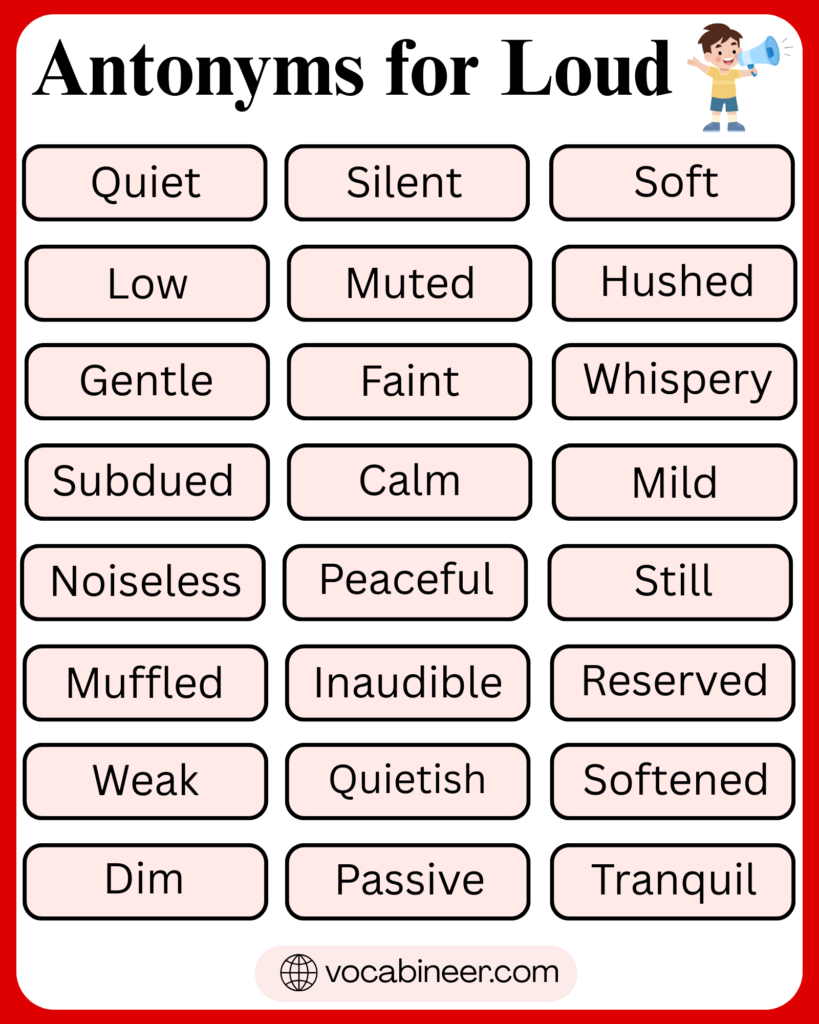
Antonyms for Loud by Context
The opposite of loud can change depending on what kind of loudness you’re talking about—sound, behavior, atmosphere, expression, or style. Choosing the right antonym helps your meaning feel clear and natural.
Sound and Noise Levels
When loud refers to strong sound or volume, its antonyms describe reduced or absent noise:
- Quiet – making little or no noise
- Silent – completely without sound
- Soft – low in volume
- Muted – intentionally reduced sound
- Hushed – suddenly or deliberately quiet
Behavior and Personality
When loud describes expressive or attention-seeking behavior, antonyms show restraint and calmness:
- Reserved – not expressive or noisy
- Calm – relaxed and controlled
- Gentle – mild and considerate
- Modest – not attention-seeking
Atmosphere and Environment
When loud refers to a setting or environment, antonyms suggest peace and stillness:
- Peaceful – free from disturbance
- Tranquil – calm and soothing
- Serene – quiet and composed
- Still – without activity or sound
Expression, Style, and Impact
When loud means bold, flashy, or attention-grabbing, antonyms reflect restraint or simplicity:
- Understated – deliberately simple
- Subtle – not obvious or strong
- Low-key – relaxed and informal
- Plain – not bold or showy
Loud vs Similar Words
While loud describes strong sound, bold behavior, or attention-grabbing presence, these similar words focus on specific types of loudness or intensity.
| Word | Meaning & Usage |
|---|---|
| Loud | Strong sound or forceful attention |
| Noisy | Continuous or unpleasant sound |
| Boisterous | Energetic and noisy behavior |
| Rowdy | Loud and uncontrolled actions |
| Clamorous | Loud, demanding noise |
| Shrill | High-pitched, piercing sound |
| Blaring | Extremely loud, harsh sound |
| Thunderous | Deep, powerful loudness |
| Flashy | Loud in appearance, not sound |
| Obnoxious | Irritating or offensive loudness |
How to Choose the Right Antonym for Loud
Choosing the right antonym for loud depends on the context. If you’re describing sound, words like quiet, silent, soft, or muted work best. For behavior or personality, reserved, calm, or gentle are more accurate. When referring to environments, peaceful, tranquil, or serene fit naturally. And when loud means bold or flashy, antonyms such as understated, subtle, or low-key clearly express the opposite. Considering the context ensures your writing or speech is clear, natural, and precise.
Conclusion
Understanding antonyms for loud helps you describe sounds, behaviors, environments, and expressions that lack noise, force, or intensity. Whether you’re talking about a quiet room, a calm person, muted music, or understated style, knowing the right opposite words makes your English more accurate and expressive. Using the correct antonym for the situation allows you to highlight contrasts, add detail, and communicate your ideas clearly in everyday speech, writing, or storytelling.
Read More
