

Learning the antonyms for wet helps readers understand how surfaces, materials, and conditions change when moisture is absent. Wet often connects to water, dampness, or liquid presence, while its opposites point to dryness, lack of moisture, or complete absence of liquid. These contrasts appear frequently in reading passages, classroom explanations, and daily descriptions where weather, texture, or condition matters.
This article explains how antonyms for wet work in different situations involving surfaces, weather, objects, and environments. Knowing these opposite words helps learners talk about dry ground, arid weather, moisture-free objects, and comfortable conditions in school and everyday communication.
In This Page
What Does Wet Mean in English?
The word wet is used in English to describe something covered with water or another liquid. It can refer to wet clothes, wet ground, wet weather, or wet hands. Wet can also describe conditions with moisture or dampness. Because the meaning of wet changes by context, its opposite words also change depending on whether you are talking about texture, weather, environment, or condition.
Common Antonyms for Wet With Meanings
Understanding opposites of wet helps readers describe surfaces, weather, materials, and conditions where moisture is absent. These words are commonly used in school texts and everyday descriptions when talking about dryness, heat, or lack of water.
- Dry: Free from water or moisture.
- Arid: Extremely dry, especially in climate or land.
- Parched: Dried out due to heat or lack of water.
- Bone-dry: Completely dry with no moisture at all.
- Desiccated: Thoroughly dried out, often unnaturally.
- Dusty: Dry enough to produce loose dust.
- Dehydrated: Lacking necessary water content.
- Sun-dried: Dried naturally by exposure to sunlight.
- Crisp: Pleasantly dry and firm.
- Powdery: Dry and fine in texture.
- Baked: Dried by strong heat.
- Cracked: Dried to the point of splitting.
- Moisture-free: Without any trace of dampness.
- Shriveled: Dried and wrinkled from loss of moisture.
- Barren: Dry and unable to support growth.
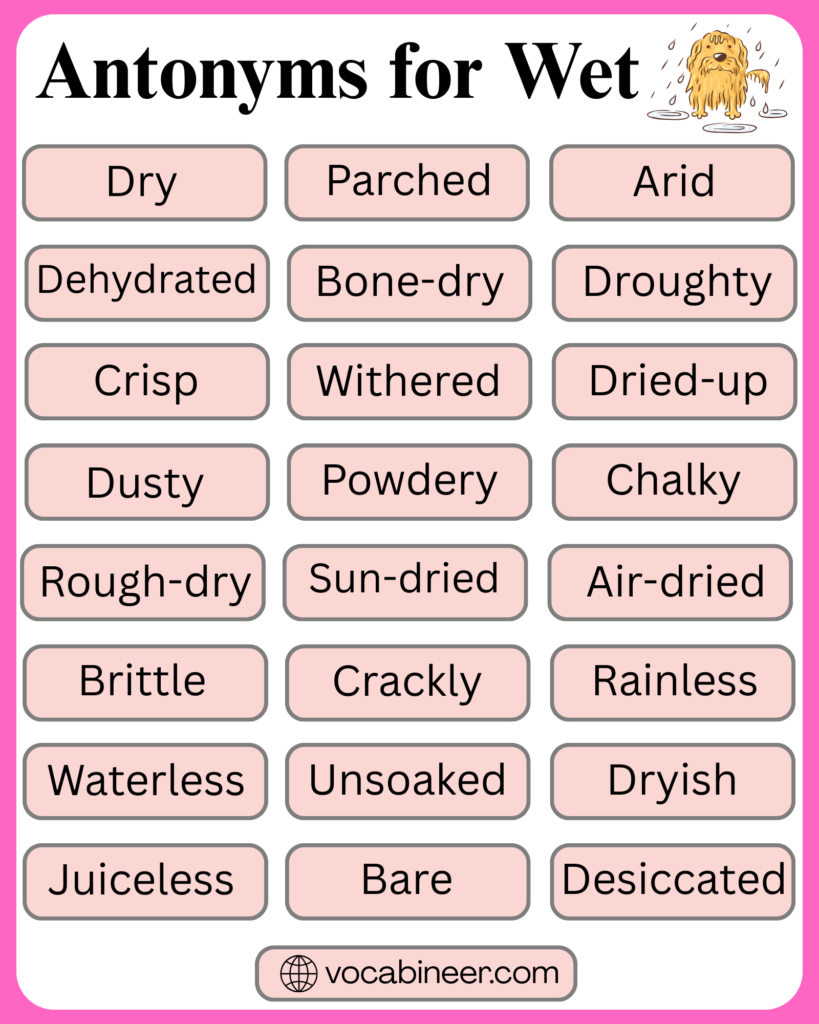
Antonyms for Wet by Context
The opposite of wet can change depending on what kind of wetness you’re talking about, such as surface condition, weather, environment, or material state. Choosing the right antonym helps your meaning stay clear and accurate.
Surfaces and Objects
When wet refers to physical surfaces or objects, antonyms describe dryness or lack of moisture.
- Dry – free from liquid
- Bone-dry – completely dry
- Crisp – dry and firm
- Powdery – dry and fine
- Cracked – dried until split
Weather and Climate
When wet refers to rain or climate, antonyms focus on dryness or lack of rainfall.
- Arid – extremely dry climate
- Dry – little or no rain
- Parched – very dry conditions
- Drought-like – lacking rainfall
- Sunny – dry with clear skies
Environment and Nature
When wet refers to land or surroundings, antonyms describe dry ground or soil.
- Desiccated – dried out completely
- Dusty – dry and dusty
- Barren – dry and lifeless
- Dehydrated – lacking water
- Shriveled – dried and weakened
Comfort and Condition
When wet describes comfort or physical condition, antonyms focus on dryness and ease.
- Dry – not damp
- Warm – dry and comfortable
- Crisp – pleasantly dry
- Airy – dry and well-ventilated
- Moisture-free – without dampness
Wet vs Similar Words
Understanding wet vs similar words helps readers describe different levels and types of moisture accurately. Some words show light moisture, while others describe heavy soaking or damp air. The table below explains how these words differ in meaning and use.
| Word | Meaning & Usage |
|---|---|
| Wet | Covered with or containing water or another liquid. |
| Damp | Slightly wet, not fully dry. |
| Moist | Lightly wet, often in a pleasant or healthy way. |
| Soaked | Completely filled or covered with liquid. |
| Soggy | Unpleasantly wet and soft. |
| Humid | Moisture present in the air, not on surfaces. |
| Slippery | Smooth because of water on the surface. |
| Dripping | Liquid falling from something due to wetness. |
| Waterlogged | Heavily soaked with water for a long time. |
| Saturated | Holding as much liquid as possible. |
How to Choose the Right Antonym for Wet
Choosing the right antonym for wet depends on context. For surfaces or objects, dry or bone-dry fits best. When describing weather or climate, arid or parched is more accurate. For environments or materials, desiccated or dusty works naturally. Thinking about how much moisture is missing helps select the correct opposite.
Conclusion
Understanding antonyms for wet helps you describe surfaces, weather, environments, and conditions that lack moisture. Whether you are talking about dry clothes, arid land, dust-covered ground, or moisture-free air, knowing the right opposite words makes communication clearer and more precise in everyday learning and communication.
Read More
