

Types of brushes include the common brush names people use for hair styling, painting, makeup, cleaning, dental care, and pet grooming. These brush types differ by brush head shape and bristle material, so the right brush becomes easier to choose when you know the names.
In this post, you will learn different types of brushes with names, short uses, and pictures where relevant. It covers hair brushes, paint brushes, makeup brushes, cleaning brushes, toothbrush types, pet grooming brushes, brush head shapes, and bristle materials, plus quick differences like hair brush vs comb and natural vs synthetic bristles, so the topic is easier to recognize, compare, and remember.
In This Page
What Is a Brush?
A brush is a tool with bristles attached to a handle, used to clean, paint, style hair, apply makeup, or groom pets. Because brushes come in many shapes and bristle types, each brush works best for a specific task. Learning brush names helps you recognize the right brush in pictures and choose it faster.
Main Brush Types
This quick overview lists the most common brush types people see in daily life. So, these names help you recognize the main categories before the detailed groups.
- Paddle brush: A wide hair brush used for smooth brushing and detangling.
- Round hair brush: A hair brush used for blow-drying and adding volume.
- Detangling brush: A hair brush made to reduce pulling while removing knots.
- Filbert brush: A paint brush with a rounded flat tip used for blending and soft edges.
- Flat paint brush: A paint brush used for broad strokes and straight edges.
- Liner brush: A thin paint brush used for fine lines and details.
- Foundation brush: A makeup brush used to spread foundation evenly on the face.
- Blending brush: An eye makeup brush used to blend eyeshadow smoothly.
- Toilet brush: A cleaning brush used for scrubbing the toilet bowl.
- Bottle brush: A cleaning brush used to clean inside bottles and narrow containers.
- Manual toothbrush: A toothbrush used by hand for daily tooth cleaning.
- Slicker brush: A pet grooming brush used to remove loose fur and tangles.
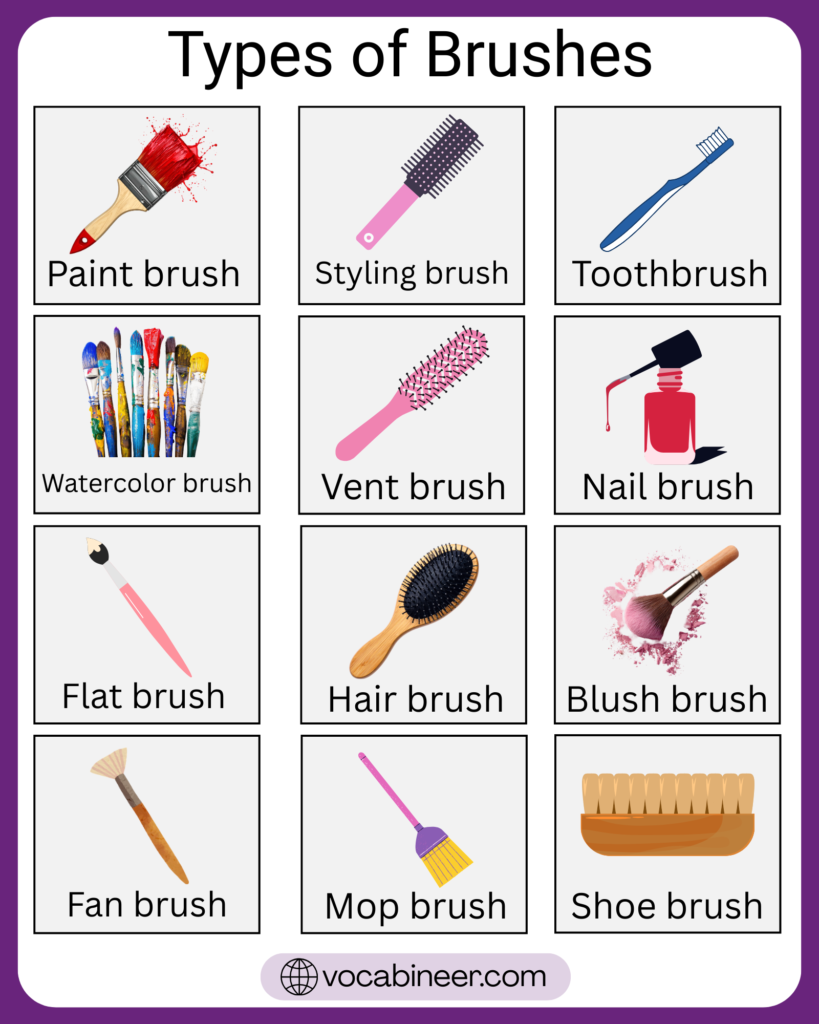
Brushes for Hair and Styling
Hair brushes are made to detangle, smooth, add volume, or style hair. Because hair texture and styling needs differ, this section groups the most common hair brush names.
Hair Brushes
- Paddle brush: A flat wide brush used for smoothing and daily detangling.
- Round brush: A brush used with blow-drying to add lift, curl, and volume.
- Vent brush: A brush with vents that allows airflow for faster drying.
- Detangling brush: A brush designed to remove knots with less pulling.
- Boar bristle brush: A brush that smooths hair and spreads natural oils.
- Teasing brush: A brush used to backcomb hair and add volume at the roots.
- Wet brush: A detangling brush used on wet hair for gentler brushing.
Styling and Edge Brushes
- Edge brush: A small brush used to smooth and shape baby hairs along the hairline.
- Hot brush (heated brush): A brush that uses heat to smooth hair and reduce frizz.
- Styling brush: A general brush used to shape hair during styling.
- Roller brush: A round-style brush used to create soft bends while drying.
Scalp and Massage Brushes
- Scalp massager brush: A brush used to massage the scalp and help spread shampoo.
- Shampoo brush: A scalp brush used during washing for gentle scalp cleaning.
- Scalp exfoliating brush: A scalp brush used to loosen buildup and support cleaner roots.
Brushes for Painting and Art
Painting brushes are grouped by how they shape paint on paper or canvas. Because brush shape controls the stroke, knowing these names makes art supplies easier to choose.
Basic Paint Brushes
- Flat brush: A straight-edged brush used for broad strokes and clean edges.
- Round brush: A pointed brush used for lines, fills, and general painting.
- Angled brush: A slanted brush used for angled strokes and sharp corners.
- Wash brush: A wide brush used for large washes and background color.
Specialty Paint Brush Shapes
- Filbert brush: A rounded flat brush used for blending and soft edges.
- Bright brush: A shorter flat brush used for stronger, controlled strokes.
- Fan brush: A fan-shaped brush used for texture like grass, clouds, and blending.
- Mop brush: A soft rounded brush used for blending and smooth washes.
Fine Detail Paint Brushes
- Liner brush: A thin brush used for long, fine lines and detail work.
- Rigger brush: A long thin brush used for very fine lines and strokes.
- Detail brush: A small brush used for tiny areas and sharp details.
- Fine tip brush: A narrow brush used for precise edges and small patterns.
Wash and Background Paint Brushes
- Background brush: A wide brush used to cover large areas quickly.
- Large wash brush: A brush used to spread water or paint across a wide space.
- Wide flat brush: A flat brush used for quick coverage and bold strokes.
Brushes for Makeup and Face
Makeup brushes help apply products smoothly and blend them evenly. Because face and eye areas need different shapes, this section groups the most common makeup brush names.
Face Makeup Brushes
- Foundation brush: A brush used to apply and smooth foundation on the face.
- Concealer brush: A small brush used to apply concealer under eyes and on spots.
- Powder brush: A fluffy brush used to apply loose or pressed powder lightly.
- Blush brush: A soft brush used to apply blush on cheeks.
- Contour brush: A brush used to shape the face with contour powder or cream.
- Highlighter brush: A brush used to apply highlight on cheekbones and nose areas.
Eye Makeup Brushes
- Eyeshadow brush: A brush used to place eyeshadow on the eyelid.
- Blending brush: A fluffy brush used to blend eyeshadow for a smooth finish.
- Crease brush: A brush used to apply color in the crease area of the eye.
- Flat shader brush: A flat brush used to pack eyeshadow onto the lid.
- Angled eyeliner brush: A thin angled brush used to apply gel or powder eyeliner.
Brow and Lash Brushes
- Brow brush: A small brush used to shape and fill eyebrows.
- Spoolie: A spiral brush used to comb brows and separate lashes.
- Brow and spoolie brush: A double-ended brush used for brow shaping and blending.
Brushes for Cleaning and Home Use
Cleaning brushes are made to scrub, reach tight spaces, and remove dirt. Because different areas need different shapes, this section groups common household brush names.
Kitchen Cleaning Brushes
- Dish brush: A brush used to scrub plates, pans, and kitchen tools.
- Bottle brush: A long brush used to clean inside bottles and narrow containers.
- Straw brush: A thin brush used to clean reusable straws.
- Vegetable brush: A brush used to scrub vegetables before cooking.
Bathroom Cleaning Brushes
- Toilet brush: A brush used to scrub the toilet bowl.
- Shower scrub brush: A brush used to clean shower walls and tubs.
- Grout brush: A narrow brush used to clean grout lines between tiles.
- Tile scrub brush: A brush used to scrub tile surfaces and corners.
Detail Cleaning Brushes
- Keyboard cleaning brush: A small brush used to remove dust from keys and gaps.
- Drain brush: A thin brush used to clean drains and narrow pipes.
- Car detailing brush: A soft brush used to clean car vents and tight areas.
- Crevice cleaning brush: A slim brush used for gaps and corners in home cleaning.
Heavy Scrub Brushes
- Scrub brush: A stiff brush used to scrub tough dirt on floors and surfaces.
- Wire brush: A strong brush used to remove heavy grime and rust from hard surfaces.
- Handheld scrub brush: A grip brush used for strong scrubbing in small areas.
Brushes for Makeup and Face
Makeup brushes help apply products smoothly and blend them evenly. Because face and eye areas need different shapes, this section groups the most common makeup brush names.
Face Makeup Brushes
- Foundation brush: A brush used to apply and smooth foundation on the face.
- Concealer brush: A small brush used to apply concealer under eyes and on spots.
- Powder brush: A fluffy brush used to apply loose or pressed powder lightly.
- Blush brush: A soft brush used to apply blush on cheeks.
- Contour brush: A brush used to shape the face with contour powder or cream.
- Highlighter brush: A brush used to apply highlight on cheekbones and nose areas.
Eye Makeup Brushes
- Eyeshadow brush: A brush used to place eyeshadow on the eyelid.
- Blending brush: A fluffy brush used to blend eyeshadow for a smooth finish.
- Crease brush: A brush used to apply color in the crease area of the eye.
- Flat shader brush: A flat brush used to pack eyeshadow onto the lid.
- Angled eyeliner brush: A thin angled brush used to apply gel or powder eyeliner.
Brow and Lash Brushes
- Brow brush: A small brush used to shape and fill eyebrows.
- Spoolie: A spiral brush used to comb brows and separate lashes.
- Brow and spoolie brush: A double-ended brush used for brow shaping and blending.
Brushes for Cleaning and Home Use
Cleaning brushes are made to scrub, reach tight spaces, and remove dirt. Because different areas need different shapes, this section groups common household brush names.
Kitchen Cleaning Brushes
- Dish brush: A brush used to scrub plates, pans, and kitchen tools.
- Bottle brush: A long brush used to clean inside bottles and narrow containers.
- Straw brush: A thin brush used to clean reusable straws.
- Vegetable brush: A brush used to scrub vegetables before cooking.
Bathroom Cleaning Brushes
- Toilet brush: A brush used to scrub the toilet bowl.
- Shower scrub brush: A brush used to clean shower walls and tubs.
- Grout brush: A narrow brush used to clean grout lines between tiles.
- Tile scrub brush: A brush used to scrub tile surfaces and corners.
Detail Cleaning Brushes
- Keyboard cleaning brush: A small brush used to remove dust from keys and gaps.
- Drain brush: A thin brush used to clean drains and narrow pipes.
- Car detailing brush: A soft brush used to clean car vents and tight areas.
- Crevice cleaning brush: A slim brush used for gaps and corners in home cleaning.
Heavy Scrub Brushes
- Scrub brush: A stiff brush used to scrub tough dirt on floors and surfaces.
- Wire brush: A strong brush used to remove heavy grime and rust from hard surfaces.
- Handheld scrub brush: A grip brush used for strong scrubbing in small areas.
Brush Head Shapes
Brush head shape helps you identify a brush in pictures even when you do not know the brand. Because the shape changes the stroke or the use, these names make brush recognition much easier.
Flat Brush Shapes
- Flat brush head: A straight edge brush shape used for broad strokes and clean lines.
- Bright brush head: A shorter flat shape used for strong, controlled strokes.
- Wide flat brush head: A larger flat shape used to cover big areas quickly.
Round and Oval Brush Shapes
- Round brush head: A pointed shape used for lines, small areas, and general painting.
- Oval brush head: A rounded shape used for smooth blending and soft edges.
- Mop brush head: A soft rounded head used for blending and gentle washes.
Angled and Dagger Brush Shapes
- Angled brush head: A slanted brush head used for sharp edges and angled strokes.
- Dagger brush head: A long slanted head used for sweeping strokes and curved lines.
- Angle shader head: An angled head used for shading and edge work.
Fan and Mop Brush Shapes
- Fan brush head: A fan-shaped head used for texture and soft blending.
- Mop brush head: A fluffy rounded head used for smooth blending and background work.
- Fan blender head: A fan head used to soften edges and mix color lightly.
Spoolie Brush Head
- Spoolie brush head: A spiral brush head used to comb brows and separate lashes.
- Mascara spoolie head: A spoolie head used to separate lashes and smooth mascara.
- Brow spoolie head: A spoolie head used to blend brow product and shape brows.
Brush Bristles and Materials
Bristle material changes softness, strength, and how a brush performs. For example, natural bristles feel softer for some uses, while synthetic bristles handle water and creams well. So, learning bristle types helps you choose the right brush faster.
Natural Bristle Brushes
- Natural bristle brush: A brush made with animal hair bristles for softer feel and smooth use.
- Boar bristle brush: A hair brush made to smooth hair and spread natural oils.
- Horsehair brush: A soft bristle type used in some gentle cleaning and polishing brushes.
Synthetic Bristle Brushes
- Synthetic bristle brush: A brush made with man-made fibers for durability and easy cleaning.
- Nylon bristle brush: A common synthetic brush type used in cleaning and some grooming brushes.
- Soft synthetic makeup brush: A synthetic brush used for makeup because it blends creams well.
Mixed Bristle Brushes
- Mixed bristle brush: A brush that combines natural and synthetic bristles for balanced strength.
- Boar and nylon brush: A hair brush that mixes bristles for smoothing and detangling.
- Mixed cleaning brush: A brush type used for steady scrubbing with better control.
Brush Names List
This is a quick scan list of common brush names. Use it to recognize brush types and remember the main names.
- Paddle brush
- Round brush
- Vent brush
- Detangling brush
- Boar bristle brush
- Teasing brush
- Wet brush
- Edge brush
- Scalp massager brush
- Flat brush
- Round paint brush
- Angled brush
- Filbert brush
- Bright brush
- Fan brush
- Mop brush
- Liner brush
- Rigger brush
- Detail brush
- Wash brush
- Foundation brush
- Concealer brush
- Powder brush
- Blush brush
- Contour brush
- Highlighter brush
- Eyeshadow brush
- Blending brush
- Crease brush
- Angled eyeliner brush
- Brow brush
- Spoolie
- Dish brush
- Bottle brush
- Toilet brush
- Grout brush
- Scrub brush
- Drain brush
- Keyboard cleaning brush
- Manual toothbrush
- Electric toothbrush
- Interdental brush
- Tongue brush
- Slicker brush
- Pin brush
- Deshedding brush
- Undercoat rake
- Grooming glove
Hair Brush vs Comb
A hair brush and a comb both manage hair, but they work differently. A brush covers more hair at once, while a comb separates strands more precisely. So, brushes suit smoothing and styling, while combs suit parting and detailed shaping.
| Tool | How It Works | Best For |
|---|---|---|
| Hair brush | Bristles move through hair in wider sections | Smoothing, detangling, styling |
| Comb | Teeth separate hair in smaller sections | Parting, precise shaping, neat lines |
Natural vs Synthetic Bristles
Natural and synthetic bristles differ in feel and performance. For some uses, natural bristles feel softer, while synthetic bristles handle water, creams, and frequent washing more easily. Ultimately, the best choice depends on what you are using the brush for.
| Bristle Type | Feel | Best For |
|---|---|---|
| Natural bristles | Softer, smoother | Hair smoothing, gentle polishing |
| Synthetic bristles | Durable, easy to clean | Makeup, wet cleaning, heavy use |
FAQs
Common brush types include hair brushes, paint brushes, makeup brushes, cleaning brushes, toothbrushes, and pet grooming brushes.
Detangling brushes and wet brushes work well for knots because they reduce pulling and help separate hair more gently.
A filbert brush is used for blending and soft edges because its rounded flat shape makes smooth strokes.
A paddle brush is best for smoothing and detangling, while a round brush is used for blow-drying and adding volume.
Synthetic brushes are easier to clean and work well with creams and water, while natural bristles can feel softer for smoothing and gentle use.
Conclusion
Types of brushes become easier to learn when you group them by use, brush head shape, and bristle material. Because each brush type fits a different job, the right choice improves cleaning, styling, painting, and grooming results.
At the same time, learning brush names helps you recognize brushes in pictures and shopping labels, whether you need a paddle brush for hair, a filbert brush for art, or a bottle brush for cleaning.
Read More
