Money is used in every country, but the sign for money is not always the same. Different countries use different currency symbols to show their currencies in prices, shops, travel websites, banks, and bills. Learning these symbols helps students, travelers, shoppers, and English learners understand world money signs more easily.
In this article, you will learn currency symbols in English with their names, countries, regions, and common uses. You will also learn the difference between currency symbols and currency codes, why some currencies share the same sign, where symbols are placed in prices, and which money signs are most common around the world.
In This Page
What Are Currency Symbols?
Currency symbols are special signs used to represent money. They are short marks or written forms that stand for a currency.
For example:
- $ stands for dollar
- € stands for euro
- £ stands for pound
- ¥ stands for yen or yuan
- ₹ stands for Indian rupee
These symbols make prices shorter and easier to read.
Common Currency Symbols and Their Names
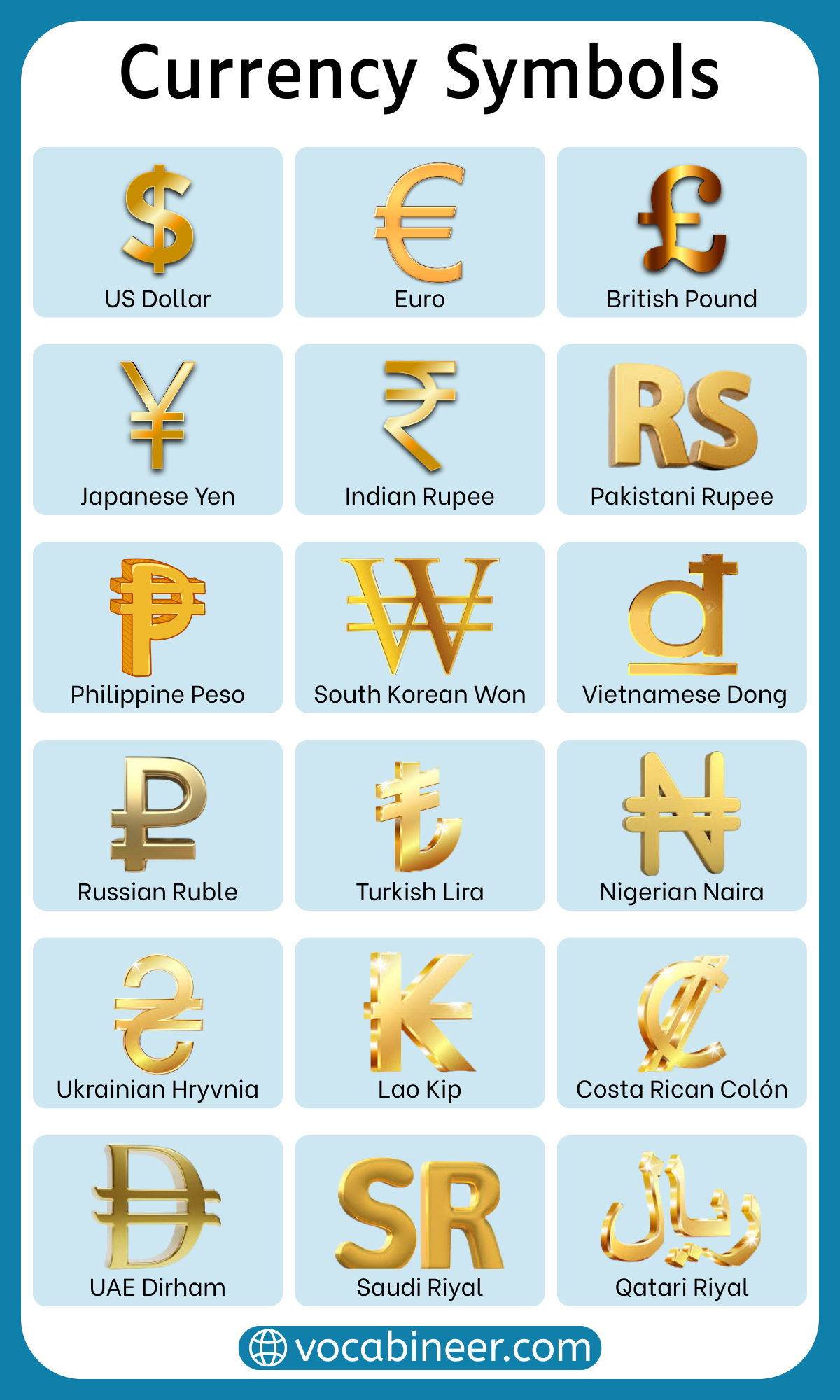
These are some of the most common currency symbols and names:
- $: dollar sign
- €: euro sign
- £: pound sign
- ¥: yen sign or yuan sign
- ₹: Indian rupee sign
- ₽: Russian ruble sign
- ₩: South Korean won sign
- ₺: Turkish lira sign
- ₫: Vietnamese dong sign
- ₱: peso sign
- ฿: Thai baht sign
- ₴: Ukrainian hryvnia sign
- د.إ: UAE dirham sign
- R$: Brazilian real sign
- C$: Canadian dollar sign
- A$: Australian dollar sign
Currency Symbols by Region
Grouping currency symbols by region makes them easier to remember.
Asian currency symbols
- ₹: Indian rupee
- ¥: Japanese yen
- ¥: Chinese yuan
- ₩: South Korean won
- ₫: Vietnamese dong
- ฿: Thai baht
- ₱: Philippine peso
- ₺: Turkish lira
European currency symbols
- €: euro
- £: British pound
- ₽: Russian ruble
- ₴: Ukrainian hryvnia
- CHF: Swiss franc
- kr: krona or krone in some European countries
American currency symbols
- $: United States dollar and other dollar currencies
- C$: Canadian dollar
- A$: Australian dollar
- R$: Brazilian real
- ₱: peso sign in some countries
Middle Eastern currency symbols
- د.إ: UAE dirham
- ﷼: riyal sign in some Arabic-writing countries
Currency Symbols by Country
Many readers want to learn currency symbols by country. Here are common examples:
- United States: $
- United Kingdom: £
- European Union countries: €
- Japan: ¥
- China: ¥
- India: ₹
- Russia: ₽
- South Korea: ₩
- Turkey: ₺
- Vietnam: ₫
- Philippines: ₱
- Thailand: ฿
- Ukraine: ₴
- Canada: C$
- Australia: A$
- Brazil: R$
- United Arab Emirates: د.إ
- Switzerland: CHF
- Sweden: kr
- Norway: kr
- Denmark: kr
Most Used Currency Symbols in the World
Some currency symbols are seen more often than others in travel, business, shopping, and online prices.
These are among the most commonly used:
- $: used for dollar currencies
- €: used for euro
- £: used for pound sterling
- ¥: used for yen and yuan
- ₹: used for Indian rupee
These money signs are common on price tags, menus, shopping apps, airport boards, travel websites, and international stores.
Currency Symbols and Currency Codes
Many people confuse currency symbols and currency codes, but they are different.
A currency symbol is the sign used with a price, such as:
- $
- €
- £
- ₹
A currency code is the short letter form used in banking, exchange, travel, and official writing, such as:
- USD: United States dollar
- EUR: euro
- GBP: British pound
- JPY: Japanese yen
- CNY: Chinese yuan
- INR: Indian rupee
- RUB: Russian ruble
- KRW: South Korean won
- TRY: Turkish lira
- VND: Vietnamese dong
- PHP: Philippine peso
- THB: Thai baht
- AED: UAE dirham
- CHF: Swiss franc
A symbol is a money sign, but a code is a short written abbreviation.
Currencies That Share the Same Symbol
One important thing many short articles skip is that some currencies share the same symbol.
Dollar sign
The $ sign is not only for the US dollar. It is also used for:
- Canadian dollar
- Australian dollar
- Singapore dollar
- Hong Kong dollar
- other dollar currencies
That is why people sometimes write US$, C$, or A$ to make the meaning clear.
Yen and yuan sign
The ¥ sign is used for:
- Japanese yen
- Chinese yuan
So the country name or code helps people know which currency is meant.
kr form
The written form kr can mean:
- Swedish krona
- Norwegian krone
- Danish krone
So it is clear only when the country or full currency name is shown.
Symbols That Are Written Like Letter Forms
Another thing that is often skipped is that not every currency uses one special symbol like € or ₹. Some currencies are often shown with letter-style forms or short written marks.
Examples:
- CHF: Swiss franc
- kr: krona or krone
- R$: Brazilian real
- د.إ: UAE dirham
These are still commonly used in price writing, even if they do not look like one single sign.
How Currency Symbols Are Used in Prices
Currency symbols are often placed before or after a number.
Examples:
- $10
- €25
- £50
- ₹500
In some places, the symbol may come after the number depending on local writing style.
Examples:
- 10 €
- 500 ₹
So the position of the symbol can change from one country or writing style to another.
Why Country Names and Codes Matter
A currency symbol alone is not always enough. The same symbol may be used by more than one country, so country names and currency codes help remove confusion.
For example:
- $50 can mean US dollar, Canadian dollar, or Australian dollar
- ¥1000 can mean Japanese yen or Chinese yuan
That is why people often use:
- USD
- CAD
- AUD
- JPY
- CNY
These forms make the currency clear in business, travel, banking, and international writing.
Money Symbols of Different Countries
Here is a quick list of money symbols of different countries:
- Dollar sign ($): used in the United States and some other countries
- Euro sign (€): used in many European countries
- Pound sign (£): used in the United Kingdom
- Yen sign (¥): used in Japan
- Yuan sign (¥): used in China
- Rupee sign (₹): used in India
- Won sign (₩): used in South Korea
- Peso sign (₱): used in the Philippines
- Baht sign (฿): used in Thailand
- Dirham sign (د.إ): used in the UAE
- Ruble sign (₽): used in Russia
- Hryvnia sign (₴): used in Ukraine
Summary
Currency symbols are signs used to represent the money of different countries. Common currency symbols in English include $, €, £, ¥, and ₹. Some countries use very clear symbols, while others often use letter-style forms such as CHF, kr, or AED.
Learning currency symbols, money symbols of different countries, currency symbols by country, and currency codes and symbols helps people understand prices, world currencies, and money signs in simple English. It also helps readers know why some currencies share the same sign and why codes are often needed for clarity.
FAQs
Currency symbols are special signs used to represent different types of money. For example, $ is used for dollar, € for euro, and £ for pound.
A currency symbol is a money sign like ₹ or €, while a currency code is a short form like INR or EUR. Symbols are often used in prices, while codes are used in banking, travel, and official writing.
Some currencies share the same symbol because they come from similar naming traditions. For example, both the Japanese yen and Chinese yuan use ¥, and many countries use $ for different dollar currencies.
No, not all currencies have one unique sign. Some are often written with letter-style forms such as CHF, kr, or AED instead of one special symbol like € or ₹.
Learning currency symbols in English helps with travel, shopping, geography, education, online reading, and understanding prices from different countries.
Read More