Types of shoes refer to the different kinds of footwear people wear for daily activities, work, sports, school, and special occasions. Each shoe type is designed with a specific purpose, shape, and level of support, depending on how and where it is used. From casual wear to formal use, shoes vary in material, sole, and structure to suit different needs.
Learning the types of shoes by name helps people choose the right footwear for comfort, safety, and routine use. It also makes shopping, discussing footwear, and understanding everyday clothing items easier in daily life.
In This Page
Different Types of Shoes Names
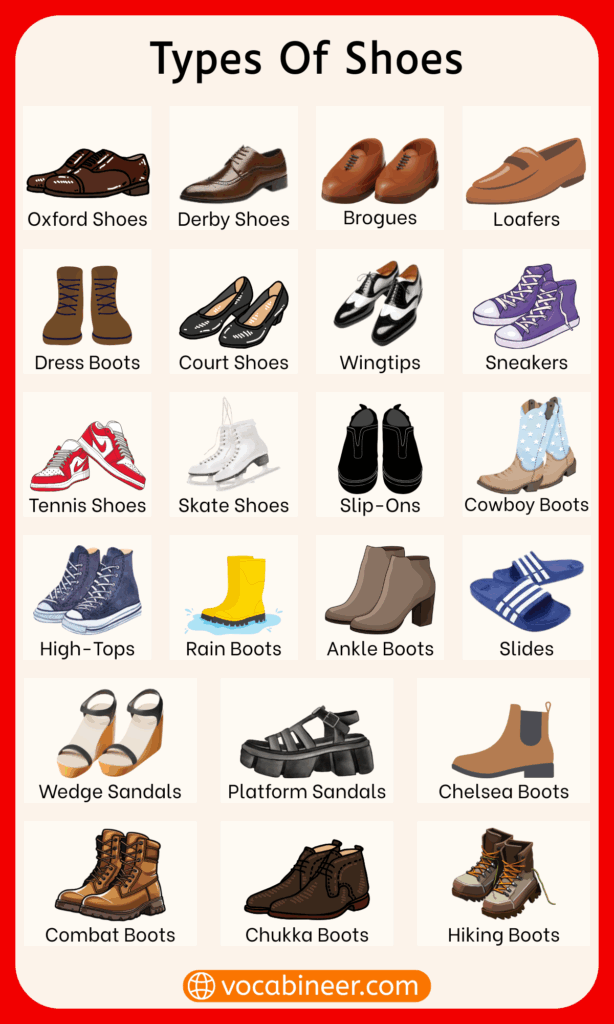
Below is a categorized list of different types of shoes with names in English. This content helps readers clearly understand common shoe styles, their purpose, and where they are usually worn in daily life, work, sports, and special occasions.
Sneakers
Comfortable everyday shoes commonly worn for walking, casual outings, and light physical activities.
Running Shoes
Supportive shoes designed for jogging and running, built to absorb impact and reduce strain on feet.
Hiking Boots
Strong footwear made for walking on rough, uneven terrain during hiking or outdoor trips.
Dress Shoes
Formal shoes worn for office wear, meetings, ceremonies, and professional events.
Oxfords
Laced leather shoes with a closed lacing system, usually worn for formal occasions.
Derby Shoes
Leather shoes with open lacing, slightly less formal than Oxfords and suitable for office wear.
Loafers
Slip-on shoes without laces, commonly worn for casual, office, or semi-formal settings.
Ballet Flats
Flat shoes inspired by ballet slippers, often worn for casual and semi-formal occasions.
Pumps
Heeled shoes mainly worn by women for business, formal events, or social gatherings.
Sandals
Open shoes fastened with straps, ideal for warm weather and everyday comfort.
Flip Flops
Casual flat footwear held by a Y-shaped strap, commonly worn at home or outdoors.
Espadrilles
Light canvas shoes with rope soles, usually worn in summer seasons.
Wedges
Shoes with thick soles that raise the heel and foot evenly for added height.
Platform Shoes
Footwear with thick soles under both the toe and heel, worn mainly for style.
Clogs
Backless shoes, sometimes with wooden soles, designed for comfort and casual use.
Mules
Slip-on shoes without backs that cover the front part of the foot.
Ankle Boots
Boots that cover the ankle, suitable for casual, formal, and seasonal wear.
Chelsea Boots
Ankle-length boots with elastic side panels, worn for both casual and formal looks.
Chukka Boots
Ankle-high boots with minimal lacing, often made from suede or leather.
Cowboy Boots
High leather boots with pointed toes and angled heels, traditionally worn for riding.
Rain Boots
Waterproof boots made from rubber, worn to protect feet in wet weather.
Work Boots
Heavy-duty boots with reinforced construction, used for labor and industrial work.
Slip-On Shoes
Laceless shoes that are easy to wear and remove, suitable for casual use.
Mary Janes
Shoes with a rounded toe and strap across the instep, commonly worn by women.
Boat Shoes
Low-cut shoes with slip-resistant soles, designed for wet surfaces and boating.
Slides
Open-toe shoes with a single strap across the foot, worn casually indoors or outdoors.
Shoes Used In Daily Life
Shoes used in daily life are designed to be worn for long hours during routine activities. These shoes focus on comfort, flexibility, and ease of movement for regular walking and casual use.
- Casual shoes: Everyday footwear worn for routine outings, light activities, and relaxed environments
- Walking shoes: Shoes designed with cushioning and support for people who walk frequently
- Slip-on shoes: Laceless shoes that are easy to wear and remove, suitable for quick use
- Everyday sneakers: Versatile shoes worn for daily movement and casual wear
- Canvas shoes: Lightweight fabric shoes commonly worn for casual and relaxed use
- Low-top shoes: Shoes that sit below the ankle, allowing natural foot movement
Athletic And Sports Shoes
Athletic and sports shoes are built to support physical activity and reduce stress on the feet during movement. These shoes usually provide grip, cushioning, and stability.
- Running shoes: Shoes designed to absorb impact and support feet during running or jogging
- Training shoes: Multi-purpose shoes used for workouts, fitness routines, and exercises
- Basketball shoes: Shoes with added ankle support to handle jumping and quick movement
- Tennis shoes: Court shoes designed for fast side-to-side motion
- Cycling shoes: Firm-soled shoes used for cycling activities
- Football shoes: Shoes with traction designed for playing on grass or turf
- Gym shoes: Lightweight shoes worn during indoor fitness activities
Formal And Office Shoes
Formal and office shoes are worn in professional settings and formal events. These shoes are usually structured and polished in appearance.
- Dress shoes: Shoes worn with formal clothing for offices and ceremonies
- Oxfords: Lace-up shoes with a closed lacing system, considered very formal
- Derby shoes: Formal shoes with open lacing, slightly more relaxed than Oxfords
- Business loafers: Slip-on shoes suitable for office and professional use
- Monk strap shoes: Formal shoes secured with buckles instead of laces
Casual And Fashion Shoes
Casual and fashion shoes focus on appearance while still offering comfort for daily wear. These shoes are often chosen to match outfits and personal style.
- Sneakers: Casual shoes commonly worn for everyday activities
- Ballet flats: Flat shoes worn for casual or semi-formal occasions
- Espadrilles: Lightweight shoes usually worn in warm weather
- Platform shoes: Shoes with thick soles that add height
- Wedge shoes: Shoes with evenly raised soles for stability
- Mules: Backless slip-on shoes worn casually
- Clogs: Slip-on shoes designed for comfort and easy wear
Sandals And Open Footwear
Sandals and open footwear are commonly worn in warm weather. These shoes allow airflow and provide comfort in relaxed settings.
- Flat sandals: Open shoes designed for everyday comfort
- Heeled sandals: Sandals worn for dressier or formal occasions
- Slides: Open shoes with a single strap across the foot
- Flip flops: Lightweight footwear often worn casually
- Sport sandals: Sandals designed for walking and outdoor activities
- Strap sandals: Sandals secured with multiple straps
Boots For Different Uses
Boots provide extra coverage and protection and are worn in specific conditions such as cold weather or outdoor work.
- Ankle boots: Boots that cover the ankle and suit casual or formal wear
- Chelsea boots: Elastic-sided ankle boots worn for smart looks
- Chukka boots: Lace-up ankle boots often made from leather or suede
- Winter boots: Insulated boots designed to keep feet warm
- Rain boots: Waterproof boots used in wet weather
- Work boots: Durable boots worn for outdoor or heavy tasks
Work And Safety Footwear
Work and safety footwear is designed to protect feet in demanding environments. These shoes are commonly worn in labor and industrial settings.
- Work boots: Heavy-duty footwear designed for strength and durability
- Safety shoes: Shoes with reinforced protection for toes
- Industrial shoes: Footwear used in factories and workshops
- Steel-toe shoes: Shoes with metal toe caps for added safety
Seasonal Footwear Types
Some shoes are chosen mainly based on seasonal weather conditions.
- Summer shoes: Breathable shoes worn in hot weather
- Rainy season shoes: Waterproof footwear for wet conditions
- Winter footwear: Shoes designed to keep feet warm and dry
Shoes Based On Closure Style
Closure style affects how shoes fit and how easily they can be worn.
- Lace-up shoes: Shoes fastened using laces for adjustable fitting
- Velcro shoes: Shoes with hook-and-loop straps for easy fastening
- Buckle shoes: Shoes secured with buckles
- Slip-on footwear: Shoes without fasteners
- Elastic-fit shoes: Stretchable shoes designed for easy wear
Shoes Based On Sole Design
The sole of a shoe plays an important role in comfort and grip.
- Rubber sole shoes: Shoes with flexible and non-slip soles
- Foam sole shoes: Lightweight shoes with cushioning
- Platform sole shoes: Shoes with raised soles for added height
- Flat sole shoes: Shoes with minimal heel height
Shoes Based On Material
The material used in shoes affects durability, comfort, and appearance.
- Leather shoes: Durable shoes commonly worn for formal use
- Fabric shoes: Lightweight shoes made from cloth materials
- Mesh shoes: Breathable shoes often used for sports
- Synthetic shoes: Shoes made from man-made materials
- Suede shoes: Soft-textured shoes with a smooth finish
Shoes Based On Foot Shape And Fit
Fit-based shoes focus on comfort and proper support for different foot shapes.
- Wide-fit shoes: Shoes designed for broader feet
- Narrow-fit shoes: Shoes made for slimmer feet
- Arch support shoes: Shoes that support foot arches
- Flat-foot shoes: Shoes designed for flat feet
- Orthopedic shoes: Shoes created for foot comfort and support
Shoes For Specific Activities
Some shoes are designed for particular activities and environments.
- Hiking shoes: Shoes made for uneven trails and outdoor paths
- Trail shoes: Shoes designed for rough outdoor surfaces
- Water shoes: Shoes worn in wet environments
- Driving shoes: Shoes designed for better pedal control
- Travel shoes: Comfortable shoes for long journeys
Shoes By Heel Height
Heel height affects posture, comfort, and appearance.
- Flat shoes: Shoes without raised heels
- Low-heel shoes: Shoes with slight elevation
- Mid-heel shoes: Shoes with moderate heel height
- High-heel shoes: Shoes with raised heels
- Block heel shoes: Shoes with wide heels for stability
Shoes By Toe Shape
Toe shape influences shoe style and fit.
- Round-toe shoes: Shoes with rounded front design
- Pointed-toe shoes: Shoes with narrow pointed fronts
- Square-toe shoes: Shoes with square-shaped toes
- Open-toe shoes: Shoes exposing the toes
- Peep-toe shoes: Shoes with small toe openings
Shoes For Indoor Use
Indoor shoes are worn inside homes for comfort.
- House slippers: Soft shoes for home use
- Bedroom slippers: Lightweight indoor footwear
- Soft-sole shoes: Shoes designed for indoor comfort
Shoes For Outdoor Use
Outdoor shoes are designed to handle rough surfaces.
- Outdoor walking shoes: Shoes suitable for outdoor paths
- All-terrain shoes: Shoes designed for mixed surfaces
Shoes For Kids
Kids’ shoes are designed to support growing feet and daily activities.
- First walking shoes: Shoes designed for early walkers
- School shoes: Shoes worn with school uniforms
- Sports shoes for kids: Shoes used for physical activities
- Sandals for kids: Open shoes for warm weather
- Boots for kids: Protective footwear for cold or rain
Shoes For Men
Men’s shoes are chosen based on work, routine, and occasions.
- Formal shoes for men: Shoes worn for office and events
- Casual shoes for men: Shoes for everyday wear
- Sports shoes for men: Shoes designed for physical activities
- Boots for men: Shoes for outdoor and work use
- Sandals and slippers for men: Open footwear for comfort
Shoes For Women
Women’s shoes include a wide range of styles and uses.
- Flats for women: Comfortable flat shoes for daily wear
- Heels for women: Shoes with raised heels for style
- Casual shoes for women: Shoes for everyday use
- Formal shoes for women: Shoes for office and events
- Party wear shoes for women: Stylish shoes for celebrations
Formal vs Casual Shoe Styles
Formal and casual shoe styles depend on the occasion, dress expectations, and comfort requirements. Formal footwear is made to appear polished and professional, often suited for offices or events. Casual shoes, on the other hand, emphasize comfort and ease for everyday activities. Knowing this difference helps people choose suitable footwear for work, gatherings, or daily wear.
| Shoe Style | Type | Description |
|---|---|---|
| Oxfords | Formal | Polished lace-up shoes with a structured shape, commonly worn with suits and formal clothing |
| Derby Shoes | Formal | Lace-up shoes with open lacing that give a slightly relaxed yet professional look |
| Business Loafers | Formal | Smart slip-on shoes suitable for office wear and professional meetings |
| Dress Pumps | Formal | Elegant heeled shoes often worn for offices, formal events, or social gatherings |
| Chelsea Boots | Formal | Ankle-length boots with elastic sides, worn in formal or smart-casual outfits |
| Casual Slip-Ons | Casual | Comfortable laceless shoes designed for relaxed everyday use |
| Sneakers | Casual | Everyday shoes worn for walking, outings, and casual activities |
| Loafers | Casual | Versatile slip-on shoes suitable for casual and semi-formal wear |
| Sandals | Casual | Open footwear worn mainly in warm weather for comfort |
| Boat Shoes | Casual | Lightweight shoes with flexible soles, commonly worn for leisure activities |
FAQs about Different Types of Shoes
Oxfords have a closed lacing system, while Derby shoes use open lacing, making them slightly less formal.
Not exactly. Sneakers are general-purpose casual shoes. Running shoes are built for running support and shock absorption.
Sandals, flip flops, and espadrilles are all suitable for warm weather due to their open and breathable design.
Yes, loafers like business loafers can be worn for semi-formal or office settings. They are versatile and stylish.
Platform shoes elevate the entire foot and are worn mainly for fashion. They add height and style to casual or formal outfits.
Conclusion
Types of shoes include daily wear shoes, sports footwear, formal shoes, sandals, boots, and seasonal footwear. Each shoe type is designed for a specific purpose based on activity, fit, age, and occasion. Knowing shoe names helps people choose suitable footwear and talk confidently about clothing in everyday life.
Read More