
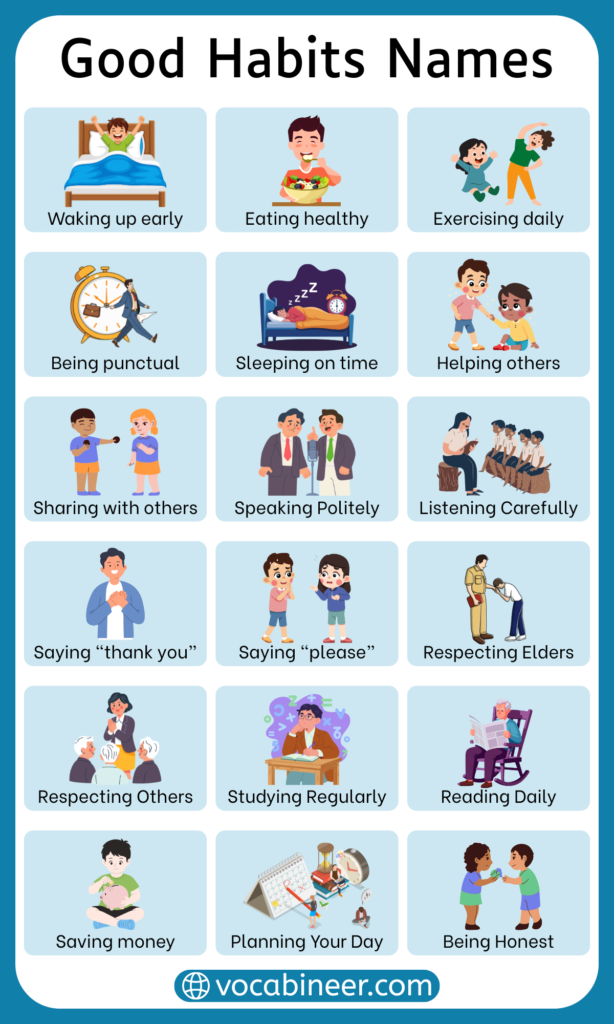
Good habits are positive actions and behaviors that people practice regularly to improve their health, character, relationships, and daily life. Developing good habits helps build discipline, confidence, and long-term success. Knowing good habits by name makes it easier to recognize them, teach them to children, and apply them consistently in everyday routines. This article presents a complete, structured, and name-based guide to good habits with clear explanations for practical understanding.
In This Page
Good Habits For Daily Life
Good habits for daily life are simple, positive actions practiced regularly that help people stay organized, healthy, disciplined, and emotionally balanced. These habits influence how a person starts the day, manages responsibilities, interacts with others, and maintains personal well-being. Practicing daily good habits consistently builds a strong routine and improves overall quality of life.
- Waking Up Early
Waking up early provides enough time to prepare for the day calmly, reduces stress, and improves time management for work or school. - Maintaining Personal Cleanliness
Keeping the body clean through bathing, grooming, and wearing clean clothes helps prevent illness and boosts confidence. - Brushing Teeth Twice a Day
This habit maintains oral hygiene, prevents cavities, and supports overall health. - Eating Meals on Time
Eating meals at regular times helps digestion, maintains energy levels, and supports a healthy metabolism. - Drinking Enough Water
Staying hydrated supports digestion, circulation, and concentration throughout the day. - Keeping Surroundings Clean
A clean home or workspace reduces stress, prevents the spread of germs, and improves focus. - Organizing Daily Tasks
Planning tasks for the day helps manage time effectively and reduces forgetfulness. - Being Punctual
Reaching places on time shows discipline, responsibility, and respect for others. - Speaking Politely
Using polite language builds positive relationships and reflects good character. - Helping Others
Helping family members, friends, or colleagues encourages kindness and cooperation. - Limiting Screen Time
Reducing unnecessary screen use protects eye health, improves sleep, and increases productivity. - Taking Short Breaks
Short breaks during work or study prevent fatigue and improve concentration. - Sleeping on Time
Going to bed on time allows the body and mind to rest properly, improving memory and mood.
Good Habits For Personal Hygiene
Hygiene habits protect the body from germs and diseases while promoting overall well-being. These habits are essential for people of all ages.
- Washing Hands Regularly – Prevents the spread of germs, especially before eating and after using the restroom.
- Cutting Nails Regularly – Maintains cleanliness and prevents infections.
- Covering Mouth While Sneezing – Reduces the spread of airborne illnesses.
- Using a Handkerchief or Tissue – Shows cleanliness and social responsibility.
- Keeping Hair Clean and Neat – Supports scalp health and personal grooming.
Good Habits For Health And Fitness
Health-related habits strengthen the body and mind. Practicing these habits regularly leads to long-term physical and mental wellness.
- Eating a Balanced Diet – Provides essential nutrients for energy, growth, and immunity.
- Drinking Enough Water – Keeps the body hydrated and supports digestion and circulation.
- Exercising Daily – Improves strength, flexibility, and heart health.
- Getting Enough Sleep – Helps the body recover and supports brain function.
- Avoiding Junk Food – Reduces the risk of obesity and lifestyle diseases.
- Maintaining Proper Posture – Prevents back and neck problems over time.
Good Habits For Mental Health
Mental health habits support emotional stability, focus, and inner peace. These habits help manage stress and improve overall happiness.
- Practicing Gratitude – Encourages a positive outlook on life.
- Meditation or Deep Breathing – Calms the mind and reduces anxiety.
- Managing Stress Positively – Helps avoid emotional burnout.
- Thinking Before Reacting – Improves decision-making and emotional control.
- Taking Breaks When Needed – Prevents mental exhaustion and improves productivity.
Good Habits For Students
Student habits play a major role in academic success and personal development. These habits build discipline, focus, and responsibility.
- Studying Regularly – Improves understanding and reduces exam stress.
- Completing Homework on Time – Builds responsibility and consistency.
- Paying Attention in Class – Enhances learning and retention.
- Maintaining a Study Schedule – Helps manage time effectively.
- Asking Questions When Confused – Encourages active learning.
- Keeping School Supplies Organized – Saves time and improves focus.
Good Habits For Children
Children learn habits early, and positive habits shape their future behavior. Teaching these habits builds strong moral and social foundations.
- Saying Please and Thank You – Teaches politeness and respect.
- Sharing with Others – Encourages kindness and teamwork.
- Listening to Elders – Builds respect and discipline.
- Following a Routine – Helps children feel secure and organized.
- Putting Toys Away After Use – Teaches responsibility and cleanliness.
Good Habits For Adults
Adult habits influence family life, work performance, and social relationships. These habits help maintain balance and responsibility.
- Managing Time Effectively – Balances work and personal life.
- Maintaining Work-Life Balance – Prevents burnout and stress.
- Saving Money Regularly – Builds financial security.
- Keeping Promises – Builds trust and reliability.
- Practicing Patience – Improves relationships and emotional control.
Good Habits At Home
Home habits create a peaceful and supportive living environment. These habits strengthen family bonds and household harmony.
- Helping with Household Chores – Builds teamwork and responsibility.
- Respecting Family Members – Encourages understanding and cooperation.
- Speaking Politely at Home – Creates a positive atmosphere.
- Eating Meals Together – Strengthens family relationships.
- Turning Off Lights When Not in Use – Saves energy and reduces bills.
Good Habits At School
School habits help students behave responsibly and build strong character alongside academics.
- Being Punctual – Teaches time management and respect for others.
- Following School Rules – Maintains discipline and safety.
- Respecting Teachers and Classmates – Builds positive relationships.
- Keeping the Classroom Clean – Encourages shared responsibility.
- Participating in Activities – Develops confidence and social skills.
Good Habits At Work
Workplace habits improve productivity, professionalism, and teamwork. These habits contribute to career growth.
- Arriving on Time – Shows reliability and commitment.
- Completing Tasks Efficiently – Improves performance and trust.
- Communicating Clearly – Prevents misunderstandings.
- Respecting Colleagues – Builds teamwork and harmony.
- Maintaining Professional Behavior – Enhances workplace reputation.
Good Habits For Social Behavior
Social habits define how people interact with society. These habits promote kindness, respect, and cooperation.
- Helping Others – Builds empathy and compassion.
- Respecting Different Opinions – Encourages healthy discussions.
- Speaking Truthfully – Builds trust and integrity.
- Avoiding Gossip – Maintains positive relationships.
- Being Courteous in Public Places – Reflects good character.
Good Habits For Environmental Care
Environmental habits protect natural resources and promote sustainability.
- Reducing Waste – Helps protect the environment.
- Recycling Materials – Conserves natural resources.
- Saving Water – Prevents water scarcity.
- Using Eco-Friendly Products – Reduces pollution.
- Planting Trees – Improves air quality and biodiversity.
Long-Term Good Habits For Success
These habits support personal growth, career success, and lifelong improvement.
- Setting Clear Goals – Provides direction and motivation.
- Practicing Self-Discipline – Helps achieve long-term objectives.
- Learning New Skills – Encourages growth and adaptability.
- Reading Regularly – Expands knowledge and thinking ability.
- Self-Reflection – Helps identify strengths and areas for improvement.
Frequently Asked Questions About Good Habits
Good habits are positive actions or behaviors that people practice regularly. These habits help improve health, discipline, behavior, and overall quality of life.
Good habits support physical and mental wellbeing, improve time management, strengthen relationships, and help people succeed at school, work, and home.
Children develop good habits through guidance, repetition, routine, and by observing positive behavior from parents, teachers, and elders.
Yes, good habits can be developed or improved at any stage of life through consistent practice and conscious effort.
Building a good habit usually takes several weeks of regular practice, depending on the habit and personal commitment.
Conclusion
Good habits are the foundation of a healthy, disciplined, and successful life. From daily routines and hygiene to mental health, education, work, and social behavior, each good habit contributes to personal growth and societal well-being. Learning and practicing good habits by name makes them easier to understand, teach, and apply consistently. By adopting positive habits early and maintaining them throughout life, individuals can create a balanced lifestyle and achieve long-term happiness and success.
Read More