

Text slangs are informal words and short expressions commonly used in text messages and chats to keep communication quick and natural. These slangs appear often in daily conversations, especially in private messages and group chats, where short replies are preferred. They help express tone, emotion, and intent without using long sentences.
Learning text slangs with meanings helps readers understand messages clearly and avoid confusion while reading casual conversations. It also makes it easier to follow chats, respond appropriately, and recognize how different expressions are used in everyday texting.
In This Page
What are Text Slangs?
Text slangs are informal words, shortened forms, or casual expressions used mainly in text messages and chat-based communication. They are created to replace longer phrases and help people communicate quickly in casual conversations. Text slangs rely on shared understanding and context rather than strict grammar rules. These slangs are commonly used in private messages, group chats, and messaging apps where fast replies are expected. While they make conversations quicker and more expressive, text slangs are generally avoided in formal or professional writing.
Text slangs are used to make messaging faster and easier. They reduce the need to type long sentences and help people reply quickly during conversations. In chats where responses are frequent, short forms keep communication smooth and uninterrupted. Text slangs are also used to express tone, emotion, or reactions in a simple way. They help messages sound more natural and casual, which suits friendly and informal communication settings.
Common Text Slangs
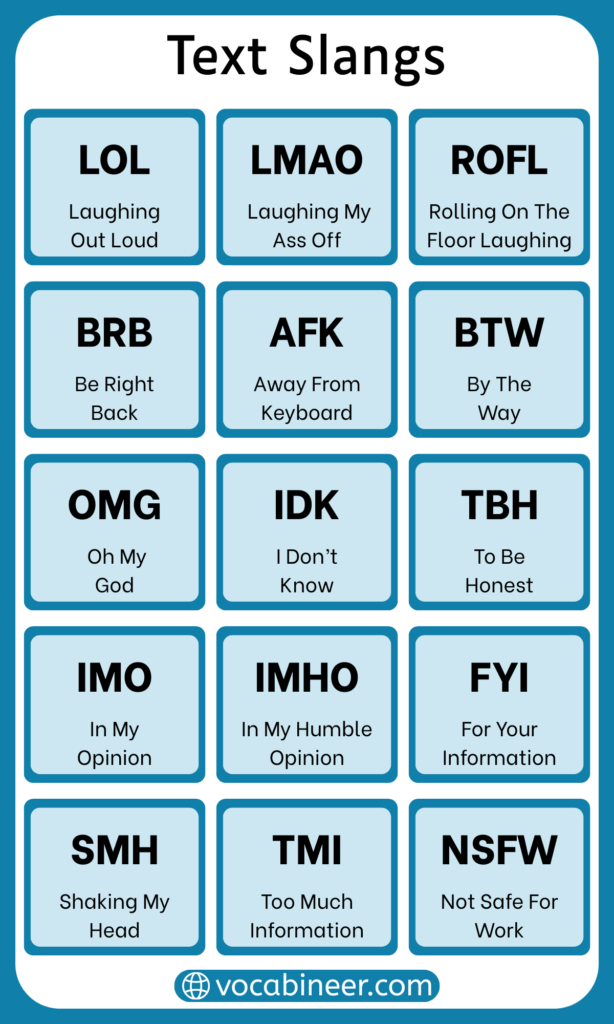
Common text slangs are short, informal expressions frequently used in text messages and online chats. These slangs help people communicate quickly and express tone without typing full words or sentences. They are widely understood and appear often in everyday digital conversations.
- LOL: Laughing out loud
- BRB: Be right back
- IDK: I don’t know
- BTW: By the way
- OMG: Oh my God
- TBH: To be honest
- FYI: For your information
- ASAP: As soon as possible
- NVM: Never mind
- TTYL: Talk to you later
- BFF: Best friends forever
- AFK: Away from keyboard
- DM: Direct message
- FOMO: Fear of missing out
- ICYMI: In case you missed it
- TLDR: Too long didn’t read
- JK: Just kidding
- RN: Right now
- IDC: I don’t care
- IKR: I know, right
Text Slangs Used in Daily Messaging
Daily messaging often involves quick exchanges where speed and tone matter. Text slangs used here help shorten responses and make conversations feel relaxed. They are common in routine chats, reminders, and short replies exchanged throughout the day.
- WYD: What are you doing
- HBU: How about you
- LMK: Let me know
- IDTS: I don’t think so
- ATM: At the moment
- IMY: I miss you
- SUP: What’s up
- HRU: How are you
- MSG: Message
- TXT: Text
- ASAP: As soon as possible
- RN: Right now
- TBH: To be honest
- JK: Just kidding
- NP: No problem
- TY: Thank you
- YW: You’re welcome
- BRB: Be right back
- GTG: Got to go
- OMW: On my way
Slangs Used in Casual Chats
Casual chats are informal conversations where relaxed language is expected. Slangs used in these chats help keep messages friendly and natural. They are often shared between people who know each other well and prefer simple, informal communication.
- LMAO: Laughing hard
- ROFL: Rolling on the floor laughing
- BRUH: Disbelief or surprise
- YIKES: Awkward reaction
- OOF: Reaction to pain or loss
- RIP: Joking failure reference
- DEAD: Laughing too hard
- MOOD: Relatable feeling
- SAME: Agreement
- FR: For real
- BET: Agreement
- LOWKEY: Slightly or quietly
- HIGHKEY: Strongly
- IDC: I don’t care
- TBH: To be honest
- NGL: Not gonna lie
- IKR: I know, right
- JK: Just kidding
- SMH: Shaking my head
Slangs Commonly Used by Teens
Teen communication often includes slangs influenced by trends, social media, and peer culture. These slangs change quickly and are used to express identity, emotion, or humor. They are especially common in chats among friends and classmates.
- AF: Very or extremely
- SUS: Suspicious
- BET: Yes or okay
- LOWKEY: Mildly
- HIGHKEY: Openly
- FR: For real
- NGL: Not gonna lie
- IKR: I know, right
- IDC: I don’t care
- JK: Just kidding
- TMI: Too much information
- RIP: Joke failure
- OOF: Discomfort reaction
- GRWM: Get ready with me
- POV: Point of view
- RN: Right now
- ATM: At the moment
- ASAP: As soon as possible
- LMK: Let me know
- GTG: Got to go
Slangs Used in Friend Conversations
Friend conversations usually involve a relaxed tone and shared understanding. Slangs used here help express familiarity, emotions, and quick reactions. These forms make conversations feel more personal and less formal than standard written language.
- BESTIE: Very close friend
- FAM: Friends treated like family
- IMY: I miss you
- ILY: I love you
- ILYSM: I love you so much
- SUP: What’s up
- WYD: What are you doing
- LMK: Let me know
- GTG: Got to go
- OMW: On my way
- RN: Right now
- ATM: At the moment
- TBH: To be honest
- IDC: I don’t care
- IKR: I know, right
- LOL: Laughing out loud
- SAME: Agreement
- BRUH: Surprise or disbelief
- BET: Agreement
- JK: Just kidding
Slangs for Quick Replies
Quick reply slangs are used when short responses are enough to acknowledge a message. These slangs save time and effort, especially during busy conversations. They are often used to confirm, agree, or respond briefly without detailed explanation.
- K: Okay
- OK: Okay
- OKAY: Agreement
- YEP: Yes
- NAH: No
- YEAH: Yes
- SURE: Agreement
- BET: Yes or agreed
- COOL: Approval
- NP: No problem
- TY: Thank you
- YW: You’re welcome
- IDC: I don’t care
- IKR: I know, right
- FR: For real
- TBH: To be honest
- RN: Right now
- ASAP: As soon as possible
- GTG: Got to go
- BRB: Be right back
Slangs for Reactions and Emotions
Many text slangs are used to show feelings, moods, or reactions. Since text messages lack facial expressions, these slangs help convey emotions clearly. They are commonly used to show excitement, surprise, laughter, or disappointment.
- LOL: Laughing out loud
- LMAO: Laughing hard
- ROFL: Rolling on the floor laughing
- OMG: Oh my God
- WTF: Strong surprise or confusion
- SMH: Shaking my head
- OOF: Reaction to pain or loss
- RIP: Joking failure
- DEAD: Laughing too hard
- MOOD: Relatable feeling
- YIKES: Awkward reaction
- BRUH: Disbelief
- CRYING: Strong emotional reaction
- SHOOK: Shocked
- WOW: Surprise
- I CAN’T: Overwhelmed reaction
- HELP: Used jokingly
- FR: For real
- SAME: Agreement
- TBH: To be honest
Slangs for Opinions and Responses
Opinion-based slangs help people share agreement, disagreement, or personal views in a short form. These slangs are often used in discussions, comments, and replies where users want to express a stance without writing full sentences.
- IMO: In my opinion
- IMHO: In my humble opinion
- TBH: To be honest
- FR: For real
- NGL: Not gonna lie
- IDC: I don’t care
- IKR: I know, right
- BET: Agreement
- SAME: Agreement
- FACTS: Strong agreement
- VALID: Acceptable opinion
- NAH: Disagreement
- YEAH: Agreement
- OKAY: Acceptance
- COOL: Approval
Slangs Common in Group Chats
Group chats move fast and include multiple participants at once. Slangs help users respond quickly and keep messages short. They are useful for maintaining flow and ensuring messages are easy to read in busy conversations.
- ALL: Everyone
- EVERYONE: Group reference
- BRB: Be right back
- GTG: Got to go
- OMW: On my way
- LMK: Let me know
- ASAP: As soon as possible
- BTW: By the way
- FYI: For your information
- RN: Right now
- ATM: At the moment
- LOL: Laughing out loud
- TBH: To be honest
- IDC: I don’t care
- IKR: I know, right
- SAME: Agreement
- BET: Agreement
- OK: Okay
- COOL: Approval
- NP: No problem
Slangs Used on WhatsApp and Messenger
WhatsApp and Messenger conversations often mix personal and group messaging. Slangs used on these platforms focus on speed and clarity. They are commonly used in daily chats, family groups, and friend conversations.
- SEEN: Message has been read
- DELIVERED: Message has reached the receiver
- TYPING: Someone is writing a message
- FORWARDED: Message shared from another chat
- VC: Voice call
- CALL: Audio call
- MISSED: Missed call
- STATUS: Temporary profile update
- DP: Display picture
- ONLINE: Active on the app
- OFFLINE: Not active
- BRB: Be right back
- GTG: Got to go
- LMK: Let me know
- RN: Right now
- ASAP: As soon as possible
- BTW: By the way
- TBH: To be honest
- IDC: I don’t care
- IKR: I know, right
Slangs Used in Social Media Messages
Social media messages often reflect platform culture and trends. Slangs used here are influenced by online behavior and shared digital habits. They are common in direct messages, comment replies, and informal online interactions.
- DM: Direct message
- PM: Private message
- REQUEST: Message waiting for approval
- ACCEPTED: Message request approved
- DECLINED: Message request rejected
- REACTED: Emoji response sent
- PINNED: Message fixed at top
- UNSENT: Message removed
- BLOCKED: User restricted
- MUTED: Notifications silenced
- SPAM: Unwanted messages
- TBH: To be honest
- IDC: I don’t care
- IKR: I know, right
- LOL: Laughing out loud
- RN: Right now
- ASAP: As soon as possible
- FYI: For your information
- BTW: By the way
- SEEN: Message read
Older Text Slangs Still Used Today
Some text slangs have been around for many years and are still commonly used. These older slangs remain popular because they are simple and widely understood. They continue to appear in modern conversations despite newer terms emerging.
- LOL: Laughing out loud
- BRB: Be right back
- TTYL: Talk to you later
- OMG: Oh my God
- IDK: I don’t know
- BTW: By the way
- FYI: For your information
- JK: Just kidding
- ASL: Age, sex, location
- GTG: Got to go
- NP: No problem
- TY: Thank you
- YW: You’re welcome
- CU: See you
- AFK: Away from keyboard
Confusing Text Slangs
Certain text slangs can be confusing because they have multiple meanings or unclear usage. Misunderstanding these slangs can lead to confusion in conversations. Learning their correct meaning helps avoid misinterpretation.
- RN: Right now
- ATM: At the moment
- AF: Very or extremely
- IDC: I don’t care
- IKR: I know, right
- TBH: To be honest
- FR: For real
- BET: Agreement
- SUS: Suspicious
- OOF: Reaction to discomfort
- RIP: Joking failure
- LOWKEY: Mildly
- HIGHKEY: Strongly
- SAME: Agreement
- DEAD: Laughing too hard
Text Slangs Used Worldwide
Some text slangs are recognized and used across different countries. These slangs help people communicate online even when they speak different native languages. Their widespread use makes them common in global digital conversations.
- LOL: Laughing out loud
- OMG: Oh my God
- IDK: I don’t know
- BRB: Be right back
- ASAP: As soon as possible
- FYI: For your information
- TBH: To be honest
- BTW: By the way
- RN: Right now
- GTG: Got to go
- OMW: On my way
- NP: No problem
- TY: Thank you
- YW: You’re welcome
- TTYL: Talk to you later
Text Slangs vs Formal English
Text slangs and formal English are used in very different communication settings. In casual messages, text slangs are common because speed and tone matter more than structure. Formal English, on the other hand, is used in professional, academic, and official writing. Knowing the difference helps readers choose the right language style and avoid confusion in different situations.
| Aspect | Text Slangs | Formal English |
|---|---|---|
| Language style | Informal and casual | Formal and structured |
| Purpose | Quick communication | Clear and complete communication |
| Sentence length | Very short or abbreviated | Full sentences |
| Common use | Text messages and chats | Emails, documents, academic writing |
| Tone | Relaxed and friendly | Polite and professional |
| Grammar rules | Often ignored | Strictly followed |
| Example expression | BRB | I will be back shortly |
| Example expression | IDK | I do not know |
| Example expression | LOL | That is funny |
| Suitable for work use | Usually no | Yes |
When to Use Text Slangs?
Text slangs are best used in private messages, group chats, and informal online conversations. They help keep communication quick and relaxed. Text slangs should not be used in formal emails, official documents, or professional communication where clarity and proper tone are required.
FAQs About Text Slangs
Text slangs are informal words or short expressions used mainly in text messages and chats to communicate quickly.
They save time, reduce typing effort, and help express tone or emotion in casual conversations.
Text slangs are a part of internet slangs, but they focus more on private messaging and chat-based communication.
Text slangs should usually be avoided in professional or formal messages unless the context allows informal language.
Yes, text slangs change as messaging habits evolve and new platforms become popular.
Conclusion
Text slangs play an important role in everyday messaging and chat-based communication. They help people share thoughts, reactions, and information quickly while keeping conversations casual and natural. Because these expressions are short and widely understood, they fit well in fast-moving text exchanges.
Understanding common text slangs allows readers to follow conversations without confusion and respond more comfortably in casual chats. As messaging habits continue to change, knowing these slangs helps people communicate clearly and choose the right language for informal situations.
Read More
