

Electric wires are metal conductors that carry electricity from one place to another. They usually have an insulating coating, so they can carry current safely without touching other wires or surfaces. At the same time, electric wires come in different types and names because different jobs need different protection, flexibility, and location ratings.
Types of electric wires are the common wire and cable names used to carry power and signals in homes, buildings, and low-voltage systems. These wire types include NM-B, UF-B, THHN, THWN-2, MC cable, and other names that differ by location, insulation, and use.
In this post, you will learn electric wire names in a clear order with simple uses and examples. It covers wire vs cable, wire types by installation area, common building wire names, solid vs stranded wire, copper vs aluminum wire, and low-voltage wires, so the topic is easier to recognize, compare, and remember.
In This Page
Main Types of Electric Wires Used in Homes
Homes commonly use a few main wire and cable families. While the exact choice depends on where the wiring runs, these names show up most often in home wiring products.
- NM-B cable: Indoor home cable used in dry areas like walls and ceilings.
- UF-B cable: Tough outdoor cable used in wet areas and underground runs.
- THHN wire: Single insulated conductor often pulled through conduit in dry locations.
- THWN-2 wire: Single insulated conductor made for conduit use in wet or damp areas.
- XHHW-2 wire: Heavy-duty insulated conductor used in conduit, often chosen for tougher conditions.
- MC cable: Metal-clad cable with a protective metal jacket for added protection.
- AC cable: Armored cable with metal protection, commonly used for some indoor runs.
- SER cable: Service entrance cable used for feeders and service-related runs in homes.
- SEU cable: Service entrance cable often used for specific service and feeder needs.
- USE-2 cable: Underground service cable used for outdoor and underground power runs.
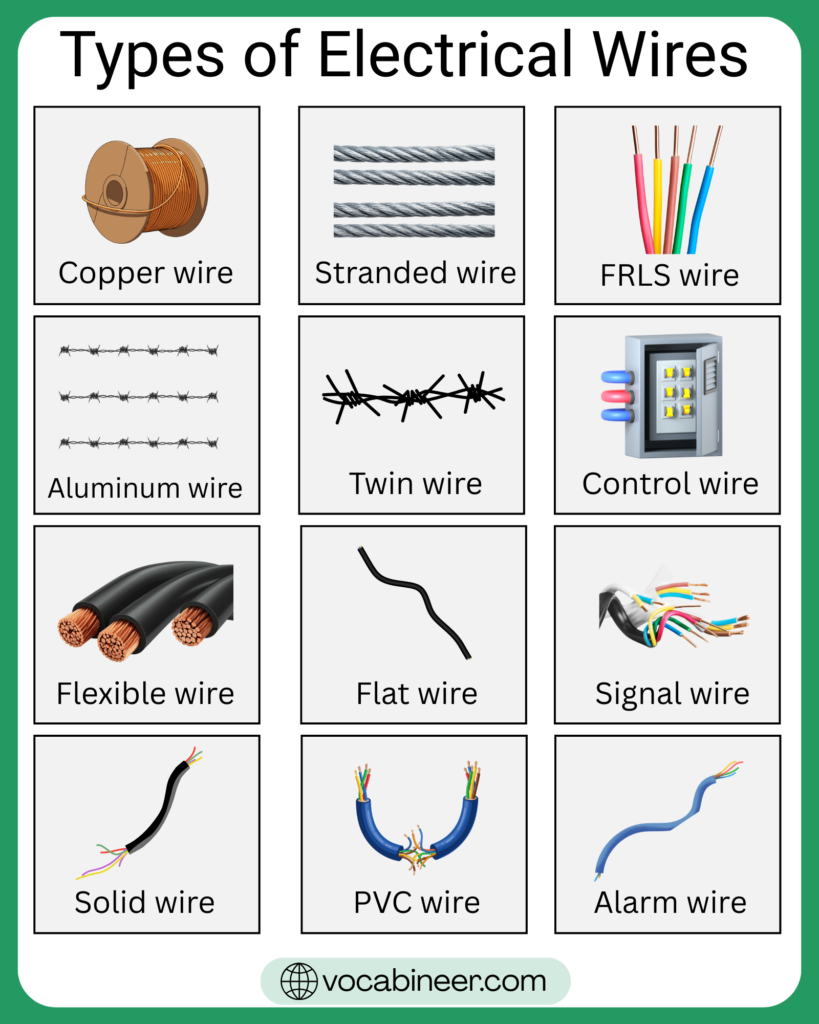
Types of Electric Wire by Installation Area
Electric wire types often depend on where the wiring runs. For example, dry indoor spaces usually use different cable types than wet outdoor areas. In addition, conduit wiring often uses single conductors, while wall wiring often uses bundled cable. Because of that, this section groups common wire names by installation area.
Inside Walls and Ceilings (Dry Areas)
- NM-B cable: The most common indoor residential cable for dry locations inside walls and ceilings.
- AC cable: Armored cable often used indoors when you want extra physical protection.
- MC cable: Metal-clad cable used indoors for added protection and cleaner routing in some builds.
- Solid copper wire: A common conductor style for indoor circuits because it holds shape and connects neatly.
Conduit Wiring
- THHN wire: A common single conductor pulled through conduit in many dry indoor conduit runs.
- THWN-2 wire: A conduit wire option that can handle damp or wet locations, so it fits many conduit setups.
- XHHW-2 wire: A tougher insulated conductor used in conduit when you want stronger insulation performance.
- Stranded copper wire: A flexible conductor that pulls through conduit more easily, especially on longer runs.
Outdoor and Wet Areas
- UF-B cable: A durable cable made for outdoor use and wet locations, so it suits exposed and damp areas better.
- THWN-2 wire: A common choice for conduit in wet locations because it is rated for wet use.
- XHHW-2 wire: Another wet-location conduit option that offers durable insulation in tougher conditions.
- USE-2 cable: A cable designed for outdoor service and underground use, so it fits exterior power runs.
Underground Wiring
- UF-B cable: Often used for underground feeder runs because it is built to handle moisture exposure.
- USE-2 cable: A common underground service cable used for outdoor and buried power applications.
- Direct burial cable: A general term for cable types rated to go underground without needing conduit in some setups.
Common Building Wire and Cable Names
These are the most common product names people see on electrical wire packages. Because the labels use short codes, each name below includes a simple meaning and the most typical use.
NM-B (Nonmetallic-Sheathed) Cable
- NM-B cable: A plastic-jacket home cable used inside walls and ceilings in dry areas for many standard circuits.
- Romex (common nickname): A common everyday name people use for NM-style home cable, especially in residential work.
UF-B (Underground Feeder) Cable
- UF-B cable: A tough plastic-jacket cable made for outdoor, wet, and underground feeder runs.
- Direct burial UF cable: A common term used for UF-type cable because it can be used for buried runs in many cases.
THHN / THWN-2 Building Wire
- THHN wire: A single insulated conductor often used in conduit for many dry indoor runs.
- THWN-2 wire: A single insulated conductor used in conduit that also suits wet or damp locations, so it fits more outdoor conduit work.
XHHW / XHHW-2 Building Wire
- XHHW wire: A single insulated conductor used in conduit when you want tougher insulation and stronger performance.
- XHHW-2 wire: A newer common version that works for wet locations too, so it suits many outdoor conduit runs.
MC (Metal-Clad) Cable
- MC cable: A cable with a metal outer jacket that adds protection, so it works well where the cable may face bumps or rough contact.
- MC cable with ground: A common MC type that includes a grounding conductor for safer circuit grounding.
AC (Armored) Cable
- AC cable: An armored cable with metal protection used for some indoor wiring needs, especially when extra protection matters.
- BX (common nickname): A name people often use for armored cable, although product labels may vary by type and brand.
SER / SEU Service Entrance Cable
- SER cable: A service entrance cable often used for feeder runs from a panel to another panel or large load area.
- SEU cable: A service entrance cable commonly used for specific service or feeder needs where a neutral conductor is included.
USE-2 (Underground Service Entrance) Cable
- USE-2 cable: An outdoor cable used for underground service and feeder runs, especially for buried power lines to buildings.
- Underground service cable: A simple name people use for USE-type cable because it supports buried exterior power runs.
Types of Wire by Conductor Style
Conductor style means how the metal inside the wire is built. One type uses one solid piece, while the other uses many thin strands. Because this affects flexibility and handling, it also affects which wire people choose for different jobs.
Solid Wire
- Solid wire: A wire made from one solid metal conductor, so it holds its shape and bends into place more easily.
- Solid copper wire: A common solid option used in many home circuits because it connects firmly at outlets and switches.
- Solid building wire: Often used where the wire needs to stay in position, especially in many basic indoor runs.
Stranded Wire
- Stranded wire: A wire made from many small strands twisted together, so it bends more easily and feels more flexible.
- Stranded copper wire: Often used for conduit pulls because it moves through bends and longer runs more smoothly.
- Stranded appliance wire: Often used inside devices and flexible cords because it handles movement better.
Types of Wire by Metal
Wire metal affects conductivity, cost, and weight. Copper is the most common choice for many circuits, while aluminum is used in some larger runs because it costs less and weighs less. However, each metal has its own handling and connection needs.
Copper Wire
- Copper wire: A common wire type with strong conductivity, so it carries current efficiently in many home circuits.
- Bare copper ground wire: A copper grounding wire used for safety grounding in many wiring systems.
- Tinned copper wire: Copper wire with a coated surface that helps resist corrosion in some settings.
Aluminum Wire
- Aluminum wire: A lighter, lower-cost conductor often used for larger feeders and service runs.
- Aluminum service wire: Used for some main power runs because it reduces cost on long, heavy-gauge wiring.
- Aluminum building wire: Used in certain circuits when fittings and connections match aluminum requirements.
Common Low-Voltage Wires
Low-voltage wires carry smaller signals and lower power than standard home power wiring. Because of that, they are used for internet, TV, sound systems, doorbells, and smart home controls. In addition, these wire names appear often in home wiring, so learning them supports clearer everyday vocabulary.
Ethernet (Network) Cable
- Ethernet cable: A network cable used for internet connections between routers, computers, and switches.
- Cat5e cable: A common home ethernet type used for stable internet and basic network needs.
- Cat6 cable: A faster ethernet option often used for stronger home networks and longer performance needs.
Coaxial Cable
- Coaxial cable: A cable used for TV signals, internet connections in some setups, and antenna lines.
- RG6 coax cable: A common coax type used for TV and broadband connections in many homes.
- RG59 coax cable: A coax type often used for shorter runs or older video setups.
Speaker Wire
- Speaker wire: A low-voltage wire used to connect speakers to amplifiers or home audio systems.
- Two-conductor speaker wire: A common speaker wire style with two side-by-side conductors for left/right audio runs.
- In-wall speaker wire: Speaker wire rated for running inside walls for cleaner home theater setups.
Doorbell Wire
- Doorbell wire: A low-voltage wire used for doorbells, chimes, and some basic controls.
- Two-wire doorbell cable: A simple doorbell wire type used for basic doorbell connections.
- Doorbell transformer wire: A short low-voltage wiring run used near doorbell transformers and chimes.
Thermostat Wire
- Thermostat wire: A low-voltage control wire used between thermostats and heating or cooling systems.
- 18/2 thermostat wire: A two-conductor thermostat cable used for simpler control setups.
- 18/5 thermostat wire: A multi-conductor thermostat cable used for more complex HVAC controls.
Fiber Optic Cable
- Fiber optic cable: A data cable that carries signals through light instead of metal, so it supports very fast internet connections.
- Single-mode fiber: A fiber type used for longer-distance connections and high-speed links.
- Multi-mode fiber: A fiber type used for shorter-distance links inside buildings and campuses.
Electric Wire Names List
This is a quick scan list of common electric wire and cable names. Use it to recognize labels and remember the main names.
- NM-B cable
- UF-B cable
- THHN wire
- THWN-2 wire
- XHHW wire
- XHHW-2 wire
- MC cable
- AC cable
- SER cable
- SEU cable
- USE-2 cable
- Solid wire
- Stranded wire
- Copper wire
- Aluminum wire
- Ethernet cable
- Coaxial cable
- Speaker wire
- Doorbell wire
- Thermostat wire
- Fiber optic cable
THHN vs THWN-2 vs XHHW-2
These wire names look similar, but they usually differ in where they work best. In simple terms, THHN is common for dry conduit runs, THWN-2 works well for wet locations, and XHHW-2 offers tougher insulation while also working in wet areas. However, you should always check the wire’s printed rating and your local rules for the exact use.
| Wire Type | Common Use | Wet Location Use | Key Point |
|---|---|---|---|
| THHN | Conduit wiring in many indoor runs | Not the main wet rating | Often chosen for dry conduit work |
| THWN-2 | Conduit wiring indoors and outdoors | Yes | A common choice for damp or wet conduit areas |
| XHHW-2 | Conduit wiring with tougher insulation | Yes | More rugged insulation option for tougher conditions |
NM-B vs UF-B vs MC Cable
These cable names are common in homes, but they fit different locations. NM-B is mainly for dry indoor walls, UF-B is for outdoor and underground use, and MC adds metal protection for areas where the cable needs extra guarding.
| Cable Type | Common Use | Best Location | Key Point |
|---|---|---|---|
| NM-B | Standard home circuits | Dry indoor areas | Common indoor residential cable |
| UF-B | Outdoor and feeder runs | Wet/outdoor/underground | Built for moisture exposure |
| MC | Protected wiring runs | Areas needing protection | Metal jacket adds protection |
FAQs About Types of Electric Wires
Common home wiring includes NM-B cable for dry indoor walls, THHN/THWN-2 wires for conduit, and UF-B cable for outdoor or underground runs.
Wire usually means one conductor, while cable includes two or more insulated conductors inside one outer jacket.
THHN, THWN-2, and XHHW-2 are commonly used as conduit wires because they are single conductors made for pulling through conduit.
UF-B cable is used for outdoor and underground feeder runs because it is built to handle moisture and wet locations.
Solid wire holds shape and connects neatly, while stranded wire bends more easily and pulls through conduit more smoothly.
Conclusion
Types of electric wires become easier to understand when you group them by location, common product names, conductor style, and metal type. Because each wire type fits a different area, the right choice supports safer wiring, cleaner routing, and clearer label reading.
At the same time, learning electric wire names helps with everyday vocabulary, especially when you shop for wiring, read packaging, and compare common names like NM-B, UF-B, THHN, and MC.
Read More
