Pens are common writing tools used in schools, offices, homes, and creative workspaces. Over time, people have developed different types of pens to match specific writing tasks, styles, and preferences. Some pens suit everyday writing, while others work better for drawing, marking, or decorative lettering. Learning about different types of pens helps you recognize their names easily and choose the right pen for each purpose.
In This Page
Common Types Of Pens Used For Writing
These pens are commonly used for regular writing in classrooms and offices. They are comfortable to hold and suitable for long writing sessions.
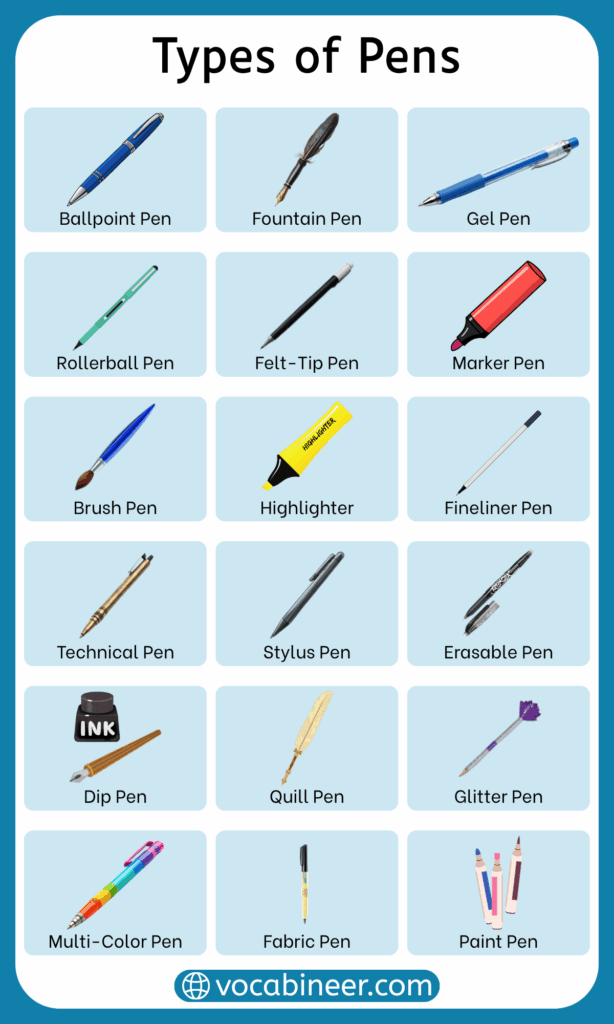
Ballpoint Pen
Ballpoint pens are the most widely used pens. They use oil-based ink that dries quickly and lasts long, making them reliable for everyday writing.
Gel Pen
Gel pens use water-based gel ink that flows smoothly. They produce dark, clear lines and are popular for neat handwriting and colorful notes.
Rollerball Pen
Rollerball pens use liquid ink that moves easily across paper. They create smoother and bolder lines than ballpoint pens.
Fountain Pen
Fountain pens use liquid ink stored in a cartridge or converter. They offer smooth ink flow and help improve writing control.
Retractable Pen
Retractable pens have a click mechanism that extends and retracts the tip. They are easy to use and do not require a cap.
Stick Pen
Stick pens have a simple straight body design. They are lightweight and commonly used in schools and offices.
Cap Pen
Cap pens come with a removable cap that covers the tip. They help prevent ink drying and accidental marks.
Pens Used For Drawing And Detailed Writing
These pens are designed for precision, clean lines, and controlled writing or drawing.
Fineliner Pen
Fineliner pens have thin, firm tips that allow precise writing. They are often used for notes, diagrams, and outlining.
Technical Pen
Technical pens produce consistent line width. They are commonly used for drafting, engineering, and technical drawings.
Needle Tip Pen
Needle tip pens have very fine tips for detailed writing. They are useful for small text and intricate designs.
Micro Tip Pen
Micro tip pens create extremely thin lines. They are often used for labeling, sketches, and detailed illustrations.
Felt Tip Pen
Felt tip pens have soft tips that create smooth and visible strokes. They are often used in classrooms and art activities.
Pens Used For Bold Writing And Display
These pens create thick or highly visible lines and are commonly used for boards or posters.
Marker Pen
Marker pens have broad tips designed for bold writing. They are often used on whiteboards, charts, and posters.
Permanent Marker Pen
Permanent marker pens use ink that does not wash away easily. They are used for labeling surfaces and long-lasting marks.
Whiteboard Marker Pen
Whiteboard marker pens are designed for dry-erase boards. They write clearly and can be wiped off easily.
Highlighter Pen
Highlighter pens use bright ink to mark important text. They help emphasize key points in books and notes.
Decorative And Artistic Pens
These pens are mainly used for creative writing styles and decorative lettering.
Calligraphy Pen
Calligraphy pens are made for decorative writing. They use special nibs that create thick and thin strokes.
Brush Pen
Brush pens have flexible tips that respond to pressure. They are commonly used for lettering, art, and calligraphy.
Glitter Pen
Glitter pens contain sparkling ink. They are often used for decorative writing and creative projects.
Metallic Pen
Metallic pens produce shiny ink. They are commonly used for art, cards, and decorative writing.
Pens Based On Ink And Design
These pens are grouped by how they store ink or how they are designed for use.
Cartridge Pen
Cartridge pens use replaceable ink cartridges. They are clean and easy to refill.
Refillable Pen
Refillable pens allow ink replacement, making them suitable for long-term use and reduced waste.
Disposable Pen
Disposable pens are designed for short-term use and are discarded once the ink finishes.
Erasable Pen
Erasable pens use special ink that can be erased. They are useful for schoolwork and practice writing.
Stylus Pen
Stylus pens are designed for touchscreen devices. Some combine digital use with traditional writing.
Ergonomic Grip Pen
Ergonomic grip pens reduce hand strain. They have soft or shaped grips for better comfort.
FAQs about Types of Pens
There is no fixed number because new pen designs keep appearing. However, the most recognized types of pens include ballpoint pens, gel pens, rollerball pens, fountain pens, fineliner pens, and marker pens, along with many subtypes based on ink and tip style.
Ballpoint pens, gel pens, fineliner pens, and erasable pens are most common in schools. These pens are easy to use, affordable, and suitable for daily writing tasks.
A ballpoint pen uses thick, oil-based ink and dries quickly. A gel pen uses gel-based ink, which looks darker and flows more smoothly on paper.
Fineliner pens, fountain pens with fine nibs, and fine-tip gel pens are often chosen for neat and controlled handwriting because they produce clean lines.
They are similar but not always the same. Felt tip pens usually have finer tips for writing, while marker pens often have thicker tips for bold writing and labeling.
Conclusion
Learning the names of different types of pens helps readers recognize them in classrooms, offices, stationery shops, and picture-based charts. From common ballpoint pens to specialized drawing and marker pens, each type has a clear identity. Knowing these pen names makes it easier to choose the right pen, understand labels, and talk about writing tools with confidence in everyday situations.
Read More