

Teeth help us bite, cut, tear, chew, and grind food. Each tooth has a different shape and place in the mouth, so it does a different job. Front teeth cut food, pointed teeth tear food, and back teeth crush and grind it.
This guide explains teeth names, types, functions, and pictures in simple words. You will learn about incisors, canines, premolars, molars, wisdom teeth, baby teeth, adult teeth, and other common teeth names used by age, position, shape, and function.
In This Page
Teeth Names and Functions Chart
| Tooth Type | Position | Number in Adults | Main Function |
|---|---|---|---|
| Incisors | Front of the mouth | 8 | Cutting and biting food |
| Canines | Beside the incisors | 4 | Tearing and holding food |
| Premolars | Between canines and molars | 8 | Crushing and chewing food |
| Molars | Back of the mouth | 12 | Grinding and chewing food |
Teeth Diagram with Names
A teeth diagram usually shows where each tooth type sits in the mouth. Incisors are at the front, canines are next to them, premolars sit behind the canines, and molars are at the back.
| Area of Mouth | Teeth Found There |
|---|---|
| Front Teeth | Incisors |
| Corner Teeth | Canines |
| Middle Back Teeth | Premolars |
| Back Teeth | Molars and Wisdom Teeth |
| Upper Jaw | Upper incisors, canines, premolars, and molars |
| Lower Jaw | Lower incisors, canines, premolars, and molars |
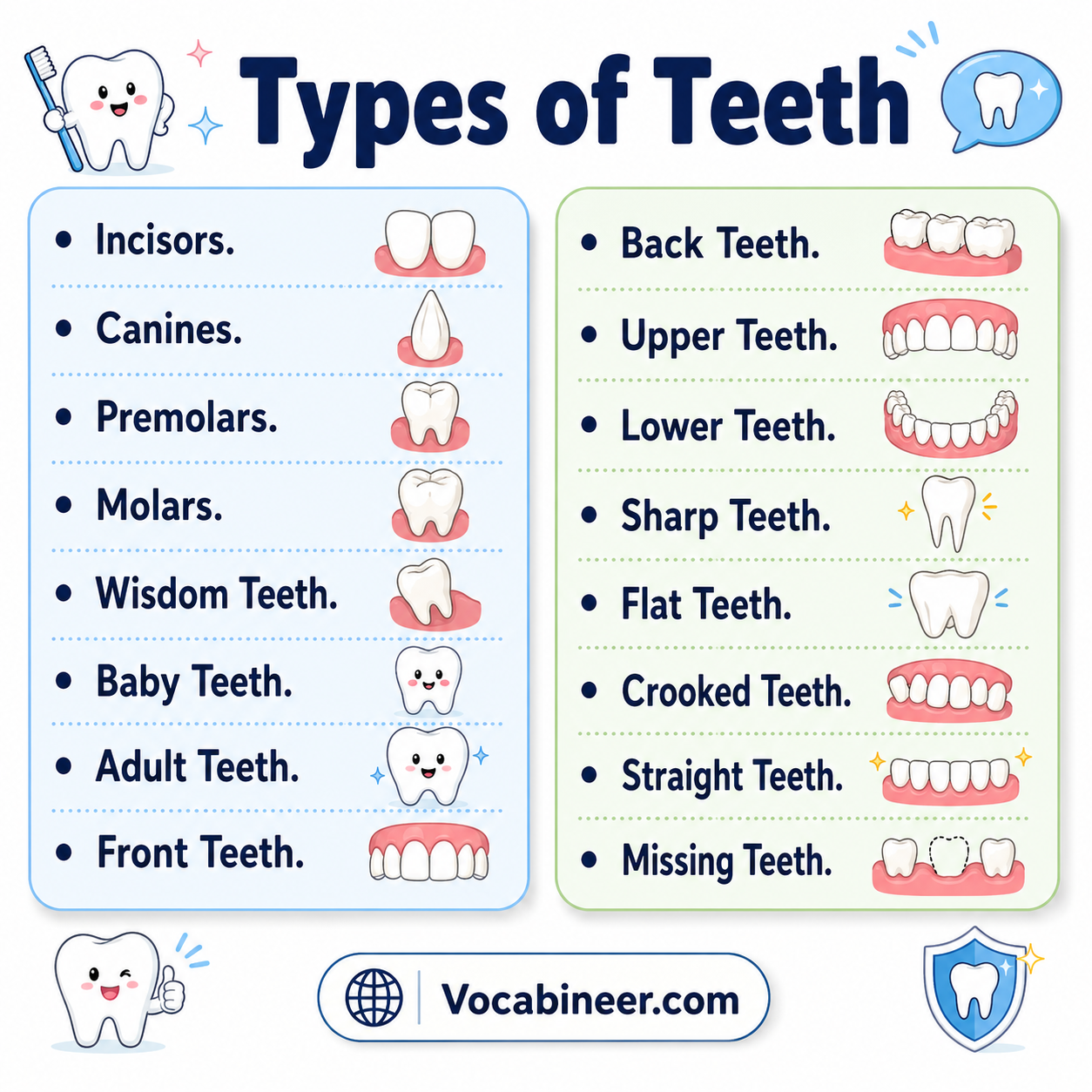
Incisors: Front Cutting Teeth
Incisors are the front teeth in the mouth. They are flat and sharp at the edge, which makes them useful for biting and cutting food into smaller pieces.
Central Incisors
Central incisors are the two front teeth in the middle of the upper jaw and the two front teeth in the middle of the lower jaw. They are usually the most visible teeth when a person smiles.
Lateral Incisors
Lateral incisors are placed beside the central incisors. They help cut food and support the natural shape of the smile.
Canines: Pointed Tearing Teeth
Canines are the pointed teeth next to the incisors. They are stronger and sharper than incisors, so they help tear food and guide the bite when the mouth closes.
Upper Canines
Upper canines are found on both sides of the upper incisors. They are often more pointed and help tear tougher foods.
Lower Canines
Lower canines are found on both sides of the lower incisors. They work with the upper canines to hold, tear, and guide food while chewing.
Premolars: Crushing and Chewing Teeth
Premolars are found between the canines and molars. They have a wider surface than front teeth and help crush food before it moves to the back teeth.
First Premolars
First premolars are located directly behind the canines. They help tear, crush, and begin the chewing process.
Second Premolars
Second premolars are located behind the first premolars. They have a broader surface and help break food into smaller pieces.
Molars: Back Grinding Teeth
Molars are the large back teeth used for heavy chewing and grinding. They have wide surfaces that help crush food before swallowing.
First Molars
First molars are the first large chewing teeth behind the premolars. They are very important for grinding food and keeping the bite balanced.
Second Molars
Second molars are located behind the first molars. They add more chewing power and help grind food into softer pieces.
Third Molars / Wisdom Teeth
Third molars are also called wisdom teeth. They are the last molars at the back of the mouth and often appear later than other adult teeth.
Other Common Teeth Names
People use different names for teeth based on age, position, shape, and function. These names are useful because they make teeth easier to understand in everyday language.
By Age
Baby Teeth
Baby teeth are the first set of teeth children get. They are smaller than adult teeth and later fall out as permanent teeth begin to grow.
Milk Teeth
Milk teeth are another name for baby teeth. Most children have 20 milk teeth before adult teeth replace them.
Primary Teeth
Primary teeth are the first teeth in children. They help children chew, speak, and hold space for permanent teeth.
Permanent Teeth
Permanent teeth are adult teeth that replace baby teeth. Most adults have 32 permanent teeth, including wisdom teeth.
Adult Teeth
Adult teeth are the permanent teeth that usually stay for life. They include incisors, canines, premolars, molars, and wisdom teeth.
By Position
Upper Teeth
Upper teeth are the teeth in the upper jaw. They work with the lower teeth for biting, chewing, and supporting the bite.
Lower Teeth
Lower teeth are the teeth in the lower jaw. They meet the upper teeth when the mouth closes.
Front Teeth
Front teeth are the teeth at the front of the mouth. They usually include incisors and sometimes canines.
Back Teeth
Back teeth are the teeth at the back of the mouth. They usually include premolars, molars, and wisdom teeth.
By Function or Shape
Cutting Teeth
Cutting teeth are another simple name for incisors. They help bite and cut food into smaller pieces.
Pointed Teeth
Pointed teeth are another simple name for canines. They help tear and hold food.
Chewing Teeth
Chewing teeth are used to break food into smaller pieces. Premolars and molars are the main chewing teeth.
Grinding Teeth
Grinding teeth are the large back teeth used for crushing and grinding food. Molars are the main grinding teeth.
Eye Teeth
Eye teeth are another name for the upper canines. They are called this because they sit below the eye area in the upper jaw.
Baby Teeth vs Adult Teeth
Baby teeth, also called milk teeth or primary teeth, are the first teeth children get. Adult teeth, also called permanent teeth, replace baby teeth over time.
| Type | Number of Teeth | Main Difference |
|---|---|---|
| Baby Teeth | 20 | Smaller first teeth in children |
| Adult Teeth | 32 | Larger permanent teeth in adults |
Baby teeth include incisors, canines, and molars. Children do not have premolars in their baby teeth set. Premolars appear only in the permanent adult teeth.
Tooth Anatomy: Main Parts of a Tooth
A tooth has different parts that work together. These parts protect the tooth, hold it in place, and support biting and chewing.
Crown
The crown is the visible part of the tooth above the gums. It is the part we use for biting and chewing.
Root
The root is the part of the tooth below the gums. It holds the tooth inside the jawbone.
Enamel
Enamel is the hard outer layer of the tooth. It protects the tooth from daily wear, chewing, and damage.
Dentin
Dentin is the layer under the enamel. It is softer than enamel and supports the tooth structure.
Pulp
The pulp is the inner part of the tooth. It contains nerves and blood vessels.
Functions of Teeth
Teeth help with eating, speaking, smiling, and supporting the natural shape of the face. Each type has a special role, but all teeth work together inside the mouth.
- Biting and Cutting: Incisors help bite into food and cut it into smaller pieces.
- Tearing: Canines help tear food and hold it in place while chewing.
- Crushing: Premolars help crush food before it reaches the molars.
- Grinding: Molars grind food into softer pieces for swallowing.
- Speaking: Teeth help the tongue and lips form clear sounds.
- Smile Shape: Teeth support the appearance of the smile.
- Face Support: Teeth help support the lips, cheeks, jaw, and lower face shape.
FAQs
The 4 main types of teeth are incisors, canines, premolars, and molars. Incisors cut food, canines tear food, premolars crush food, and molars grind food into smaller pieces.
Most adults have 32 permanent teeth, including wisdom teeth. These usually include 8 incisors, 4 canines, 8 premolars, and 12 molars.
Most children have 20 baby teeth, also called milk teeth or primary teeth. These teeth later fall out and are replaced by permanent adult teeth.
Wisdom teeth are the third molars at the very back of the mouth. They usually appear later than other adult teeth and may be removed if they cause pain, crowding, or dental problems.
Molars are used for grinding food. They are the large back teeth with wide surfaces, so they help chew and break food into smaller pieces before swallowing.
Summary
The main types of teeth are incisors, canines, premolars, and molars. Incisors cut food, canines tear food, premolars crush food, and molars grind food. Other common teeth names include wisdom teeth, baby teeth, milk teeth, primary teeth, permanent teeth, adult teeth, front teeth, back teeth, cutting teeth, pointed teeth, chewing teeth, grinding teeth, and eye teeth. Learning these names helps you understand tooth position, function, and basic dental structure in simple words.
Read More