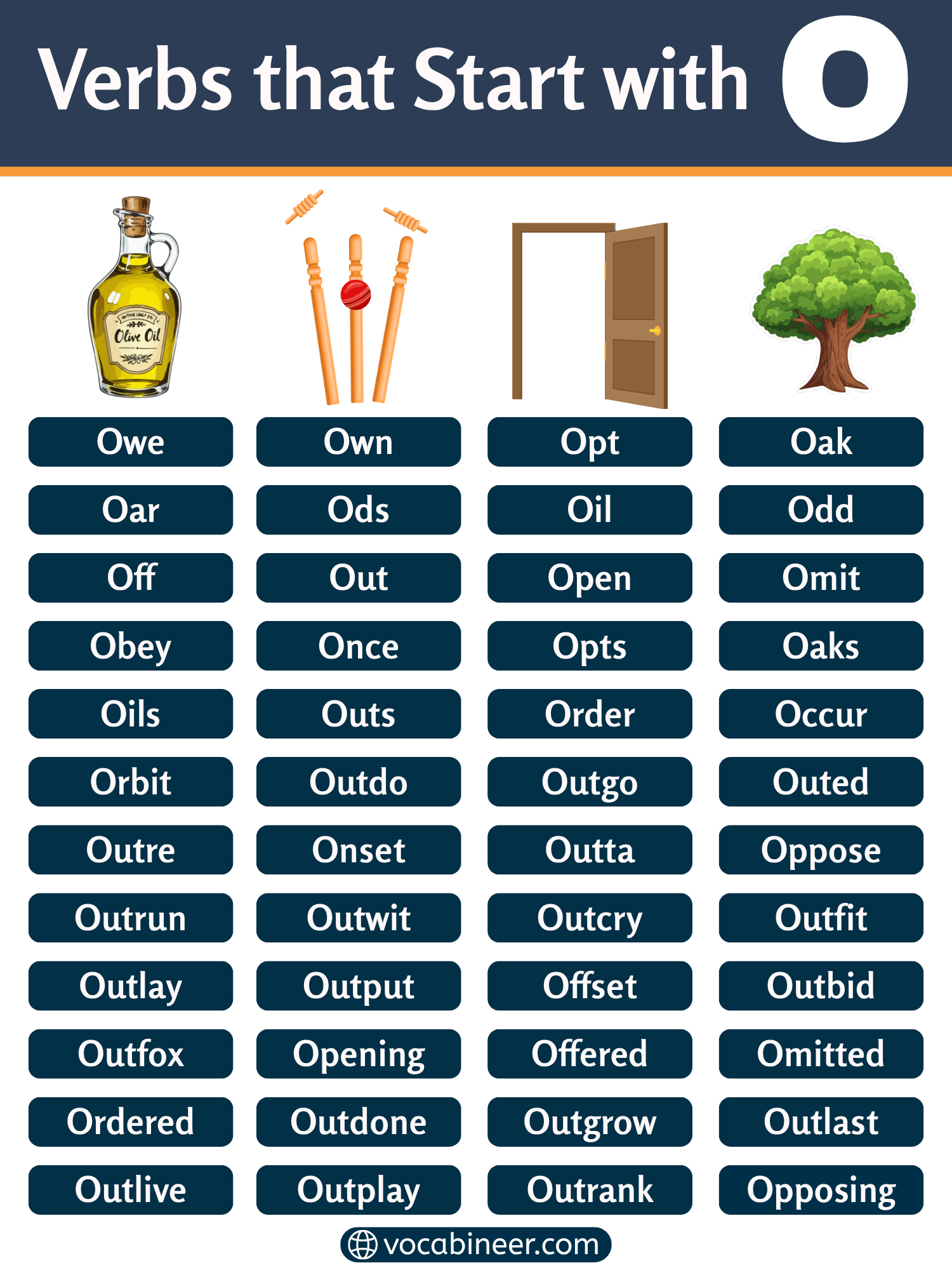
Verbs starting with O are useful in English because they can describe actions, change, movement, communication, and daily activities. Some of these words are common in simple speaking and writing, while others are more useful in formal, descriptive, or academic English.
In this article, you’ll find a full list of verbs that start with O with meanings and examples. You’ll also explore common O verbs, useful verbs for daily English, action verbs, positive verbs, and more in a clear and easy-to-scan format.
In This Page
Common Verbs Starting With O
This section includes common verbs that start with O. These words are useful because they appear often in daily English and simple writing.
- Obey: to do what you are told
- Object: to express disagreement
- Observe: to watch carefully
- Obtain: to get something
- Occur: to happen
- Offer: to present something for someone to take
- Open: to make something not closed
- Operate: to work or control something
- Order: to ask for something or arrange things
- Organize: to arrange properly
- Originate: to begin or come from
- Overcome: to succeed against difficulty
- Overtake: to go past
- Owe: to need to pay or give
- Own: to have something as property
- Oppose: to be against something
- Occupy: to take up space or time
- Outline: to describe the main points
- Overlook: to fail to notice or to look over from above
- Overload: to put too much into or onto something
- Overhear: to hear something without meaning to
- Overflow: to run over the edge
- Overuse: to use too much
- Overwork: to work too hard
- Offset: to balance one thing against another
- Outgrow: to become too big for something
- Outlast: to last longer than something else
- Outnumber: to be greater in number
- Outperform: to do better than
- Outshine: to do better than others or shine more brightly
- Observe over: to watch closely for a period
- Opt: to choose
- Ornament: to decorate
- Oscillate: to move back and forth
- Outfit: to provide with equipment or clothes
- Outweigh: to be more important or heavier
- Overturn: to turn over or cancel officially
- Overstate: to say too strongly
- Open up: to begin talking freely or make available
- Own up: to admit the truth
Useful O Verbs for Daily English
These O verbs are useful in daily speaking and writing. They are simple, practical, and easy to use in common sentences.
- Obey: to do what you are told
- Observe: to watch carefully
- Obtain: to get something
- Occur: to happen
- Offer: to present something
- Open: to make something not closed
- Operate: to work or control something
- Order: to ask for something or arrange things
- Organize: to arrange properly
- Overcome: to succeed against difficulty
- Owe: to need to pay or give
- Own: to have something as property
- Outline: to describe the main points
- Opt: to choose
- Outgrow: to become too big for something
- Outlast: to last longer than something else
- Outnumber: to be greater in number
- Outperform: to do better than
- Outshine: to do better than others or shine more brightly
- Open up: to begin talking freely or make available
- Own up: to admit the truth
- Overhear: to hear something without meaning to
- Overflow: to run over the edge
- Offset: to balance one thing against another
- Overlook: to fail to notice or look over from above
- Outfit: to provide with equipment or clothes
- Overuse: to use too much
- Overwork: to work too hard
- Oppose: to be against something
- Occupy: to take up space or time
Action Verbs Beginning With O
Action verbs beginning with O show what someone or something does. These verbs are useful because they describe clear actions in simple and direct English.
- Obey: to do what you are told
- Object: to express disagreement
- Observe: to watch carefully
- Obtain: to get something
- Offer: to present something
- Open: to make something not closed
- Operate: to work or control something
- Order: to ask for something or arrange things
- Organize: to arrange properly
- Originate: to begin or come from
- Overcome: to succeed against difficulty
- Overtake: to go past
- Oppose: to be against something
- Occupy: to take up space or time
- Outline: to describe the main points
- Overlook: to fail to notice or look over from above
- Overload: to put too much into or onto something
- Overhear: to hear something without meaning to
- Overflow: to run over the edge
- Overuse: to use too much
- Overwork: to work too hard
- Offset: to balance one thing against another
- Outgrow: to become too big for something
- Outlast: to last longer than something else
- Outnumber: to be greater in number
- Outperform: to do better than
- Outshine: to do better than others or shine more brightly
- Opt: to choose
- Ornament: to decorate
- Oscillate: to move back and forth
- Outfit: to provide with equipment or clothes
- Outweigh: to be more important or heavier
- Overturn: to turn over or cancel officially
- Overstate: to say too strongly
- Open up: to begin talking freely or make available
- Own up: to admit the truth
- Obliterate: to destroy completely
- Offend: to upset someone
- Omit: to leave something out
- Overrun: to spread over or defeat by force
Positive Verbs That Start With O
This section includes positive verbs that start with O. These verbs can show progress, help, honesty, growth, or useful action in speaking and writing.
- Obtain: to get something useful
- Offer: to present something kindly
- Open: to make available
- Operate: to work or manage effectively
- Organize: to arrange properly
- Originate: to begin something new
- Overcome: to succeed against difficulty
- Outperform: to do better than expected
- Outshine: to stand out in a good way
- Opt: to choose wisely
- Outline: to explain clearly
- Outfit: to provide what is needed
- Offset: to balance one thing with another
- Open up: to speak honestly or make something available
- Own up: to admit the truth honestly
- Observe: to notice carefully
- Order: to arrange in a proper way
- Occupy: to make good use of time or space
- Overtake: to move ahead of something
- Outlast: to remain strong for longer
- Outgrow: to move beyond something
- Outweigh: to be more important
- Oblige: to help by doing a favor
- Orchestrate: to organize skillfully
- Optimize: to make as effective as possible
Easy O Verbs for Kids and Beginners
These O verbs are simple and easy to learn. They are useful for kids, students, and beginners because the meanings are short and clear.
- Obey: to do what you are told
- Observe: to watch carefully
- Obtain: to get something
- Offer: to present something
- Open: to make something not closed
- Order: to ask for something or arrange things
- Organize: to arrange properly
- Own: to have something as property
- Opt: to choose
- Outline: to describe the main points
- Occupy: to take up space or time
- Overcome: to succeed against difficulty
- Offset: to balance one thing with another
- Outfit: to provide with equipment or clothes
- Outgrow: to become too big for something
- Outlast: to last longer than something else
- Outnumber: to be greater in number
- Outperform: to do better than
- Outshine: to do better than others
- Own up: to admit the truth
Phrasal Verbs with O
Phrasal verbs with O are useful in speaking and everyday English. These verb phrases often appear in common conversations and simple writing.
- Open up: to begin talking freely or make something available
- Own up: to admit the truth
- Opt for: to choose something
- Opt out: to decide not to take part
- Order around: to keep telling someone what to do
- Order in: to have food brought to your home
- Occur to: to come into someone’s mind
- Operate on: to do surgery on someone
- Overcome by: to be strongly affected by something
- Overhear from: to hear news indirectly
- Overlook on: to have a view over something
- Overrun with: to be filled too much with something
- Open out: to spread open
- Open into: to lead into another place
- Open onto: to face or lead onto something
- Opt in: to choose to take part
- Own out: to admit openly
- Overdo it: to do too much
- Order out: to command someone to leave
- Offer up: to give something formally
Complete List of Verbs That Start With O
This section includes a longer list of verbs that start with O. These O verbs help make the article more complete and useful for vocabulary building.
- Obey
- Object
- Observe
- Obtain
- Occur
- Offer
- Open
- Operate
- Order
- Organize
- Originate
- Overcome
- Overtake
- Owe
- Own
- Oppose
- Occupy
- Outline
- Overlook
- Overload
- Overhear
- Overflow
- Overuse
- Overwork
- Offset
- Outgrow
- Outlast
- Outnumber
- Outperform
- Outshine
- Opt
- Ornament
- Oscillate
- Outfit
- Outweigh
- Overturn
- Overstate
- Obliterate
- Offend
- Omit
- Overrun
- Oblige
- Orchestrate
- Optimize
- Open up
- Own up
- Opt for
- Opt out
- Order around
- Order in
- Occur to
- Operate on
- Open out
- Open into
- Open onto
- Opt in
- Overdo
- Offer up
FAQs
Verbs that start with O are verbs that begin with the letter O. These words can show an action, a state, or something that happens. Examples include obey, observe, obtain, offer, and open.
Some common verbs that start with O are obey, observe, obtain, offer, open, operate, order, organize, own, and opt. These verbs are useful in daily English because they appear often in simple speaking and writing.
No, not all verbs that start with O are used in the same way. Many O verbs show clear actions, such as offer, open, and organize, while others may show a different meaning depending on the sentence.
Some positive verbs that start with O are obtain, offer, open, organize, overcome, outfit, and optimize. These verbs can show progress, help, honesty, growth, or useful action.
You can learn them by starting with the most common O verbs first. Then, read short lists, use the verbs in simple sentences, and practice them often in speaking and writing. This makes them easier to remember and use naturally.
Summary
Verbs that start with O are useful in English because they help describe actions, change, movement, communication, and daily activities. In this article, you explored common O verbs, useful verbs for daily English, action verbs, positive verbs, easy verbs for kids and beginners, phrasal verbs, and a complete list of verbs that start with O.
By learning these O verbs step by step, you can improve your vocabulary and use English more clearly in speaking and writing.
Read More