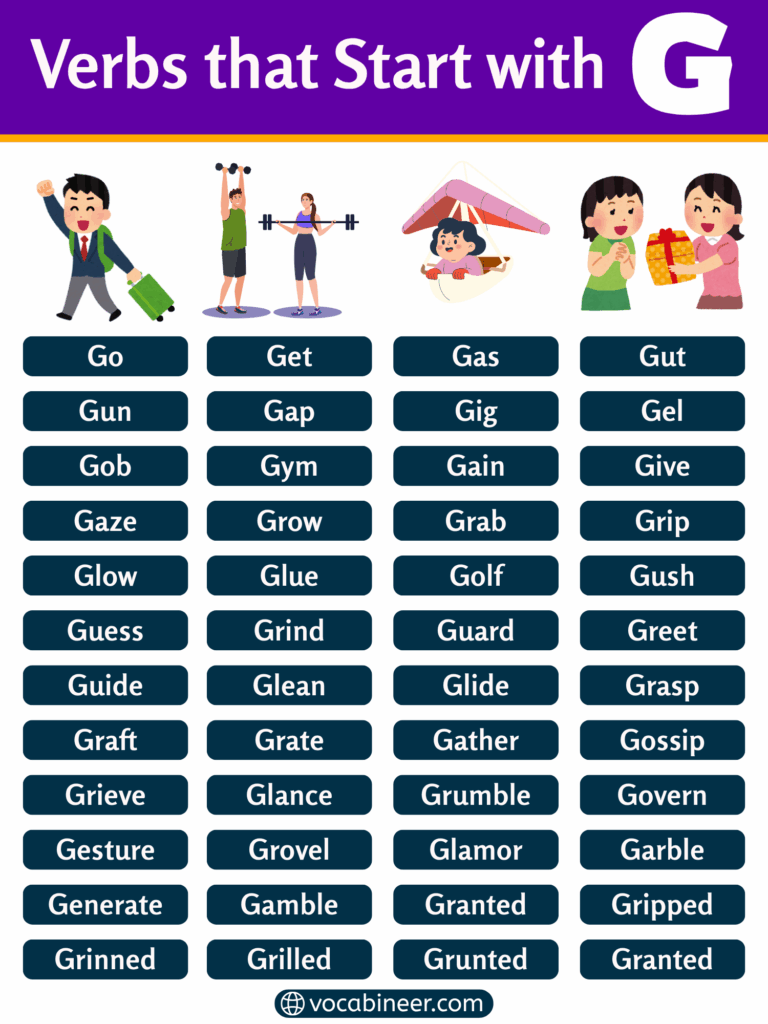
Verbs that begin with G are useful in daily English because they can describe actions, movement, growth, giving, and change. Some of these words are common in simple speaking and writing, while others are more useful in formal, academic, or descriptive English.
In this article, you’ll find a clear list of verbs that start with G with meanings and examples. You’ll also explore common G verbs, action verbs beginning with G, positive verbs, and more, so the article stays easy to scan and simple to use.
In This Page
Common Verbs That Begin With G
This section includes common verbs that begin with G. These G verbs are useful because they appear often in everyday English.
- Gain: to get or achieve something
- Gather: to collect things together
- Gaze: to look steadily
- Get: to receive or obtain
- Giggle: to laugh lightly
- Give: to hand something to someone
- Glance: to look quickly
- Glow: to shine softly
- Go: to move from one place to another
- Grab: to take quickly
- Graduate: to complete a course of study
- Grant: to give or allow
- Greet: to welcome
- Grin: to smile widely
- Grip: to hold tightly
- Grow: to become bigger
- Guarantee: to promise something will happen
- Guess: to answer without being sure
- Guide: to lead someone
- Guard: to protect
- Govern: to rule or control
- Generate: to produce
- Glide: to move smoothly
- Glitter: to shine with small bright flashes
- Grasp: to understand or hold firmly
- Grumble: to complain in a low voice
- Grind: to crush into small pieces
- Gather up: to collect everything together
- Govern: to manage a country or group
- Growl: to make a low angry sound
- Groom: to clean and care for
- Glorify: to praise highly
- Gather in: to bring together
- Gasp: to breathe in suddenly
- Glow up: to improve in appearance or confidence
- Gift: to give as a gift
- Ground: to keep from flying or going out
- Gain back: to get back something lost
- Gather around: to come together near something
- Give out: to hand out or stop working
Action Verbs Beginning With G
Action verbs beginning with G show what someone or something does. These verbs are useful because they describe clear actions in simple and direct English.
- Gain: to get or achieve something
- Gather: to collect things together
- Gaze: to look steadily
- Get: to receive or obtain
- Giggle: to laugh lightly
- Give: to hand something to someone
- Glance: to look quickly
- Glow: to shine softly
- Go: to move from one place to another
- Grab: to take quickly
- Graduate: to complete a course of study
- Grant: to give or allow
- Greet: to welcome
- Grin: to smile widely
- Grip: to hold tightly
- Grow: to become bigger
- Guess: to answer without being sure
- Guide: to lead someone
- Guard: to protect
- Govern: to rule or control
- Generate: to produce
- Glide: to move smoothly
- Glitter: to shine with small bright flashes
- Grasp: to understand or hold firmly
- Grumble: to complain in a low voice
- Grind: to crush into small pieces
- Growl: to make a low angry sound
- Groom: to clean and care for
- Gasp: to breathe in suddenly
- Gift: to give as a gift
- Ground: to keep from flying or going out
- Gallop: to run fast like a horse
- Gamble: to risk money or something valuable
- Garnish: to decorate food
- Gatecrash: to go to an event without invitation
- Gaze out: to look outward for a while
- Gel: to form into a whole
- Gesture: to show with movements
- Glare: to look angrily
- Gobble: to eat quickly
Positive Verbs That Start With G
Positive verbs that start with G are useful when you want to show growth, support, kindness, progress, or success. These verbs work well in writing, speaking, and daily English.
- Gain: to achieve or get something good
- Gather: to bring people or things together
- Give: to offer something kindly
- Glow: to shine softly or look healthy
- Graduate: to complete a course successfully
- Grant: to give or allow
- Greet: to welcome warmly
- Grin: to smile widely
- Grow: to develop or improve
- Guide: to lead or help someone
- Generate: to create something useful
- Glorify: to praise highly
- Gift: to give as a present
- Ground: to give stability or support
- Gather up: to collect in a helpful way
- Gain back: to recover something valuable
- Glow up: to improve in appearance or confidence
- Grasp: to understand clearly
- Grace: to honor with presence or beauty
- Galvanize: to push into action
- Give back: to return something kindly
- Give in: to agree peacefully
- Give over: to hand something to someone
- Give thanks: to show gratitude
- Go forward: to make progress
G Verbs for Everyday English
These G verbs are useful in daily speaking and writing. They are simple, practical, and easy to use in common sentences.
- Gain: to get something
- Gather: to collect things together
- Get: to receive or obtain
- Give: to hand something to someone
- Go: to move from one place to another
- Grow: to become bigger
- Guess: to answer without being sure
- Guide: to lead someone
- Grab: to take quickly
- Glance: to look quickly
- Glow: to shine softly
- Greet: to welcome
- Grin: to smile widely
- Grip: to hold tightly
- Guard: to protect
- Govern: to control or rule
- Generate: to produce
- Glide: to move smoothly
- Grasp: to understand or hold firmly
- Grumble: to complain quietly
- Grind: to crush into small pieces
- Growl: to make a low angry sound
- Gasp: to breathe in suddenly
- Gift: to give as a present
- Ground: to stop from flying or going out
- Gamble: to risk money
- Garnish: to decorate food
- Glare: to look angrily
- Gobble: to eat quickly
- Group: to put together
Easy Verbs Starting With G for Kids and Beginners
These G verbs are simple and easy to learn. They are useful for kids, students, and beginners because the meanings are clear and easy to remember.
- Gain: to get something
- Gather: to collect things together
- Get: to receive or obtain
- Give: to hand something to someone
- Go: to move from one place to another
- Grow: to become bigger
- Guess: to answer without being sure
- Guide: to lead someone
- Grab: to take quickly
- Glance: to look quickly
- Glow: to shine softly
- Greet: to welcome
- Grin: to smile widely
- Grip: to hold tightly
- Guard: to protect
- Glide: to move smoothly
- Grind: to crush into small pieces
- Gasp: to breathe in suddenly
- Gift: to give as a present
- Group: to put together
Phrasal Verbs That Begin With G
Phrasal verbs that begin with G are verb phrases made with a main verb and another word. They are common in daily English and often appear in speaking.
- Get across: to make someone understand
- Get along: to have a friendly relationship
- Get around: to move from place to place or avoid something
- Get away: to escape or go on a short trip
- Get back: to return
- Get by: to manage with what you have
- Get down: to make someone sad or swallow something
- Get in: to enter
- Get off: to leave a bus, train, or plane
- Get on: to enter a bus, train, or plane
- Get out: to leave a place
- Get over: to recover from something
- Get through: to finish or survive something
- Get together: to meet with others
- Get up: to rise from bed or stand up
- Give away: to give something for free
- Give back: to return something
- Give in: to stop fighting or agree
- Give out: to distribute or stop working
- Give up: to stop trying
- Go after: to follow or chase
- Go against: to oppose
- Go ahead: to continue
- Go back: to return
- Go down: to move downward or become less
- Go on: to continue
- Go out: to leave home or stop burning
- Go over: to review carefully
- Go through: to experience or examine
- Grow up: to become an adult
Complete List of Verbs That Start With G
This section includes a longer list of verbs that start with G. These G verbs are useful for building vocabulary and making the article more complete.
- Gain
- Gather
- Gaze
- Get
- Giggle
- Give
- Glance
- Glow
- Go
- Grab
- Graduate
- Grant
- Greet
- Grin
- Grip
- Grow
- Guarantee
- Guess
- Guide
- Guard
- Govern
- Generate
- Glide
- Glitter
- Glorify
- Grasp
- Grumble
- Grind
- Growl
- Groom
- Gasp
- Gift
- Ground
- Gallop
- Gamble
- Garnish
- Gatecrash
- Gel
- Gesture
- Glare
- Gobble
- Group
- Gain back
- Gather around
- Gather in
- Gather up
- Gaze out
- Get across
- Get along
- Get around
- Get away
- Get back
- Get by
- Get down
- Get in
- Get off
- Get on
- Get out
- Get over
- Get through
- Get together
- Get up
- Give away
- Give back
- Give in
- Give out
- Give over
- Give up
- Give thanks
- Glow up
- Go after
- Go against
- Go ahead
- Go back
- Go down
- Go forward
- Go on
- Go out
- Go over
- Go through
- Grow up
FAQs
Verbs that start with G are verbs that begin with the letter G. These words can show an action, a state, or something that happens. Examples include gain, gather, give, go, and grow.
Some common verbs that start with G are gain, gather, get, give, go, grow, guess, guide, greet, and guard. These verbs appear often in daily English, so they are useful for speaking, writing, and vocabulary building.
No, not all verbs that start with G are action verbs. Many G verbs show clear actions, such as gather, grab, and grind, while others may show a different meaning depending on how they are used in a sentence.
Some positive verbs that start with G are gain, give, glow, graduate, grant, greet, grow, guide, and glorify. These verbs often show growth, support, kindness, progress, or success.
You can learn them by starting with the most common G verbs first. Then, read short lists, use them in simple sentences, and practice them often in speaking and writing. This helps you remember them more naturally.
Summary
Verbs that start with G are useful in daily English because they help describe actions, movement, growth, giving, and change. In this article, you explored common G verbs, action verbs beginning with G, positive verbs, everyday verbs, easy verbs for beginners, phrasal verbs, and a complete list of verbs that start with G.
Learning these G verbs step by step can help you grow your vocabulary and use English more clearly in speaking and writing.
Read More