
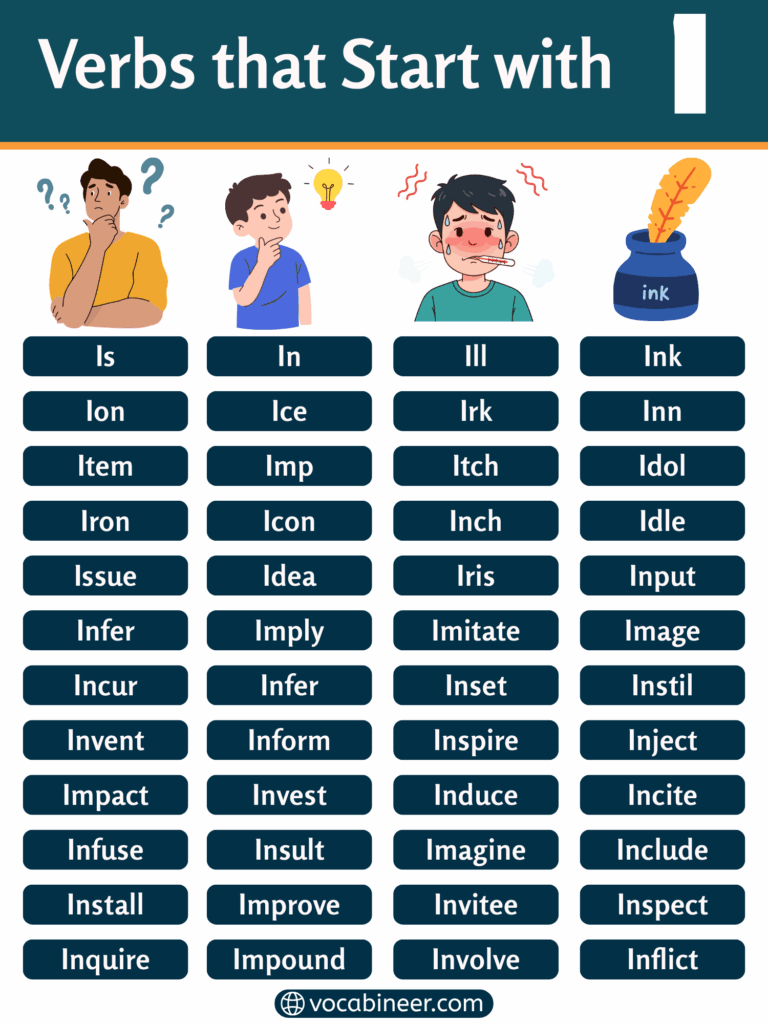
Verbs that start with I are useful in daily English because they can describe actions, ideas, movement, communication, and change. Some of these words are common in simple speaking and writing, while others are more useful in formal, academic, or descriptive English.
In this article, you’ll find a clear list of verbs that start with I with meanings and examples. You’ll also explore common I verbs, action verbs beginning with I, positive verbs, and more, so the article stays easy to scan and simple to use.
In This Page
Common Verbs That Start With I
This section includes common verbs that begin with I. These I verbs are useful because they appear often in everyday English.
- Identify: to recognize or name someone or something
- Ignore: to pay no attention to
- Imagine: to form a picture in the mind
- Impress: to make someone admire something
- Improve: to make better
- Include: to have as part of something
- Increase: to become more or make more
- Influence: to affect someone or something
- Inform: to tell someone
- Inject: to put into with a needle
- Injure: to hurt physically
- Insert: to put into something
- Inspect: to examine carefully
- Inspire: to fill someone with ideas or encouragement
- Install: to put in place for use
- Intend: to plan
- Interest: to make someone curious
- Interrupt: to stop someone while speaking or doing something
- Introduce: to present someone or something
- Invent: to create something new
- Invite: to ask someone to come
- Involve: to include as a part
- Iron: to smooth clothes with heat
- Irritate: to annoy
- Issue: to give out officially
- Illustrate: to explain with examples or pictures
- Imitate: to copy someone or something
- Immerse: to put deeply into something
- Import: to bring in from another country
- Improve on: to make something better than before
- Indicate: to show or point out
- Influence over: to affect strongly
- Insist: to say firmly
- Interact: to communicate with others
- Interpret: to explain the meaning of something
- Intervene: to become involved in a situation
- Invest: to put money, time, or effort into something
- Investigate: to look into something carefully
- Invite in: to ask someone to enter
- Instruct: to teach or direct
Action Verbs Beginning With I
Action verbs beginning with I show what someone or something does. These verbs are useful because they describe clear actions in simple and direct English.
- Identify: to recognize or name someone or something
- Ignore: to pay no attention to
- Imagine: to form a picture in the mind
- Impress: to make someone admire something
- Improve: to make better
- Include: to have as part of something
- Increase: to become more or make more
- Influence: to affect someone or something
- Inform: to tell someone
- Inject: to put into with a needle
- Injure: to hurt physically
- Insert: to put into something
- Inspect: to examine carefully
- Inspire: to fill someone with ideas or encouragement
- Install: to put in place for use
- Intend: to plan
- Interest: to make someone curious
- Interrupt: to stop someone while speaking or doing something
- Introduce: to present someone or something
- Invent: to create something new
- Invite: to ask someone to come
- Involve: to include as a part
- Iron: to smooth clothes with heat
- Irritate: to annoy
- Issue: to give out officially
- Illustrate: to explain with examples or pictures
- Imitate: to copy someone or something
- Immerse: to put deeply into something
- Import: to bring in from another country
- Indicate: to show or point out
- Insist: to say firmly
- Interact: to communicate with others
- Interpret: to explain the meaning of something
- Intervene: to become involved in a situation
- Invest: to put money, time, or effort into something
- Investigate: to look into something carefully
- Instruct: to teach or direct
- Ignite: to set on fire or cause to begin
- Illustrate: to make something clearer
- Infect: to spread disease to
Positive Verbs That Start With I
Positive verbs that start with I are useful when you want to show growth, support, kindness, progress, or success. These verbs work well in writing, speaking, and daily English.
- Improve: to make better
- Include: to make someone part of something
- Increase: to make greater
- Influence: to affect in a helpful way
- Inform: to give useful knowledge
- Inspire: to fill someone with ideas or encouragement
- Introduce: to present someone or something
- Invent: to create something new
- Invite: to ask someone kindly to come
- Involve: to include as an important part
- Illustrate: to make something easier to understand
- Immerse: to involve deeply
- Indicate: to show clearly
- Insist: to speak firmly for something important
- Interact: to communicate with others
- Interpret: to explain meaning clearly
- Intervene: to step in and help
- Invest: to give time, effort, or money for future good
- Investigate: to examine carefully for truth
- Instruct: to teach or guide
- Ignite: to start something powerful or exciting
- Illuminate: to light up or make clear
- Integrate: to bring together into one whole
- Innovate: to create something new and better
- Inherit: to receive something valuable
I Verbs for Everyday English
These I verbs are useful in daily speaking and writing. They are simple, practical, and easy to use in common sentences.
- Identify: to recognize or name
- Ignore: to pay no attention to
- Imagine: to form a picture in the mind
- Impress: to make someone admire
- Improve: to make better
- Include: to have as part
- Increase: to become more
- Influence: to affect
- Inform: to tell someone
- Insert: to put into something
- Inspect: to examine carefully
- Inspire: to encourage or fill with ideas
- Install: to put in place for use
- Intend: to plan
- Interrupt: to stop someone while speaking
- Introduce: to present someone or something
- Invent: to create something new
- Invite: to ask someone to come
- Involve: to include as a part
- Issue: to give out officially
- Illustrate: to explain with examples
- Imitate: to copy
- Import: to bring in from another country
- Indicate: to show or point out
- Insist: to say firmly
- Interact: to communicate with others
- Interpret: to explain the meaning
- Invest: to put money or effort into something
- Investigate: to look into carefully
- Instruct: to teach or direct
Easy Verbs Starting With I for Kids and Beginners
These I verbs are simple and easy to learn. They are useful for kids, students, and beginners because the meanings are clear and easy to remember.
- Identify: to know or name someone or something
- Ignore: to pay no attention
- Imagine: to form a picture in the mind
- Improve: to make better
- Include: to make part of something
- Increase: to become more
- Inform: to tell someone
- Insert: to put into something
- Inspect: to look at carefully
- Inspire: to encourage
- Install: to put in place for use
- Intend: to plan
- Interrupt: to stop someone while speaking
- Introduce: to present someone or something
- Invent: to create something new
- Invite: to ask someone to come
- Involve: to include as a part
- Issue: to give out officially
- Imitate: to copy
- Iron: to smooth clothes with heat
Phrasal Verbs That Begin With I
Phrasal verbs that begin with I are verb phrases made with a main verb and another word. They are common in daily English and often appear in speaking.
- Ice over: to become covered with ice
- Idle away: to spend time doing very little
- Ink in: to add in writing or ink
- Invite in: to ask someone to enter
- Invite over: to ask someone to come to your home
- Iron out: to solve a problem or remove wrinkles
- Include in: to make part of something
- Invest in: to put money, time, or effort into something
- Immerse in: to become deeply involved in something
- Instruct on: to teach someone about something
Complete List of Verbs That Start With I
This section includes a longer list of verbs that start with I. These I verbs are useful for building vocabulary and making the article more complete.
- Identify
- Ignore
- Imagine
- Impress
- Improve
- Include
- Increase
- Influence
- Inform
- Inject
- Injure
- Insert
- Inspect
- Inspire
- Install
- Intend
- Interest
- Interrupt
- Introduce
- Invent
- Invite
- Involve
- Iron
- Irritate
- Issue
- Illustrate
- Imitate
- Immerse
- Import
- Indicate
- Infect
- Inflate
- Ignite
- Illuminate
- Illustrate
- Imply
- Impose
- Impress
- Imprison
- Incite
- Incorporate
- Induce
- Informalize
- Inhabit
- Inhale
- Inherit
- Initiate
- Innovate
- Input
- Inquire
- Inscribe
- Insist
- Inspire
- Install
- Instruct
- Insulate
- Integrate
- Intensify
- Interact
- Intercept
- Interest
- Interfere
- Interpret
- Intervene
- Interview
- Intoxicate
- Intrigue
- Introduce
- Invade
- Invent
- Invest
- Investigate
- Invite
- Invoke
- Involve
- Itemize
FAQs
Verbs that start with I are verbs that begin with the letter I. These words can show an action, a state, or something that happens. Examples include identify, imagine, improve, include, and invite.
Some common verbs that start with I are identify, ignore, imagine, improve, include, increase, inform, inspect, inspire, and invite. These verbs appear often in daily English, so they are useful for speaking, writing, and vocabulary building.
No, not all verbs that start with I are action verbs. Many I verbs show clear actions, such as improve, inspect, and invite, while others can be used in different ways depending on the sentence and meaning.
Some positive verbs that start with I are improve, include, inspire, invent, invite, innovate, integrate, and illuminate. These verbs often show growth, support, creativity, or progress.
You can learn them by starting with the most common I verbs first. Then, read short lists, use them in simple sentences, and practice them often in speaking and writing. This helps you remember them more naturally.
Summary
Verbs that start with I are useful in daily English because they help describe actions, ideas, movement, communication, and change. In this article, you explored common I verbs, action verbs beginning with I, positive verbs, everyday verbs, easy verbs for beginners, phrasal verbs, and a complete list of verbs that start with I.
Learning these I verbs step by step can help you grow your vocabulary and use English more clearly in speaking and writing.
Read More