
Air animals names include the names of animals that fly, glide, or move through the air regularly. These animals are often called aerial animals or flying animals, and they may belong to different groups such as birds, mammals, insects, and a few unusual gliding animals.
In this article, you will learn air animals names in English with grouped lists and simple explanations. You will also see flying birds, mammals, insects, and other useful sections that make this vocabulary easier to understand and remember.
In This Page
What Are Air Animals?
Air animals are animals that spend much of their movement in the air by flying, gliding, or hovering. Some flap their wings, some glide between trees, and a few leap out of water and stay airborne for a short distance.
Some air animals are true fliers, such as birds, bats, and insects, while others are gliders, such as flying squirrels or flying frogs. In this topic, the focus stays on animals commonly linked with the air or sky, so readers can learn the names in a clear and organized way.
Common Air Animals Names List
Many air animals are known for wings, gliding skin, light bodies, or fast movement through the sky. Some are birds, some are insects, and a few are unusual mammals or gliding animals. Together, they make air-animal vocabulary interesting and useful for learners.
- Eagle
- Albatross
- Hummingbird
- Bat
- Butterfly
- Dragonfly
- Snowy owl
- Flying squirrel
- Frigate bird
- Parrot
- Pigeon
- Sparrow
- Hawk
- Falcon
- Owl
- Bee
- Wasp
- Moth
- Housefly
- Mosquito
- Flying fish
- Flying fox
- Draco lizard
- Colugo
- Wallace’s flying frog
- Flying squid
- Seagull
- Pelican
- Kite
- Canary
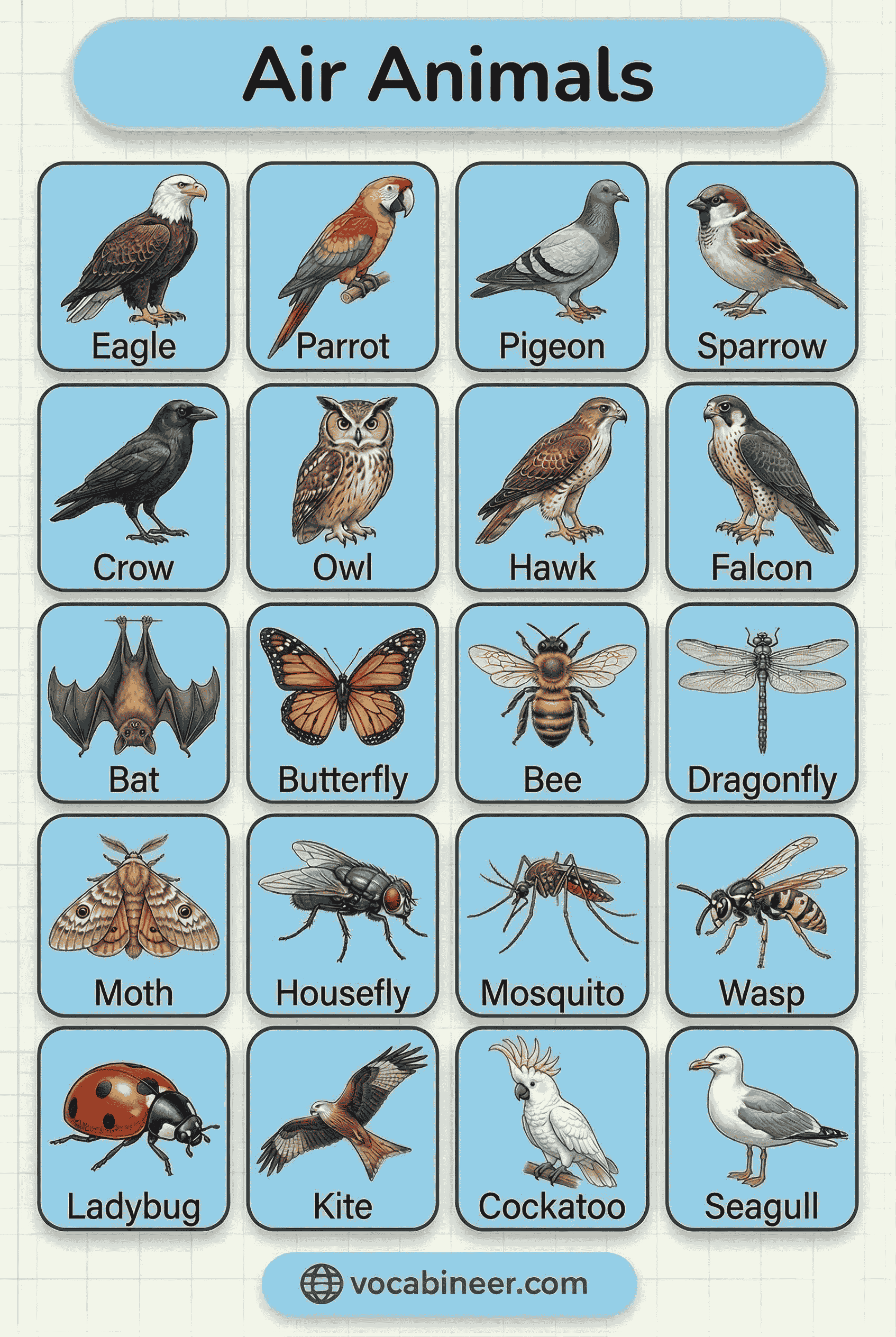
Birds That Fly in the Air
Birds are the most common air animals because most of them fly with wings and feathers. Some fly high in the sky, while others glide, hover, or move quickly between trees and open spaces. Because of that, birds form the biggest and most familiar group in air-animal vocabulary.
- Eagle: A large flying bird with strong wings and sharp eyesight.
- Albatross: A seabird known for flying long distances over the ocean.
- Hummingbird: A tiny bird that can hover in the air.
- Frigate bird: A large sea bird with long wings and light flight.
- Parrot: A colorful bird that flies well and lives in many warm regions.
- Pigeon: A common flying bird often seen in cities.
- Sparrow: A small bird that flies quickly between trees and buildings.
- Hawk: A strong flying bird known for hunting small animals.
- Falcon: A fast bird with pointed wings.
- Owl: A bird that flies quietly, especially at night.
- Seagull: A bird often seen flying near beaches and the sea.
- Pelican: A large bird with broad wings and a pouch under its beak.
- Kite: A bird known for gliding smoothly in the sky.
- Canary: A small bird that flies lightly and sings sweetly.
Flying Mammals Names
Very few mammals can truly fly. Bats are the best-known flying mammals, while some others glide through the air instead of flapping wings. Even so, they are still often included in simple air-animal vocabulary lists because they move through the air regularly.
- Bat: The most well-known flying mammal.
- Flying fox: A large fruit bat with wide wings.
- Flying squirrel: A gliding mammal that moves between trees.
- Colugo: A gliding mammal also called a flying lemur.
- Sugar glider: A small gliding mammal with a skin flap for air movement.
Flying Insects Names
Flying insects are small animals that move through the air with wings. Some fly from flower to flower, while others hover, buzz, or move very quickly. As a result, they are an important part of air-animal vocabulary.
- Butterfly: A colorful insect with large wings.
- Dragonfly: A fast-flying insect with a long body.
- Bee: A small flying insect known for collecting nectar.
- Wasp: A winged insect with a narrow body.
- Moth: An insect similar to a butterfly, often active at night.
- Housefly: A common flying insect often seen indoors.
- Mosquito: A small flying insect with a thin body.
- Beetle: Some beetles can fly using hard wing covers and hidden wings.
- Grasshopper: An insect that can jump and also fly in short bursts.
- Ladybug: A small insect that can open its wing covers and fly.
Other Air Animals Names
Some animals are included in air-animal lists because they glide, leap, or move through the air for short distances, even though they are not birds, bats, or insects. These animals make the topic more interesting and show that air movement is not limited to one animal group.
- Flying fish: A fish that can glide above the water for a short distance.
- Draco lizard: A lizard that glides between trees using wing-like skin flaps.
- Wallace’s flying frog: A frog that can glide from tree to tree.
- Flying squid: A sea animal that can launch itself above the water briefly.
Air Animals Names for Kids
Air animals names for kids should be simple, familiar, and easy to remember. So, this section focuses on common flying or gliding animals that children often see in books, charts, cartoons, and beginner lessons.
- Eagle
- Hummingbird
- Bat
- Butterfly
- Dragonfly
- Bee
- Parrot
- Pigeon
- Sparrow
- Owl
- Seagull
- Pelican
- Canary
- Flying squirrel
- Flying fish
- Moth
- Wasp
- Mosquito
- Kite
- Housefly
Big and Small Air Animals Names
Air animals come in different sizes. Some are large and powerful, while others are tiny and light. This grouping makes air animals names easier to compare and remember.
Big Air Animals Names
- Eagle: A large bird with strong wings and powerful flight.
- Albatross: A very large seabird known for long-distance flight.
- Frigate bird: A large flying bird with long narrow wings.
- Pelican: A big bird with a broad wingspan.
- Flying fox: A large bat with wide wings.
- Seagull: A medium to large bird often seen near the sea.
Small Air Animals Names
- Hummingbird: A tiny bird that can hover in one place.
- Butterfly: A light insect with delicate wings.
- Bee: A small flying insect known for buzzing.
- Mosquito: A very small flying insect with a thin body.
- Dragonfly: A slim insect with fast-moving wings.
- Canary: A small flying pet bird.
Herbivorous, Carnivorous, and Omnivorous Air Animals
Air animals eat different kinds of food depending on their species and body type. Some feed on nectar, seeds, or fruit, some hunt insects or small animals, and others eat both plant and animal matter. Because of that, this grouping makes air animals names easier to study in a clear and practical way.
Herbivorous Air Animals
- Hummingbird: Feeds mainly on nectar from flowers.
- Canary: Eats seeds and plant food.
- Parrot: Eats seeds, fruit, and plant matter.
- Butterfly: Feeds mainly on nectar.
- Bee: Collects nectar and pollen from flowers.
Carnivorous Air Animals
- Eagle: Hunts small animals and birds.
- Hawk: Eats meat and catches small animals.
- Falcon: A hunting bird that feeds on other animals.
- Owl: Hunts small animals, especially at night.
- Dragonfly: Eats other small insects.
- Bat: Many bats eat insects, while some eat small animals.
Omnivorous Air Animals
- Seagull: Eats fish, scraps, and many other foods.
- Pigeon: Eats seeds, grains, and some small food items.
- Sparrow: Eats seeds and small insects.
- Pelican: Mainly eats fish but may take other food in simple learning categories.
- Wasp: Feeds on nectar and also hunts small insects.
Air Animals and Their Babies
Air animals and their babies are useful to learn together because many young animals have simple English baby names. This makes vocabulary learning easier and more memorable.
- Eagle — Eaglet
- Owl — Owlet
- Duck — Duckling
- Goose — Gosling
- Swan — Cygnet
- Parrot — Chick
- Canary — Chick
- Pigeon — Squab
- Pelican — Chick
- Seagull — Chick
- Bat — Pup
- Butterfly — Caterpillar
- Bee — Larva
- Mosquito — Larva
Most Popular Air Animals Names
Some air animals are more popular than others because people see them often in nature, in books, in school lessons, and in picture charts. As a result, these are usually the first air-animal names learners remember.
- Eagle: One of the most famous flying birds.
- Hummingbird: Popular because of its tiny size and hovering flight.
- Bat: A very well-known flying mammal.
- Butterfly: A colorful and familiar flying insect.
- Dragonfly: A popular insect known for fast flight.
- Parrot: A colorful flying bird often kept as a pet.
- Pigeon: A common flying bird seen in cities.
- Sparrow: A familiar small bird seen near homes.
- Owl: A famous bird known for night flight.
- Seagull: A well-known bird often seen near the sea.
Air Animals vs Land Animals
Air animals and land animals are both part of the animal world, but they move in different ways. Air animals spend much of their movement in the air by flying or gliding, while land animals mainly move on the ground by walking, running, crawling, or hopping.
Here is a simple table showing the difference between air animals and land animals.
| Feature | Air Animals | Land Animals |
|---|---|---|
| Main movement | Fly, glide, or hover in the air | Walk, run, crawl, or hop on land |
| Body support | Usually have wings or gliding body parts | Usually have legs or strong ground support |
| Main living space | Sky, trees, cliffs, open air, or places above ground | Ground, forests, deserts, grasslands, and farms |
| Common examples | Eagle, bat, butterfly, sparrow, dragonfly | Lion, elephant, fox, rabbit, horse |
| Learning focus | Flying and air movement | Ground movement and land habitats |
FAQs
Air animals are animals that fly, glide, or move through the air regularly. They include birds, bats, insects, and a few gliding animals.
Common air animals include eagle, hummingbird, bat, butterfly, dragonfly, parrot, pigeon, sparrow, owl, and seagull.
No, all air animals are not birds. Some are insects, some are bats, and some are gliding animals such as flying squirrels.
Air animals move mainly through the air, while land animals move mainly on the ground.
Easy air animal names for kids include eagle, parrot, sparrow, butterfly, bee, bat, owl, pigeon, hummingbird, and dragonfly.
Conclusion
Air animals names help readers learn the names of animals that fly, glide, or move through the air. These animals belong to different groups, including birds, mammals, insects, and a few unusual gliding animals.
When the names are learned in clear categories, they become easier to understand and remember. In addition, sections such as food groups, baby names, and the difference table make the topic more complete and more useful for learners.
Read More