

Plants are living things that grow in many forms, and the main types of plants include herbs, shrubs, trees, climbers, and creepers. These common plant groups help readers understand how plants are classified in simple everyday learning.
In this article, you’ll learn the main plant types, how different groups are recognized, and what makes one type different from another. You’ll also see clear categories and simple explanations that make plant names and plant types easier to remember.

In This Page
Common Plant Names
Plants include many familiar flowers, herbs, shrubs, trees, and houseplants that people grow in gardens, homes, parks, and farms. The following are common plant names with simple descriptions to make each one easier to recognize and understand.
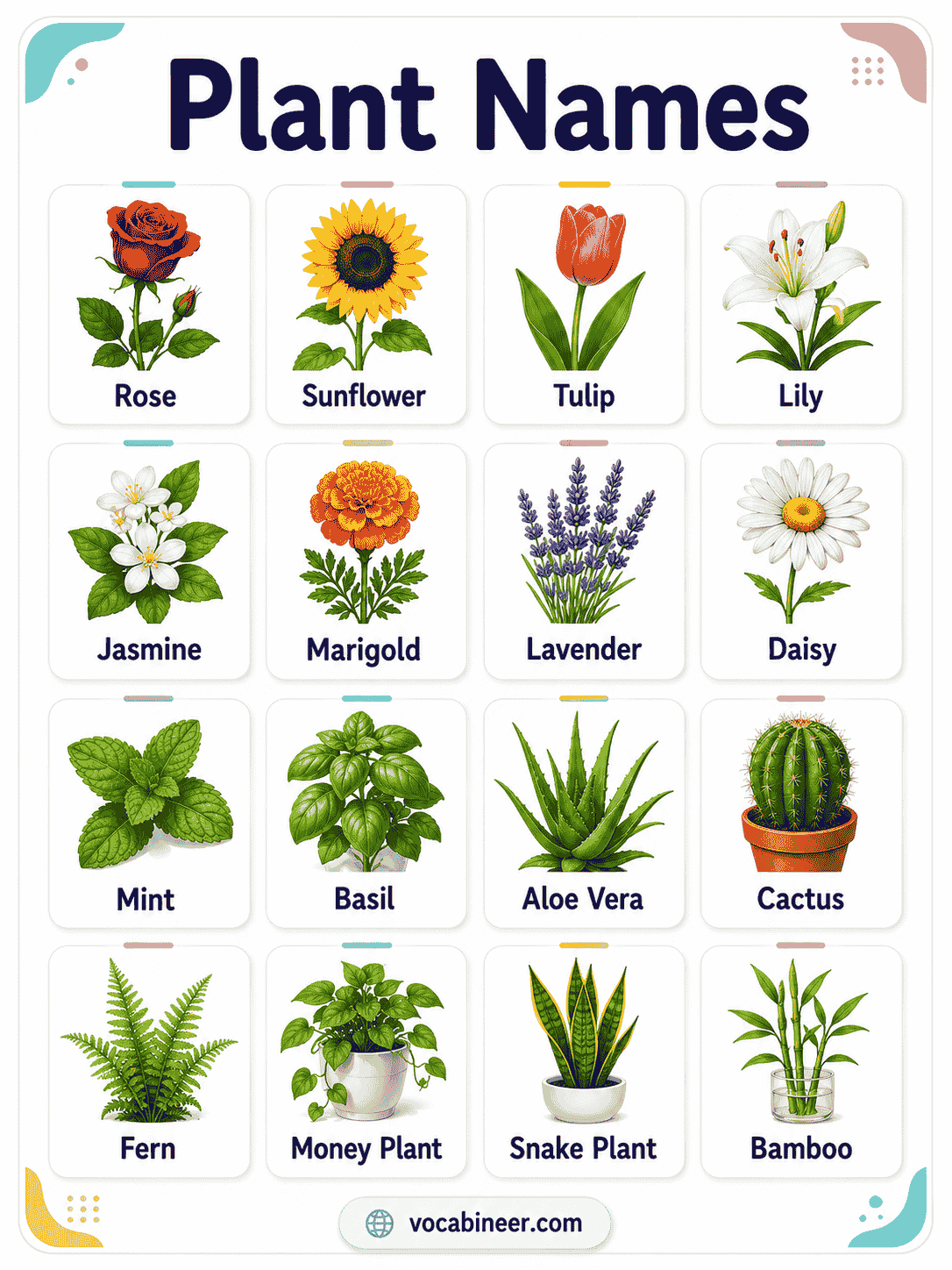
Rose
A flowering plant known for its colorful, fragrant blooms and thorny stems. Roses grow in many colors and are commonly planted in gardens for decoration and cut flowers.
Sunflower
A tall flowering plant with a large yellow flower head and a dark center. Sunflowers grow best in sunny places and produce seeds that people and animals can eat.
Tulip
A spring-flowering plant with smooth green leaves and bright cup-shaped flowers. Tulips grow in many colors and are popular in flower beds, parks, and decorative gardens.
Daisy
A small flowering plant with white petals and a yellow center. Daisies commonly grow in gardens, lawns, and fields and are known for their simple, cheerful appearance.
Lily
A flowering plant with large, attractive blooms that come in many colors and shapes. Lilies often grow from bulbs and are widely used in gardens and floral arrangements.
Jasmine
A fragrant flowering plant that produces small white or yellow flowers. Jasmine is often grown in gardens and near homes because of its pleasant scent and attractive climbing or shrub-like growth.
Lavender
A fragrant plant with narrow leaves and purple flower spikes. Lavender is commonly grown in gardens and is also valued for its strong scent, dried flowers, and aromatic oils.
Mint
A green herb with fresh-smelling leaves and a cool flavor. Mint grows quickly and is commonly used in drinks, foods, sauces, and herbal preparations.
Basil
A leafy herb with soft green leaves and a strong aroma. Basil is widely used in cooking and grows well in warm, sunny places or small kitchen gardens.
Aloe Vera
A succulent plant with thick, fleshy leaves that store water and contain a clear gel. Aloe vera grows well in dry conditions and is commonly kept as a houseplant or garden plant.
Cactus
A drought-tolerant plant with thick stems that store water and often have spines. Cacti grow well in dry environments and come in many shapes, sizes, and flowering varieties.
Fern
A green non-flowering plant with soft, feathery leaves called fronds. Ferns usually grow best in shady, moist places and are popular in gardens and indoor plant displays.
Bamboo
A fast-growing plant with tall, hollow, jointed stems. Bamboo grows in dense groups and is widely used for decoration, furniture, construction, crafts, and garden screening.
Money Plant
A popular climbing or trailing houseplant with heart-shaped green leaves. It grows easily indoors, can be kept in soil or water, and is often used to decorate homes and offices.
Snake Plant
A hardy houseplant with tall, upright, sword-shaped leaves marked with green patterns. It needs little care, tolerates low light well, and is popular for indoor decoration.
Spider Plant
A common indoor plant with long, narrow, arching leaves. It produces small plantlets on hanging stems, making it easy to grow and reproduce in pots or hanging baskets.
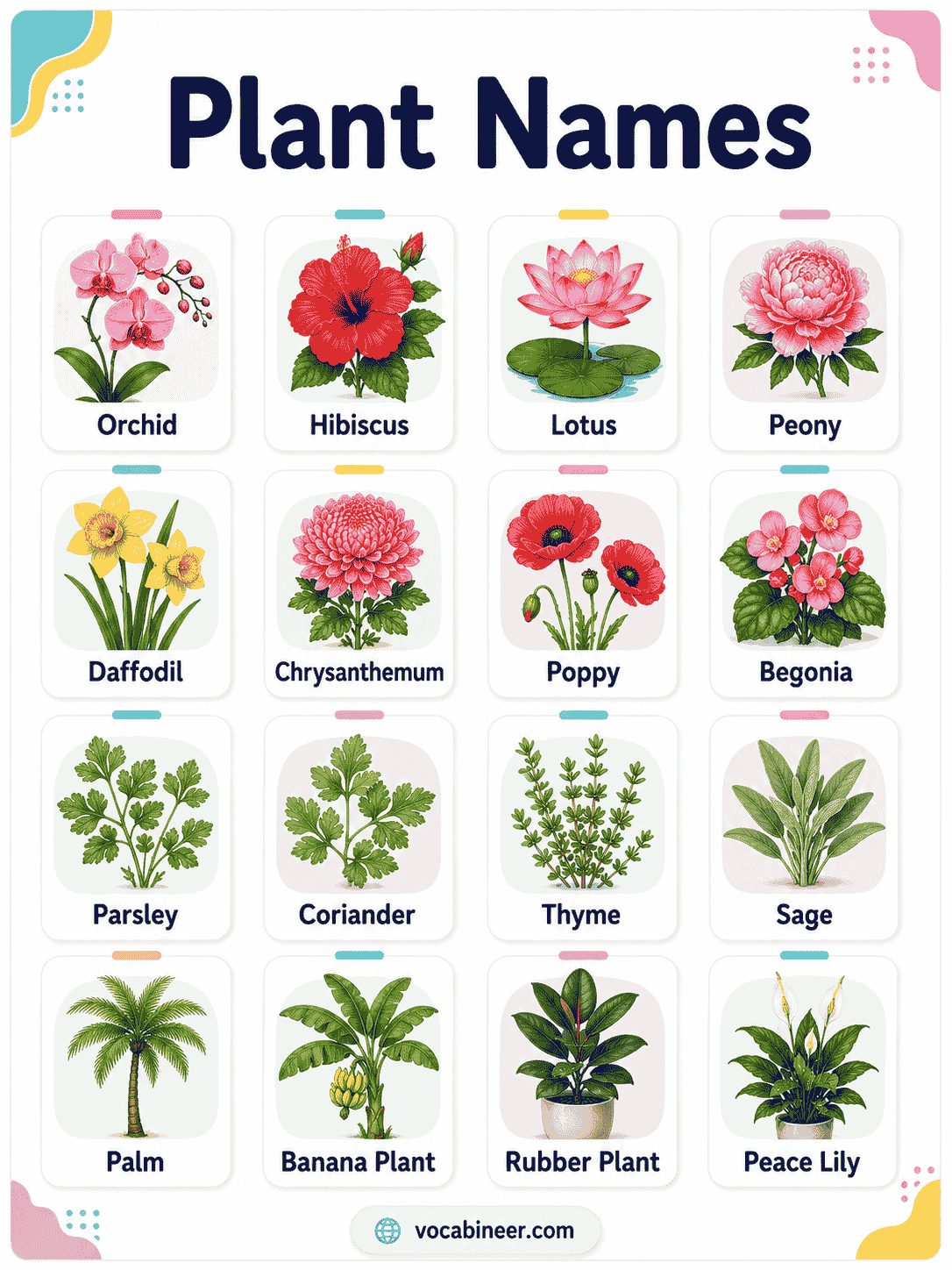
Hibiscus
A flowering shrub with large, bright, trumpet-shaped flowers. Hibiscus grows well in warm climates and is commonly planted in gardens for its colorful and eye-catching blooms.
Marigold
A garden plant with bright yellow, orange, or golden flowers. Marigolds are easy to grow, bloom for long periods, and are often planted along borders, paths, and flower beds.
Bougainvillea
A climbing ornamental plant known for its bright, paper-like colored bracts surrounding small flowers. It grows well in warm, sunny areas and is often trained over walls, fences, and gates.
Orchid
A flowering plant known for its elegant blooms, unusual shapes, and wide range of colors. Orchids are popular indoor and garden plants and often require careful light, moisture, and growing conditions.
Types of Plant Groups with Examples
Different types of plants can be grouped according to their size, structure, habitat, life cycle, and method of reproduction. These groups help learners understand how plants grow, survive, and differ from one another, including trees, shrubs, herbs, climbers, creepers, flowering plants, non-flowering plants, aquatic plants, desert plants, annuals, biennials, and perennials.
Flowering Plants
Flowering plants are some of the easiest plants to recognize because they are colorful, attractive, and common in gardens. As a result, these names are often the first plant names learners remember.
- Rose: A popular flowering plant known for soft petals and a sweet scent.
- Tulip: A cup-shaped flower that is often seen in bright spring colors.
- Sunflower: A tall flowering plant with a large yellow flower head.
- Lily: An elegant flowering plant with large and often fragrant petals.
- Daffodil: A spring flower with a trumpet-shaped center and bright petals.
- Marigold: A bright orange or yellow flower often used in gardens and decorations.
- Hibiscus: A tropical flowering plant with wide and colorful petals.
- Jasmine: A small flowering plant known for its pleasant fragrance.
- Lavender: A flowering plant with purple blooms and a calming scent.
- Orchid: A delicate flowering plant with unusual and decorative blooms.
Common Trees
Trees are tall and long-living plants, and they are easy to notice in parks, roadsides, farms, and forests. Because of that, tree names are an important part of basic plant vocabulary.
- Mango Tree: A fruit tree known for sweet mangoes and a wide green canopy.
- Neem Tree: A well-known tree with medicinal value and bitter leaves.
- Coconut Tree: A tall tree found in warm areas that produces coconuts.
- Banyan Tree: A large spreading tree known for its hanging roots.
- Peepal Tree: A familiar tree with heart-shaped leaves and a broad crown.
- Pine Tree: A tall tree with needle-like leaves and cones.
- Apple Tree: A fruit tree that grows apples in cooler regions.
- Guava Tree: A small to medium tree that produces guava fruit.
- Oak Tree: A strong tree known for its thick trunk and broad branches.
- Palm Tree: A tall tree with a straight trunk and leaves at the top.
Indoor Plants
Indoor plants are common in homes, classrooms, and offices because they are easy to place and simple to recognize. In addition, many of them are chosen for their leaves, shape, and neat appearance.
- Snake Plant: A popular indoor plant with long, upright leaves and a strong look.
- Money Plant: A common indoor plant with trailing stems and heart-shaped leaves.
- Peace Lily: A well-known indoor plant with glossy leaves and white blooms.
- Spider Plant: A striped indoor plant with narrow leaves and hanging baby plants.
- ZZ Plant: A hardy indoor plant with shiny, dark green leaves.
- Aloe Vera: A thick-leaved indoor plant also known for its useful gel.
- Areca Palm: A soft-leaved plant often used to brighten indoor corners.
- Rubber Plant: A broad-leaved indoor plant with a bold and glossy look.
- Pothos: A trailing plant with green or variegated leaves that grows well indoors.
- Chinese Evergreen: A decorative indoor plant known for patterned leaves and easy care.
Fruit Plants
Fruit plants are easy to learn because many of them are already familiar from daily life. So, this group helps readers connect plant names with common fruits they already know.
- Banana Plant: A large leafy plant that produces bananas in warm climates.
- Strawberry Plant: A small fruit plant that grows low and produces red berries.
- Pomegranate Plant: A fruit plant known for round fruits filled with red seeds.
- Papaya Plant: A soft-stemmed plant that produces large tropical fruits.
- Orange Tree: A fruit tree that gives round citrus fruits with orange skin.
- Lemon Tree: A small citrus tree known for sour yellow fruits.
- Grapefruit Tree: A citrus tree that produces large, round fruits.
- Chiku Plant: A fruit plant known for sweet brown fruits, also called sapodilla.
- Fig Plant: A plant or small tree that produces soft and sweet figs.
- Litchi Tree: A fruit tree that gives small juicy fruits with rough red skin.
Common Herbs
Common herbs are smaller plants often known for their leaves, smell, and everyday usefulness. Because of that, herb names are easy to remember and often appear in school and home vocabulary.
- Tulsi: A well-known herb with small green leaves and strong cultural value.
- Mint: A fresh-smelling herb with soft green leaves.
- Coriander: A common herb with light green leaves used in many kitchens.
- Fennel: A herb-like plant with fine leaves and a distinct smell.
- Lemongrass: A tall grassy herb known for its lemon-like scent.
- Ginger Plant: A useful plant known for its underground ginger rhizome.
- Ashwagandha: A traditional herb plant known in herbal plant lists.
- Brahmi: A small herb plant often included in common medicinal herb groups.
Farm Crops and Field Plants
Farm crops and field plants are grown mainly for food, fiber, or daily agricultural use. Therefore, these plant names are very useful for students, school lessons, and general plant vocabulary.
- Wheat: A major grain crop used to make flour, bread, and many food products.
- Rice: A common field crop grown as a staple food in many countries.
- Maize: A grain plant, also called corn, with yellow kernels and tall stalks.
- Barley: A cereal crop used in food, animal feed, and grain products.
- Sugarcane: A tall field plant grown for sugar production.
- Cotton: A crop plant known for the soft fiber used to make cloth.
- Soybean: A useful crop grown for beans, oil, and food products.
- Groundnut: A field plant that grows peanuts below the soil.
- Mustard Plant: A crop plant grown for seeds, oil, and yellow flowers.
- Jute: A fiber plant used to make ropes, sacks, and rough fabric.
Shrubs and Bushes
Shrubs and bushes are medium-sized plants with many branches and a fuller shape. As a result, they are easy to recognize in gardens, parks, and decorative plant lists.
- Rosemary: A bushy herb-like shrub with narrow leaves and a strong smell.
- Hibiscus: A flowering shrub with large and colorful blooms.
- Oleander: A shrub known for clusters of bright flowers and narrow leaves.
- Croton: A colorful bushy plant with bold and patterned leaves.
- Boxwood: A dense shrub often shaped into neat hedges.
- Honeysuckle: A shrub or vine known for fragrant flowers.
- Azalea: A flowering shrub with bright and showy blooms.
- Camellia: A glossy-leaved shrub with rose-like flowers.
- Hydrangea: A shrub known for large round flower clusters.
- Spirea: A light and bushy shrub with many small flowers.
Climbers and Vines
Climbers and vines are plants that grow by climbing, trailing, or spreading over support. So, these names are helpful for learning plant types seen on walls, fences, poles, and garden structures.
- Morning Glory: A climbing plant with funnel-shaped flowers.
- Bougainvillea: A colorful climbing plant with bright paper-like bracts.
- Ivy: A vine that climbs walls and spreads over surfaces.
- Pumpkin Plant: A spreading vine that grows large pumpkins.
- Grapevine: A climbing plant that produces grapes in bunches.
- Pea Plant: A climber that uses support to grow upward.
- Cucumber Plant: A vine plant that spreads and grows cucumbers.
- Bitter Gourd: A climbing plant that produces long, ridged fruits.
- Black Pepper: A vine plant known for peppercorns.
- Bottle Gourd: A climbing plant that produces long or round gourds.
Water Plants
Water plants grow in or near water, and they are easy to notice because of their floating leaves, soft stems, or wet habitats. In many cases, these plants appear in ponds, lakes, marshes, and other watery places.
- Water Lily: A well-known water plant with broad floating leaves and attractive flowers.
- Lotus: A water plant with large round leaves and beautiful blooms rising above the water.
- Duckweed: A tiny floating plant that often covers the surface of still water.
- Water Hyacinth: A floating water plant with thick leaves and purple flowers.
- Hornwort: A soft underwater plant that grows fully submerged in water.
- Water Lettuce: A floating plant with light green leaves arranged like a rosette.
- Cattail: A marsh plant known for its tall stems and brown cigar-shaped flower heads.
- Papyrus: A tall water-loving plant with umbrella-like clusters at the top.
- Elodea: A common aquatic plant with small leaves growing along underwater stems.
- Anacharis: A water plant often found in ponds and aquariums.
Succulents and Cacti
Succulents and cacti are known for storing water in their leaves or stems. Because of that, they are easy to recognize and are often included in indoor plant and desert plant lists.
- Cactus: A thick-stemmed plant, often with spines, that stores water well.
- Jade Plant: A succulent with small, thick, rounded leaves.
- Echeveria: A rosette-shaped succulent with fleshy and neatly layered leaves.
- Zebra Plant: A small succulent with striped leaves that stand out clearly.
- Hens and Chicks: A cluster-forming succulent that grows many small baby rosettes.
- Agave: A large succulent with thick pointed leaves growing in a circular form.
- Burro’s Tail: A trailing succulent with thick bead-like leaves.
- Sedum: A succulent group known for fleshy leaves and easy growth.
Complete Plant Names List
This full list brings all 100 plant names together in one place. So, it makes quick revision and easy scanning much simpler.
- Rose
- Tulip
- Sunflower
- Lily
- Daffodil
- Marigold
- Hibiscus
- Jasmine
- Lavender
- Orchid
- Mango Tree
- Neem Tree
- Coconut Tree
- Banyan Tree
- Peepal Tree
- Pine Tree
- Apple Tree
- Guava Tree
- Oak Tree
- Palm Tree
- Snake Plant
- Money Plant
- Peace Lily
- Spider Plant
- ZZ Plant
- Aloe Vera
- Areca Palm
- Rubber Plant
- Pothos
- Chinese Evergreen
- Banana Plant
- Strawberry Plant
- Pomegranate Plant
- Papaya Plant
- Orange Tree
- Lemon Tree
- Grapefruit Tree
- Chiku Plant
- Fig Plant
- Litchi Tree
- Tulsi
- Mint
- Coriander
- Fennel
- Lemongrass
- Ginger Plant
- Ashwagandha
- Brahmi
- Wheat
- Rice
- Maize
- Barley
- Sugarcane
- Cotton
- Soybean
- Groundnut
- Mustard Plant
- Jute
- Rosemary
- Hibiscus
- Oleander
- Croton
- Boxwood
- Honeysuckle
- Azalea
- Camellia
- Hydrangea
- Spirea
- Morning Glory
- Bougainvillea
- Ivy
- Pumpkin Plant
- Grapevine
- Pea Plant
- Cucumber Plant
- Bitter Gourd
- Black Pepper
- Bottle Gourd
- Water Lily
- Lotus
- Duckweed
- Water Hyacinth
- Hornwort
- Water Lettuce
- Cattail
- Papyrus
- Elodea
- Anacharis
- Cactus
- Jade Plant
- Echeveria
- Zebra Plant
- Hens and Chicks
- Agave
- Burro’s Tail
- Sedum
Summary
Plant names become easier to learn when they are grouped into clear and familiar categories. In this article, the 100 plant names were organized into flowering plants, trees, indoor plants, fruit plants, herbs, farm crops, shrubs, climbers, water plants, and succulents.
Because the list is arranged by group, it supports faster recognition and better memory. So, whether you are a student, a kid, or an ESL learner, this plant names list with pictures makes vocabulary learning much easier.
FAQs
The main types of plants in this list include flowering plants, trees, indoor plants, fruit plants, herbs, farm crops, shrubs, climbers, water plants, and succulents.
Plant names with pictures help readers recognize plants faster. As a result, they improve memory, vocabulary, and picture-word learning.
Some common indoor plant names are snake plant, money plant, peace lily, spider plant, ZZ plant, aloe vera, and pothos.
Climbers grow by climbing or spreading over support, while water plants grow in or near water. So, they belong to different plant groups.
No, they are different. Herbs are usually smaller and softer, while shrubs are bushier plants with many branches.
Read More
