

Lights help people see, work, study, travel, decorate spaces, and create different moods. Some lights come from nature, while others come from electricity, fire, bulbs, lamps, or special lighting systems. In addition, light can look warm, cool, soft, bright, dim, direct, indirect, focused, or diffused.
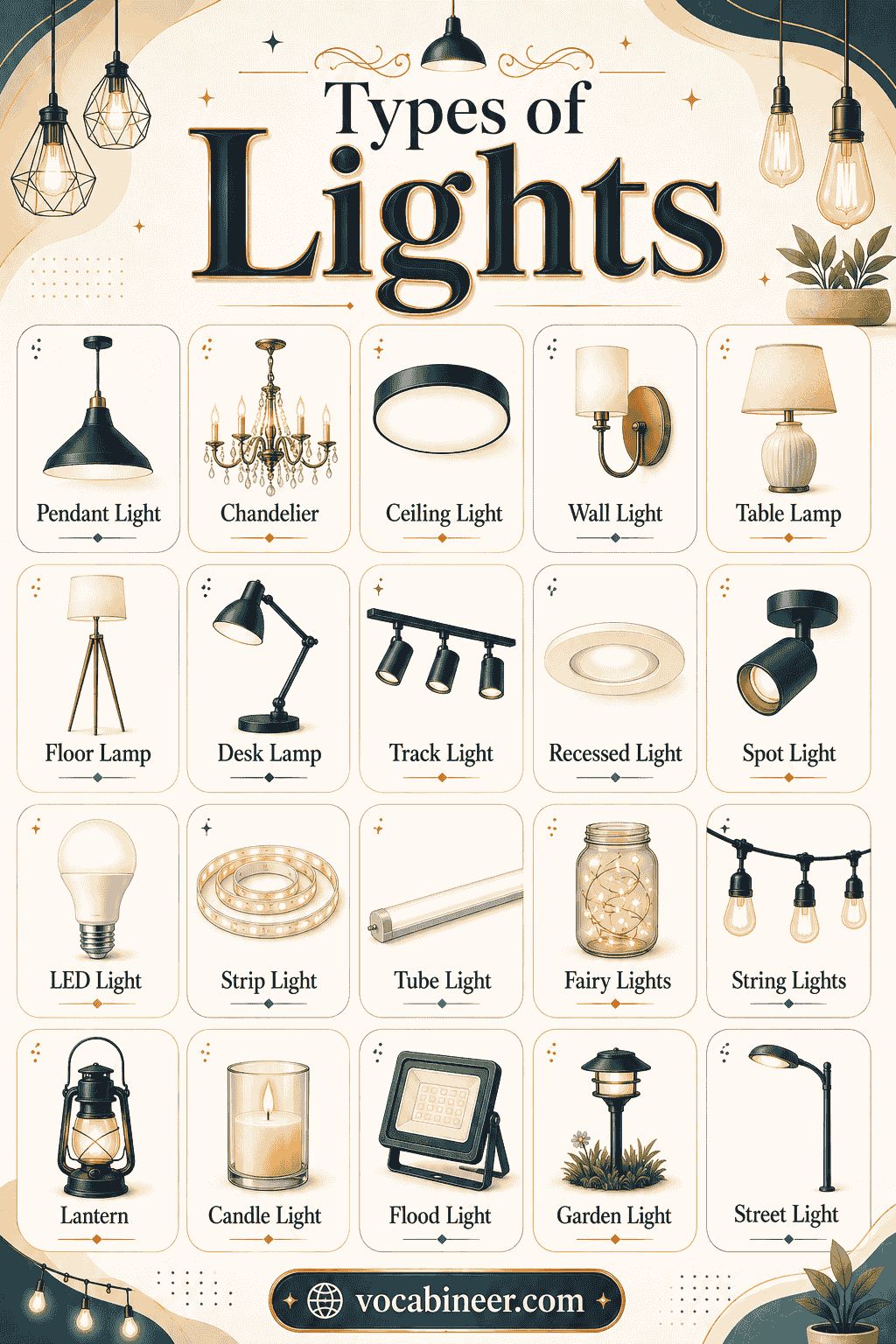
Common types of lights include natural light, artificial light, LED light, fluorescent light, incandescent light, halogen light, solar light, warm light, cool light, and dim light. This guide explains light types in English with simple meanings, examples, pictures, lighting uses, and helpful comparisons.
In This Page
What Are Lights?
Lights are sources or forms of brightness that help people see objects, spaces, signs, roads, and surroundings. Light can come from natural sources, such as the sun and moon, or artificial sources, such as bulbs, lamps, LEDs, candles, and electrical lighting systems.
People use different types of lights for different purposes. For example, bright light helps with work and study, while warm light creates a calm and comfortable feeling. Because light affects visibility, mood, color, and safety, choosing the right type of light matters in homes, schools, offices, photography, streets, and outdoor spaces.
Common Types of Lights
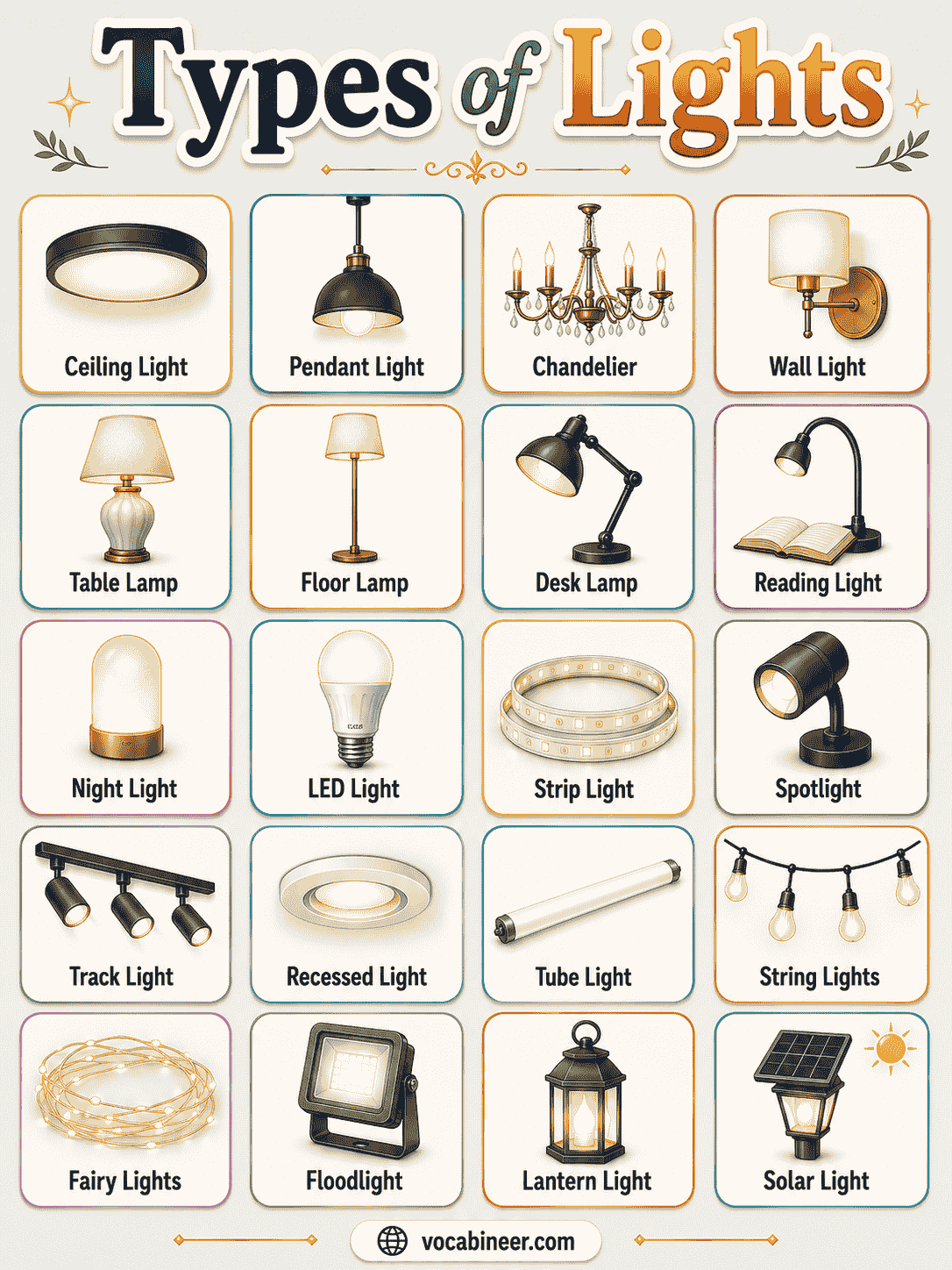
These are some of the most common types of lights in English. They are useful for science vocabulary, home lighting, photography words, electrical vocabulary, and ESL learning.
Natural light
Natural light comes from nature. Sunlight, moonlight, starlight, and firelight are common examples.
Artificial light
Artificial light is made by humans. Electric bulbs, lamps, LEDs, candles, and neon signs can produce artificial light.
LED light
Using light-emitting diode technology, LED light is energy-efficient, long-lasting, and common in homes, offices, screens, vehicles, and signs.
Fluorescent light
Often found in offices, shops, classrooms, and commercial spaces, fluorescent light comes from fluorescent tubes or bulbs.
Incandescent light
Older filament bulbs produce incandescent light with a warm tone. However, this type usually uses more energy than LED light.
Halogen light
Halogen light gives bright and clear illumination. It uses a halogen bulb and can become hot during use.
Solar light
Solar light uses energy from sunlight. It is common in garden lights, pathway lighting, and outdoor spaces.
Warm light
Warm light looks yellow, soft, or cozy. People often use it in bedrooms, living rooms, restaurants, and relaxing spaces.
Cool light
Cool light looks white or slightly blue. It is useful in offices, study rooms, kitchens, and work areas.
Dim light
Dim light gives low brightness. It creates a calm feeling and is often used at night or in relaxing spaces.
Natural and Artificial Light
Natural and artificial light are two major groups of light. One comes from nature, while the other is created by people using electricity, fire, fuel, or technology.
Natural Light
Light from nature is called natural light. Sunlight is the strongest and most common example in daily life.
Examples of natural light include:
- Sunlight
- Moonlight
- Starlight
- Firelight
- Lightning
- Bioluminescent light
Artificial Light
Artificial light is created by people using tools, electricity, fuel, or technology. It helps people see when natural light is not enough.
Examples of artificial light include:
- Electric light
- LED light
- Candlelight
- Neon light
- Laser light
- Fluorescent light
Direct Light
Direct light shines straight from a source onto an object or area. For example, sunlight through a window or a desk lamp shining on a book can create direct light.
Direct light is useful when people need strong brightness for reading, studying, cooking, or working.
Indirect Light
Indirect light does not shine straight onto the object. Instead, it bounces off a wall, ceiling, or surface before spreading through the space.
This light often feels softer and more comfortable than direct light. As a result, many homes, hotels, and restaurants use indirect lighting to create a calm atmosphere.
Reflected Light
Reflected light bounces from one surface to another. A mirror, white wall, shiny floor, or water surface can reflect light.
Reflected light helps brighten a space without adding more light sources. It is also important in photography, interior design, and science lessons.
Light Sources and Examples
A light source is anything that produces or gives off light. Some light sources are natural, while others are human-made.
Sunlight
Sunlight is natural light from the sun. It helps plants grow and gives brightness during the day.
Moonlight
Moonlight is sunlight reflected from the moon. It gives soft natural light at night.
Firelight
Firelight comes from flames. It creates warm light and is common in campfires, fireplaces, and candles.
Candlelight
Candlelight comes from a burning candle. It gives soft, warm, and gentle light.
Electric light
Electric light comes from electrical power. Bulbs, lamps, tube lights, and many modern lighting systems use electric light.
LED light
LED light is produced by LED technology. It is used in bulbs, screens, signs, cars, and smart lighting.
Solar light
Solar light uses energy collected from sunlight. It is helpful for outdoor spaces and areas with limited electricity.
Neon light
Neon light creates bright colored light. It is often used in signs, decoration, and display boards.
Laser light
Laser light is a focused beam of light. It is used in science, medicine, barcode scanners, projectors, and light shows.
UV light
UV light means ultraviolet light. It is invisible to human eyes and appears in science, cleaning, and special lighting applications. UV light should be used carefully because strong ultraviolet exposure can harm the skin or eyes.
Light Colors and Temperature
Light color and temperature describe how light looks to the eyes. Some light feels warm and yellow, while other light feels cool, white, or blue.
Warm light
Warm light looks yellow or golden. It creates a cozy and relaxing feeling.
Cool light
Cool light looks white or slightly blue. It feels clear, bright, and active.
White light
White light looks clean and balanced. It is common in homes, offices, schools, and shops.
Yellow light
Yellow light feels soft and warm. It is often used in bedrooms, living rooms, and decorative spaces.
Blue light
Blue light has a cool tone. Screens, LEDs, and some modern lights can produce blue light.
Colored light
Colored light can appear red, green, blue, purple, pink, or many other colors. It is common in events, signs, decorations, and stage lighting.
RGB light
RGB light uses red, green, and blue colors to create many color combinations. It is common in gaming rooms, LED strips, and decorative lighting.
Daylight
Daylight is bright white light that looks similar to natural daytime light. It is useful in workspaces, classrooms, and study areas.
Soft white light
Soft white light has a warm and gentle tone. It is common in homes and relaxing spaces.
Bright white light
Bright white light looks clear and strong. It works well in kitchens, offices, garages, and work areas.
Brightness Levels and Lighting Effects
Light can change the mood and appearance of a space. Brightness, direction, and spread all affect how light feels.
Bright light
Bright light gives strong illumination. It helps people see clearly in work areas, classrooms, kitchens, and outdoor spaces.
Dim light
Dim light gives low brightness. It creates a calm feeling and works well at night or in relaxing rooms.
Soft light
Soft light spreads gently and reduces sharp shadows. It is useful in portraits, bedrooms, restaurants, and calm spaces.
Harsh light
Harsh light feels strong and direct. It can create sharp shadows and high contrast.
Glowing light
Glowing light gives a soft shine. It often looks warm, gentle, or decorative.
Flashing light
Flashing light turns on and off quickly. It is used for warnings, signals, emergency vehicles, and attention-grabbing displays.
Flickering light
Flickering light changes brightness quickly or unevenly. Candle flames, firelight, or faulty bulbs can create flickering light.
Focused light
Focused light shines on a specific area. Reading lamps, spotlights, and task lights often use focused light.
Diffused light
Diffused light spreads evenly. It feels softer and reduces strong shadows.
Backlight
Backlight comes from behind a subject or object. It can create a glow, outline, shadow effect, or dramatic visual style in photography, stage lighting, and design.
Lighting Types by Purpose
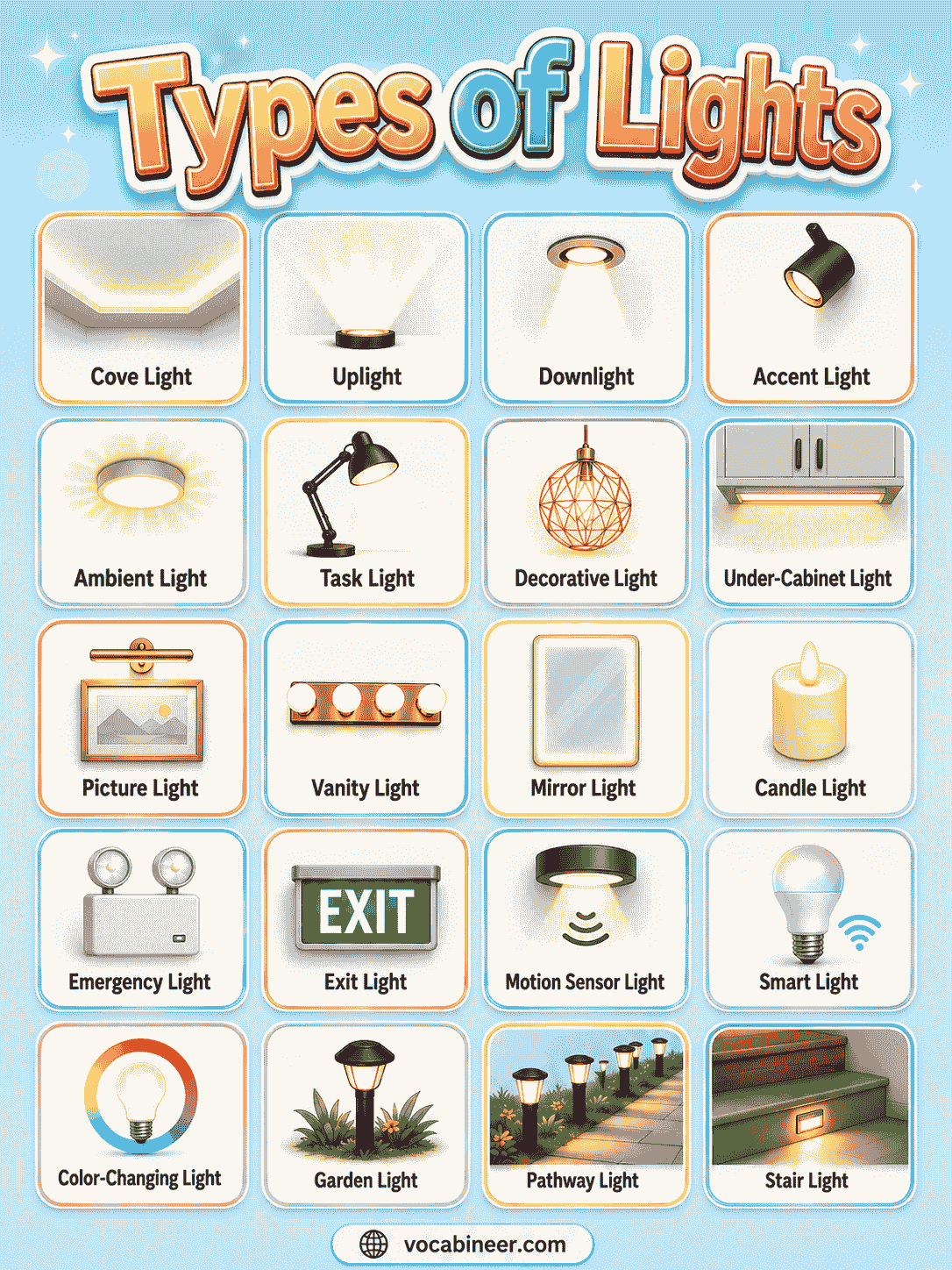
Lighting types can be grouped by purpose. Some lighting helps people work, while other lighting creates mood, safety, decoration, or focus.
Ambient light
Ambient light provides general brightness for a whole room or space. It is the main layer of lighting in many homes.
Task light
Task light helps with a specific activity. Reading, writing, cooking, sewing, and studying often need task lighting.
Accent light
Accent light highlights a special area, object, wall, or decoration. It is often used for artwork, shelves, plants, or display corners.
Decorative light
Decorative light adds beauty and style. It may not be the main light source, but it improves the look of a space.
Mood light
Mood light creates a feeling or atmosphere. It can be warm, colorful, soft, dim, or relaxing.
Emergency light
Emergency light helps during power cuts, danger, or urgent situations. It is common in buildings, vehicles, and safety systems.
Security light
Security light improves safety by lighting outdoor areas, entrances, gates, or dark corners.
Reading light
Reading light gives focused brightness for books, pages, or documents. It helps reduce eye strain during reading.
Studio light
Studio light is used in photography, video, and content creation. It helps control brightness, shadows, and subject appearance.
Stage light
Stage light is used in theaters, concerts, events, and performances. It helps focus attention and create visual effects.
Indoor and Outdoor Lighting Uses
Lights serve different purposes indoors and outdoors. Inside buildings, lighting often supports comfort, tasks, and decoration. Outside, it usually improves safety, visibility, and space coverage.
Indoor Lighting
Inside homes, schools, offices, shops, hotels, and public buildings, lighting helps people see clearly and use rooms more comfortably.
Common indoor lighting uses include:
- Room lighting
- Reading lighting
- Study lighting
- Kitchen lighting
- Office lighting
- Decorative lighting
Outdoor Lighting
Outdoor lighting is used outside buildings, gardens, roads, parks, and public spaces. It improves visibility and safety at night.
Common outdoor lighting uses include:
- Pathway lighting
- Garden lighting
- Street lighting
- Porch lighting
- Security lighting
- Parking area lighting
Street Lighting
Street lighting helps illuminate roads, sidewalks, crossings, and public areas at night. It improves safety for drivers and pedestrians.
Street lighting usually needs strong, wide, and reliable illumination.
Garden Lighting
Garden lighting highlights plants, paths, walls, fountains, or outdoor seating areas. It can be decorative and practical at the same time.
Solar lighting, pathway lighting, and soft accent lighting are common in gardens.
Room Lighting
Room lighting includes all lights used inside a room. It may include general light, task light, accent light, or mood light.
Good room lighting often combines more than one lighting type. For example, a living room may use ambient light, table lamps, and accent lights together.
Light vs Lamp
The words light and lamp are related, but they do not always mean the same thing.
| Term | Meaning |
|---|---|
| Light | The brightness or illumination produced by a source, such as the sun, a bulb, fire, or lamp. |
| Lamp | A lighting object or fixture that holds a bulb or light source. |
In simple words, light is the brightness, while a lamp is an object that produces or holds that light.
Differences Between Common Light Types
Some light types look or sound similar, but they have different meanings, uses, and effects.
| Comparison | Main Difference |
|---|---|
| Natural light vs artificial light | Natural light comes from nature; artificial light is made by humans using bulbs, lamps, or electricity. |
| Warm light vs cool light | Warm light looks yellow or soft; cool light looks white or slightly blue. |
| Direct light vs indirect light | Direct light shines straight on an area; indirect light bounces or spreads before reaching the area. |
| Ambient light vs task light | Ambient light lights a whole space; task light helps with a specific activity. |
| Soft light vs harsh light | Soft light spreads gently and creates softer shadows; harsh light is stronger and creates sharper shadows. |
| LED light vs incandescent light | LED light is energy-efficient and modern; incandescent light uses an older heated filament bulb. |
How to Choose the Right Light for a Space
Choosing the right light becomes easier when you think about the space, activity, brightness, color, and mood. A good light should match both the place and the purpose.
Helpful points:
- Use warm light for bedrooms, living rooms, and relaxing spaces.
- Choose cool light for offices, study rooms, kitchens, and work areas.
- Use task light for reading, writing, cooking, or detailed work.
- Choose ambient light for general room brightness.
- Use accent light to highlight artwork, shelves, plants, or walls.
- Choose security light for entrances, gates, and dark outdoor areas.
- Use soft light for portraits, calm rooms, and cozy spaces.
- Choose bright light when clear visibility is important.
Common Light Type Confusions
Learners often confuse light types because many words sound similar. However, each term describes a different source, color, brightness, direction, or purpose.
Common confusions include:
- Calling every artificial light an LED light
- Confusing warm light and yellow light
- Using cool light and daylight as the same term
- Confusing direct light and focused light
- Calling ambient light and mood light the same thing
- Confusing soft light and dim light
- Using lamp when they mean light
- Mixing up task light and accent light
Light Types Chart with Pictures
A light types picture chart helps learners connect lighting words with real examples. It is useful for students, ESL learners, science lessons, home vocabulary, photography vocabulary, worksheets, and visual learning.
Picture chart ideas:
- Natural lights: sunlight, moonlight, firelight
- Artificial lights: electric light, LED light, neon light
- Color lights: warm light, cool light, colored light
- Brightness effects: bright light, dim light, soft light
- Purpose-based lighting: ambient light, task light, accent light
- Outdoor lighting: street lighting, garden lighting, security lighting
FAQ
Common types of lights include natural light, artificial light, LED light, fluorescent light, incandescent light, halogen light, solar light, warm light, cool light, and dim light.
Light is the brightness or illumination produced by a source. A lamp is an object or fixture that holds a bulb or produces light.
Natural light comes from nature, such as sunlight, moonlight, and firelight. Artificial light is made by humans using electricity, bulbs, lamps, candles, or other lighting tools.
Task light, reading light, or cool white light is usually helpful for reading or studying because it gives focused brightness and improves visibility.
Warm light looks yellow, soft, and cozy, while cool light looks white or slightly blue. Warm light is common in relaxing spaces, while cool light is often used in work or study areas.
Read More