Lamps are lighting objects used to brighten rooms, work areas, outdoor spaces, and decorative corners. They can give focused light for reading, soft light for bedrooms, bright light for offices, or decorative light for home design. In addition, lamps come in many shapes, sizes, materials, styles, and light sources.
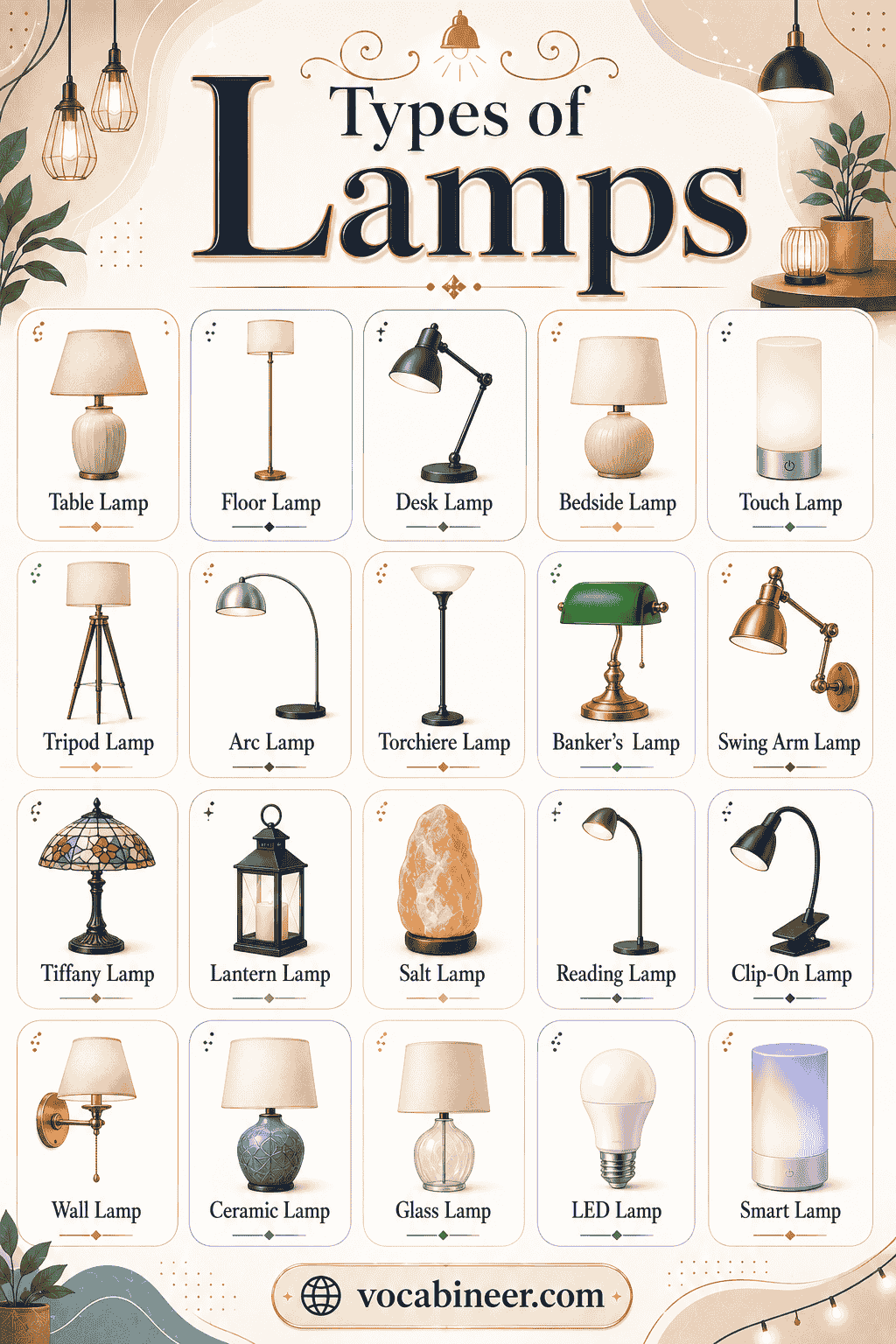
Common types of lamps include table lamp, desk lamp, floor lamp, bedside lamp, wall lamp, ceiling lamp, pendant lamp, chandelier lamp, reading lamp, and night lamp. This guide explains lamp types in English with simple meanings, examples, room uses, parts vocabulary, comparisons, and picture ideas.
In This Page
What Are Lamps?
Lamps are lighting fixtures or objects that hold a bulb, LED, flame, or other light source. People use lamps to add brightness, improve visibility, create mood, decorate rooms, and support daily tasks.
Usually, a lamp includes parts such as a base, shade, bulb, switch, cord, socket, stand, or frame. However, lamp designs can vary widely. For example, a desk lamp may have an adjustable arm, while a pendant lamp hangs from the ceiling.
Common Lamp Types
These are some of the most common lamp types in English. They are useful for home vocabulary, lighting vocabulary, interior design words, and ESL learning.
Table lamp
A table lamp sits on a table, side table, or console. It gives general light and can also decorate a room.
Desk lamp
A desk lamp is used on a desk for reading, writing, studying, or working. Many desk lamps give focused light.
Floor lamp
A floor lamp stands on the floor and usually has a tall stand. It can brighten corners, living rooms, bedrooms, or reading areas.
Bedside lamp
A bedside lamp sits near a bed, usually on a nightstand. It gives soft light for reading, relaxing, or nighttime use.
Wall lamp
A wall lamp is fixed to a wall. It saves space and can provide accent light, reading light, or hallway light.
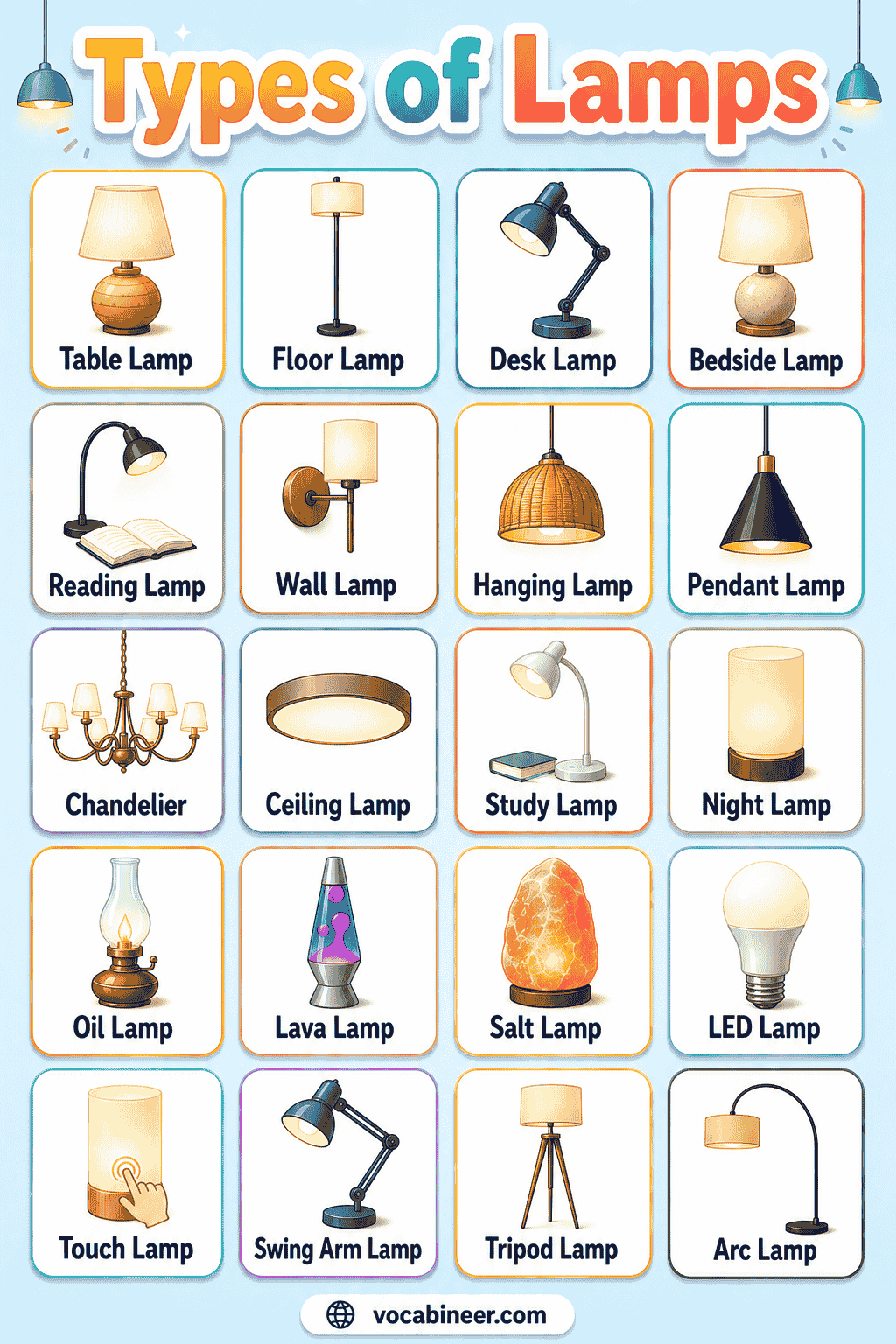
Ceiling lamp
A ceiling lamp is attached to the ceiling. It provides overhead light for a room.
Pendant lamp
A pendant lamp hangs from the ceiling by a cord, chain, or rod. It is common above dining tables, kitchen counters, and entryways.
Chandelier lamp
A chandelier lamp hangs from the ceiling and often has several lights or branches. It creates a decorative and elegant look.
Reading lamp
A reading lamp gives focused light for reading books, magazines, or documents. It is often used beside beds, chairs, or desks.
Night lamp
A night lamp gives soft, low light at night. It helps people move around without turning on bright lights.
Lamps for Different Rooms and Spaces
Different rooms need different types of lamps. For example, a study room needs focused light, while a bedroom often needs soft and relaxing light.
Living Room Lamps
Living room lamps help create comfort, style, and balanced lighting. They can brighten seating areas, corners, side tables, and decorative spaces.
Common living room lamps include:
- Table lamp
- Floor lamp
- Wall lamp
- Corner lamp
- Accent lamp
- Mood lamp
- Decorative lamp
- Smart lamp
Bedroom Lamps
Bedroom lamps usually provide soft, warm, and comfortable light. They are useful for reading, relaxing, dressing, and nighttime movement.
Common bedroom lamps include:
- Bedside lamp
- Night lamp
- Reading lamp
- Table lamp
- Wall-mounted lamp
- Touch lamp
- Dimmable lamp
- Soft light lamp
Study and Office Lamps
Study and office lamps give clear, focused light for reading, writing, working, and using a computer. Good task lighting can reduce eye strain and improve focus.
Common study and office lamps include:
- Desk lamp
- Study lamp
- Work lamp
- Task lamp
- LED desk lamp
- Adjustable arm lamp
- Clip-on lamp
- Smart desk lamp
Hallway and Entryway Lamps
Hallway and entryway lamps help people see paths, doors, walls, and corners. They also make the entrance area look warmer and more welcoming.
Common hallway and entryway lamps include:
- Wall lamp
- Ceiling lamp
- Pendant lamp
- Flush mount lamp
- Lantern lamp
- Console table lamp
- Motion sensor lamp
- Entryway chandelier
Outdoor Lamps
Outdoor lamps provide light for gardens, patios, pathways, gates, porches, and outdoor seating areas. They often need stronger materials and weather-friendly designs.
Common outdoor lamps include:
- Garden lamp
- Patio lamp
- Pathway lamp
- Solar lamp
- Street lamp
- Wall-mounted outdoor lamp
- Lantern lamp
- Security lamp
Lamps for Different Uses
Lamps are often named by purpose. Some lamps help with work, while others create decoration, mood, safety, or outdoor light.
Reading lamp
A reading lamp gives focused light for books, magazines, and close work. It is useful near beds, desks, and reading chairs.
Study lamp
A study lamp gives clear light for schoolwork, writing, and learning. Many study lamps have adjustable heads or arms.
Work lamp
A work lamp provides strong light for tasks, repairs, crafts, or office work. It is usually brighter than a decorative lamp.
Night lamp
A night lamp gives low light during the night. It is useful in bedrooms, children’s rooms, and hallways.
Decorative lamp
A decorative lamp improves the look of a room. It may have a stylish base, shade, color, or shape.
Task lamp
A task lamp gives focused light for a specific activity. Reading, sewing, writing, and desk work often need task lighting.
Accent lamp
An accent lamp highlights a small area, object, wall, or corner. It adds visual interest instead of lighting the whole room.
Mood lamp
A mood lamp creates soft or colored light for atmosphere. It is used for relaxing spaces, bedrooms, or decorative settings.
Emergency lamp
An emergency lamp provides light during power cuts or emergencies. Many emergency lamps use batteries or rechargeable power.
Camping lamp
A camping lamp is portable and useful outdoors. It helps provide light in tents, campsites, and travel situations.
Lamp Styles and Designs
Lamp style affects how a room looks and feels. Some lamps look modern and simple, while others look vintage, rustic, decorative, or luxurious.
Modern lamp
A modern lamp has a clean and stylish design. It often uses simple shapes, smooth finishes, or LED light.
Vintage lamp
A vintage lamp is inspired by older designs. It may include antique shapes, warm colors, glass details, or metal finishes.
Industrial lamp
An industrial lamp often uses metal, exposed bulbs, dark colors, or factory-style details. It gives a bold and raw look.
Rustic lamp
A rustic lamp uses natural textures like wood, rope, stone, or aged metal. It creates a warm country-style feel.
Minimalist lamp
A minimalist lamp has a simple design with very few details. It suits clean, modern, and uncluttered spaces.
Traditional lamp
A traditional lamp has a classic design. It often includes fabric shades, curved bases, or warm colors.
Boho lamp
A boho lamp may use rattan, bamboo, fabric, beads, or handmade-style details. It gives a relaxed and artistic look.
Luxury lamp
A luxury lamp uses elegant materials, polished finishes, or detailed designs. It adds a high-end decorative touch.
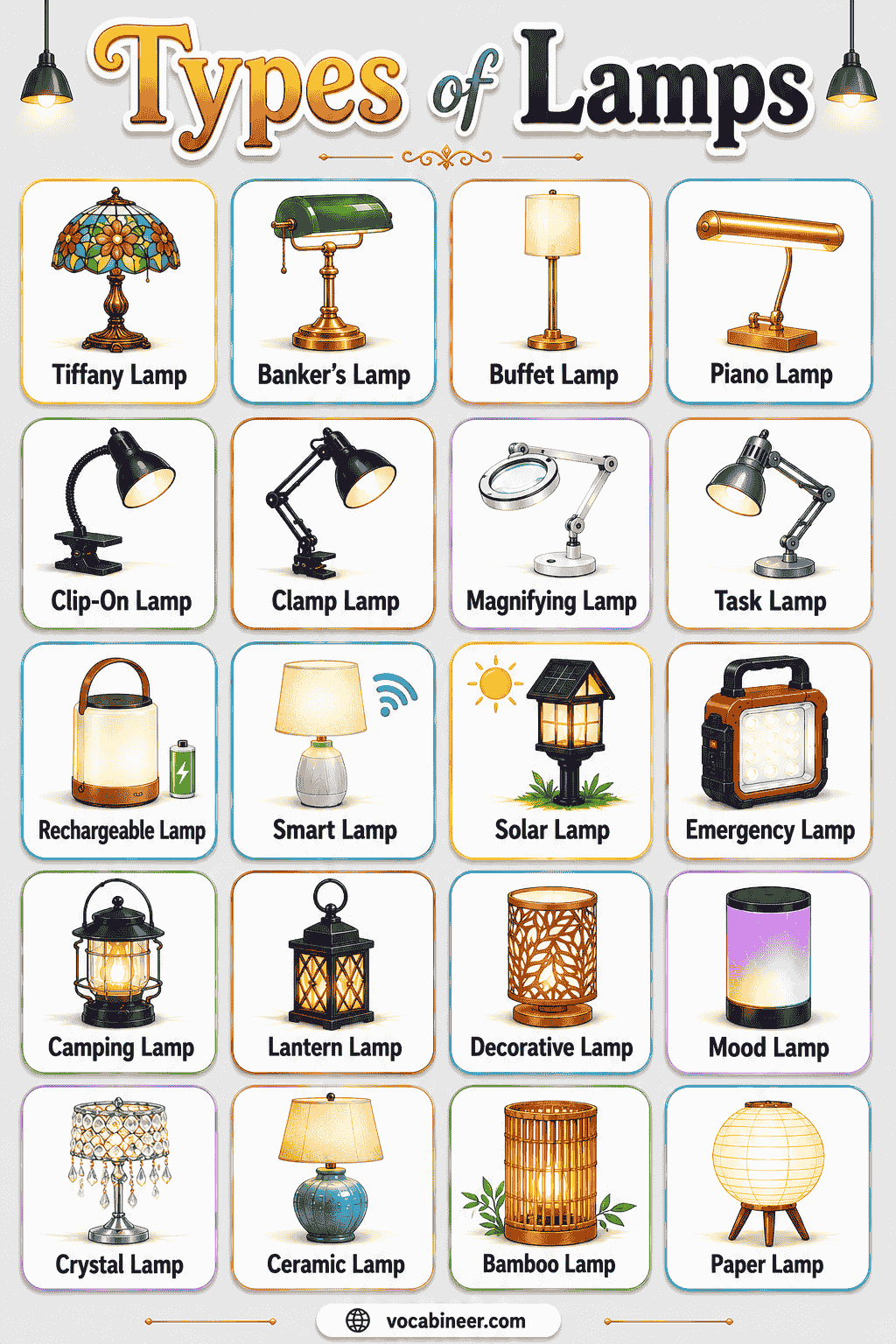
Crystal lamp
A crystal lamp includes crystal parts or crystal-like details. It reflects light and creates a sparkling effect.
Smart lamp
A smart lamp connects to apps, remotes, or voice control. It may change brightness, color, or lighting schedules.
Lamp Light Sources
Lamp light sources affect brightness, energy use, heat, and color. Therefore, knowing these terms helps readers understand different lamp types more clearly.
LED lamp
An LED lamp uses light-emitting diode technology. It is energy-efficient, long-lasting, and common in modern homes.
Halogen lamp
A halogen lamp gives bright light and uses a halogen bulb. It can become hot during use.
Fluorescent lamp
A fluorescent lamp uses fluorescent tube or bulb technology. It is common in offices, shops, and older lighting setups.
Incandescent lamp
An incandescent lamp uses an older filament bulb. It gives warm light but uses more energy than LED lighting.
Solar lamp
A solar lamp uses sunlight for power. It is common in gardens, pathways, and outdoor spaces.
Battery-powered lamp
A battery-powered lamp works without a wall outlet. It is useful for travel, camping, emergencies, or movable lighting.
Rechargeable lamp
A rechargeable lamp can be charged and used without staying plugged in. It works well during power cuts or outdoor use.
Oil lamp
An oil lamp uses oil as fuel. It is traditional and often used for decoration, history lessons, or emergency lighting.
Candle lamp
A candle lamp uses a candle or candle-like light source. It gives soft, warm, and decorative light.
Smart LED lamp
A smart LED lamp combines LED lighting with smart controls. Users can adjust brightness, colors, or timers.
Lamp Materials and Shade Styles
Lamp materials affect durability, style, light diffusion, and room design. In addition, the shade controls how light spreads in a space.
Fabric shade lamp
A fabric shade lamp has a lampshade made from cloth or fabric. It gives soft and warm light.
Glass lamp
A glass lamp uses glass in the base, shade, or body. It can look modern, classic, or decorative.
Metal lamp
A metal lamp uses metal parts such as steel, brass, iron, or aluminum. It often feels strong and durable.
Wooden lamp
A wooden lamp has a wood base, frame, or stand. It adds a natural and warm look.
Ceramic lamp
A ceramic lamp uses ceramic material in the base. It often appears in decorative table lamps.
Crystal lamp
A crystal lamp includes crystal-like details. It reflects light and adds sparkle to a room.
Bamboo lamp
A bamboo lamp uses bamboo material. It suits natural, boho, tropical, or eco-style rooms.
Paper lamp
A paper lamp uses paper or paper-like material for the shade. It gives soft, diffused light.
Plastic lamp
A plastic lamp is lightweight and often affordable. It appears in children’s rooms, study spaces, or portable designs.
Rattan lamp
A rattan lamp uses woven rattan material. It gives a natural, relaxed, and handmade-style look.
Outdoor and Portable Lighting Lamps
Outdoor and portable lamps are useful when fixed indoor lighting is not enough. They help with gardens, travel, camping, patios, emergencies, and pathways.
Garden lamp
A garden lamp lights plants, paths, or outdoor decorations. It is often placed in soil or along garden edges.
Patio lamp
A patio lamp lights outdoor seating areas. It helps make patios comfortable in the evening.
Lantern lamp
A lantern lamp has a handle or enclosed light design. It can be used indoors, outdoors, or during travel.
Camping lamp
A camping lamp is made for outdoor trips. It usually gives portable light for tents and campsites.
Solar lamp
A solar lamp charges from sunlight. It is useful for gardens, gates, and pathways.
Rechargeable lamp
A rechargeable lamp can be charged and carried. It works well during power cuts and outdoor use.
Battery lamp
A battery lamp runs on batteries. It is useful when electricity is not available.
Emergency lamp
An emergency lamp provides backup light during power failures. Many emergency lamps are rechargeable.
Street lamp
A street lamp lights roads, streets, and public outdoor areas. It helps improve visibility at night.
Pathway lamp
A pathway lamp lights walkways, garden paths, and outdoor steps. It improves safety and decoration.
Lamp Parts Vocabulary
Lamp parts vocabulary helps learners describe how a lamp is built. These words are useful for home vocabulary, shopping, repairs, and product descriptions.
Base
The base is the bottom part of a lamp. It supports the lamp and keeps it steady.
Shade
The shade covers or surrounds the bulb. It softens, directs, or spreads the light.
Bulb
The bulb is the part that produces light. It may be LED, halogen, fluorescent, or incandescent.
Switch
The switch turns the lamp on or off. Some lamps use touch switches, pull chains, or buttons.
Cord
The cord connects the lamp to electricity. Some modern lamps may be cordless or rechargeable.
Stand
The stand holds the lamp upright. It is common in floor lamps and desk lamps.
Arm
The arm is a movable or fixed part that supports the light head. Adjustable desk lamps often have arms.
Socket
The socket holds the bulb in place. It connects the bulb to the lamp’s power source.
Frame
The frame is the structure that supports the lamp body or shade. It gives the lamp its shape.
Diffuser
A diffuser spreads light more evenly. It helps reduce harsh brightness or glare.
Lamp vs Light
The words lamp and light are related, but they do not always mean the same thing.
| Term | Meaning |
|---|---|
| Lamp | A lighting object or fixture that holds a bulb or light source. |
| Light | The brightness or illumination produced by a lamp, bulb, sun, or other source. |
In simple words, a lamp is the object, while light is what the object produces.
Differences Between Common Lamp Types
Some lamp types look similar, but they have different uses, placements, and lighting effects.
| Comparison | Main Difference |
|---|---|
| Table lamp vs desk lamp | A table lamp is often decorative or general-purpose; a desk lamp is mainly used for reading, writing, or work. |
| Floor lamp vs table lamp | A floor lamp stands on the floor; a table lamp sits on a table, desk, or bedside stand. |
| Wall lamp vs ceiling lamp | A wall lamp is fixed to a wall; a ceiling lamp is attached to the ceiling. |
| Pendant lamp vs chandelier | A pendant lamp usually has one hanging light; a chandelier has multiple branches or lights. |
| Reading lamp vs night lamp | A reading lamp gives focused light; a night lamp gives soft light for nighttime comfort. |
| LED lamp vs incandescent lamp | An LED lamp uses energy-efficient LED technology; an incandescent lamp uses an older heated filament bulb. |
How to Choose a Lamp for Your Room
Choosing a lamp becomes easier when you think about the room, purpose, brightness, size, and style. A good lamp should match both the activity and the space.
Helpful points:
- Use a desk lamp for studying, writing, or office work.
- Place a bedside lamp near the bed for soft nighttime light.
- Choose a floor lamp for corners, reading chairs, or living rooms.
- Use a wall lamp when you want light without using table space.
- Pick a night lamp for soft light in bedrooms or children’s rooms.
- Choose a solar lamp or pathway lamp for outdoor areas.
- Use a decorative lamp when style matters as much as brightness.
- Select a lamp size that matches the table, room, and furniture.
Common Lamp Buying and Placement Mistakes
Lamp mistakes can make a room feel too dark, too bright, or uncomfortable. However, simple planning can make lighting more useful and attractive.
Common mistakes include:
- Choosing a lamp that is too small for the room
- Using a very bright lamp beside a bed
- Placing a reading lamp too far from the reading area
- Buying a decorative lamp that does not give enough light
- Ignoring bulb type, brightness, or color temperature
- Using only one light source in a large room
- Placing floor lamps where people may trip over the cord
- Choosing outdoor lamps that are not suitable for weather exposure
Lamp Types Chart with Pictures
A lamp picture chart helps learners connect lamp names with real lighting objects. It is useful for students, ESL learners, home vocabulary lessons, interior design words, worksheets, and visual learning.
Picture chart ideas:
- Indoor lamps: table lamp, floor lamp, wall lamp
- Work lamps: desk lamp, study lamp, task lamp
- Bedroom lamps: bedside lamp, night lamp, reading lamp
- Decorative lamps: chandelier, crystal lamp, mood lamp
- Outdoor lamps: garden lamp, patio lamp, pathway lamp
- Portable lamps: camping lamp, emergency lamp, rechargeable lamp
FAQ
Common types of lamps include table lamp, desk lamp, floor lamp, bedside lamp, wall lamp, ceiling lamp, pendant lamp, chandelier lamp, reading lamp, and night lamp.
A lamp is the object or fixture that holds a bulb or light source. Light is the brightness or illumination produced by a lamp, bulb, sun, or another source.
A reading lamp or desk lamp is best for reading because it gives focused light. Adjustable lamps are especially useful because they can direct light toward a book or page.
A bedside lamp, night lamp, wall-mounted lamp, or soft table lamp works well in a bedroom. These lamps give comfortable light for reading, relaxing, or nighttime use.
Outdoor lamps include garden lamps, patio lamps, pathway lamps, solar lamps, lantern lamps, street lamps, and wall-mounted outdoor lamps.
Read More