

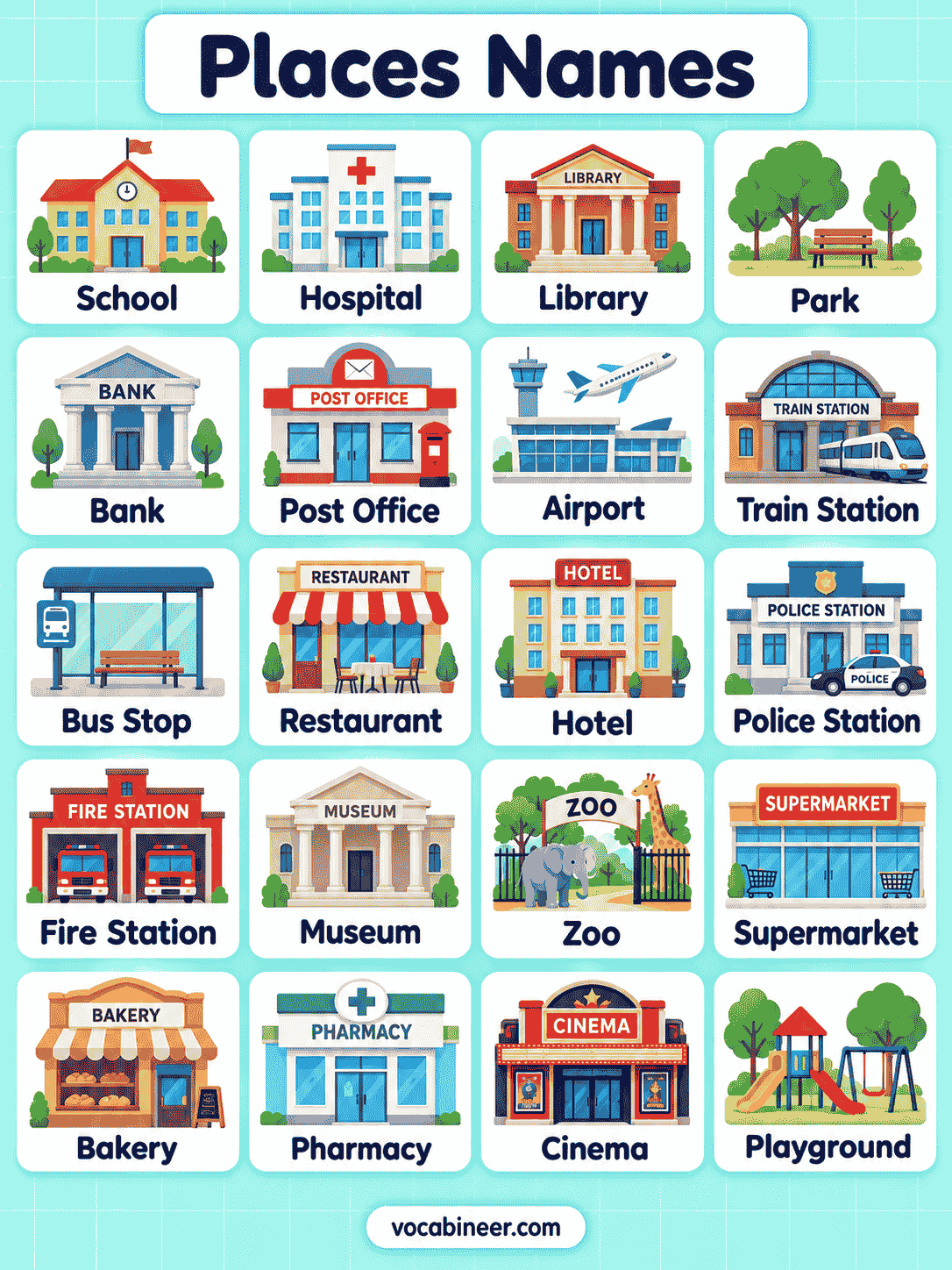
Different places names help English learners describe where people study, work, shop, travel, eat, receive services, exercise, relax, and spend time. Familiar words such as school, hospital, library, supermarket, restaurant, park, airport, museum, and police station appear frequently in everyday conversations, directions, travel, and classroom vocabulary.
Learning place names by category makes them easier to understand and remember. Below, you will learn 100 different places names in English with clear meanings, along with common public places, everyday place vocabulary, sentence examples, useful distinctions, and practical language for talking about locations.
In This Page
100 Different Places Names in English
Places can be buildings, institutions, outdoor areas, transport locations, workplaces, accommodation sites, or natural spaces. The following 100 place names are grouped by their main function so learners can understand both the word and the purpose of the place.
Education Places
Education places are used for learning, teaching, reading, training, and academic activities.
School
A place where children and students receive formal education.
College
A place that provides higher, professional, or specialized education.
University
An institution where students study for degrees and advanced qualifications.
Library
A place where people read, study, research, and borrow books.
Kindergarten
A place where young children receive early education before primary school.
Daycare Center
A place where young children are cared for while parents or guardians are busy.
Training Center
A place where people develop practical, technical, or professional skills.
Language School
A place where students study one or more languages.
Academy
An educational institution that focuses on a particular subject, profession, or skill.
Healthcare Places
Healthcare places provide medical treatment, health advice, medicine, testing, or dental care.
Hospital
A place where patients receive medical treatment, surgery, and emergency care.
Clinic
A smaller medical facility where patients receive consultations and basic treatment.
Pharmacy
A place where medicines and health-related products are sold or dispensed.
Dental Clinic
A place where dentists examine and treat teeth and gums.
Health Center
A facility that provides general medical and community health services.
Medical Center
A larger healthcare facility offering consultations, treatment, and specialist services.
Laboratory
A place where medical samples, tests, and scientific examinations are carried out.
Shopping Places
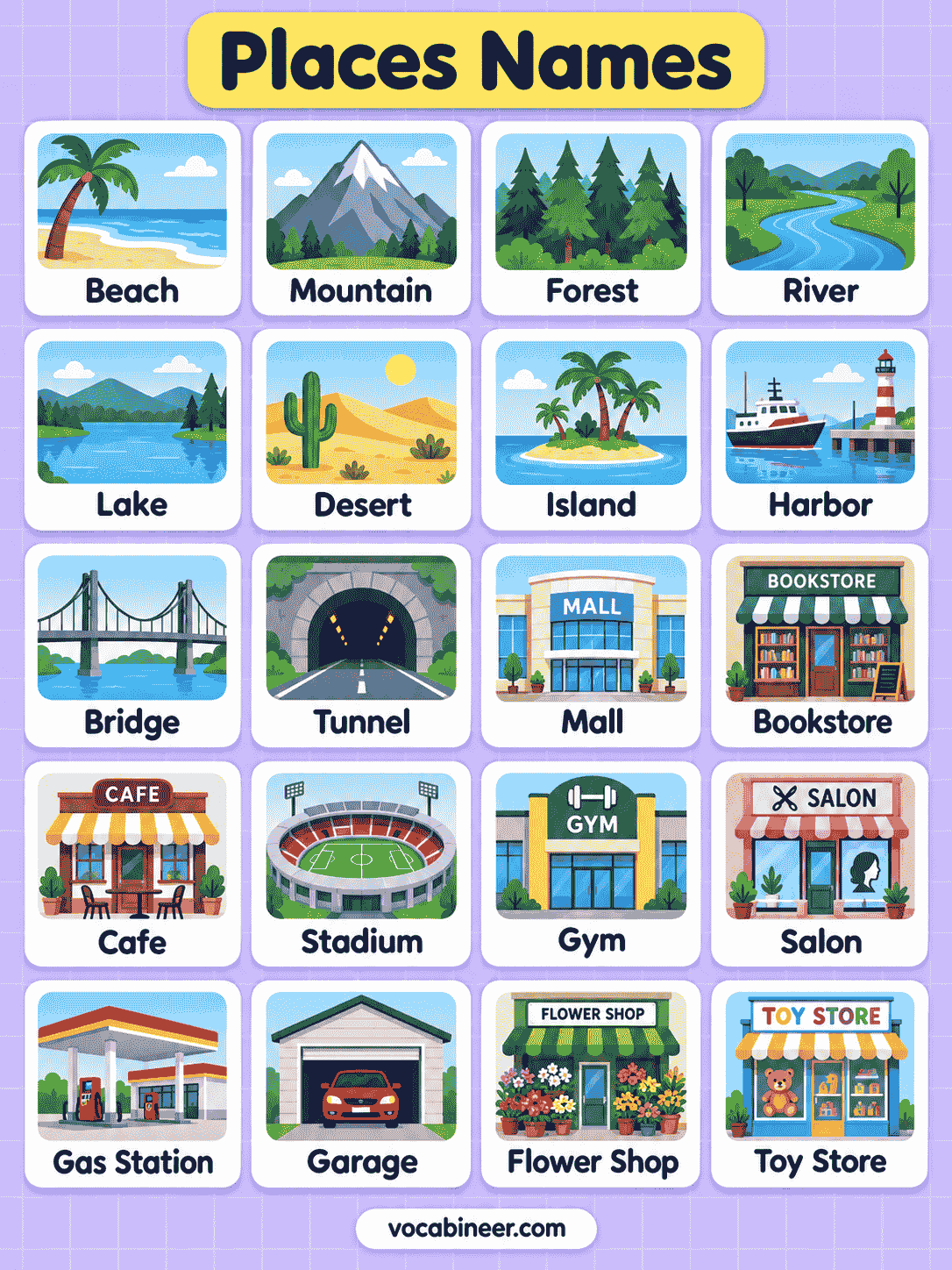
Shopping places sell food, clothing, books, furniture, household products, and other goods.
Supermarket
A large self-service store that sells food, drinks, cleaning products, and household essentials.
Grocery Store
A shop that mainly sells food and everyday grocery items.
Market
A place where different sellers offer food, clothes, household goods, and other products.
Shopping Mall
A large building containing many shops, restaurants, and services.
Department Store
A large store divided into sections that sell different types of products.
Bookstore
A shop where books, magazines, and sometimes stationery are sold.
Clothing Store
A place where people buy shirts, trousers, dresses, jackets, and other clothes.
Shoe Store
A shop that sells shoes, sandals, boots, and other footwear.
Furniture Store
A place where people buy tables, chairs, beds, sofas, and other furniture.
Convenience Store
A small shop that sells frequently needed food, drinks, and everyday items.
Food and Drink Places
These places prepare or sell meals, snacks, desserts, drinks, or baked foods.
Restaurant
A place where people order and eat prepared meals.
Café
A place that usually serves coffee, tea, snacks, and light meals.
Coffee Shop
A place mainly known for coffee, hot drinks, cold drinks, and small snacks.
Bakery
A place where bread, cakes, pastries, biscuits, and other baked foods are made or sold.
Fast-Food Restaurant
A place that serves meals prepared and delivered quickly.
Food Court
An area containing several food outlets with shared seating.
Ice Cream Shop
A place where ice cream, sundaes, cones, and frozen desserts are sold.
Transport Places
Transport places help people travel, wait for vehicles, refuel, transfer routes, or park.
Airport
A place where airplanes arrive, depart, and carry passengers or cargo.
Train Station
A place where passengers board, leave, or transfer between trains.
Bus Station
A larger transport location where buses begin, end, or connect routes.
Bus Terminal
A major station where bus journeys start, finish, or transfer.
Bus Stop
A designated place where passengers wait for a bus.
Subway Station
A place where passengers enter or leave an underground railway system.
Taxi Stand
A designated place where taxis wait to collect passengers.
Petrol Station
A place where cars and other vehicles are refueled.
Parking Lot
An area where cars and other vehicles are parked.
Public Service Places
Public-service places provide safety, postal, legal, financial, administrative, and community services.
Police Station
A place where police officers work and provide public safety services.
Fire Station
A place where firefighters, fire engines, and emergency equipment are based.
Post Office
A place where people send and receive letters, parcels, and postal services.
Bank
A place where people save, withdraw, transfer, or manage money.
Courthouse
A building where judges and courts hear legal cases.
Town Hall
A building used for local government administration and civic activities.
Government Office
A place where public officials provide administrative and official services.
Community Center
A place where local people attend meetings, classes, events, and social activities.
Entertainment and Cultural Places
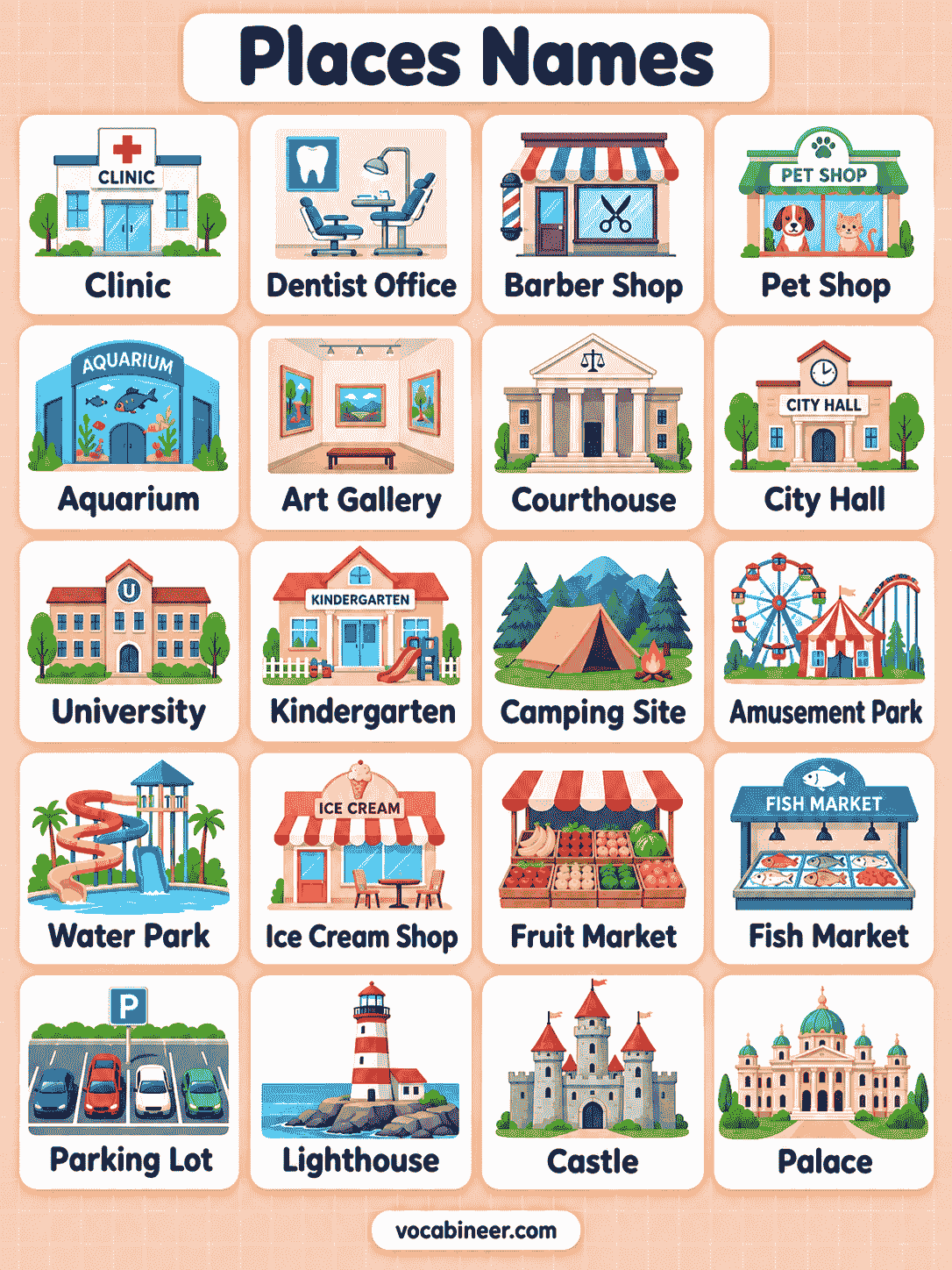
These places are used for entertainment, culture, learning, public events, and leisure.
Cinema
A place where people watch movies on a large screen.
Theater
A place where plays, performances, and stage shows are presented.
Museum
A place where historical, cultural, scientific, or artistic objects are displayed.
Art Gallery
A place where paintings, sculptures, photographs, and other artworks are exhibited.
Zoo
A place where animals are kept for education, conservation, and public viewing.
Aquarium
A place where fish and other aquatic animals and plants are displayed.
Amusement Park
A place with rides, games, attractions, and entertainment.
Concert Hall
A venue designed for live music performances.
Sports and Recreation Places
These places are used for sports, exercise, games, play, and relaxation.
Park
An outdoor public area with grass, trees, paths, and spaces for recreation.
Playground
A place where children play using swings, slides, climbing equipment, and open space.
Stadium
A large venue where sports matches, competitions, and major events take place.
Gym
A place where people exercise using fitness machines, weights, and training equipment.
Sports Center
A facility where people take part in different sports and physical activities.
Swimming Pool
A place designed for swimming, exercise, lessons, or recreation.
Tennis Court
A marked playing area where tennis is played.
Football Field
An outdoor playing area where football matches and practice take place.
Religious Places
Religious places are used for worship, prayer, ceremonies, learning, and community gatherings.
Mosque
A place of worship for Muslims.
Church
A place of worship for Christians.
Temple
A place of worship used in several religious traditions.
Synagogue
A place of worship and community gathering for Jewish people.
Shrine
A religious place associated with a sacred person, object, event, or tradition.
Workplaces
Workplaces are locations where people perform jobs, manufacture products, store goods, repair items, or provide services.
Office
A place where administrative, professional, or business work is carried out.
Factory
A place where products or goods are manufactured.
Farm
A place where crops are grown or animals are raised.
Workshop
A place where repairs, skilled work, crafts, or manufacturing take place.
Warehouse
A large building where goods, products, and materials are stored.
Construction Site
A place where a building, road, bridge, or other structure is being built.
Garage
A place where vehicles may be stored, repaired, or serviced.
Accommodation Places
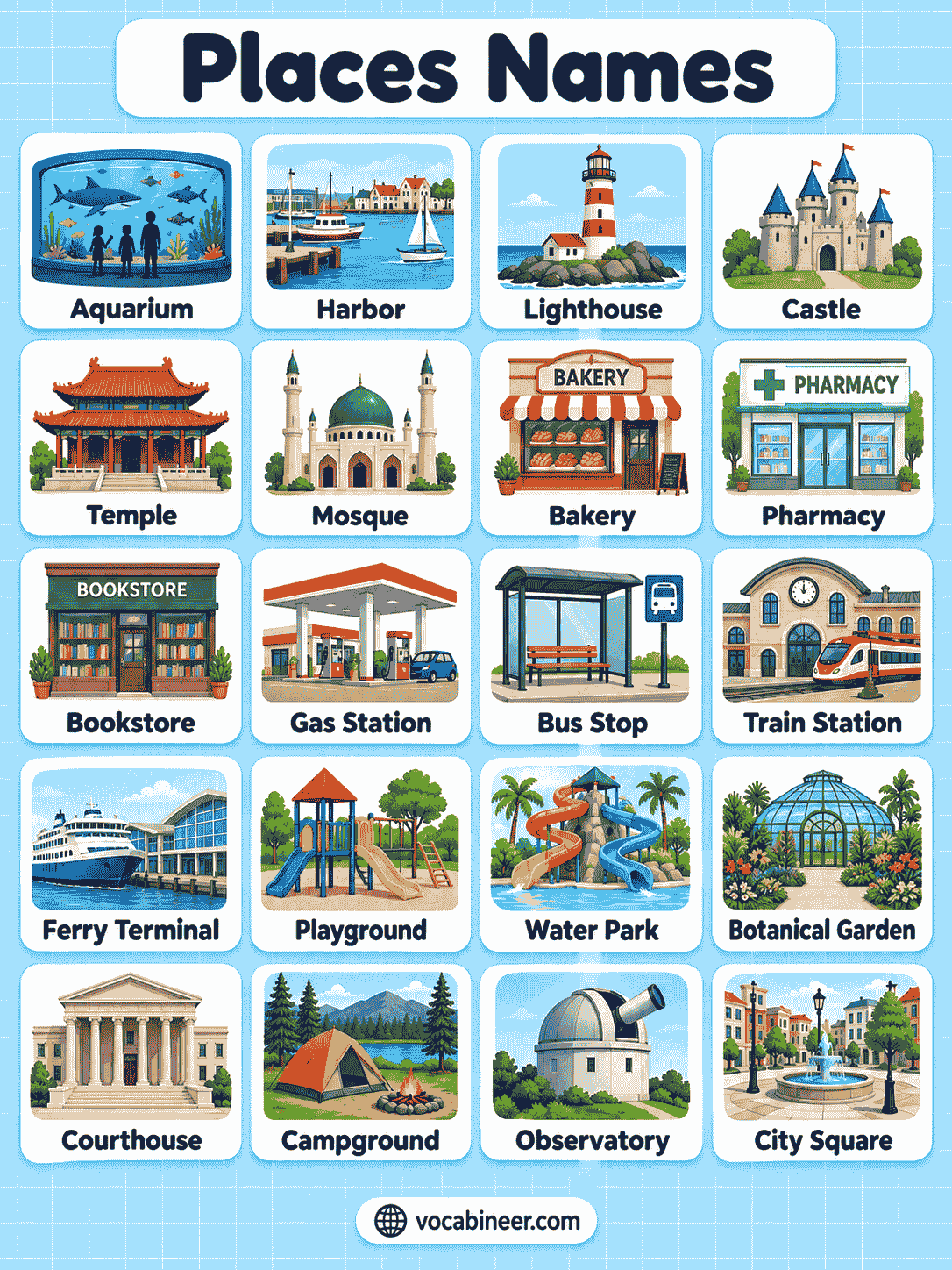
Accommodation places provide temporary or permanent lodging.
Hotel
A place where travelers pay to stay for a short period.
Motel
A roadside accommodation mainly designed for people traveling by car.
Hostel
A lower-cost accommodation where travelers may share rooms or facilities.
Guesthouse
A smaller lodging place that offers rooms to visitors.
Apartment Building
A building containing several separate homes or apartments.
Resort
A place that offers accommodation together with leisure, recreation, or holiday facilities.
Outdoor and Natural Places
Outdoor and natural places are locations found in nature or outside built-up urban spaces.
Beach
A sandy, rocky, or pebbly area beside the sea, ocean, lake, or another body of water.
Forest
A large area covered mainly with trees and natural vegetation.
Mountain
A high natural area of land rising above the surrounding ground.
River
A natural flowing body of water.
Lake
A large body of water surrounded by land.
Garden
An outdoor area where flowers, trees, fruits, vegetables, or decorative plants are grown.
Desert
A very dry region with little rainfall and limited vegetation.
Waterfall
A place where water flows over a steep or vertical drop.
Countryside
Land outside cities and towns, often containing fields, farms, villages, and natural scenery.
Island
An area of land completely surrounded by water.
Tourist and Landmark Places
Tourist and landmark places are often visited because of their history, appearance, cultural importance, or special features.
Castle
A large fortified building, often connected with history, royalty, or defense.
Palace
A large official residence associated with royalty, rulers, or government.
Monument
A structure built to remember an important person, event, or historical period.
Tower
A tall structure that may serve practical, historical, defensive, or tourist purposes.
Bridge
A structure that allows people or vehicles to cross water, roads, valleys, or other obstacles.
Historic Site
A place preserved because of its historical, cultural, or archaeological importance.
Common Places Names in English
Common Places Names in English
Places around us include buildings, public spaces, transport areas, shops, schools, and natural locations. Learning common place names in English helps children and English learners improve everyday vocabulary and talk about where people live, work, study, shop, travel, and spend their free time.
School
A school is a place where students learn subjects, develop skills, and take part in educational activities.
Hospital
A hospital provides medical care for people who are sick, injured, or need treatment from doctors and nurses.
Market
A market is a place where people buy and sell food, clothing, household goods, and other products.
Park
A park is an outdoor public area with grass, trees, paths, and spaces for walking, relaxing, or playing.
Library
A library keeps books, magazines, and other learning materials that people can read, study, or borrow.
Bank
A bank provides financial services such as saving money, making payments, transferring funds, and managing accounts.
Post Office
A post office handles letters, parcels, stamps, and other postal services.
Restaurant
A restaurant prepares and serves meals and drinks to customers.
Hotel
A hotel provides rooms and other services for travelers who need a temporary place to stay.
Airport
An airport is a transport center where airplanes arrive, depart, and carry passengers or cargo.
Railway Station
A railway station is a place where trains stop so passengers can board or leave.
Bus Station
A bus station is a transport area where buses arrive, depart, and carry passengers to different destinations.
Supermarket
A supermarket is a large shop that sells groceries, drinks, household supplies, and everyday products.
Bakery
A bakery makes and sells bread, cakes, pastries, biscuits, and other baked foods.
Pharmacy
A pharmacy sells medicines, health products, and personal care items and may also provide basic health advice.
Police Station
A police station is a workplace where police officers handle reports, public safety matters, and law-enforcement duties.
Fire Station
A fire station houses firefighters, fire engines, and emergency equipment used to respond to fires and other emergencies.
Museum
A museum displays objects related to history, science, art, culture, or other subjects for learning and public viewing.
Cinema
A cinema is a place where people watch films on a large screen.
Playground
A playground is an outdoor or indoor area with equipment and open space where children can play and exercise.
Popular Places in a City or Town
Cities and towns usually contain a mixture of educational, commercial, healthcare, transport, recreational, and service locations.
Some of the most familiar places include:
- School
- Hospital
- Supermarket
- Bank
- Police Station
- Post Office
- Restaurant
- Café
- Library
- Park
- Museum
- Shopping Mall
- Train Station
- Bus Station
- Pharmacy
- Hotel
A smaller town may not have every type of place, while a large city may have several branches or locations of the same type.
Public Places Names in English
A public place is a location that people can commonly visit for services, education, recreation, transport, shopping, culture, or community activities.
Common public places include:
- Park
- Library
- Hospital
- Museum
- Market
- Police Station
- Post Office
- Bank
- Train Station
- Airport
- Community Center
- Zoo
- Cinema
- Stadium
- Shopping Mall
- Playground
- Bus Station
- Art Gallery
People visit these places for different reasons. A library provides books and study space, a hospital provides medical care, a park offers recreation, and a museum displays objects of cultural, historical, scientific, or artistic value.
Places We Visit in Daily Life
Many place names become easier to remember when learners connect them with common activities.
School
Students go there to study and attend classes.
Office
Many adults go there to work.
Market
People visit it to buy food and other goods.
Bank
People use it for financial services.
Hospital
People go there for medical treatment.
Pharmacy
People visit it to buy medicine.
Restaurant
People go there to eat meals.
Park
People visit it to walk, exercise, play, or relax.
Bus Stop
Passengers wait there for a bus.
Supermarket
People go there to buy groceries and household items.
These examples connect vocabulary with everyday routines instead of teaching the names as isolated words.
Places Found in a City
A city contains many kinds of places because large numbers of people need education, healthcare, transport, shopping, work, entertainment, and public services.
Common city places include:
- University
- Hospital
- Shopping Mall
- Bank
- Cinema
- Museum
- Train Station
- Bus Station
- Airport
- Stadium
- Police Station
- Fire Station
- Government Office
- Hotel
- Restaurant
- Office
- Apartment Building
Large cities may also contain several hospitals, museums, universities, transport stations, and commercial centers.
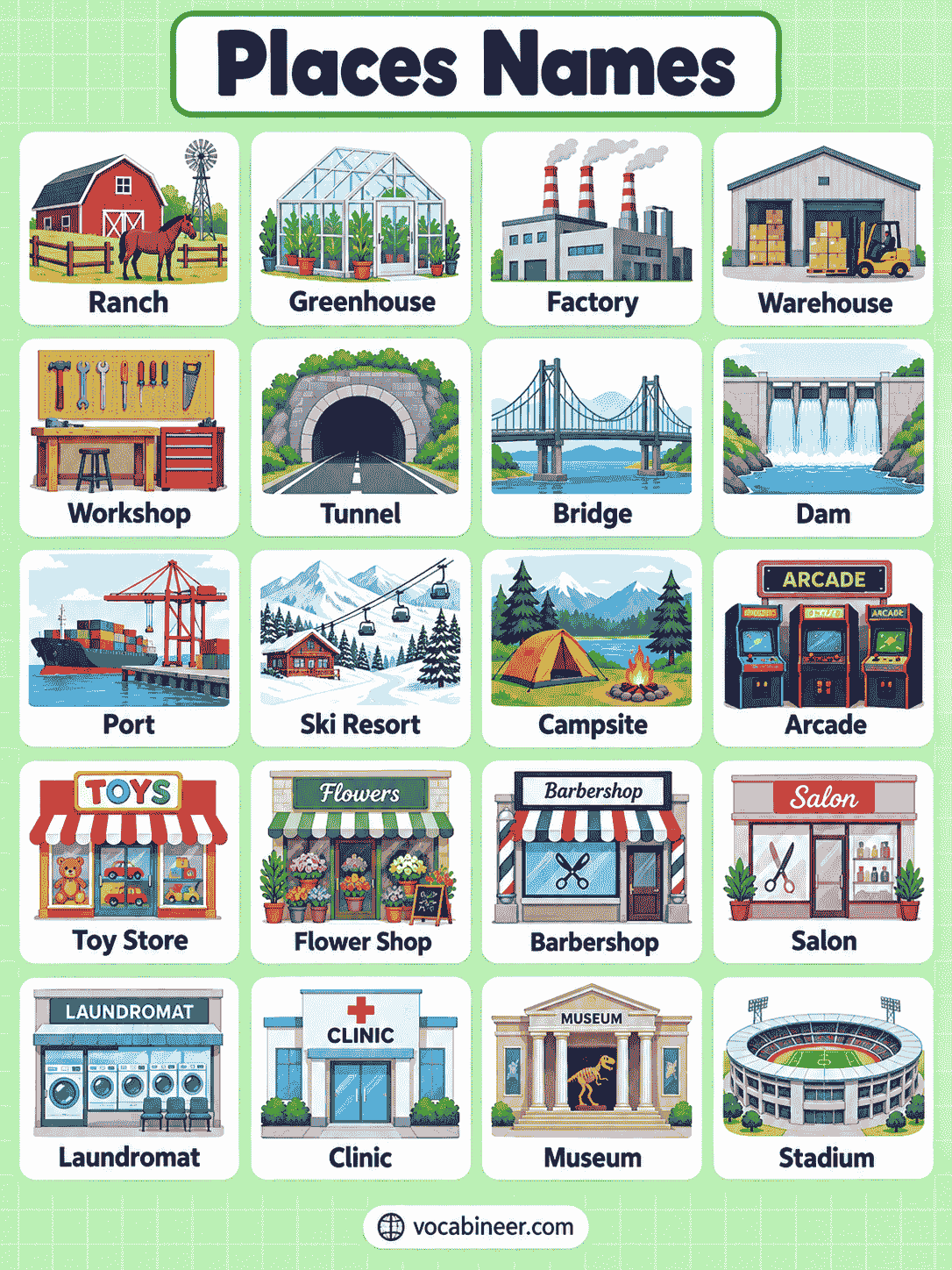
Places Found in a Town
Towns usually contain many everyday community places, although they may have fewer large institutions than major cities.
Common examples include:
- School
- Clinic
- Pharmacy
- Market
- Grocery Store
- Bank
- Police Station
- Post Office
- Park
- Library
- Restaurant
- Bus Stop
- Community Center
- Bakery
These places support the daily needs of local residents.
Places for Education and Learning
Several places support learning beyond an ordinary school.
Examples include:
- School
- College
- University
- Library
- Academy
- Training Center
- Language School
A student may attend school for basic education, study for a degree at a university, visit a library for research, or attend a training center to learn a practical skill.
Places for Shopping
People shop in different places depending on what they need.
Examples include:
- Supermarket
- Grocery Store
- Market
- Shopping Mall
- Department Store
- Bookstore
- Clothing Store
- Shoe Store
- Furniture Store
- Convenience Store
A supermarket mainly provides groceries and household essentials, while a shopping mall contains many different stores and services in one location.
Places for Travel
Travel vocabulary includes both large transport centers and smaller waiting points.
Examples include:
- Airport
- Train Station
- Bus Station
- Bus Terminal
- Bus Stop
- Subway Station
- Taxi Stand
- Petrol Station
- Parking Lot
An airport serves airplanes, a train station serves trains, and a bus stop is a smaller location where passengers wait for local buses.
Places for Fun and Recreation
People visit recreational places to relax, exercise, watch entertainment, or spend time with family and friends.
Examples include:
- Park
- Playground
- Cinema
- Theater
- Zoo
- Aquarium
- Amusement Park
- Stadium
- Gym
- Swimming Pool
For example, children may visit a playground, families may visit a zoo, and sports fans may go to a stadium.
Places for Work
Different jobs take place in different environments.
Examples include:
- Office
- Factory
- Farm
- Workshop
- Warehouse
- Construction Site
- Garage
An accountant may work in an office, a mechanic in a garage, a farmer on a farm, and manufacturing workers in a factory.
Natural Places
Natural places are not created mainly as buildings or institutions.
Examples include:
- Beach
- Forest
- Mountain
- River
- Lake
- Desert
- Waterfall
- Island
- Countryside
These words are especially useful when talking about travel, nature, geography, and outdoor activities.
Places vs Buildings
A place is any location where people can go or where something happens. A building is a physical structure with walls and a roof.
| Place | Type |
|---|---|
| Hospital | building and institution |
| Park | outdoor place |
| Bus Stop | transport location |
| Beach | natural place |
| Market | commercial place |
| Playground | recreational place |
| Airport | transport complex |
| Forest | natural place |
Therefore, not every place is a building.
A hospital may be both a building and a place, while a park, beach, forest, and bus stop are places without being ordinary buildings.
Place, Building, and Institution
These three words are related but not identical.
Place
A broad word for any location.
Building
A physical structure.
Institution
An organization created for a particular purpose, such as education, healthcare, or government.
For example:
- A university is an institution and can include many buildings.
- A hospital is an institution that operates in one or more buildings.
- A park is a place but not usually a building or institution.
This distinction helps learners use place vocabulary more precisely.
Place Names and What People Do There
Understanding the activity associated with a place makes the word easier to remember.
| Place | Common Activity |
|---|---|
| School | study |
| Library | read and borrow books |
| Hospital | receive medical care |
| Supermarket | buy groceries |
| Restaurant | eat meals |
| Bank | manage money |
| Post Office | send letters and parcels |
| Airport | travel by airplane |
| Gym | exercise |
| Museum | view exhibits |
| Park | relax or play |
| Hotel | stay overnight |
This relationship between place + activity is especially useful for beginners.
Different Places Names in Sentences
These examples show how place names work naturally in everyday English:
- The children are at school.
- She works in a hospital.
- We borrowed books from the library.
- They ate at a restaurant.
- I bought groceries at the supermarket.
- He waited at the train station.
- We visited the museum.
- The children played in the park.
- She stayed at a hotel.
- He works in a factory.
- They met at the bus stop.
- We watched a movie at the cinema.
- The plane landed at the airport.
- She bought medicine from the pharmacy.
- They visited the zoo on Sunday.
- My father works in an office.
- We bought bread from the bakery.
- The firefighters returned to the fire station.
- She exercises at the gym.
- The tourists visited the old castle.
Place Names with Common Prepositions
Place vocabulary is often used with prepositions such as at, in, near, and from.
Examples:
- at school
- at the bank
- at the airport
- at the bus stop
- in the park
- in the library
- in the hospital
- near the supermarket
- near the police station
- from the post office
Sentence examples:
- She is at school.
- We are waiting at the bus stop.
- The children are playing in the park.
- The pharmacy is near the hospital.
- He came from the bank.
The exact preposition can change with context, so this section should support vocabulary rather than replace a full preposition lesson.
Asking About Places in English
Place vocabulary is especially useful when asking questions or requesting directions.
Common questions include:
- Where is the hospital?
- Is there a bank nearby?
- How can I get to the train station?
- Where is the nearest supermarket?
- Is the museum open today?
- Which bus goes to the airport?
- Is there a restaurant near here?
- Where can I find a pharmacy?
These patterns help learners use place names in practical conversations.
Talking About Where You Are Going
Use to when talking about movement toward many places.
Examples:
- I am going to the bank.
- She went to the hospital.
- We are going to the museum.
- They walked to the park.
- He drove to the airport.
Some fixed expressions may omit the, such as:
- go to school
- go to work
This is a useful vocabulary point, but detailed article rules belong in a separate grammar topic.
Places Names for Kids and Beginners
Children and beginners should start with familiar places they can easily recognize in pictures.
Useful first words include:
- School
- Hospital
- Park
- Bank
- Library
- Market
- Restaurant
- Supermarket
- Airport
- Hotel
- Zoo
- Playground
- Bus Stop
- Police Station
- Post Office
- Bakery
Picture-based learning works especially well for these words because each place has recognizable visual features.
For example:
- school → classrooms and students
- hospital → doctors and medical rooms
- park → trees, grass, and benches
- airport → airplanes and terminals
- library → books and shelves
Learning Place Names with Pictures
Pictures help learners connect the English word with the real location.
For clearer learning, pictures should be grouped by category, such as:
- education places
- healthcare places
- transport places
- shopping places
- public places
- entertainment places
- workplaces
- natural places
Avoid placing many unrelated locations into one crowded visual. A category-based picture set makes recognition and recall easier.
Common Mistakes with Place Vocabulary
Mixing Places with Objects
A hospital is a place, while a traffic light is an object.
Mixing Places with Rooms
A school is a place, while a classroom is a room inside a school.
Treating Every Place as a Building
A beach, park, forest, playground, and bus stop are places but not ordinary buildings.
Repeating the Same Place in Several Categories
Use one main category for each place unless the overlap needs explanation.
Using Very Specialized Places Before Common Ones
Beginners should learn words such as school, hospital, bank, market, park, and restaurant before rare or technical locations.
Confusing Similar Transport Places
A bus stop is usually a small roadside stopping point, while a bus station or terminal is a larger transport facility.
FAQs
Common place names include school, hospital, bank, library, supermarket, restaurant, park, airport, museum, police station, post office, hotel, and train station.
Examples of public places include parks, libraries, hospitals, museums, police stations, markets, post offices, and community centers.
Common city and town places include schools, hospitals, supermarkets, banks, restaurants, parks, bus stations, police stations, museums, and shopping malls.
A place is any location where people go or where something happens, while a building is a physical structure. A park is a place but not a building.
Examples include car park/parking lot, petrol station/gas station, underground station/subway station, and cinema/movie theater.
Read More
- CVC Rhyming Words for Kids
- Short Vowel Words for Kids
- Long Vowel Words for Kids
- 300+ Kindergarten Words
- Preschool Vocabulary Words