A perfectly serious face can make a ridiculous comment even funnier, while a clever pun, an exaggerated fall, or a sharp sarcastic remark creates humor in completely different ways. Learning the main types of humor makes it easier to recognize how jokes work and why the same idea can make people laugh for different reasons.
Humor does not follow one fixed classification system. Some types depend on delivery, others use language, imitation, subject matter, physical action, or everyday situations. In addition, psychology uses a separate set of humor styles to describe how people use humor with themselves and others.
In This Page
How Humor Can Differ
Humor types often describe different parts of a joke rather than completely separate categories. Therefore, one joke may fit several types at the same time.
Humor can differ through:
- Delivery: how the joke is said or presented
- Language: how words and meanings create the joke
- Purpose: whether humor entertains, imitates, or criticizes
- Subject matter: what the joke is about
- Situation: where the humor comes from
- Physical action: movement, expression, or visual mishaps
- Social use: how someone uses humor with themselves or other people
For example, a joke can be both dark and deadpan, while a parody can also use satire, irony, or wordplay.
Humor Based on Delivery
Delivery can turn an ordinary statement into something funny. These humor styles depend heavily on tone, timing, expression, and how openly the speaker signals that something is a joke.
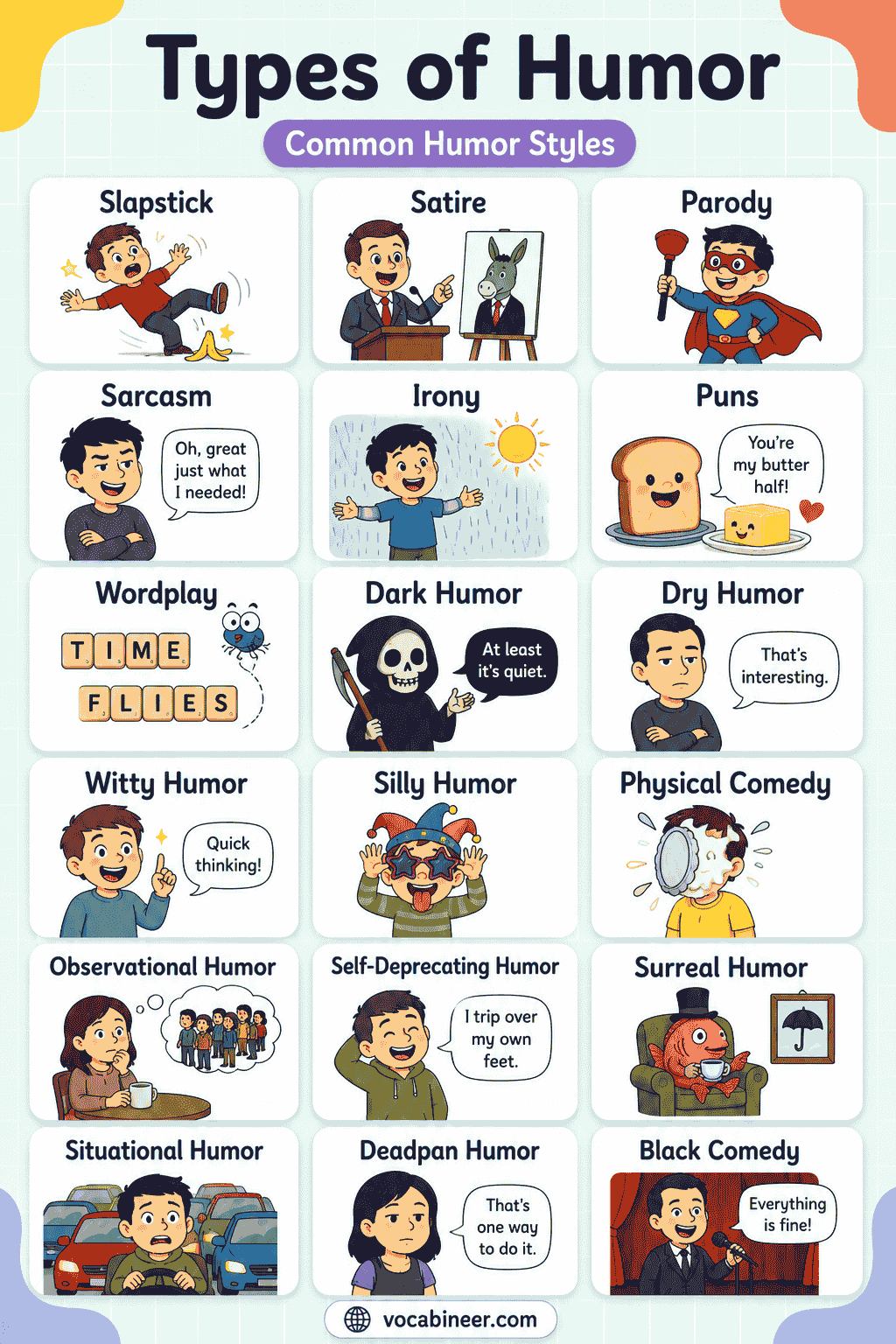
Dry Humor
Dry humor presents something funny in an understated and subtle way. The speaker usually avoids exaggerated reactions, so the humor may sound almost serious.
Deadpan Humor
Deadpan humor uses a deliberately expressionless face or flat tone while delivering funny or absurd material. Unlike dry humor more broadly, deadpan focuses especially on emotionless delivery.
Sarcastic Humor
Sarcastic humor often says something different from the intended meaning to tease, criticize, or mock. For example, someone might say, “Perfect timing,” when a friend arrives very late.
Witty Humor
Witty humor relies on quick, clever observations or phrasing. It usually feels sharp and concise rather than exaggerated or physical.
Humor Based on Language
Some humor works mainly because of words themselves. In these cases, double meanings, similar sounds, unexpected phrasing, or clever contrasts create the joke.
Wordplay Humor
Wordplay humor uses language in a clever or unexpected way. It may rely on double meanings, similar sounds, unusual phrasing, or playful sentence structure.
Puns
A pun is a type of wordplay that uses words with multiple meanings or similar sounds. Therefore, every pun is wordplay, but not every example of wordplay is a pun.
Double Entendre
A double entendre uses a phrase that can carry two interpretations. One meaning may sound ordinary, while the second adds the humorous effect.
Ironic Humor
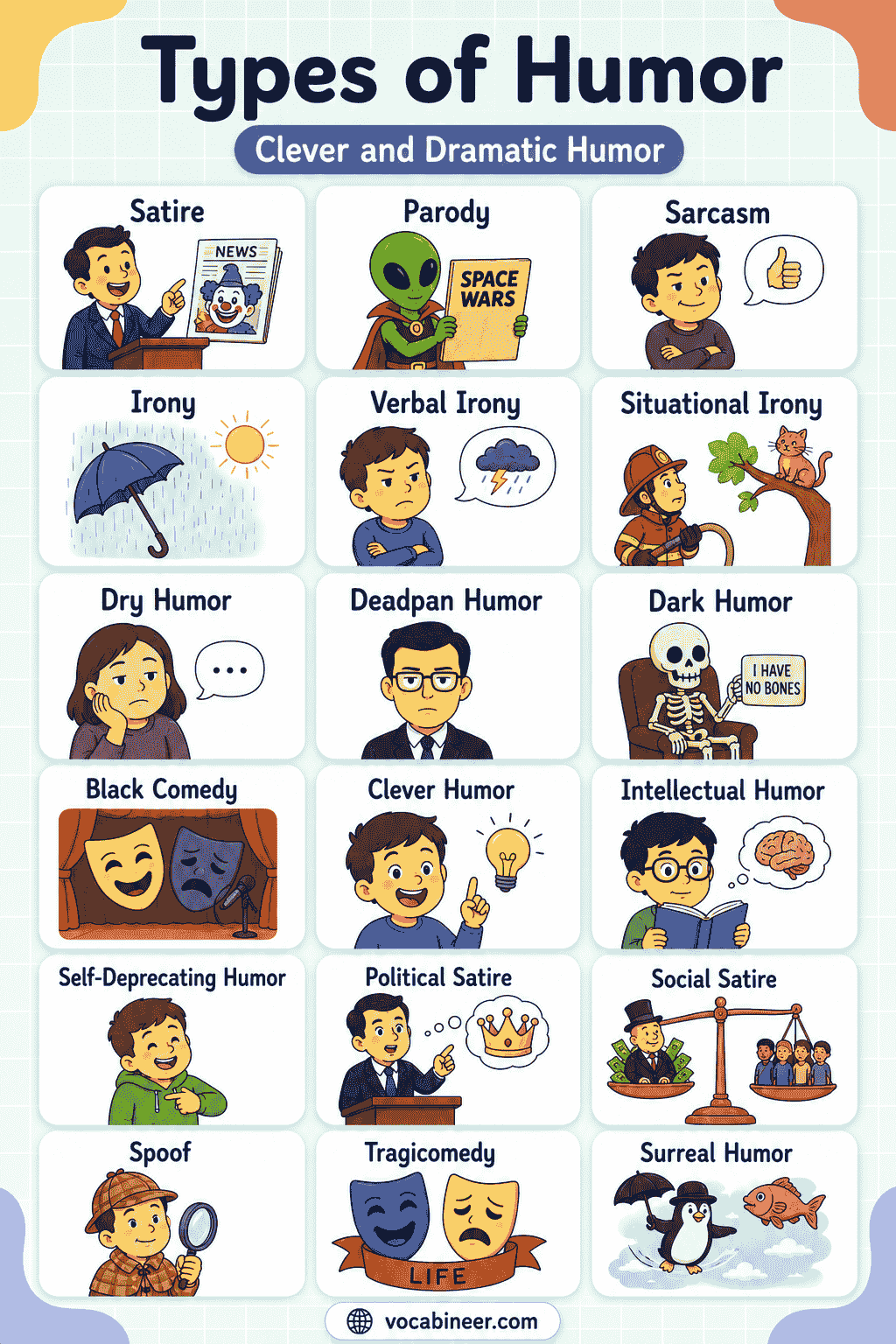
Ironic humor creates comedy through a contrast between what is said, expected, or appears to be true and what actually happens or is intended. However, not every example of irony is humorous.
Humor Based on Imitation and Criticism
Imitation and criticism often create humor by exaggerating recognizable features or exposing weaknesses. Although satire and parody frequently overlap, their main purposes differ.
Satirical Humor
Satirical humor uses comedy to expose or criticize behavior, institutions, ideas, or social problems. It may use irony, exaggeration, sarcasm, or parody to make its point.
Parody
Parody imitates a recognizable person, work, genre, or style and exaggerates its familiar features for comic effect. A parody may simply entertain, although it can also become satirical when the imitation carries criticism.
Everyday and Situational Humor
Some humor comes directly from ordinary experiences, awkward moments, misunderstandings, and familiar habits. Because people recognize these situations easily, the joke often feels relatable.
Observational Humor
Observational humor finds comedy in everyday behavior that people often overlook. For example, someone might joke about pressing an elevator button twice as though the second press will make it arrive faster.
Situational Humor
Situational humor develops from circumstances, misunderstandings, timing, or relationships between people. The humor comes from what happens rather than from one particular wording technique.
Self-Deprecating Humor
Self-deprecating humor makes the speaker’s own mistakes, habits, or shortcomings the target of the joke. Light self-mockery can make an awkward situation feel less serious without necessarily putting the person down harshly.
Humor Based on Subject Matter
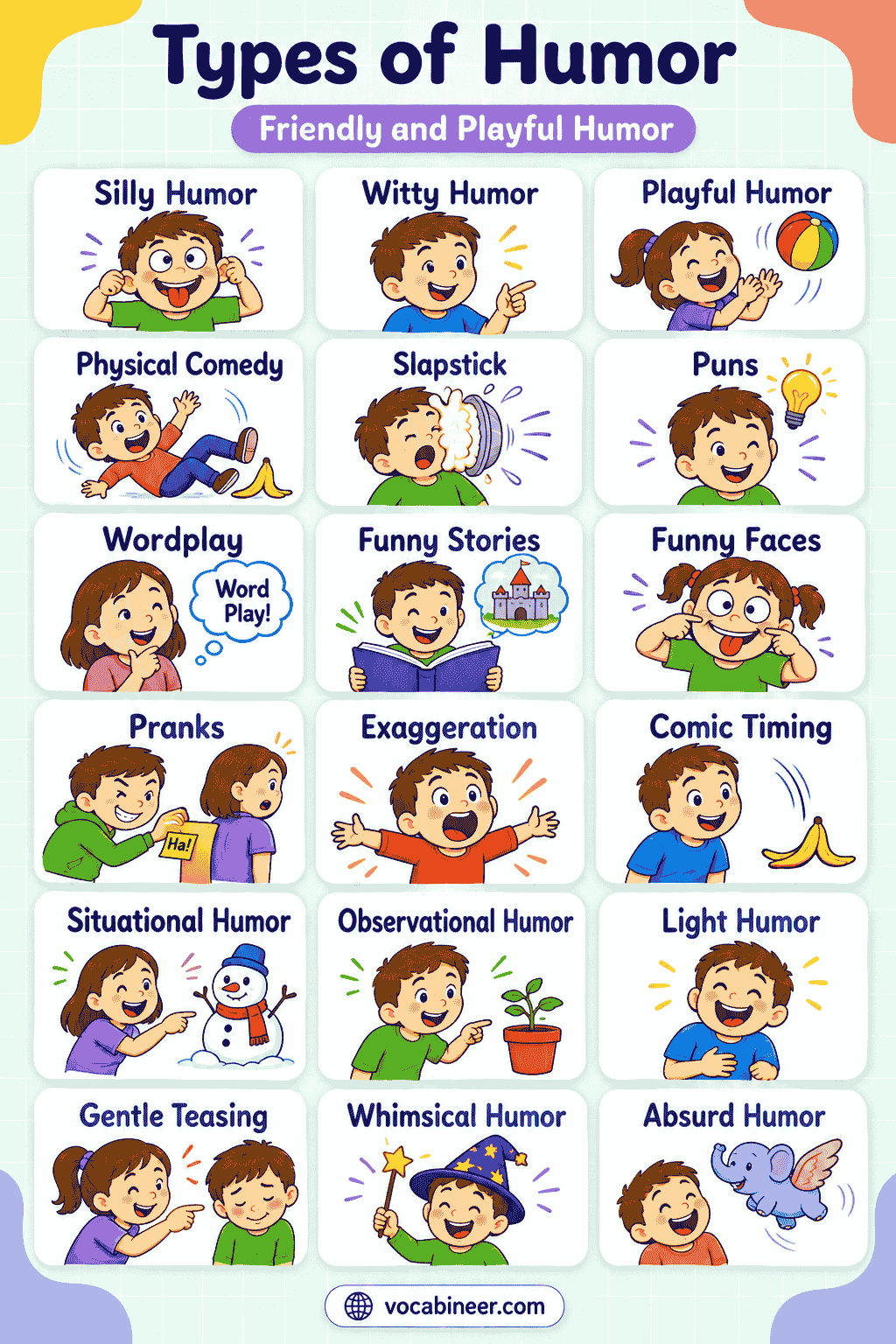
Some humor types are defined mainly by what they joke about. Dark subjects can still become humorous, although context and audience strongly affect how people respond.
Dark Humor
Dark humor finds comedy in serious, uncomfortable, morbid, or taboo subjects. It may address topics such as death, disaster, or hardship in ways that deliberately contrast seriousness with humor.
Gallows Humor
Gallows humor is a more specific form of dark humor associated with bleak, dangerous, or difficult circumstances. People directly facing a stressful situation may use it to joke about what they are experiencing.
Absurd and Surreal Humor
These styles break normal expectations and logic. Although they overlap considerably, absurd humor emphasizes ridiculous illogic, while surreal humor often creates a stranger, dreamlike effect.
Absurd Humor
Absurd humor creates comedy through deliberately illogical situations, statements, or connections. The joke works because ordinary rules and expectations suddenly stop making sense.
Surreal Humor
Surreal humor uses bizarre, dreamlike, or reality-defying situations. Compared with general absurdity, it often feels stranger and less connected to ordinary experience.
Physical and Exaggerated Humor
Not all humor depends on words. Physical movement, exaggerated reactions, visual mishaps, and increasingly complicated situations can create comedy even without much dialogue.
Slapstick Humor
Slapstick humor relies on exaggerated physical action such as falls, collisions, facial expressions, and visual mishaps. The physical performance itself creates much of the joke.
Farcical Humor
Farcical humor uses exaggerated situations, improbable events, misunderstandings, and rapidly growing complications. While slapstick emphasizes physical action, farcical humor focuses more on the ridiculous situation as a whole.
Psychological Humor Styles
Psychology also uses a separate framework that describes how people tend to use humor socially and personally. These four styles do not replace everyday categories such as sarcasm, satire, or slapstick; instead, they describe broader patterns of humor use.
Affiliative Humor
Affiliative humor helps entertain others, strengthen relationships, and make social situations more comfortable. Friendly jokes and playful stories often fit this style.
Self-Enhancing Humor
Self-enhancing humor involves maintaining a humorous outlook, especially when dealing with difficulties. A person may look for something amusing in a frustrating situation without making someone else the target.
Aggressive Humor
Aggressive humor targets other people through ridicule, hostile teasing, put-downs, or mockery. Although it may make some people laugh, it can also embarrass or exclude the person being targeted.
Self-Defeating Humor
Self-defeating humor involves repeatedly making oneself the target in ways that may undermine self-respect or seek approval from others. Therefore, it is more specific than ordinary light self-deprecating humor.
Can One Joke Use More Than One Type of Humor?
Humor categories often overlap because they describe different features of the same joke. A joke does not need to fit only one label.
For example:
- a serious delivery can make a sarcastic comment dry and deadpan
- a joke about a grim subject can be dark and sarcastic
- a parody can also use satire and irony
- an everyday story can combine observational and self-deprecating humor
- an illogical pun can combine absurd humor and wordplay
Therefore, humor labels work best as descriptions of how a joke operates rather than rigid boxes.
Humor Styles vs Comedy Genres
Humor styles describe how humor works, while comedy genres or formats describe the broader form in which comedy appears. Competitor lists often mix these two ideas, but keeping them separate makes the terminology much clearer.
| Humor Style or Technique | Comedy Genre or Format |
|---|---|
| Sarcasm | Stand-up comedy |
| Deadpan humor | Sitcom |
| Wordplay | Sketch comedy |
| Satire | Improvisational comedy |
| Observational humor | Romantic comedy |
A stand-up routine, for example, can use observational, sarcastic, deadpan, or self-deprecating humor. Similarly, a sitcom may combine slapstick, situational humor, wordplay, and parody.
Humor Types People Often Confuse
Several humor terms overlap because they describe similar techniques or effects. However, their main emphasis differs.
| Humor Types | Main Difference |
|---|---|
| Dry vs Deadpan | Dry humor is broadly understated, while deadpan humor specifically emphasizes emotionless delivery. |
| Sarcasm vs Irony | Sarcasm usually has a sharper teasing or critical target, while irony describes a broader contrast between meaning, expectation, and reality. |
| Satire vs Parody | Satire mainly criticizes or exposes something, while parody mainly imitates and exaggerates. |
| Dark vs Gallows Humor | Dark humor covers serious or taboo subjects broadly, while gallows humor often arises within a bleak or difficult situation. |
| Absurd vs Surreal Humor | Absurd humor is deliberately illogical, while surreal humor tends to feel especially bizarre or dreamlike. |
| Self-Deprecating vs Self-Defeating Humor | Self-deprecating humor jokes about oneself, while self-defeating humor describes a psychological pattern that may undermine the person using it. |
FAQs
Common types include dry, deadpan, sarcastic, observational, self-deprecating, dark, satirical, parody, wordplay, absurd, surreal, slapstick, and situational humor.
Dry humor is generally subtle and understated, while deadpan humor specifically uses a serious or expressionless delivery. A joke can be both.
Yes, sarcasm can function as humor when someone uses sharp, ironic wording for teasing or comic effect. However, sarcasm can also sound critical or hurtful depending on context.
Satire mainly uses humor to criticize or expose something, while parody imitates a recognizable style, person, or work for comic effect. A parody can also contain satire.
Yes. Humor categories overlap, so one joke may be dark and sarcastic, dry and deadpan, or observational and self-deprecating at the same time.
Read More
- Types of Smiles
- Facial Expressions Names
- Human Parts of Body
- Emoji Symbols Names
- Sad Emoji Meanings
- Emoji Meanings in Chat