Smiles can show happiness, kindness, confidence, nervousness, or mixed emotions. Some smiles look natural and warm, while others may look polite, shy, forced, playful, or tense. A smile can also change meaning depending on the person and situation.
This guide explains 20 types of smiles with names, simple meanings, and picture-friendly descriptions. You will learn how different smiles look, what they may suggest, and why context matters when reading facial expressions, body language, and social cues.
In This Page
Smile Types Chart
| Smile Type | Group | Simple Meaning |
|---|---|---|
| Duchenne Smile | Genuine and Happy | A real smile that reaches the eyes. |
| Open-Mouth Smile | Genuine and Happy | A wide smile that shows strong happiness or excitement. |
| Toothy Smile | Genuine and Happy | A smile that clearly shows the teeth. |
| Soft Smile | Genuine and Happy | A gentle smile with a calm expression. |
| Polite Smile | Polite and Social | A respectful smile used in formal or social moments. |
| Closed-Mouth Smile | Polite and Social | A smile with lips closed and teeth hidden. |
| Social Smile | Polite and Social | A smile used to greet or respond to others. |
| Friendly Smile | Polite and Social | A warm smile that shows kindness and comfort. |
| Nervous Smile | Nervous and Awkward | A smile that may appear during stress or uncertainty. |
| Embarrassed Smile | Nervous and Awkward | A smile linked with shyness or mild discomfort. |
| Shy Smile | Nervous and Awkward | A small smile that may show hesitation or modesty. |
| Forced Smile | Nervous and Awkward | A smile that looks tense or unnatural. |
| Confident Smile | Confident and Playful | A relaxed smile that shows self-assurance. |
| Smirk | Confident and Playful | A one-sided smile that may look playful or proud. |
| Flirty Smile | Confident and Playful | A playful smile used to show interest or charm. |
| Sarcastic Smile | Confident and Playful | A smile that may suggest irony or hidden meaning. |
| Sad Smile | Sad and Mixed-Emotion | A smile that appears with sadness or disappointment. |
| Tight-Lipped Smile | Sad and Mixed-Emotion | A smile with pressed lips that may show tension. |
| Distress Smile | Sad and Mixed-Emotion | A smile that may appear during discomfort or stress. |
| Proud Smile | Sad and Mixed-Emotion | A smile that shows satisfaction or personal achievement. |
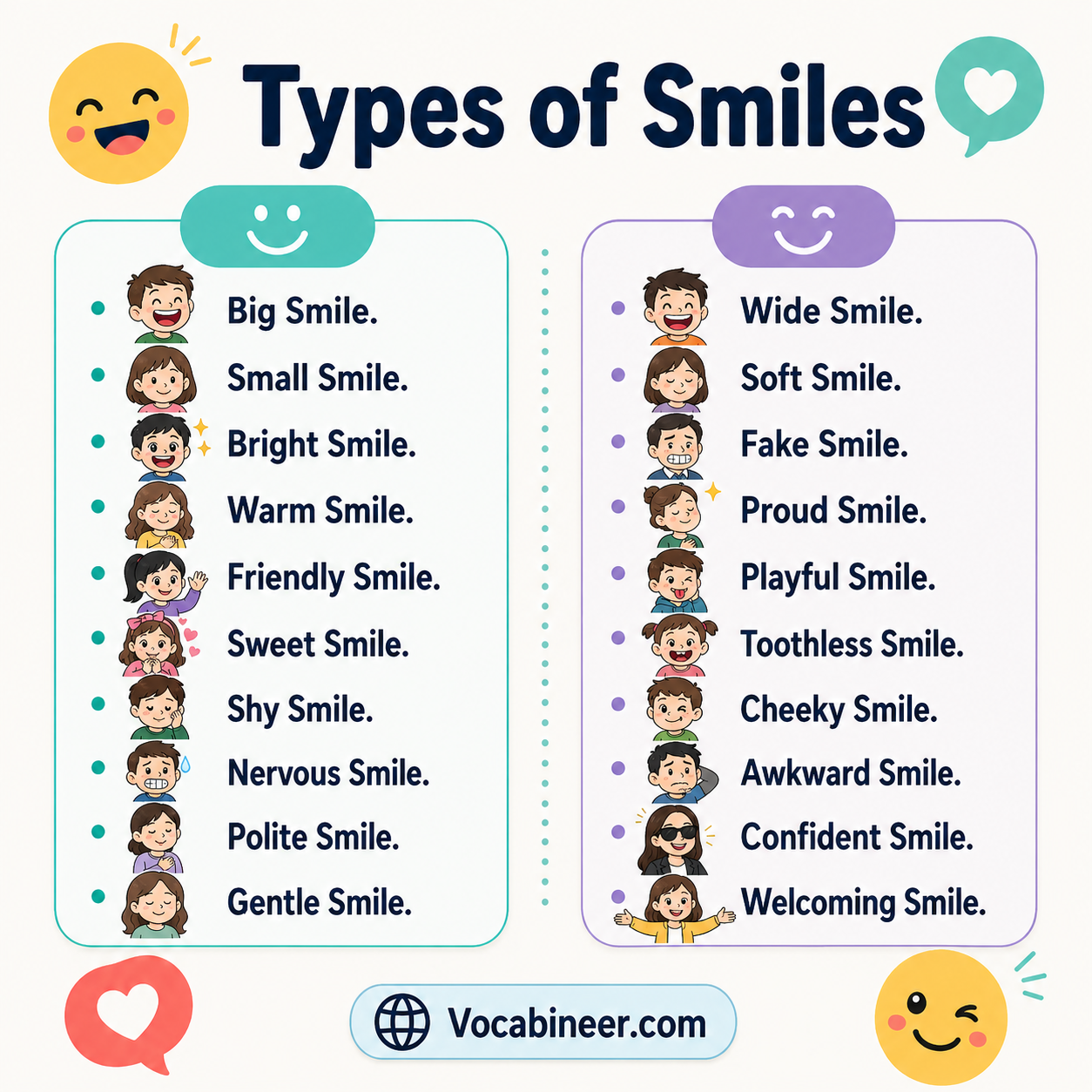
Genuine and Happy Smiles
Genuine and happy smiles usually look relaxed, warm, and natural. They often show positive emotions such as joy, excitement, kindness, or comfort.
Duchenne Smile
A Duchenne smile is a genuine smile that uses both the mouth and the eyes. The cheeks lift, the eyes may crinkle slightly, and the expression looks natural and happy.
Open-Mouth Smile
An open-mouth smile is a wide smile where the lips open and the teeth may show. It often appears during laughter, excitement, surprise, or strong happiness.
Toothy Smile
A toothy smile shows the teeth clearly. It can look bright, friendly, and confident, especially when the face looks relaxed.
Soft Smile
A soft smile is gentle and calm. The mouth curves slightly, and the expression may show kindness, peace, or quiet happiness.
Polite and Social Smiles
Polite and social smiles are often used in everyday communication. They may show respect, friendliness, greeting, or social comfort rather than strong emotion.
Polite Smile
A polite smile is used in formal or social situations. It may be small and controlled, but it helps show respect, kindness, or good manners.
Closed-Mouth Smile
A closed-mouth smile happens when the lips curve upward but the teeth stay hidden. It can look polite, calm, shy, or reserved.
Social Smile
A social smile is used when greeting someone, responding politely, or keeping a friendly mood in conversation. It may not always show strong happiness.
Friendly Smile
A friendly smile looks warm and welcoming. It helps make others feel comfortable and often appears during kind, relaxed interactions.
Nervous and Awkward Smiles
Nervous and awkward smiles may appear when someone feels shy, embarrassed, unsure, or uncomfortable. These smiles can look small, tense, or uneven.
Nervous Smile
A nervous smile may appear during stress, uncertainty, or pressure. It can look tense, quick, or slightly uncomfortable.
Embarrassed Smile
An embarrassed smile often appears when someone feels awkward, shy, or self-conscious. It may come with lowered eyes, blushing, or a small laugh.
Shy Smile
A shy smile is usually small and gentle. It may show modesty, hesitation, or quiet happiness.
Forced Smile
A forced smile looks less natural because the face may seem tense. The mouth may smile, but the eyes may not show the same feeling.
Confident and Playful Smiles
Confident and playful smiles can show charm, humor, self-assurance, or personality. These smiles may look relaxed, one-sided, teasing, or expressive.
Confident Smile
A confident smile looks relaxed and steady. It may show self-assurance, comfort, and a positive attitude.
Smirk
A smirk is a small, one-sided smile. It can look playful, proud, teasing, or slightly sarcastic depending on the situation.
Flirty Smile
A flirty smile is playful and charming. It may include soft eye contact, a small grin, or a warm expression.
Sarcastic Smile
A sarcastic smile may suggest irony, teasing, or hidden meaning. It often depends strongly on tone, eye expression, and context.
Sad and Mixed-Emotion Smiles
Some smiles do not show pure happiness. They may appear with sadness, tension, stress, pride, or mixed feelings.
Sad Smile
A sad smile appears when someone smiles while feeling sadness, disappointment, or emotional pain. It may look soft, weak, or brief.
Tight-Lipped Smile
A tight-lipped smile happens when the lips are pressed together. It may suggest tension, politeness, discomfort, or hidden feelings.
Distress Smile
A distress smile may appear during stress, fear, or discomfort. It can happen when someone tries to stay calm in a difficult situation.
Proud Smile
A proud smile shows satisfaction, achievement, or confidence. It often appears when someone feels pleased with something they did.
How to Read a Smile
A smile can suggest emotion, but it should not be judged alone. The same smile can mean different things in different situations.
Look at the eyes, cheeks, mouth tension, body language, voice, and context. For example, a closed-mouth smile may be polite in one moment, shy in another, and uncomfortable in a different situation.
Real Smile vs Fake Smile
A real smile usually looks relaxed and natural. It often reaches the eyes, lifts the cheeks, and matches the person’s mood or situation.
A fake smile may look tense or controlled. The mouth may curve upward, but the eyes and cheeks may not show the same warmth.
| Feature | Real Smile | Fake Smile |
|---|---|---|
| Eyes | Often crinkle or soften | May stay still |
| Cheeks | Usually lift naturally | May look less active |
| Mouth | Relaxed curve | Tense or forced curve |
| Feeling | Matches real emotion | May hide true feeling |
| Example | Duchenne smile | Forced smile |
FAQs
The main types of smiles include genuine smiles, polite smiles, nervous smiles, confident smiles, playful smiles, and mixed-emotion smiles. Common examples are Duchenne smile, closed-mouth smile, smirk, forced smile, and soft smile.
A Duchenne smile is a genuine smile that involves both the mouth and the eyes. The cheeks lift, the eyes may crinkle, and the whole face looks naturally happy.
A real smile usually looks relaxed and reaches the eyes, while a fake smile often looks more controlled or tense. In a fake smile, the mouth may smile but the eyes may not show the same emotion.
A closed-mouth smile can mean politeness, calmness, shyness, or reservation. Its meaning depends on the person’s face, body language, and the situation.
Yes, a smile can show nervousness. A nervous smile may appear when someone feels unsure, embarrassed, stressed, or uncomfortable, even if they are not truly happy.
Summary
Types of smiles include Duchenne smile, open-mouth smile, toothy smile, polite smile, closed-mouth smile, nervous smile, shy smile, smirk, forced smile, sad smile, and more. Smiles can show happiness, kindness, confidence, nervousness, or mixed emotions. Since meanings can change with context, it is best to look at the full facial expression and situation before judging a smile.
Read More