

A quiet chuckle, a sudden guffaw, and a nervous laugh can sound very different even though all three are forms of laughter. Learning the main types makes it easier to describe how people laugh and understand what a laugh may communicate in different situations.
Laughter does not always mean that something is funny. Some laughs differ mainly in sound or intensity, while others appear because of nervousness, embarrassment, politeness, or social interaction. In addition, laughter may arise spontaneously or be produced deliberately.
In This Page
How Laughter Can Differ
People describe laughter in several ways because one label may focus on sound while another focuses on situation or control. Therefore, the main differences usually involve:
- Sound and intensity: quiet, loud, deep, sharp, or restrained
- Social situation: nervous, polite, shared, embarrassed, or mocking
- Control: spontaneous or deliberately produced
As a result, terms such as guffaw, nervous laughter, and deliberate laughter describe different aspects of laughing rather than one single classification system.
Laughter by Sound and Intensity
Some laughter names describe mainly how a laugh sounds or how strongly someone laughs. These familiar words range from soft, restrained laughs to loud and full-bodied ones.
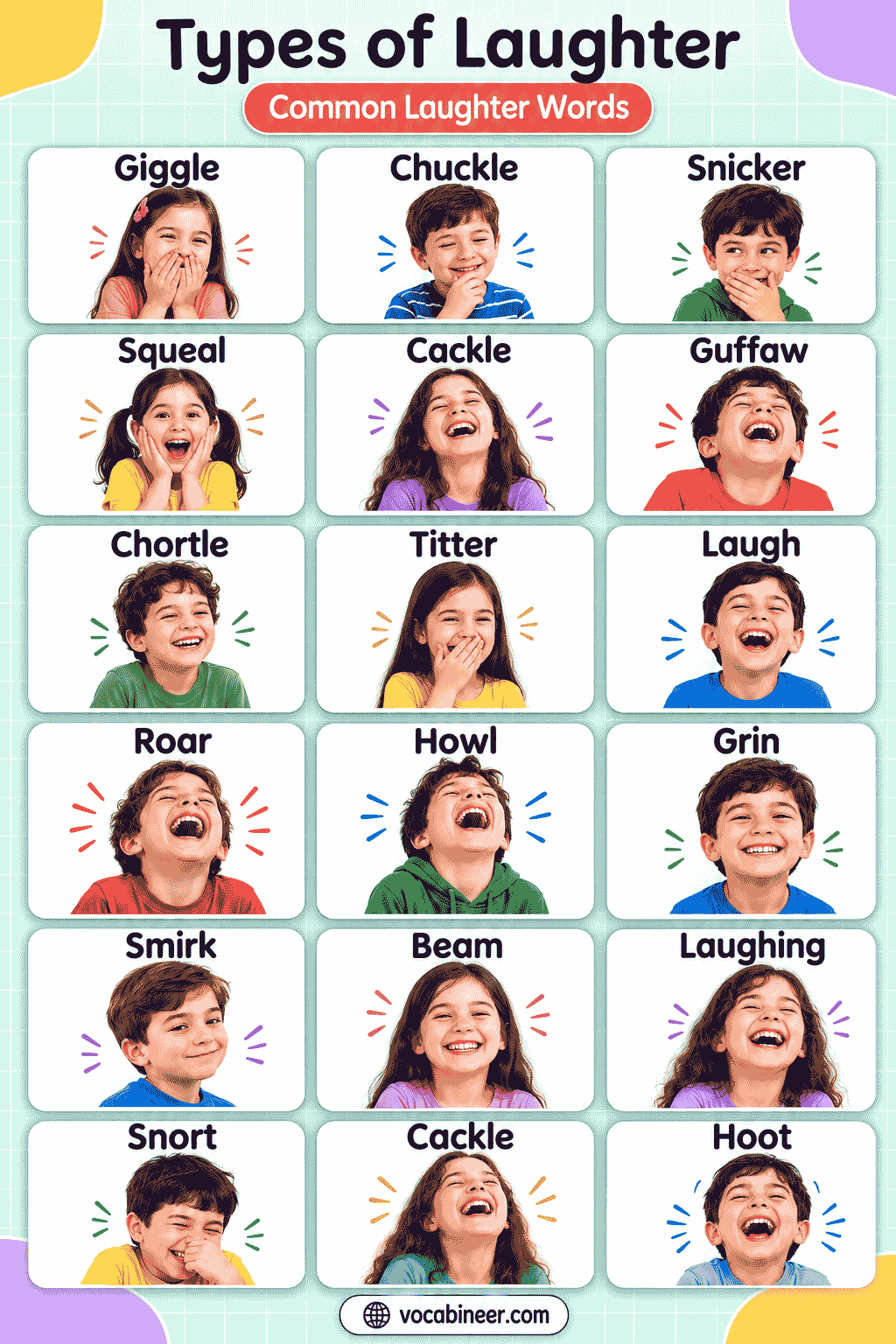
Giggle
A giggle is a light, repeated laugh that often sounds soft or relatively high-pitched. People may giggle because of amusement, playfulness, shyness, or nervousness.
Chuckle
A chuckle is a quiet, restrained laugh that usually shows mild amusement. Unlike a guffaw, it often stays brief and controlled.
Chortle
A chortle is a warm, pleased laugh that is generally more open than a chuckle. However, the two words overlap in everyday use.
Guffaw
A guffaw is a loud, sudden, and hearty laugh. It usually sounds much stronger and less restrained than a giggle or chuckle.
Belly Laugh
A belly laugh is a deep, vigorous laugh that can involve much of the body. Someone may lean back, shake, or breathe heavily while laughing this strongly.
Cackle
A cackle is a loud, sharp laugh made up of repeated bursts. Although stories sometimes associate cackling with mockery or wickedness, the sound itself does not always carry that meaning.
Titter
A titter is a light, restrained laugh that someone may try to suppress. It often appears during awkward, nervous, or mildly amusing situations.
Snicker
A snicker is a quiet or partly suppressed laugh, often made when someone finds something privately amusing. Snigger is a common variant in British English.
Snort Laugh
A snort laugh happens when air suddenly escapes through the nose during laughter. It often occurs unexpectedly when someone is laughing strongly.
Silent Laugh
A silent laugh shows the facial expression and body movement of laughter with little or no audible sound. Someone may shake, smile widely, or struggle to breathe while making very little noise.
Howling Laugh
A howling laugh is an informal term for very loud, prolonged laughter. It usually describes intensity rather than a formally defined laughter category.
Laughter in Different Social Situations
People do not laugh only because something is funny. Laughter can also manage tension, support conversation, show social connection, or communicate ridicule, so the situation often matters as much as the sound.
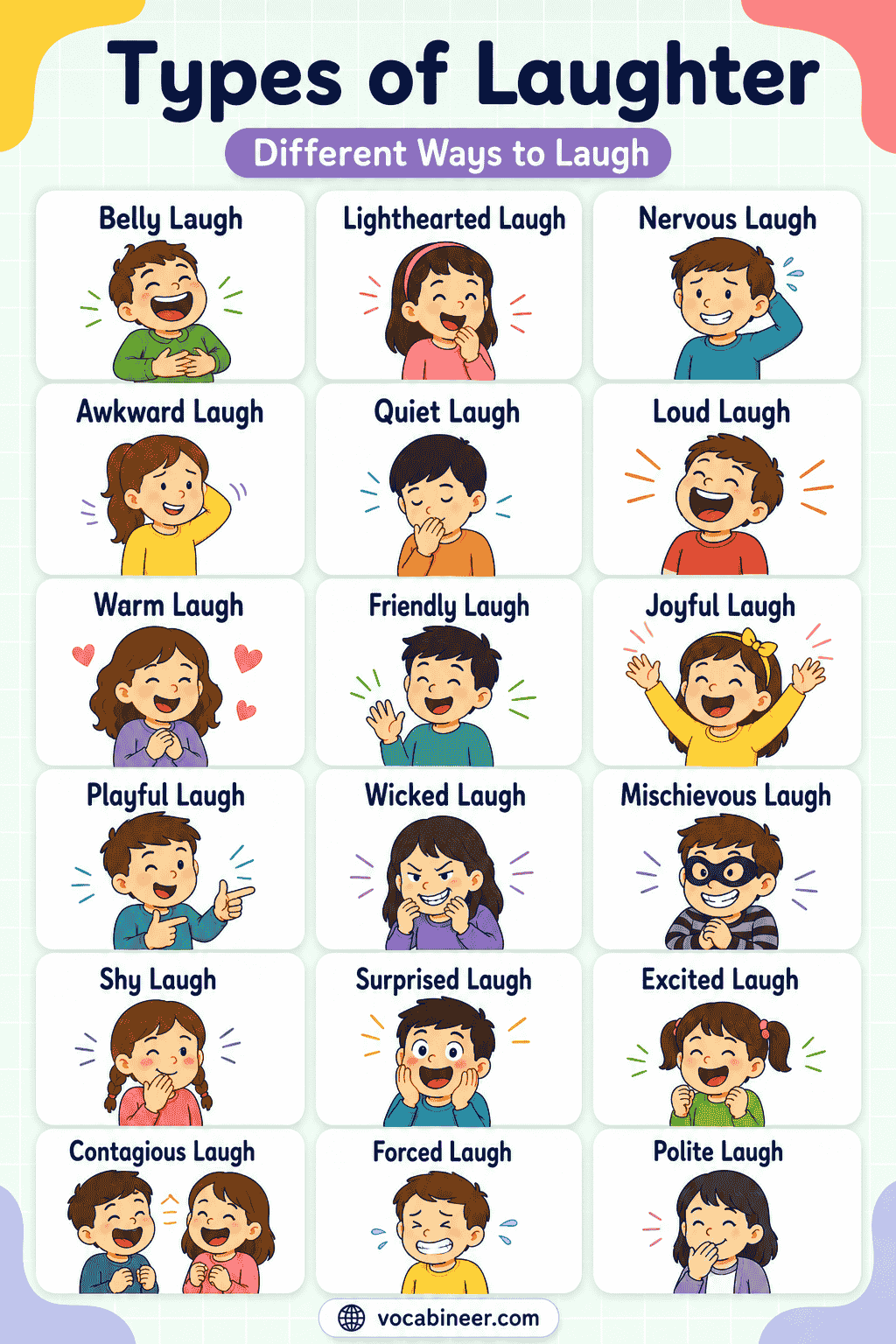
Nervous Laughter
Nervous laughter appears during tension, uncertainty, or discomfort. For example, someone may laugh while waiting for difficult news or facing an awkward situation even when nothing is particularly funny.
Embarrassed Laughter
Embarrassed laughter can follow a mistake, awkward moment, or unwanted attention. It may help someone respond to self-consciousness without saying much.
Polite or Courtesy Laughter
Polite laughter is a socially responsive laugh used to acknowledge another person or keep an interaction comfortable. Someone may laugh lightly at a joke even when they do not find it especially funny.
Contagious Laughter
Contagious laughter occurs when hearing or seeing another person laugh prompts someone else to laugh. As a result, laughter can spread quickly through a group.
Shared Laughter
Shared laughter happens when two or more people laugh together during an interaction. It can accompany a joke, shared memory, playful moment, or other social experience.
Mocking or Derisive Laughter
Mocking laughter is directed at someone in a way that communicates ridicule, contempt, or superiority. Unlike friendly shared laughter, it can make the target feel excluded or belittled.
Self-Directed Laughter
Self-directed laughter happens when someone laughs at their own mistake, awkward moment, or harmless behavior. In some situations, it can make an embarrassing moment feel less serious.
Spontaneous and Deliberate Laughter
Another useful distinction concerns how intentionally the laughter begins. Some laughter arises naturally with little conscious effort, while other laughter is produced deliberately for social or communicative reasons.
Spontaneous Laughter
Spontaneous laughter arises with relatively little deliberate control. It often appears during genuine amusement, surprise, playful interaction, or another immediate response.
Volitional or Deliberate Laughter
Volitional laughter is intentionally produced rather than arising automatically. For instance, someone may laugh deliberately to be polite, encourage another person, or keep a conversation flowing.
Deliberate laughter is not automatically dishonest or “fake.” Instead, people sometimes use it as a normal part of social interaction.
Can the Same Laugh Mean Different Things?
A laugh does not have one fixed meaning because context changes how people interpret it. The situation, facial expression, tone, relationship between the people, and events immediately before the laugh can all affect what it communicates.
For example, a quiet chuckle may show genuine amusement during a friendly conversation. However, a similar chuckle could serve as polite acknowledgement in another setting. Likewise, loud laughter may feel warm and shared among friends but mocking if it is directed at someone after a mistake.
Laughter Types People Often Confuse
Several laughter terms overlap because they describe similar sounds or situations. The table below highlights the clearest practical differences without treating the boundaries as rigid.
| Laughter Types | Main Difference | Easy Recognition |
|---|---|---|
| Giggle vs Chuckle | A giggle is lighter and often repeated, while a chuckle is quieter and more restrained. | Giggle sounds lighter; chuckle sounds more subdued. |
| Chuckle vs Chortle | A chuckle is usually mild and quiet, while a chortle sounds warmer and more openly pleased. | Chortle generally feels fuller and more expressive. |
| Guffaw vs Belly Laugh | A guffaw emphasizes loudness and suddenness, while a belly laugh emphasizes depth and full-body intensity. | Guffaw is a loud burst; belly laugh often involves visible body movement. |
| Nervous vs Embarrassed Laughter | Nervous laughter can appear during general tension, while embarrassed laughter relates more specifically to self-consciousness or awkwardness. | Look at what caused the laugh. |
| Spontaneous vs Deliberate Laughter | Spontaneous laughter arises less intentionally, while deliberate laughter is consciously produced. | One occurs more automatically; the other serves an intentional purpose. |
| Polite vs Mocking Laughter | Polite laughter supports social interaction, while mocking laughter communicates ridicule or disrespect. | Context and who the laugh is directed toward matter most. |
FAQs
Common laughter types include giggles, chuckles, chortles, guffaws, belly laughs, cackles, nervous laughter, polite laughter, contagious laughter, and spontaneous or deliberate laughter.
A giggle is usually lighter and may repeat several times, while a chuckle is quieter, shorter, and more restrained.
People may laugh during tension, uncertainty, embarrassment, or discomfort even when nothing is funny. In these situations, laughter can become part of how they respond socially to stress or awkwardness.
Contagious laughter occurs when another person’s laughter makes someone else begin laughing. It often spreads quickly in groups because laughter is strongly influenced by social interaction.
Spontaneous laughter arises with less conscious control, while deliberate laughter is intentionally produced. However, deliberate laughter can still serve a genuine social purpose, such as politeness or encouragement.
Read More
- Types of Smiles
- Facial Expressions Names
- Human Parts of Body
- Emoji Symbols Names
- Sad Emoji Meanings
- Emoji Meanings in Chat