

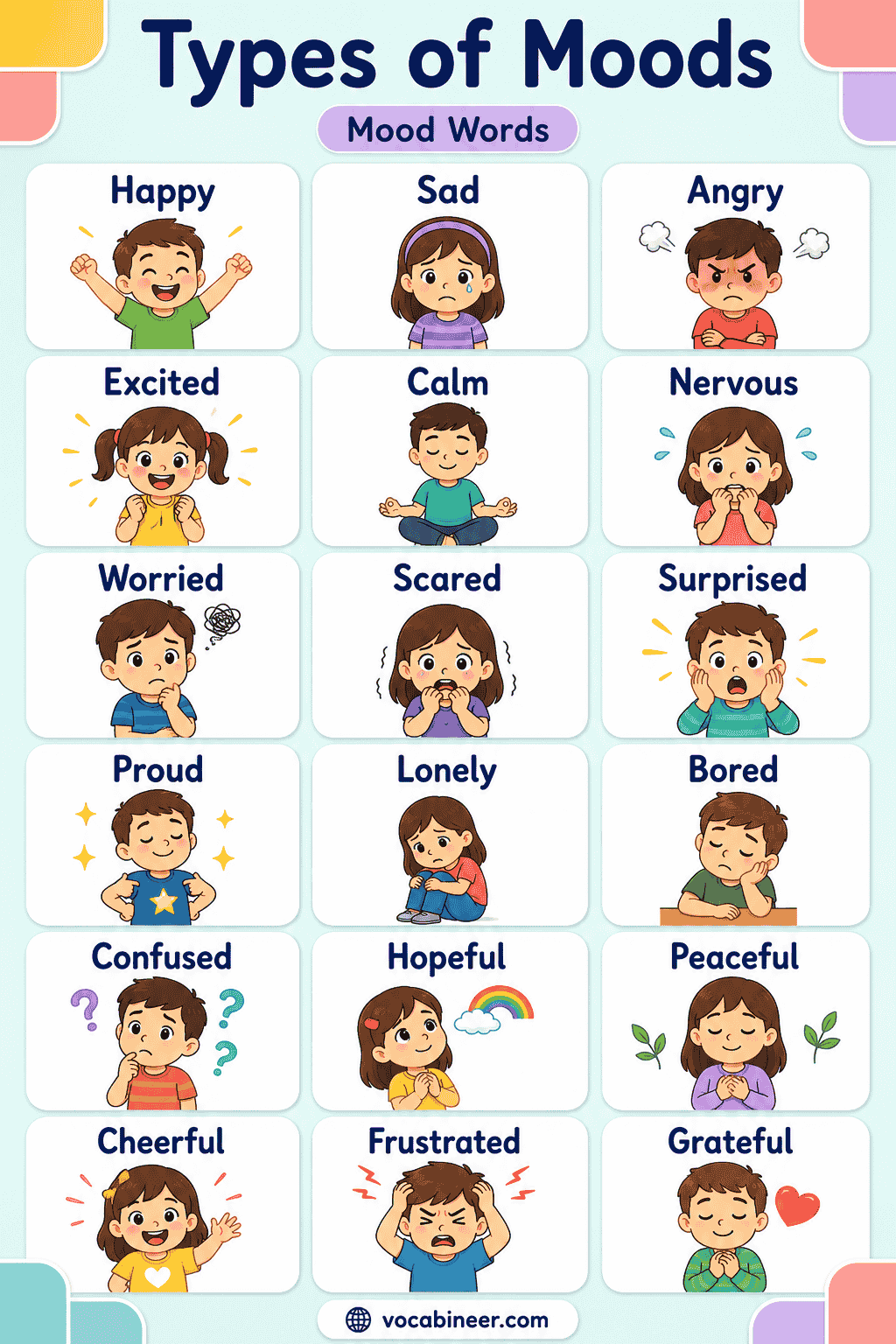
A person can feel cheerful and energetic in the morning, calm after a quiet break, or gloomy when the day feels difficult. Moods shape the general tone of how we feel, so learning common mood types makes it easier to describe everyday experiences with more precise words.
A mood usually lasts longer and feels broader than a brief emotional reaction. Some moods feel pleasant, while others feel unpleasant; in addition, they can carry high or low energy. This article explains the main types of moods, common mood words, useful differences, and the distinction between mood and emotion.
In This Page
Positive and Negative Moods
People often divide moods into positive and negative groups because this is the simplest way to describe whether a state feels pleasant or unpleasant. However, this basic division does not explain how energetic or calm a mood feels.
- Positive moods generally feel pleasant, such as cheerful, hopeful, relaxed, or content.
- Negative moods generally feel unpleasant, such as angry, anxious, sad, or frustrated.
For example, excited and calm are both pleasant moods, yet excited carries much more energy. Similarly, angry and sad can both feel unpleasant, but anger usually feels more activated than sadness.
How Moods Differ by Pleasantness and Energy
A useful way to understand mood types is to look at two features: pleasantness and energy level. This creates four broad groups that make similar mood words easier to compare.
| Mood Group | General Feeling | Examples |
|---|---|---|
| Pleasant + high energy | Positive and active | Excited, cheerful, energetic |
| Pleasant + low energy | Positive and calm | Relaxed, content, peaceful |
| Unpleasant + high energy | Negative and activated | Angry, anxious, frustrated |
| Unpleasant + low energy | Negative and subdued | Sad, gloomy, lonely |
Not every mood fits perfectly into one box. For instance, happiness can feel peaceful in one situation and highly energetic in another.
Pleasant High-Energy Moods
Pleasant high-energy moods combine a positive tone with greater activity, excitement, or motivation. People often experience them when something enjoyable, promising, or stimulating is happening.
Excited
Excited describes a pleasant mood with strong energy and anticipation. Someone may feel excited before a trip, celebration, or important event.
Cheerful
Cheerful means feeling noticeably happy, bright, and positive. A cheerful mood often affects the way someone speaks, smiles, or interacts with others.
Enthusiastic
Enthusiastic describes strong interest and positive energy toward an activity or idea. For example, someone may feel enthusiastic about starting a new project.
Energetic
Energetic means feeling lively, active, and ready to do things. Although energy can come from physical factors, people also use the word to describe an upbeat mood.
Playful
Playful describes a light, fun-loving mood. Someone in a playful mood may joke, laugh, or approach activities with less seriousness.
Inspired
Inspired describes a positive state in which someone feels motivated to create, act, or pursue an idea. Therefore, it often combines pleasant emotion with mental energy.
Hopeful
Hopeful means feeling positive about what may happen in the future. The mood can feel quiet or energetic depending on the situation.
Confident
Confident describes a positive state of self-assurance. A person may feel confident before speaking, performing, competing, or making a decision.
Pleasant Low-Energy Moods
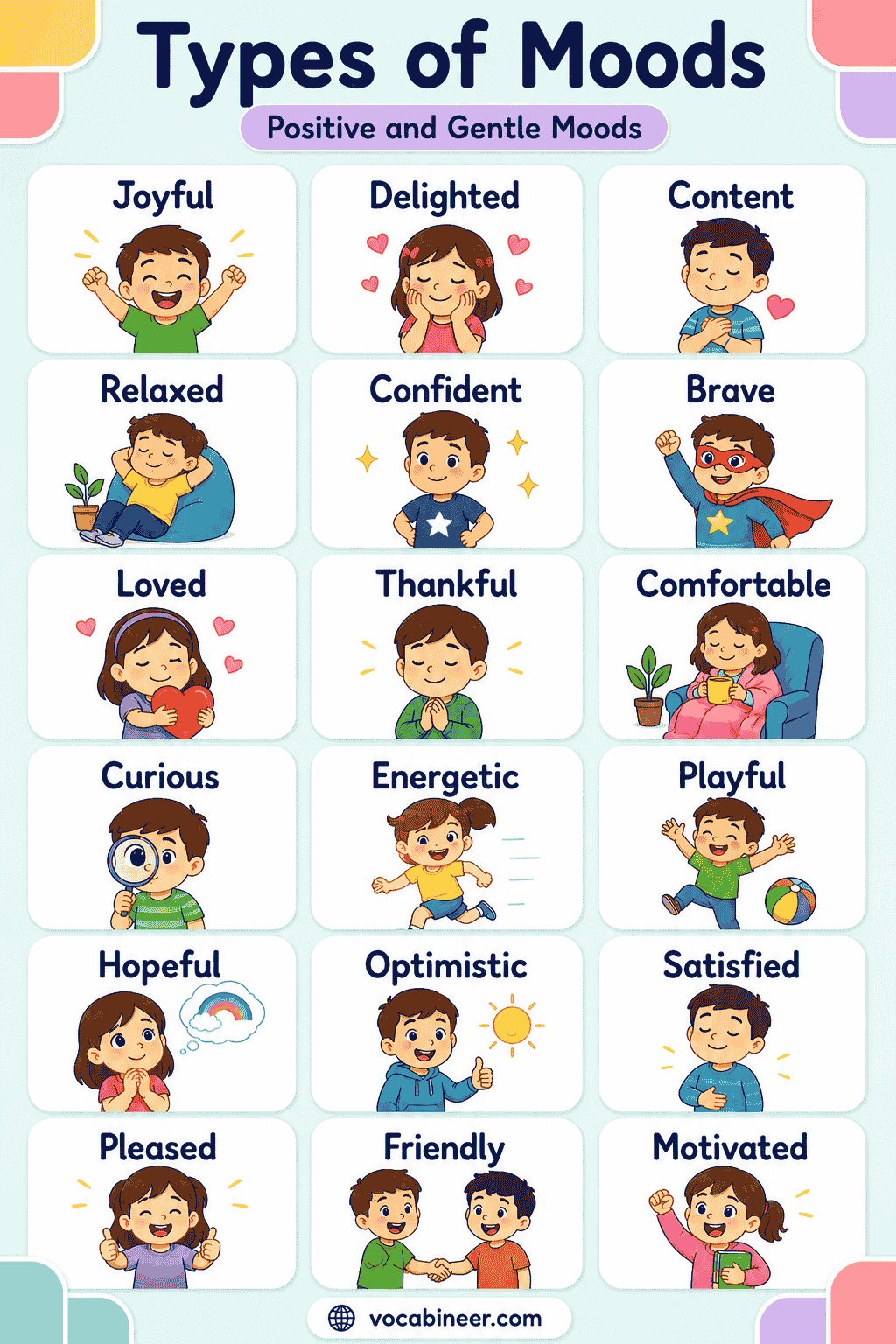
Pleasant low-energy moods feel positive without strong excitement. Instead, they often involve ease, steadiness, satisfaction, or reduced tension.
Calm
Calm describes a steady mood with little tension or agitation. Someone may feel calm after resting, breathing quietly, or finishing a stressful task.
Relaxed
Relaxed means feeling free from much physical or mental tension. While calm emphasizes steadiness, relaxed often emphasizes the release of pressure.
Content
Content describes a quiet sense of satisfaction with the present situation. Unlike excitement, contentment does not require intense energy.
Peaceful
Peaceful describes a gentle, undisturbed mood with little inner conflict. A quiet environment or reassuring situation may support this feeling.
Serene
Serene means deeply calm and untroubled. The word often describes a particularly steady and peaceful state.
Satisfied
Satisfied describes a pleasant feeling that something has met a need, expectation, or goal. For example, someone may feel satisfied after completing difficult work successfully.
Unpleasant High-Energy Moods
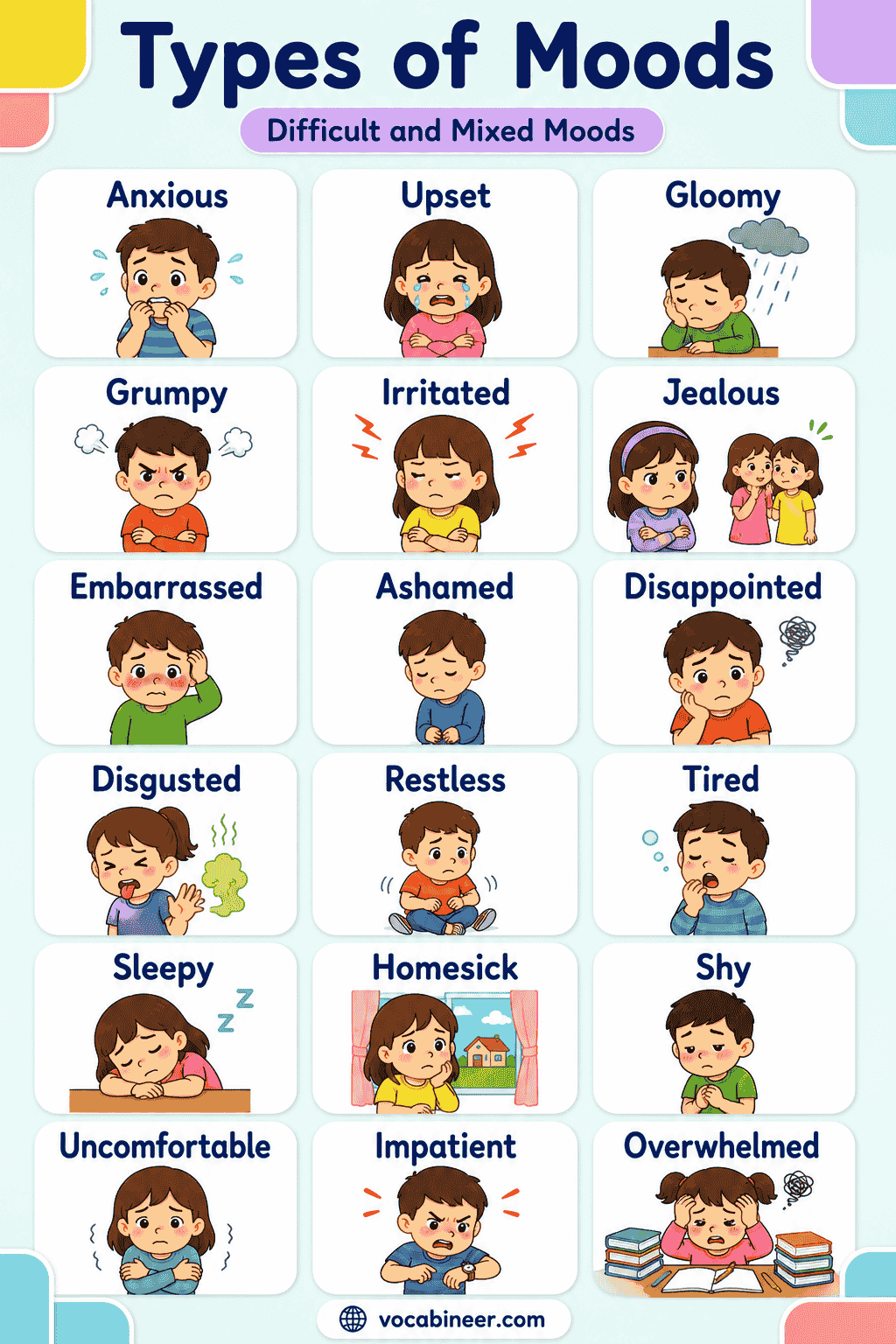
Unpleasant high-energy moods combine discomfort with tension, activation, or agitation. As a result, they often feel more intense or restless than low-energy negative moods.
Angry
Angry describes a strongly unpleasant and activated mood involving irritation, resentment, or displeasure. The intensity can range from mild anger to much stronger frustration.
Irritable
Irritable means becoming annoyed or bothered more easily than usual. Unlike a single burst of anger, irritability can continue as a general mood.
Anxious
Anxious describes an uneasy, tense mood often connected with worry or uncertainty. Someone may feel anxious while waiting for important news or facing an unfamiliar situation.
Frustrated
Frustrated means feeling upset because something is difficult, blocked, or not working as expected. Therefore, it often combines irritation with a sense of being stuck.
Stressed
Stressed describes a tense state that often develops when demands or pressures feel difficult to manage. People commonly use it as a mood word in everyday conversation.
Tense
Tense means feeling mentally or physically strained. Unlike calmness, a tense mood carries noticeable pressure or uneasiness.
Restless
Restless describes difficulty settling down or staying still mentally or physically. Boredom, worry, anticipation, or discomfort can all contribute to this mood.
Agitated
Agitated describes a more disturbed and unsettled state than ordinary restlessness. Someone may feel agitated when irritation or tension becomes difficult to ignore.
Overwhelmed
Overwhelmed means feeling that demands, thoughts, or emotions have become too much to handle comfortably. Consequently, the mood may include stress, anxiety, and mental fatigue at the same time.
Unpleasant Low-Energy Moods
Unpleasant low-energy moods usually feel subdued, heavy, or lacking in motivation. Although they share a negative tone, each word describes a slightly different experience.
Sad
Sad describes an unhappy, low mood that may follow disappointment, loss, or another difficult experience. Sometimes, however, sadness appears without one obvious cause.
Gloomy
Gloomy describes a dark, low, or pessimistic mood. Compared with ordinary sadness, it often suggests a more generally negative outlook.
Lonely
Lonely means feeling emotionally separated from other people or lacking desired connection. A person can feel lonely even when other people are physically nearby.
Bored
Bored describes a low-engagement mood caused by too little interest, variety, or stimulation. Unlike sadness, boredom mainly centers on lack of involvement.
Discouraged
Discouraged means feeling less hopeful or motivated after difficulty, failure, or disappointing progress. Therefore, it often affects willingness to keep trying.
Pessimistic
Pessimistic describes a negative outlook in which someone expects unfavorable results. It can influence how a person interprets situations and future possibilities.
Melancholy
Melancholy describes a thoughtful, lingering sadness that may feel quieter than strong emotional distress. People often use the word for a reflective or subdued low mood.
Moods People Often Confuse
Some mood words overlap because they share similar levels of pleasantness or energy. Still, their meanings differ enough that choosing the right word can make a description more accurate.
| Mood Pair | Main Difference |
|---|---|
| Happy vs Excited | Happy is a broad pleasant state, while excited usually carries stronger energy and anticipation. |
| Calm vs Relaxed | Calm emphasizes emotional steadiness; relaxed emphasizes reduced tension. |
| Angry vs Irritable | Angry describes stronger displeasure, while irritable means becoming annoyed more easily. |
| Anxious vs Stressed | Anxious centers more on worry or apprehension; stressed often reflects pressure or demands. |
| Sad vs Gloomy | Sad describes unhappiness, while gloomy often suggests a darker or more pessimistic overall tone. |
| Bored vs Tired | Bored means lacking interest or stimulation; tired mainly refers to low physical or mental energy. |
Mood vs Emotion
Mood and emotion are closely related, so people often use the words interchangeably. However, a mood generally feels broader and lasts longer, while an emotion often reacts more directly to a particular event.
| Mood | Emotion |
|---|---|
| Usually lasts longer | Often lasts for a shorter period |
| May have no obvious trigger | Often has a clearer trigger |
| Influences general outlook | Focuses more on a specific event or situation |
| Often feels less sharply defined | Can feel more immediate and intense |
For example, someone may feel irritable for several hours without knowing exactly why. By contrast, that person may feel anger immediately after someone behaves unfairly.
The distinction is not absolute, because everyday language overlaps. Still, it helps explain why the same word may sometimes describe either an emotion or a broader mood.
FAQs
A useful framework groups moods as pleasant high-energy, pleasant low-energy, unpleasant high-energy, and unpleasant low-energy. People also commonly describe them more simply as positive or negative moods.
A mood usually lasts longer and may not have one clear cause, while an emotion often appears more quickly in response to a specific event or situation.
Yes. Calm, relaxed, content, peaceful, and serene are pleasant moods that usually carry less energy than excitement or enthusiasm.
Some states may feel relatively neutral or difficult to classify as clearly positive or negative. Words such as reflective, pensive, or indifferent may fall into this area depending on the context.
No. An ordinary sad mood can occur temporarily as part of everyday life, whereas depression refers to a broader clinical condition with more persistent symptoms. A healthcare professional should assess concerns about depression.
Read More
- Types of Emotions
- Facial Expressions Names
- Human Parts of Body
- Emoji Symbols Names
- Sad Emoji Meanings
- Emoji Meanings in Chat