Feelings and emotions are natural human reactions that shape how people think, speak, act, and respond in daily life. They help us describe happiness, sadness, anger, fear, love, surprise, worry, and many other inner experiences. In addition, emotion words make communication clearer because they help people explain what they feel in simple English.
Common feelings and emotions include happiness, sadness, anger, fear, surprise, disgust, excitement, nervousness, confusion, pride, embarrassment, calmness, shame, relief, curiosity, frustration, hope, and love. This guide explains types of feelings and emotions in English with meanings, examples, body reactions, comparisons, and picture ideas.

In This Page
What Are Feelings and Emotions?
Feelings and emotions describe how people react to situations, thoughts, memories, relationships, and experiences. For example, a person may feel happy after good news, nervous before an exam, or angry after being treated unfairly.
Emotions often appear through facial expressions, voice tone, body movement, posture, and behavior. Because of this, learning emotion names helps students, kids, ESL learners, writers, and everyday speakers describe personal experiences more clearly.
Feelings vs Emotions
Feelings and emotions are closely connected, but they are not exactly the same. An emotion usually happens quickly as a natural reaction, while a feeling is the personal way someone notices, understands, and describes that reaction.
| Term | Meaning |
|---|---|
| Emotion | A quick natural reaction to a situation, event, thought, or experience. |
| Feeling | The personal way a person notices, understands, and describes an emotion. |
For example, fear may happen quickly when someone hears a loud noise. After that, the person may describe the feeling as scared, nervous, unsafe, or worried.
Common Feelings and Emotions in English
These are the most useful feelings and emotions to learn first. They help readers describe daily reactions, conversations, stories, schoolwork, and personal experiences.
- Happiness — a positive feeling of joy, comfort, pleasure, or satisfaction.
- Sadness — a heavy feeling caused by loss, disappointment, grief, or emotional pain.
- Anger — a strong reaction to unfairness, harm, conflict, or irritation.
- Fear — an emotional response to danger, threat, risk, or uncertainty.
- Surprise — a sudden reaction to something unexpected.
- Disgust — a strong feeling of dislike toward something unpleasant.
- Excitement — a high-energy feeling of joy, interest, or eager anticipation.
- Nervousness — worry or tension before an uncertain situation.
- Confusion — a state of not understanding something clearly.
- Pride — satisfaction and confidence after achievement, progress, or effort.
- Embarrassment — discomfort in an awkward or unwanted social situation.
- Calmness — a peaceful state of relaxation, control, and emotional balance.
- Shame — a painful feeling connected to mistakes, guilt, or social discomfort.
- Relief — a relaxed feeling after stress, fear, worry, or difficulty ends.
- Curiosity — interest and desire to learn, ask, or understand something.
- Frustration — a reaction caused by blocked effort, delay, or repeated difficulty.
- Hope — a positive feeling that something good may happen.
- Love — a deep emotional connection showing care, affection, warmth, and attachment.
Specific Emotion Words for Clearer Expression
Some emotion words describe deeper or more specific emotional experiences. These words help readers talk about relationships, stress, regret, appreciation, loneliness, and personal reactions more clearly.
- Trust — confidence in someone’s honesty, support, or reliability.
- Anticipation — a feeling about something that may happen in the future.
- Guilt — regret about something a person has done or failed to do.
- Jealousy — discomfort caused by fear of losing attention, love, or something important.
- Loneliness — sadness from feeling alone or disconnected from others.
- Gratitude — thankfulness for help, kindness, support, or good things.
- Sympathy — care or concern for someone who is suffering.
- Empathy — the ability to understand or share another person’s feelings.
- Disappointment — sadness or frustration when something does not happen as expected.
- Anxiety — strong worry, fear, or tension about something uncertain.
These words are useful when a simple word like happy, sad, or angry is not specific enough.
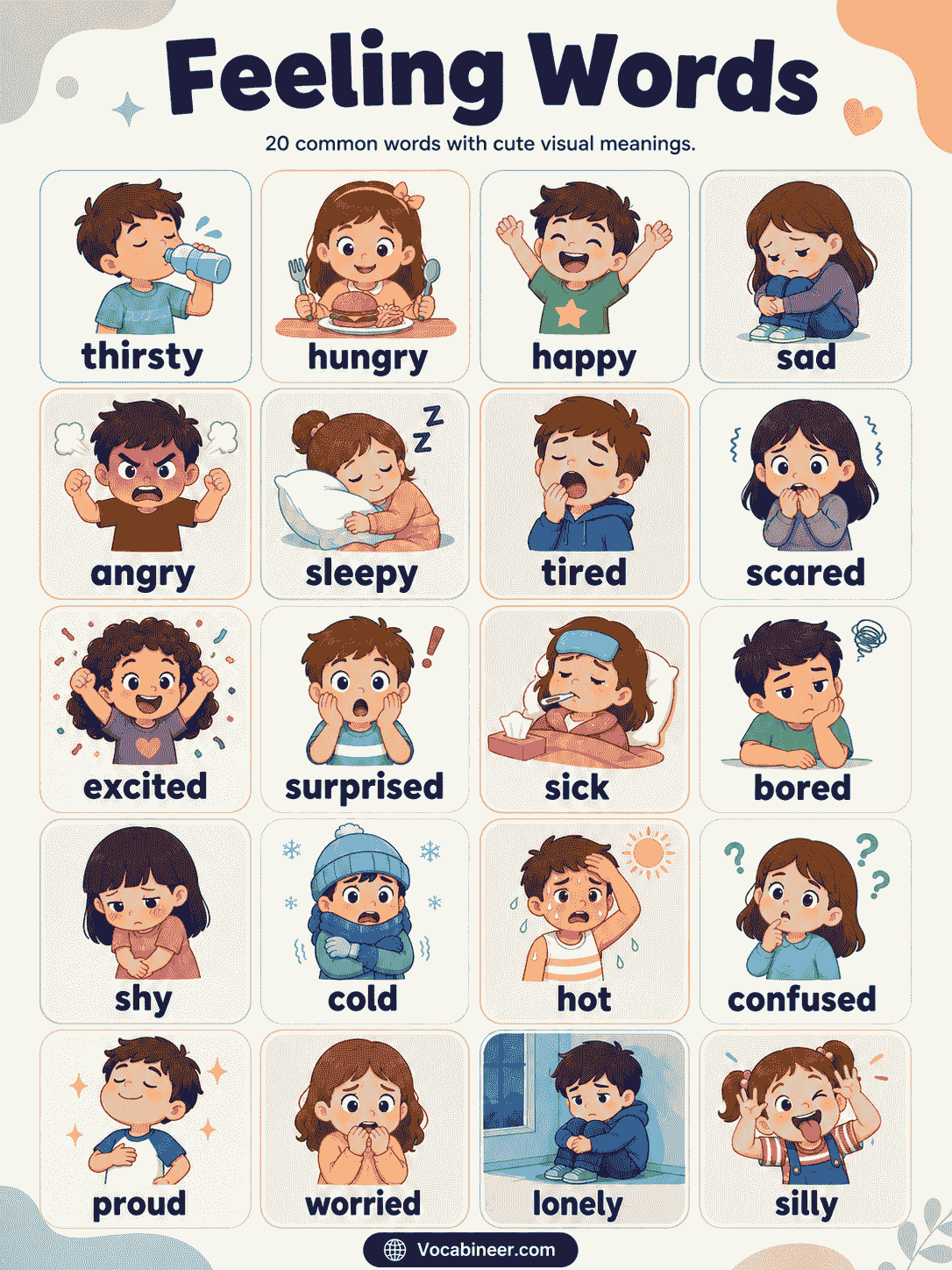
Positive and Negative Emotions
Emotions can be grouped into positive and negative types. Positive emotions usually feel pleasant and can bring comfort, energy, hope, or connection. Negative emotions may feel difficult, but they can still be useful because they warn us, show problems, or signal that something needs attention.
Positive emotions include:
- Happiness
- Love
- Gratitude
- Hope
- Pride
- Relief
- Calmness
- Excitement
These emotions often make people feel encouraged, peaceful, confident, or connected to others.
Negative emotions include:
- Sadness
- Anger
- Fear
- Guilt
- Shame
- Jealousy
- Frustration
- Disappointment
These emotions can feel uncomfortable, but they help people understand pain, danger, regret, conflict, or unmet expectations.
Feelings in Relationships
Relationships create emotional experiences that may feel warm, painful, confusing, or meaningful. These words help describe feelings toward family, friends, partners, classmates, coworkers, and other people.
- Affection — a warm feeling of care, liking, or closeness.
- Admiration — respect for someone’s qualities, actions, talent, or personality.
- Attraction — a strong emotional, romantic, or personal pull toward someone.
- Trust — belief that someone is honest, reliable, or supportive.
- Compassion — caring concern for another person’s suffering.
- Respect — a positive feeling toward someone’s value, behavior, position, or qualities.
- Jealousy — insecurity or fear of losing attention, affection, or closeness.
- Resentment — lasting anger or bitterness after unfair treatment.
These relationship words help readers describe emotional closeness, conflict, care, respect, and attachment more accurately.
Facial Expressions and Body Reactions
Emotions do not stay only in the mind. They often appear on the face and in the body through expressions, movement, posture, breathing, heartbeat, and voice tone.
Facial Expressions Linked to Emotions
- Smile — often shows happiness, kindness, comfort, or friendliness.
- Frown — can show sadness, anger, worry, or confusion.
- Tears — may show sadness, pain, relief, joy, or emotional overwhelm.
- Wide eyes — often show surprise, fear, shock, or excitement.
- Raised eyebrows — can show surprise, doubt, interest, or confusion.
- Clenched jaw — may show anger, stress, tension, or control.
- Blushing face — can show embarrassment, shyness, affection, or nervousness.
- Blank face — may show calmness, shock, boredom, or lack of emotion.
Body Reactions to Emotions
- Fear can cause a fast heartbeat, sweaty palms, shaky hands, tense muscles, or quick breathing.
- Happiness may create a smile, relaxed muscles, warm energy, and a lighter voice tone.
- Anger can lead to a red face, clenched jaw, tight fists, strong voice, or tense posture.
- Sadness may cause tears, low energy, slow movement, drooping posture, or a quiet voice.
- Excitement can bring extra energy, faster speech, wide eyes, smiles, or quick movement.
- Nervousness may cause fidgeting, shaky voice, stomach discomfort, sweating, or restless movement.
Together, facial expressions and body reactions make emotions easier to notice in real conversations, stories, and classroom examples.
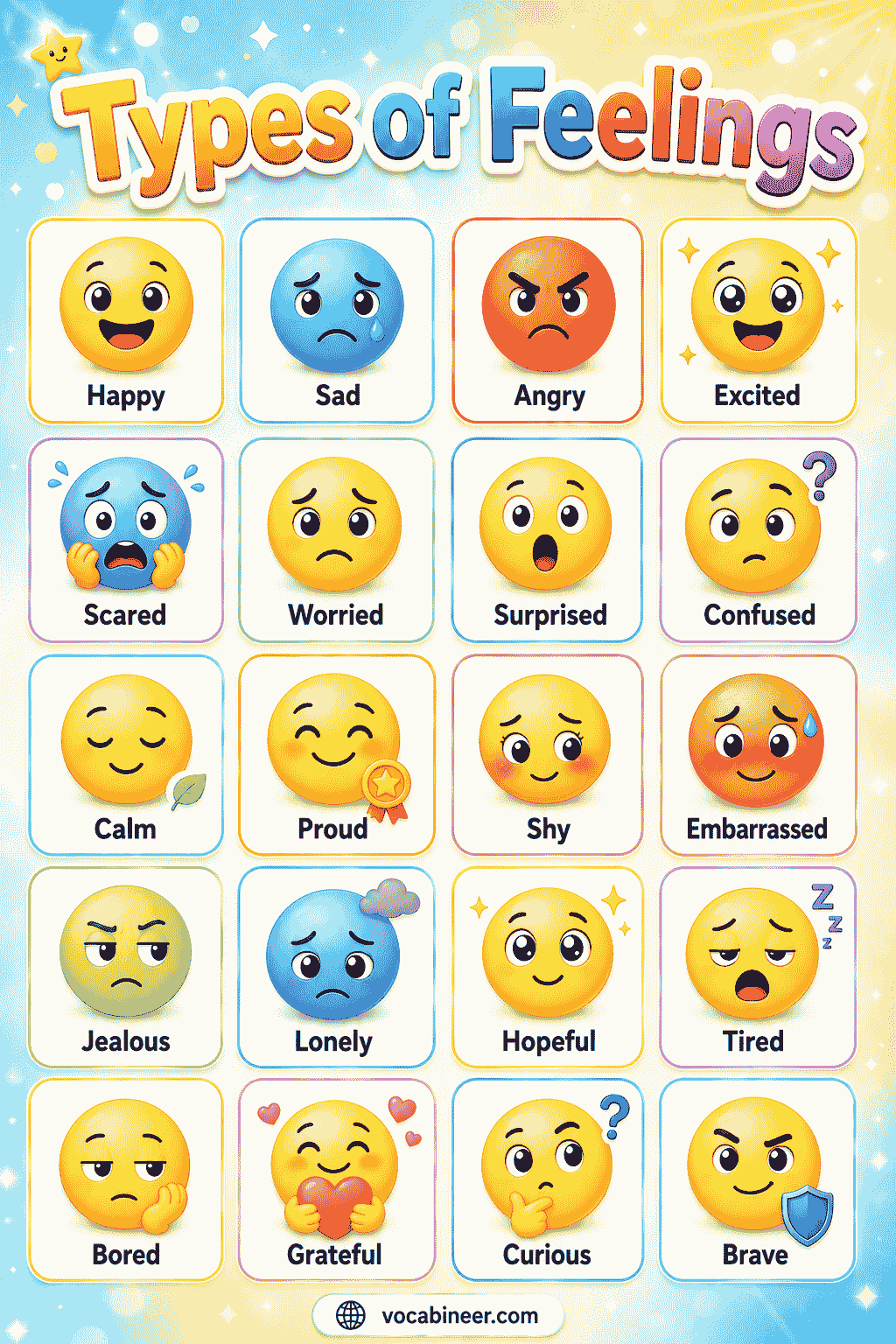
Emotion Words from Mild to Strong
Some emotion words are soft, while others show a stronger feeling. Learning mild and strong emotion words helps readers choose the right word for each situation.
| Mild Emotion | Strong Emotion |
|---|---|
| Happy | Joyful |
| Sad | Miserable |
| Angry | Furious |
| Worried | Anxious |
| Surprised | Shocked |
| Afraid | Terrified |
| Annoyed | Frustrated |
| Pleased | Delighted |
For example, happy can describe a simple positive feeling, while joyful sounds stronger. Similarly, afraid shows fear, but terrified shows a much stronger level of fear.
Differences Between Common Emotion Words
Some emotion words look similar, but they do not mean exactly the same thing. These comparisons help learners choose the correct word in speaking and writing.
| Comparison | Main Difference |
|---|---|
| Happiness vs excitement | Happiness is a positive feeling of joy or comfort; excitement is a high-energy feeling before or during something enjoyable. |
| Fear vs nervousness | Fear usually connects to danger or threat; nervousness often appears before uncertain situations. |
| Anger vs frustration | Anger is a strong reaction to unfairness or conflict; frustration comes from blocked effort or repeated difficulty. |
| Shame vs guilt | Shame often relates to feeling bad about oneself; guilt relates to regret over an action. |
| Sadness vs disappointment | Sadness is a heavy emotional feeling; disappointment appears when something does not happen as expected. |
| Jealousy vs envy | Jealousy often involves fear of losing someone or something; envy means wanting what another person has. |
Feelings and Emotions in Real Life
Feelings and emotions appear in many daily situations. They affect how people speak, learn, work, connect, and solve problems.
Emotions at Home
At home, people may feel love, comfort, care, calmness, frustration, or worry. Family life often includes both positive and negative emotions.
Emotions at School
At school, students may feel curiosity, nervousness, pride, confusion, excitement, or stress. These emotions can affect learning and confidence.
Emotions at Work
At work, people may feel motivation, pressure, satisfaction, frustration, or accomplishment. Clear emotional vocabulary helps people explain needs and problems more professionally.
Emotions in Relationships
Relationships can create affection, trust, admiration, jealousy, resentment, compassion, and love. These feelings shape how people communicate and behave with others.
Emotions in Social Situations
In social situations, people may feel embarrassment, confidence, anxiety, surprise, or relief. Understanding these words helps describe conversations, events, and reactions.
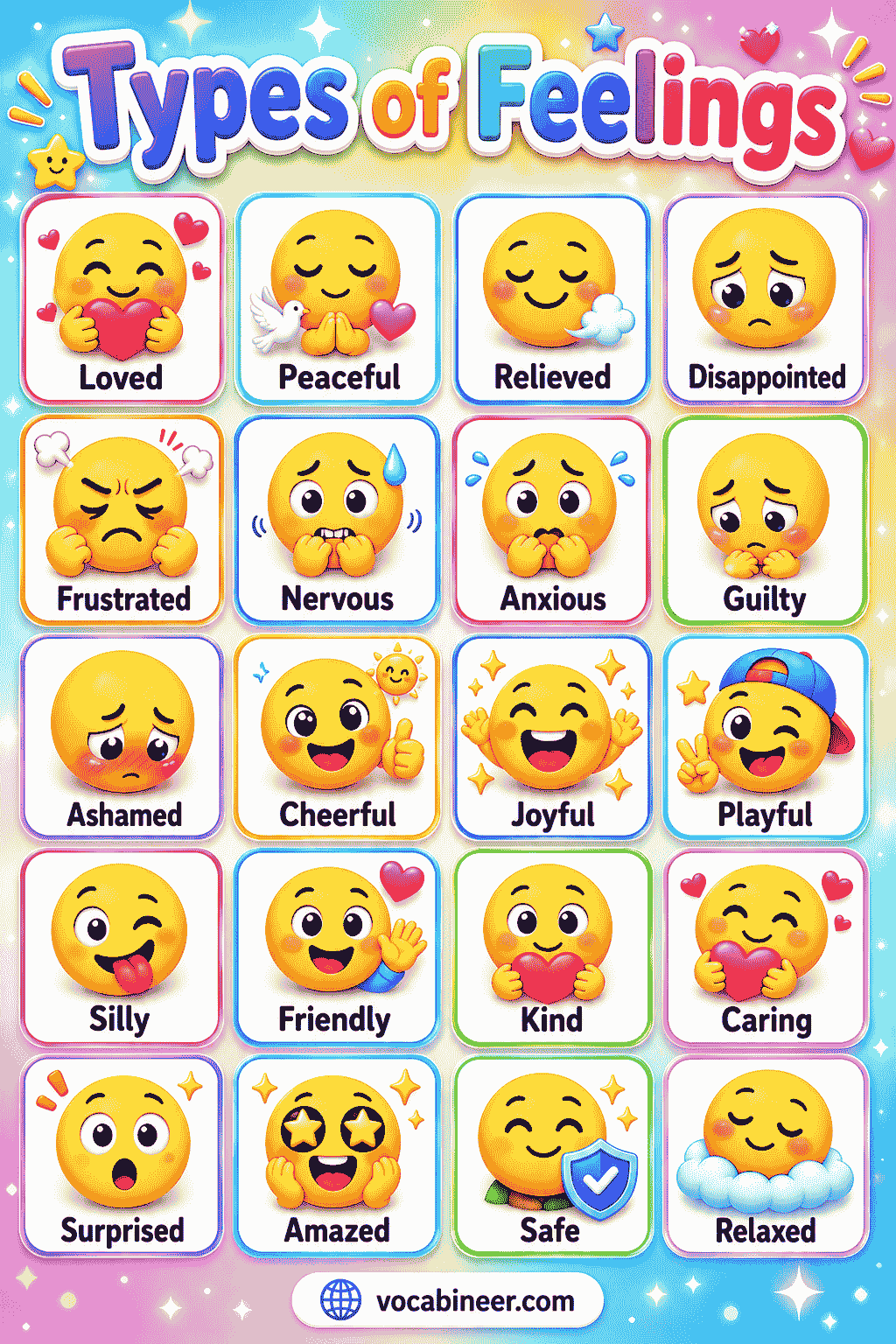
Feelings and Emotions Chart with Pictures
A feelings and emotions picture chart helps learners connect emotion words with faces, body language, and real-life reactions. It is useful for students, kids, ESL learners, worksheets, classroom lessons, writing tasks, and personal expression.
Picture chart ideas:
- Basic emotions: happiness, sadness, anger, fear, surprise, disgust
- Positive emotions: love, hope, gratitude, pride, calmness
- Negative emotions: guilt, shame, jealousy, frustration, disappointment
- Relationship feelings: affection, admiration, trust, compassion, resentment
- Body reactions: tears, smile, clenched jaw, shaky hands, fast heartbeat
- Facial expressions: smile, frown, wide eyes, raised eyebrows, blank face
FAQs
The basic types of feelings and emotions include happiness, sadness, anger, fear, disgust, and surprise. These emotions are commonly used to describe simple human reactions.
Emotions are quick reactions to situations, while feelings are how people notice, understand, and describe those emotional reactions.
Positive emotions include happiness, love, hope, gratitude, pride, calmness, relief, and excitement. Negative emotions include sadness, anger, fear, guilt, jealousy, shame, frustration, and disappointment.
You can describe your feelings by choosing the emotion word that matches your situation. For example, say “I feel nervous” before an exam, “I feel proud” after success, or “I feel disappointed” when something does not happen as expected.
Emotions can affect the body through facial expressions, heartbeat, breathing, posture, tears, muscle tension, energy level, and tone of voice.
Read More
- Facial Expressions Names
- Human Parts of Body
- Emoji Symbols Names
- Sad Emoji Meanings
- Emoji Meanings in Chat
- Laughing Emojis Meaning