

Coats are outerwear items that people wear over other clothes for warmth, protection, and style. They are usually longer and warmer than jackets, so they are common in cold, rainy, windy, and snowy weather. In addition, coats can make an outfit look formal, casual, classic, fashionable, or practical.
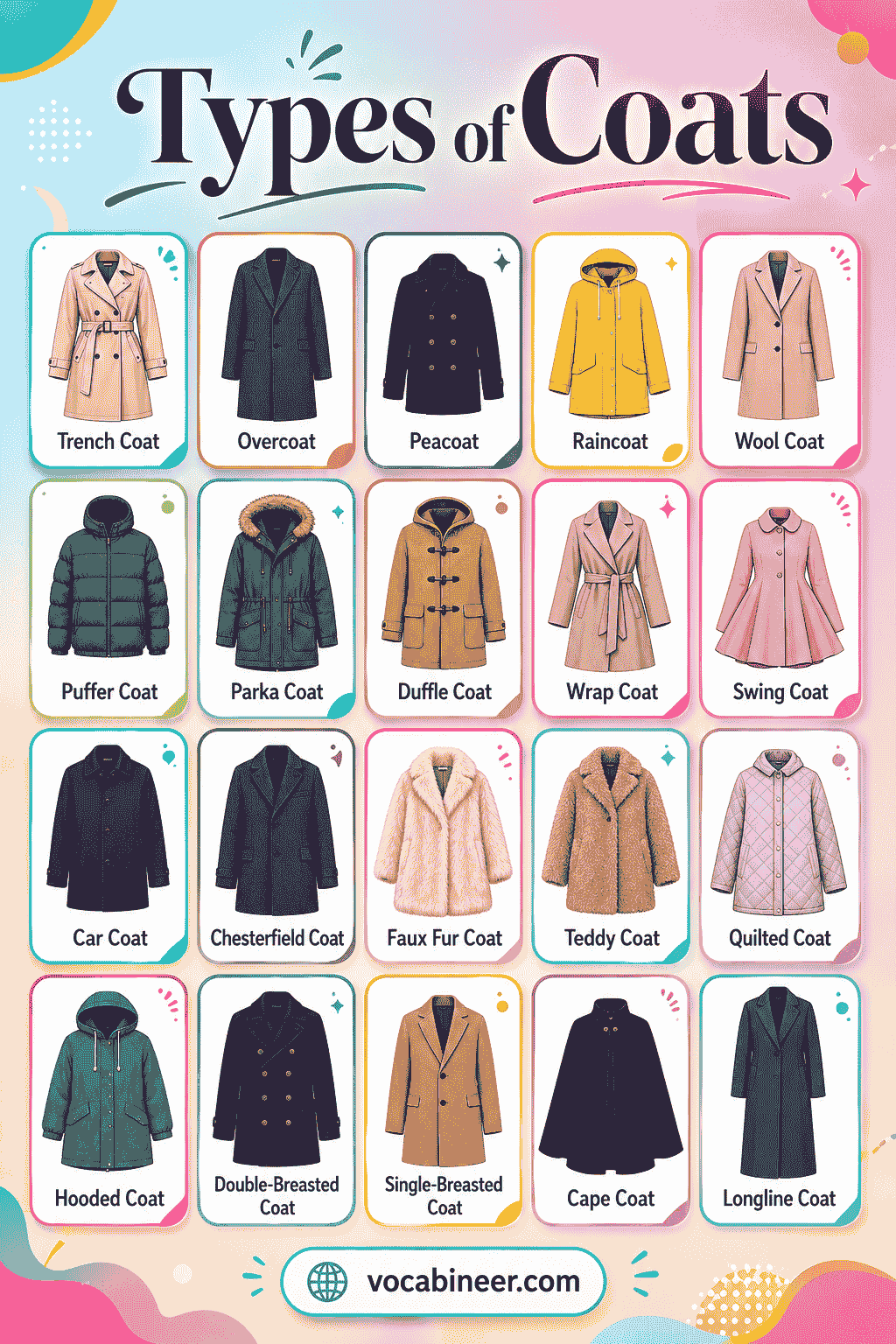
Common types of coats include trench coat, overcoat, pea coat, parka, duffle coat, raincoat, wool coat, faux fur coat, puffer coat, and wrap coat. This guide explains coat names in English with simple meanings, picture ideas, style groups, materials, seasons, and useful comparisons.
In This Page
What Are Coats?
People wear coats on the upper body, usually over shirts, sweaters, jackets, suits, dresses, or winter clothing. Most coats cover the arms and upper body, while many also extend below the hips, thighs, or knees.
Generally, coats provide more warmth and coverage than jackets. However, some light coats, such as raincoats or spring coats, focus more on weather protection than heavy warmth. Because coat styles vary by season, material, length, and purpose, learners can understand them better by grouping coat names into clear categories.
Common Types of Coats
These are some of the most common coat names in English. They are useful for clothing vocabulary, shopping, outfit descriptions, winter lessons, and fashion learning.
Trench coat
For classic style, a trench coat is a long coat with a belt and a structured design. People often wear it in rainy or mild weather.
Overcoat
An overcoat is a long coat worn over other clothes. It usually gives warmth and a formal look in cold weather.
Pea coat
This short warm coat has a double-breasted front. It often uses wool and gives a classic outerwear look.
Parka
For very cold weather, a parka gives strong warmth and coverage. Many parkas include a hood and a longer shape.
Duffle coat
A duffle coat is a warm coat with toggle fastenings. In addition, it often has a hood and a casual winter style.
Raincoat
In rainy weather, a raincoat helps protect the body from water. Usually, it uses waterproof or water-resistant material.
Wool coat
A wool coat uses wool or wool-blend fabric. Therefore, it works well in cold weather and formal outfits.
Faux fur coat
A faux fur coat has a soft fur-like texture without using real fur. It gives outfits a warm and fashionable look.
Puffer coat
A puffer coat has padded sections filled with down or synthetic material. As a result, it helps trap warmth in cold weather.
Wrap coat
A wrap coat closes by wrapping around the body, often with a belt. It creates a soft, elegant, and comfortable look.
Common Coat Styles
Coat styles can be grouped by design, weather, length, material, and use. These style names help learners describe outerwear more clearly.
Common coat styles include:
- Casual coats — relaxed coats for everyday outfits
- Formal coats — smart coats for work, events, or dressy outfits
- Winter coats — warm coats for cold weather
- Raincoats — coats that protect against rain
- Long coats — coats that extend below the hips, thighs, or knees
- Short coats — coats with a shorter outerwear shape
- Hooded coats — coats with a hood for extra coverage
- Double-breasted coats — coats with two rows of buttons
- Belted coats — coats with a belt around the waist
- Fashion coats — stylish coats used to improve an outfit
Coat Names with Meanings
Different coats are used for everyday wear, winter warmth, rain protection, formal dressing, classic styling, and fashion. The sections below explain common coat names with simple meanings.
Everyday Coats
Everyday coats are easy to wear with regular outfits. They are useful for school, travel, shopping, walking, commuting, and daily winter wear.
Trench coat
For everyday smart style, a trench coat works well because it has a classic belted design. It often suits mild, rainy, or windy weather.
Car coat
A car coat is a medium-length coat originally designed for driving. Today, people wear it as a simple everyday coat.
Cotton coat
Made from cotton fabric, this coat feels breathable and comfortable. It works best in mild weather.
Casual coat
A casual coat is a relaxed coat for daily wear. It pairs easily with jeans, trousers, sweaters, and simple outfits.
Hooded coat
With a hood attached, this coat gives extra coverage for the head and neck. It is useful in cold, windy, or rainy weather.
Lightweight coat
A lightweight coat feels thin and easy to wear. Therefore, it works well for mild temperatures and transitional seasons.
Belted coat
A belted coat has a belt around the waist. This design helps shape the coat and gives a neat look.
Single-breasted coat
A single-breasted coat has one row of buttons. It usually looks simple, clean, and easy to style.
Everyday wool coat
For daily winter outfits, an everyday wool coat gives warmth without looking too formal. It works well with simple clothing.
Short coat
A short coat ends around the hips or upper thighs. Because of its length, it feels easy to move in.
Winter and Warm Coats
Winter and warm coats help protect the body from cold weather. They often use wool, down, fleece, padding, faux fur, or insulated materials.
Overcoat
An overcoat is a long warm coat worn over other clothing. It often suits formal and winter outfits.
Parka
For freezing weather, a parka gives strong warmth and coverage. Many parkas include a hood with faux fur trim.
Puffer coat
A puffer coat has padded sections that trap heat. As a result, it is a common choice for winter.
Down coat
With down filling or similar insulation, this coat feels warm and light. It works well in cold weather.
Wool coat
A wool coat uses wool or wool-blend fabric. It gives warmth and often looks dressy.
Fleece coat
A fleece coat feels soft, warm, and casual. It is useful for comfortable winter outfits.
Shearling coat
A shearling coat has a warm wool-like lining or trim. In addition, it gives outfits a cozy and stylish look.
Teddy coat
A teddy coat has a soft, fluffy texture that looks like teddy-bear fabric. It is popular for warm and fashionable outfits.
Faux fur coat
For a bold winter look, a faux fur coat adds softness, warmth, and style. It uses fur-like material instead of real fur.
Snow coat
A snow coat protects against snow, cold, and wind. It is useful for snowy places and winter trips.
Rain and Waterproof Coats
Rain and waterproof coats help protect the body during wet weather. They often use water-resistant, waterproof, or coated fabrics.
Raincoat
In rainy weather, a raincoat helps keep the body dry. Usually, it uses waterproof or water-resistant material.
Waterproof coat
A waterproof coat helps stop rain from passing through the fabric. It is useful for heavy rain and outdoor travel.
Trench coat
A trench coat can work in light rain when it uses water-resistant fabric. However, not every trench coat is fully waterproof.
Mac coat
A mac coat, also called a mackintosh, is a classic raincoat style. It usually has a simple and clean design.
Plastic raincoat
A plastic raincoat is a lightweight coat made for rain protection. It is often simple, practical, and easy to carry.
Hooded raincoat
With a hood included, this coat gives extra protection in rain. It covers the head while keeping the body dry.
Storm coat
A storm coat protects against strong rain, wind, or cold. It is useful in rough weather.
Water-resistant coat
A water-resistant coat can handle light rain. However, it may not protect as well as a fully waterproof coat.
Outdoor coat
For travel, walking, or outdoor work, an outdoor coat gives practical weather protection. It often has pockets, a hood, or durable fabric.
Weatherproof coat
A weatherproof coat protects against different weather conditions. It may help against rain, wind, or cold.
Formal and Dressy Coats
Formal and dressy coats are useful for office wear, business outfits, ceremonies, events, and polished winter looks. They often have a neat shape, clean fabric, and structured design.
Overcoat
For formal winter outfits, an overcoat gives warmth and a smart appearance. People often wear it over suits or dress clothes.
Topcoat
A topcoat is a lighter formal coat than an overcoat. It works well in cool weather and dressy outfits.
Chesterfield coat
A Chesterfield coat is a formal long coat with a clean, classic shape. It often suits business and elegant styling.
Crombie coat
A Crombie coat is a smart wool coat with a structured design. It gives a polished and traditional look.
Dress coat
A dress coat is a formal coat used with smart outfits. It often looks neat, simple, and refined.
Tailored coat
A tailored coat fits the body neatly. Therefore, it creates a clean and professional appearance.
Double-breasted coat
A double-breasted coat has two rows of buttons. It gives a classic and formal look.
Single-breasted coat
A single-breasted coat has one row of buttons. It looks simple, smart, and easy to wear.
Belted wool coat
A belted wool coat uses a waist belt for shape. It gives warmth while keeping a polished style.
Long formal coat
A long formal coat extends below the thighs or knees. It works well for business, evening, and winter outfits.
Long, Short, and Classic Coats
Coat length and classic design can change the full look of an outfit. Some coats look long and elegant, while others feel shorter, easier, and more casual.
Long coat
A long coat extends below the hips, thighs, or knees. It often gives a warm and elegant look.
Short coat
A short coat ends around the hips or upper thighs. Because it is shorter, it allows easier movement.
Topcoat
A topcoat is a lighter long coat used in cool weather. It often looks formal or smart.
Overcoat
An overcoat is a long warm coat worn over clothing. It usually works well in cold weather.
Duster coat
A duster coat is a long, loose coat. It often gives a dramatic or vintage-style look.
Cape coat
A cape coat has a cape-like shape instead of regular fitted sleeves. It gives outfits a stylish and unique appearance.
Cocoon coat
A cocoon coat has a rounded, oversized shape. As a result, it looks soft, modern, and comfortable.
Car coat
A car coat usually has a medium length. It is practical for daily wear and easy movement.
Pea coat
A pea coat is a short double-breasted coat. It often uses wool and has a classic shape.
Duffle coat
A duffle coat has toggle fastenings and often includes a hood. It is a classic casual winter coat.
Fashion and Statement Coats
Fashion and statement coats focus on style, design, texture, color, and outfit impact. They can look bold, elegant, trendy, classic, or eye-catching.
Faux fur coat
For a bold winter outfit, a faux fur coat adds softness and style. It uses fur-like material without real fur.
Teddy coat
A teddy coat has a fluffy, cozy texture. It is popular for warm and fashionable looks.
Leather coat
A leather coat uses leather or faux leather. It gives outfits a bold, sleek, and stylish look.
Wrap coat
A wrap coat closes around the body with a belt. It creates a soft and elegant shape.
Cape coat
A cape coat gives a dramatic fashion look. It often works well for dressy outfits.
Printed coat
A printed coat has patterns, graphics, or colorful designs. It adds personality to simple clothing.
Designer coat
A designer coat comes from a fashion designer or brand. It often focuses on style, fabric, fit, and trend.
Military coat
Inspired by military clothing, this coat often has structured details, buttons, or strong lines. It gives outfits a bold classic style.
Belted fashion coat
A belted fashion coat shapes the waist and adds style. It works well in dressy and casual outfits.
Statement coat
A statement coat stands out because of its color, shape, fabric, or design. People often wear it as the main piece of an outfit.
Coats by Material
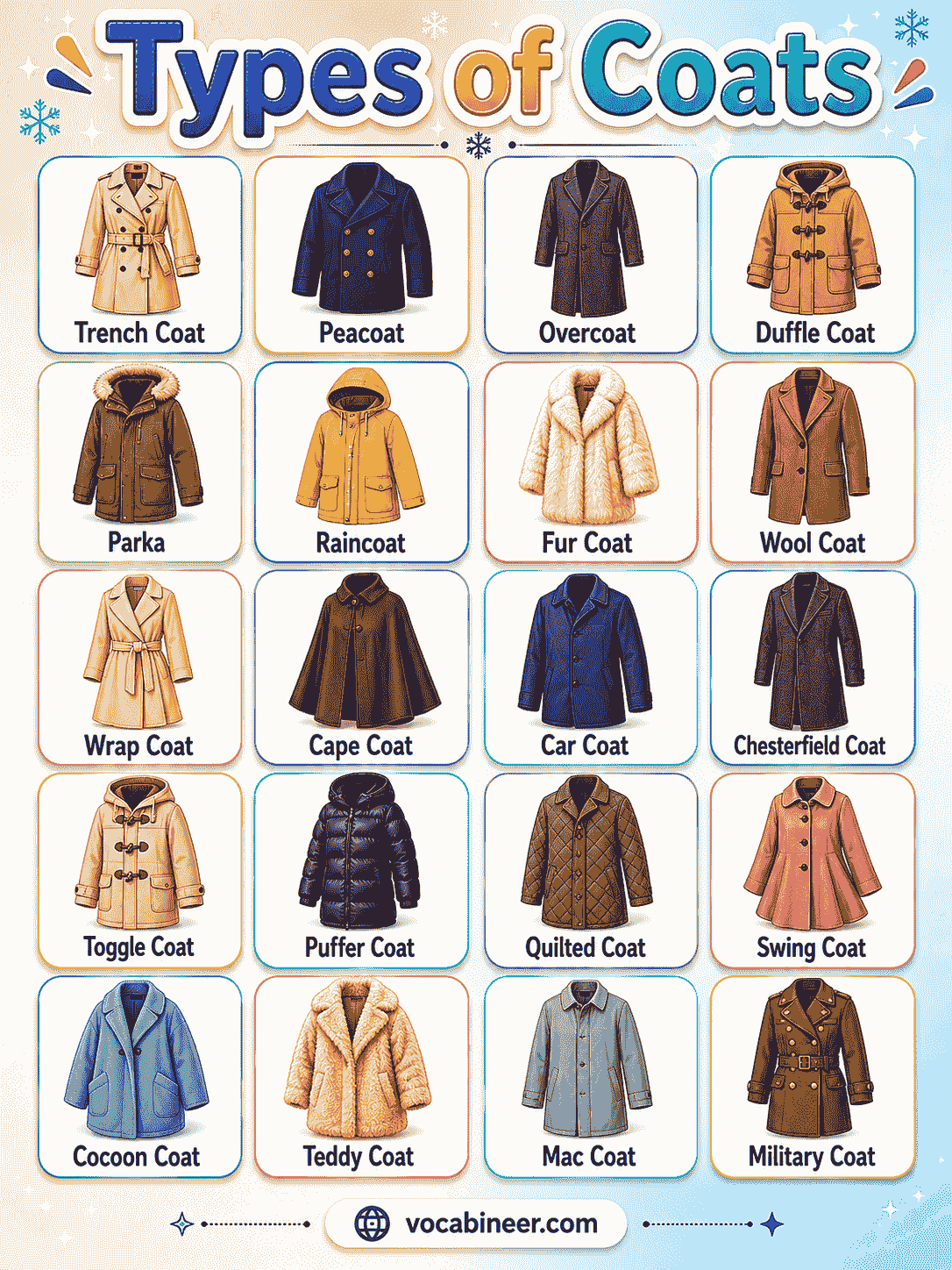
Material affects how a coat looks, feels, warms, and protects the body. In addition, material helps learners understand why some coats feel soft, heavy, light, waterproof, or dressy.
Common coat materials include:
- Wool coats — warm coats often used for winter and formal outfits
- Cotton coats — breathable coats for mild weather
- Leather coats — bold coats made from leather or faux leather
- Faux fur coats — soft fashion coats with fur-like material
- Fleece coats — soft casual coats for warmth and comfort
- Down coats — warm coats filled with down or similar insulation
- Quilted coats — padded coats with stitched sections
- Nylon coats — lightweight coats often used for rain or outdoor wear
- Polyester coats — easy-care coats made from synthetic fabric
- Waterproof coats — coats made to protect against rain
Coats by Season
Season also affects coat choice. For example, winter coats focus on warmth, while spring coats feel lighter and easier to wear.
Common seasonal coat types include:
- Winter coats — warm coats for cold weather
- Autumn coats — coats for cool and changing weather
- Spring coats — light to medium coats for mild weather
- Raincoats — coats for rainy days
- Snow coats — coats for snow and freezing weather
- Lightweight coats — thin coats for mild temperatures
- Heavy coats — thick coats for cold weather
- Transitional coats — coats for weather between seasons
- All-season coats — coats that work in many weather conditions
- Cold-weather coats — coats designed for low temperatures
Men’s Coat Styles
Men’s coats are often grouped by weather, material, length, and occasion. For example, some coats suit office wear, while others work better for winter, rain, travel, or casual outfits.
Common coat styles for men include:
- Overcoat
- Trench coat
- Pea coat
- Parka
- Duffle coat
- Raincoat
- Wool coat
- Puffer coat
- Topcoat
- Car coat
- Leather coat
- Military coat
- Snow coat
- Double-breasted coat
- Long formal coat
Women’s Coat Styles
Women’s coats come in many casual, formal, warm, lightweight, classic, and fashion-focused designs. Also, many women’s coat styles vary by length, waist shape, fabric, color, and occasion.
Common coat styles for women include:
- Trench coat
- Wrap coat
- Wool coat
- Faux fur coat
- Teddy coat
- Puffer coat
- Parka
- Raincoat
- Cape coat
- Cocoon coat
- Belted coat
- Long coat
- Short coat
- Printed coat
- Designer coat
Kids’ Coat Styles
Kids usually need coats that feel warm, comfortable, easy to wear, and suitable for movement. Therefore, simple and practical coats are often best for school, travel, and cold weather.
Common coat styles for kids include:
- Winter coat
- Raincoat
- Puffer coat
- Parka
- Duffle coat
- Hooded coat
- Fleece coat
- Snow coat
- Lightweight coat
- School coat
Coat Names Chart with Pictures
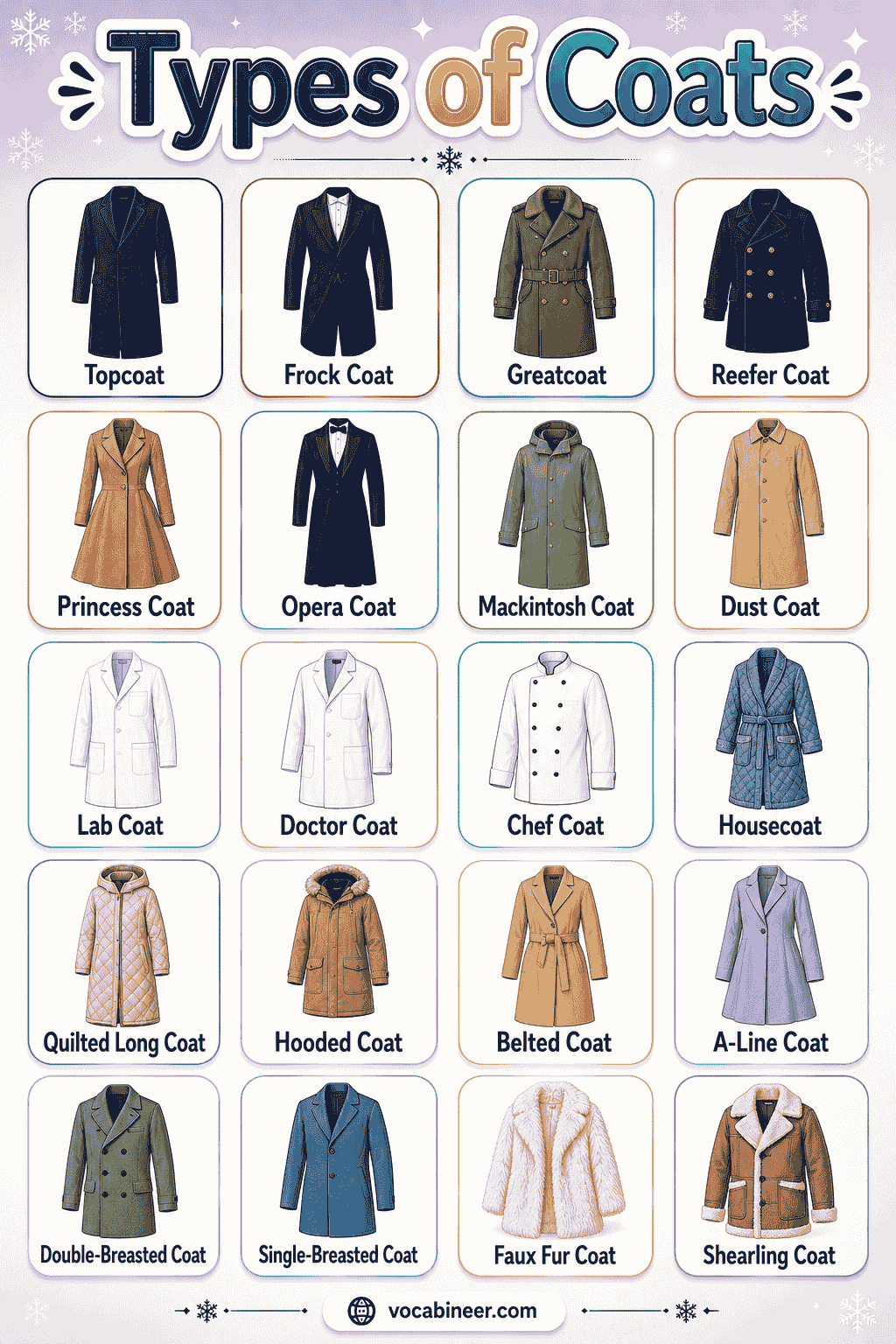
A coat picture chart helps learners connect coat names with real styles. It is useful for students, ESL learners, fashion vocabulary, worksheets, and classroom activities.
Picture chart ideas:
- Everyday coats: trench coat, car coat, casual coat
- Winter coats: puffer coat, parka, wool coat
- Rain coats: raincoat, mac coat, waterproof coat
- Formal coats: overcoat, topcoat, Chesterfield coat
- Classic coats: pea coat, duffle coat, double-breasted coat
- Fashion coats: faux fur coat, teddy coat, wrap coat
Difference Between Common Coat Types
Some coat names look similar, but they describe different lengths, materials, designs, or uses.
| Comparison | Main Difference |
|---|---|
| Coat vs jacket | A coat is usually longer and warmer; a jacket is usually shorter and lighter. |
| Overcoat vs topcoat | An overcoat is usually heavier and warmer; a topcoat is usually lighter. |
| Trench coat vs raincoat | A trench coat has a classic belted design; a raincoat mainly protects from rain. |
| Pea coat vs duffle coat | A pea coat has a short double-breasted design; a duffle coat usually has toggle fastenings and a hood. |
| Parka vs puffer coat | A parka is usually longer and hooded; a puffer coat has padded sections for warmth. |
| Wool coat vs fleece coat | A wool coat is usually dressier and warmer; a fleece coat is softer and more casual. |
Common Mistakes When Learning Coat Names
Learners often confuse coat names because many outerwear styles look similar. In addition, some words change meaning depending on weather, length, fabric, or regional English.
Common mistakes include:
- Calling every outerwear item a jacket
- Confusing coat and jacket
- Using overcoat and topcoat as if they always mean the same thing
- Calling every rain coat a trench coat
- Confusing puffer coat and parka
- Using wool coat and fleece coat as the same term
- Forgetting that coat names can describe material, length, season, or design
How to Choose the Right Coat
Choosing the right coat becomes easier when you think about weather, length, material, and occasion.
Helpful points:
- Choose a puffer coat, parka, or down coat for cold weather.
- Choose a raincoat or waterproof coat for rainy days.
- Choose an overcoat, topcoat, or wool coat for formal winter outfits.
- Choose a trench coat for classic style and mild weather.
- Choose a pea coat or duffle coat for a warm casual look.
- Choose a fleece coat for soft comfort.
- Choose a faux fur coat or teddy coat for a fashionable winter outfit.
- Choose a lightweight coat for spring or autumn.
How to Learn Coat Names Easily
Coat vocabulary becomes easier when learners group names by style, material, season, and use. In addition, pictures can make each coat type easier to remember.
Helpful learning tips:
- Start with common coat names like trench coat, overcoat, pea coat, and parka.
- Match each coat name with a picture.
- Group coats by use, such as winter, rain, formal, casual, and fashion.
- Learn material words such as wool, leather, fleece, down, nylon, and faux fur.
- Learn season words such as winter, autumn, spring, rain, and snow.
- Practice simple sentences like “He is wearing an overcoat” or “She bought a raincoat.”
- Compare similar coat types, such as coat vs jacket or overcoat vs topcoat.
FAQ
Common types of coats include trench coat, overcoat, pea coat, parka, duffle coat, raincoat, wool coat, faux fur coat, puffer coat, and wrap coat.
A coat is usually longer and warmer than a jacket. Jackets are usually shorter and lighter, so people often wear them in mild weather or for light layering.
Puffer coats, down coats, parkas, wool coats, fleece coats, snow coats, and faux fur coats are common choices for winter.
Raincoats, waterproof coats, mac coats, hooded raincoats, and some trench coats are useful for rainy weather.
Long coats may be called overcoats, topcoats, trench coats, duster coats, long wool coats, or long formal coats, depending on their style and fabric.
Read More
- 100 Clothes Names in English
- Types of Winter Clothes
- Different Types of Jackets
- Types of Jeans for Women
- Different Types of Trousers
- Different Types of Hats Name