

Fruits that start with W include familiar choices such as watermelon alongside tropical fruits, berries, wild fruits, and regional specialties. Their appearances vary widely, from the glossy bell shape of wax apple to the hard shell of wood apple and the bright red berries of wolfberry.
This article covers 24 carefully selected fruits that start with W with pictures, short descriptions, visual clues, and alternative names. It also explains the difference between water apple and wax apple while keeping aliases such as wampee and wampi or wolfberry and goji berry together.
In This Page
Recognizable Fruits That Start With W
Fruits that start with the letter W include melons, berries, citrus fruits, tropical varieties, and regional fruits with distinctive colors, shapes, and flavors. Learning these W fruit names helps children and English learners expand food vocabulary and recognize both familiar and less common fruits more easily.
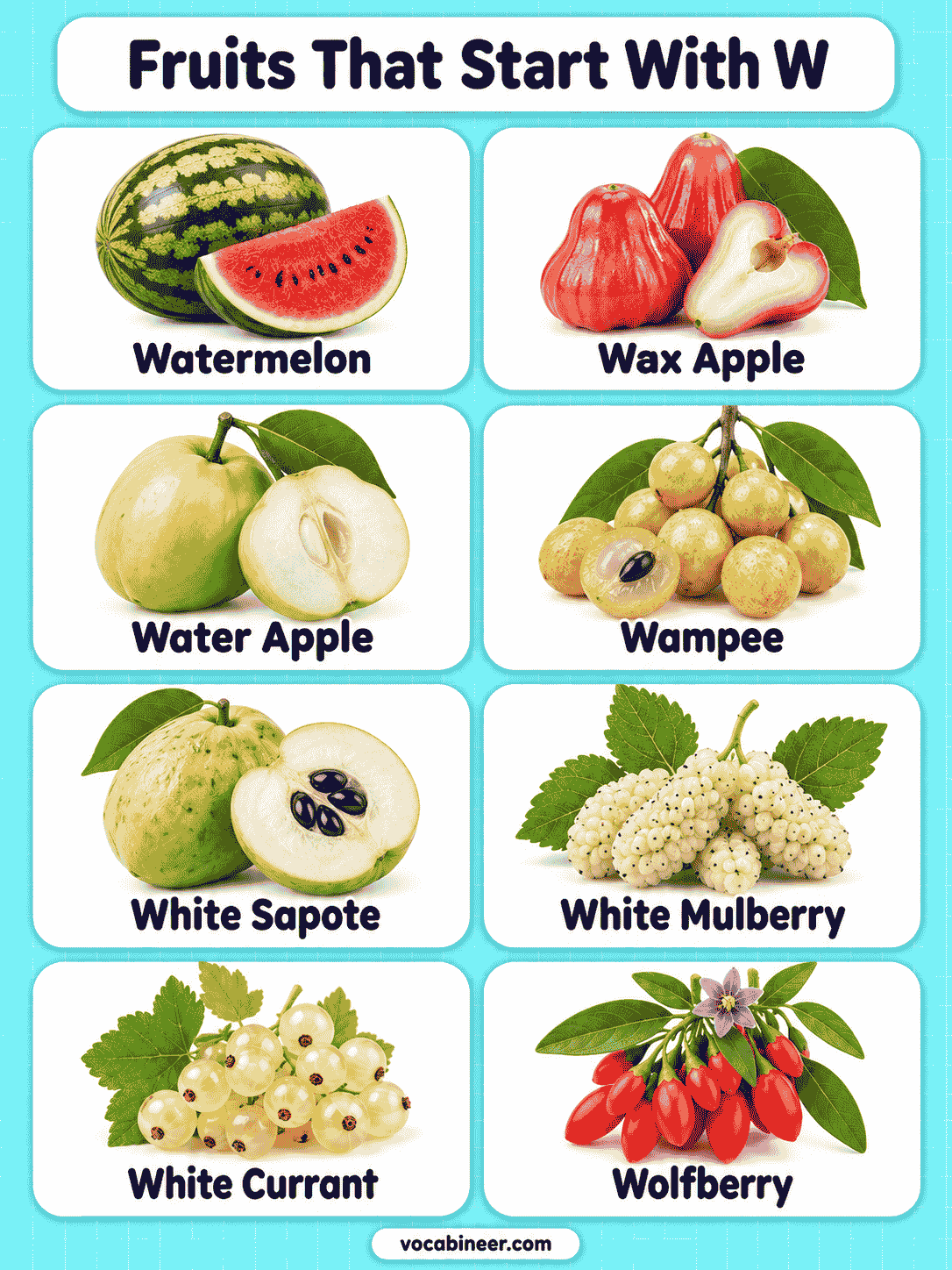
Watermelon
Watermelon has a thick green rind and juicy red, pink, yellow, or orange flesh. Its high water content and sweet flavor make it especially refreshing.
Wax Apple
Wax apple has smooth, shiny skin and a bell-like shape. Its crisp, watery flesh has a mild, lightly sweet flavor.
White Sapote
White sapote has green to yellow skin and soft creamy flesh. Its sweet flavor is often compared with banana, peach, or vanilla.
Wolfberry
Wolfberry, better known as goji berry, is a small red-orange fruit with a mildly sweet and slightly tart taste. People often eat it dried.
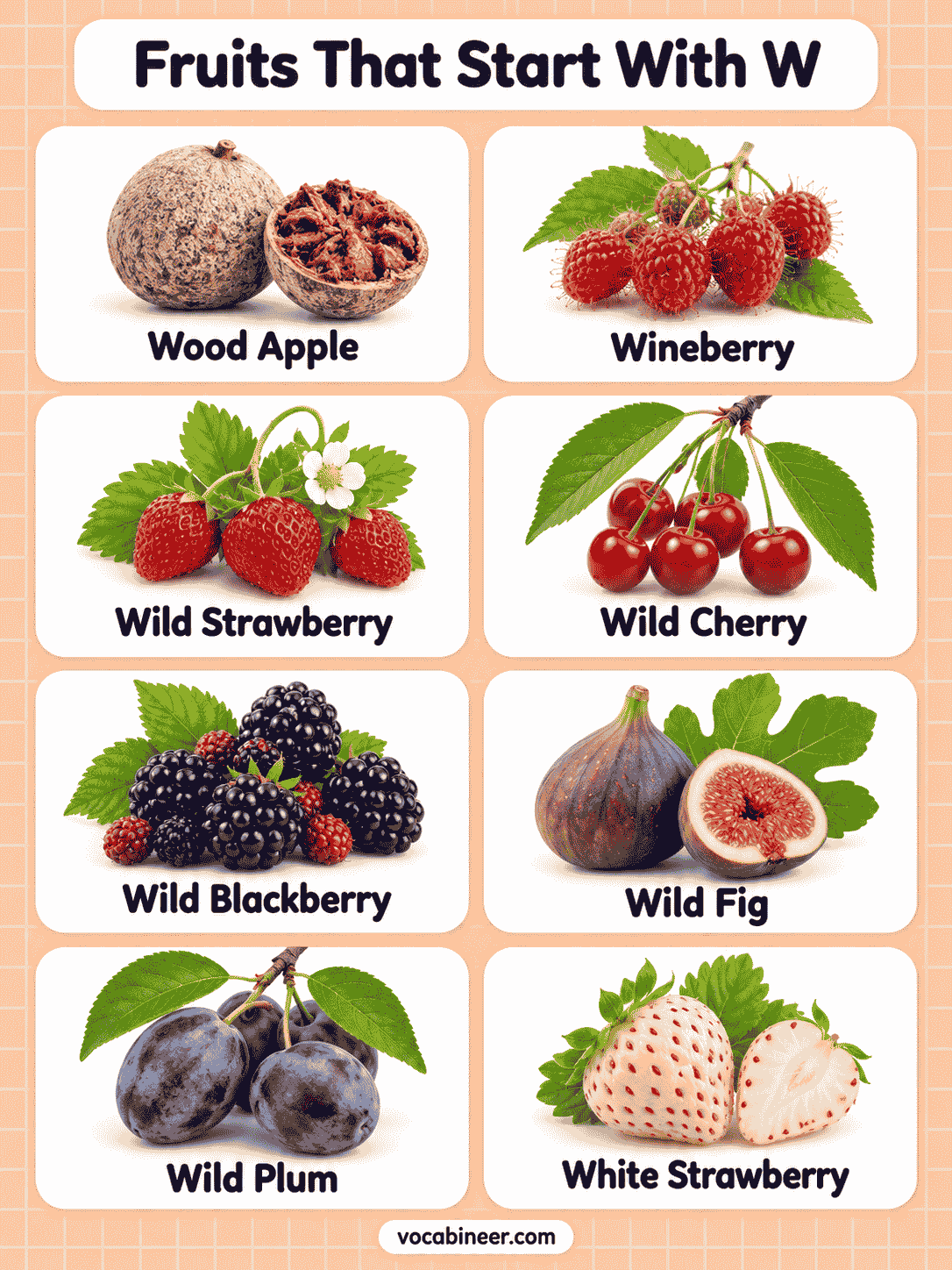
Wineberry
Wineberries are bright red berries related to raspberries. Their juicy flesh has a sweet-tart flavor.
Wild Strawberry
Wild strawberries are small red berries with a strong aroma and concentrated sweetness. They are usually smaller than cultivated strawberries.
Wild Blueberry
Wild blueberries are small deep-blue berries with juicy flesh and a rich sweet-tart flavor.
Wild Blackberry
Wild blackberries consist of many small dark drupelets joined together. Their flavor ranges from tart to sweet as they ripen.
Wild Raspberry
Wild raspberries are soft red or dark berries with a delicate texture and sweet-tart taste.
Wild Plum
Wild plums are small stone fruits that can ripen to red, purple, yellow, or blue-black. Their flesh may taste sweet or sharply tart.
Wild Cherry
Wild cherries are small round stone fruits that range from red to dark purple or black. Flavor varies widely by species.
Wild Grape
Wild grapes grow in clusters and often have thick skins with strongly flavored pulp. Colors include green, red, purple, and black.
Winter Melon
Winter melon is a large pale-green fruit with firm white flesh. People usually cook it as a vegetable in soups and savory dishes.
West Indian Cherry
West Indian cherry, also called acerola, is a small bright red fruit with juicy, tart flesh.
West Indian Lime
West Indian lime, also called key lime, is a small citrus fruit with green to yellow skin and strongly acidic juice.
Wampee
Wampee is a small yellow-brown tropical fruit with translucent flesh. Its flavor ranges from sweet to mildly sour.
Wood Apple
Wood apple has a hard brown shell and soft brown aromatic pulp. Its flavor combines sweet, sour, and earthy notes.
Water Apple
Water apple is a bell-shaped tropical fruit with thin skin and crisp watery flesh. Its flavor is mild and refreshing.
Williams Pear
Williams pear has a classic pear shape with green skin that turns yellow as it ripens. Its soft juicy flesh has a sweet, aromatic flavor.
Worcester Pearmain Apple
Worcester Pearmain is a red apple variety with crisp flesh and a sweet, slightly strawberry-like aroma.
Fruits Beginning With W and Their Key Features
The following list includes familiar, tropical, berry-like, wild, and regional fruits whose established common names begin with W.
Watermelon
Watermelon develops a thick green rind around crisp, juicy flesh that may appear red, pink, yellow, or orange. Because of its high water content and refreshing taste, it remains the most familiar fruit beginning with W.
Wampee (Wampi)
Wampee produces clusters of small yellow to golden fruits with thin skin and translucent pulp. Depending on the variety and ripeness, the flavor may range from sweet to pleasantly tart.
Water Apple (Watery Rose Apple)
Water apple has thin skin, crisp watery flesh, and a bell-like shape. Its fruit commonly appears pale green, pink, or red and belongs to Syzygium aqueum.
Wax Apple (Wax Jambu)
Wax apple develops a glossy bell-shaped fruit with crisp, juicy flesh. Although it resembles water apple, wax apple belongs to Syzygium samarangense and often grows larger and sweeter.
Water Berry
Water berry produces small round fruits that darken as they ripen. In addition, people use the edible fruits fresh or process them into drinks, jams, and other foods in parts of Africa.
White Currant
White currants grow in hanging clusters of small translucent berries. Although closely related to red currants, their pale fruits usually have a milder, sweeter appearance and flavor.
White Mulberry
White mulberry produces elongated berry clusters that may ripen to white, cream, pink, or purple tones. Moreover, the soft fruits become noticeably sweeter as they mature.
White Sapote
White sapote has smooth green to yellow-green skin and soft pale flesh inside. When fully ripe, its creamy texture and sweet flavor make it very different from the dark-skinned sapotes people may know.
White Aspen Fruit
White aspen develops small pale fruits with a rounded form. The edible flesh has a noticeably acidic taste, so people often use the fruit in processed foods rather than eat large amounts fresh.
White Bark Raspberry
White bark raspberry produces dark purple to black raspberry-like fruits on canes with pale or whitish stems. Despite the name, the ripe berries themselves are usually dark rather than white.
White Star Apple
White star apple produces rounded fruits with edible pulp and a sweet to lightly acidic flavor. Its pale interior helps explain the common name.
Whitebeam Fruit
Whitebeam trees produce small orange-red fruits that soften as they become very ripe. Therefore, people traditionally eat them after full ripening or use them in preserves and other preparations.
Wineberry
Wineberry resembles a bright red raspberry and grows inside a sticky reddish calyx. The clustered drupelets have a juicy sweet-tart flavor.
Wolfberry (Goji Berry)
Wolfberries are small elongated red-orange fruits better known commercially as goji berries. People often dry them, although fresh fruits also develop on the shrubs.
Wood Apple
Wood apple has an extremely hard gray-brown shell that protects aromatic brown pulp inside. Because of the tough rind, people usually crack the fruit open before eating or processing the pulp.
West Indian Cherry (Acerola)
West Indian cherry produces small bright-red fruits with several shallow lobes. Also known as acerola, the juicy fruit has a tart flavor and resembles a tiny cherry.
Wild Strawberry
Wild strawberries are smaller than many cultivated strawberries but share the familiar red color and seed-covered surface. Their compact fruits often have an intense strawberry aroma.
Wild Jack
Wild jack produces green to yellow fruits on a tropical tree related to jackfruit. When ripe, the pulp develops a sweet-sour taste, while people can also use the seeds as food.
Wild Custard Apple
Wild custard apple produces rounded to oval fruits with soft edible pulp inside. As the fruit ripens, its pale flesh develops a pleasantly sweet flavor.
Wild Apricot
Wild apricot produces small yellow to orange stone fruits on trees growing naturally in parts of Asia. People use the fruits fresh, dried, or in preserves, chutneys, and drinks.
Wild Dilly
Wild dilly grows as a small tropical fruit related to sapodilla. Its ripe fruit contains edible flesh, although the flavor usually receives less attention than cultivated sapodilla.
Wild Loquat
Wild loquat produces round yellow-brown fruits with sweet edible pulp. In addition to fresh use, people process the fruits into juice, fermented drinks, and other foods.
Willow Leaf Cherry (Japanese Plum)
Willow leaf cherry produces round to oval stone fruits that may ripen to yellow, red, or purple. Despite the word cherry in this common name, the fruit is better known as Japanese plum.
Wongi
Wongi is an Australian fruit that ripens to orange-red or reddish tones. Its edible flesh adds a lesser-known regional fruit to the W list.
Water Apple vs. Wax Apple
Water apple and wax apple look similar because both belong to the Syzygium group and often develop bell-shaped fruits. However, they represent different species.
| Fruits | Main Difference |
|---|---|
| Water Apple | Usually smaller, crisp, watery, and associated with Syzygium aqueum |
| Wax Apple | Usually larger, glossier, sweeter, and associated with Syzygium samarangense |
Quick takeaway: Water apple tends to have a lighter, more watery texture, while wax apple usually has a glossier surface and sweeter flesh.
W Fruit Names That Share Other Names
Several W fruits also appear under regional or alternative names. Therefore, these aliases should not increase the total fruit count.
| Main Name | Alternative Name |
|---|---|
| Wampee | Wampi |
| Water Apple | Watery Rose Apple |
| Wax Apple | Wax Jambu |
| Wolfberry | Goji Berry |
| West Indian Cherry | Acerola |
| Willow Leaf Cherry | Japanese Plum |
Recognizing these relationships prevents duplicate entries and makes regional fruit vocabulary easier to understand.
Wild and White Fruit Names That Need Care
The words wild and white can form genuine established fruit names, but simply placing either word before a familiar fruit does not automatically create a separate fruit.
For example, Wild Strawberry, Wild Jack, Wild Custard Apple, Wild Loquat, White Sapote, White Mulberry, and White Star Apple all have established common-name use. In contrast, vague names such as Wild Mango, Wild Pear, White Grapes, or White Nectarine may refer only to regional forms, cultivars, or descriptive color variations.
Therefore, this list uses W names that have clear common-name value rather than adding every possible “Wild + fruit” or “White + fruit” combination merely to increase the total.
FAQs
Watermelon, wampee, water apple, wax apple, white sapote, white mulberry, wineberry, wolfberry, wood apple, West Indian cherry, and wild strawberry are examples of fruits beginning with W.
Watermelon is the most familiar W fruit for most readers. Its large green rind and juicy flesh make it easy to recognize.
No. Water apple generally refers to Syzygium aqueum, while wax apple refers to Syzygium samarangense. Although the fruits look similar, they belong to different species.
Yes. Wolfberry and goji berry commonly refer to the same general fruit group, so they count as one entry in this list.
White aspen fruit, white bark raspberry, white star apple, wild jack, wild dilly, wild loquat, wongi, and whitebeam fruit are some less familiar W fruits.
Read More