A round mouth mirror, a pointed explorer, and a pair of extraction forceps may all sit on the same dental tray, yet each serves a very different purpose. Learning their names makes it easier to recognize the instruments you see in dental clinics, textbooks, training materials, and pictures.
Dental professionals usually call these items dental instruments, although many people simply call them dental tools. Some help examine teeth, while others clean surfaces, place fillings, control moisture, deliver anesthetic, isolate teeth, or assist with extraction and surgery.
In This Page
Dental Examination Tools
Dentists use examination tools to inspect teeth, gums, and other areas inside the mouth. Although many of these instruments have slim metal handles, the shape of the working end usually makes each one easy to recognize.
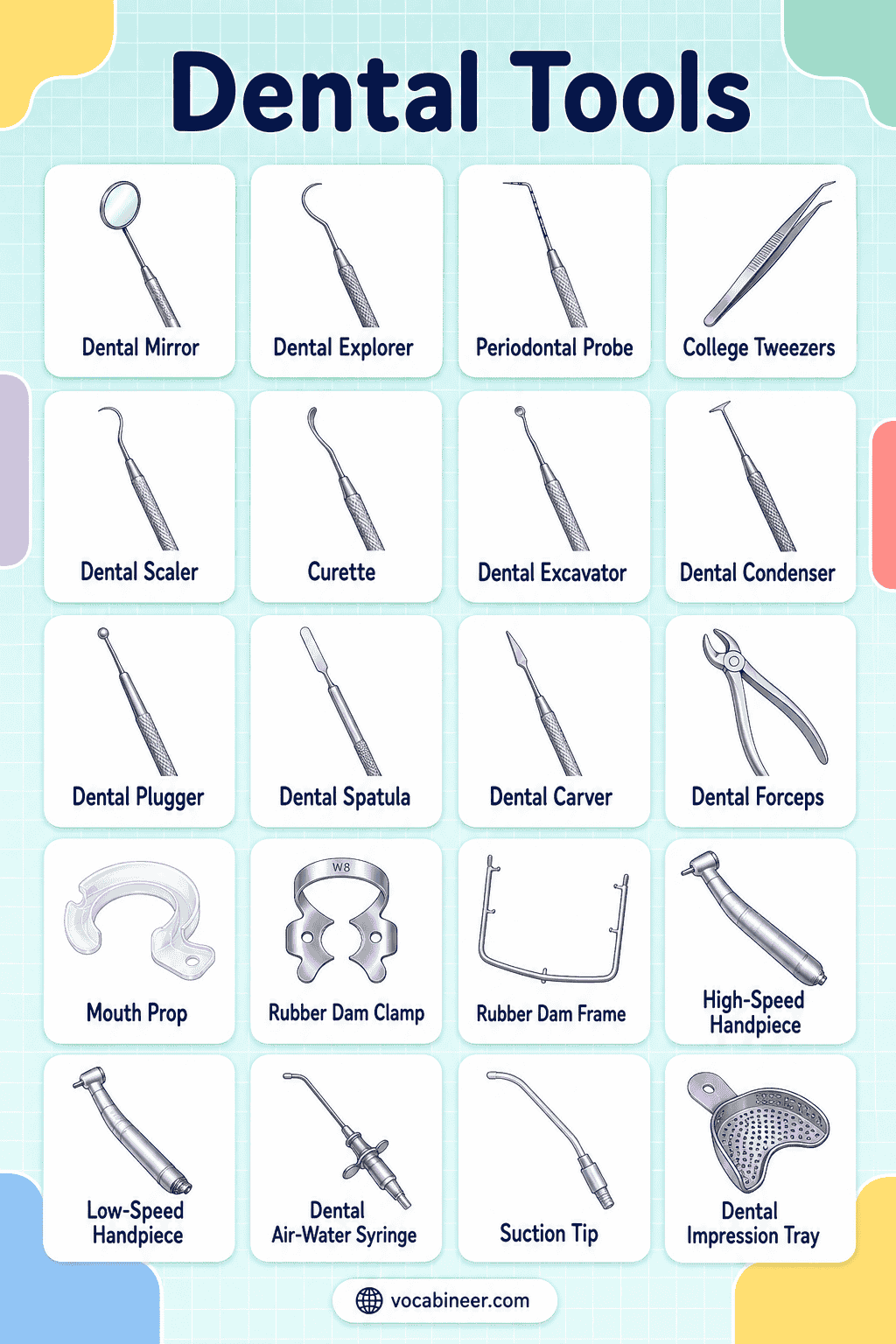
Mouth Mirror
A mouth mirror has a small round reflective head attached to a thin handle. Dentists use it to view areas that are difficult to see directly and to move the cheek or tongue when needed.
Dental Explorer
A dental explorer has a fine, pointed working end that often curves like a small hook. Dentists use it during examination to check tooth surfaces and areas that need closer inspection.
Periodontal Probe
A periodontal probe has a thin tip with visible measurement markings. Dentists use those markings to measure spaces around the teeth and assess the gums.
Cotton Pliers
Cotton pliers look similar to long dental tweezers. They help dentists pick up, place, or remove cotton and other small materials inside the mouth.
Tools Dentists Use for Cleaning Teeth
Cleaning and periodontal care require instruments that remove deposits from tooth surfaces and around the gumline. Some work by hand, while powered tools use rapid movement to help break up calculus and debris.
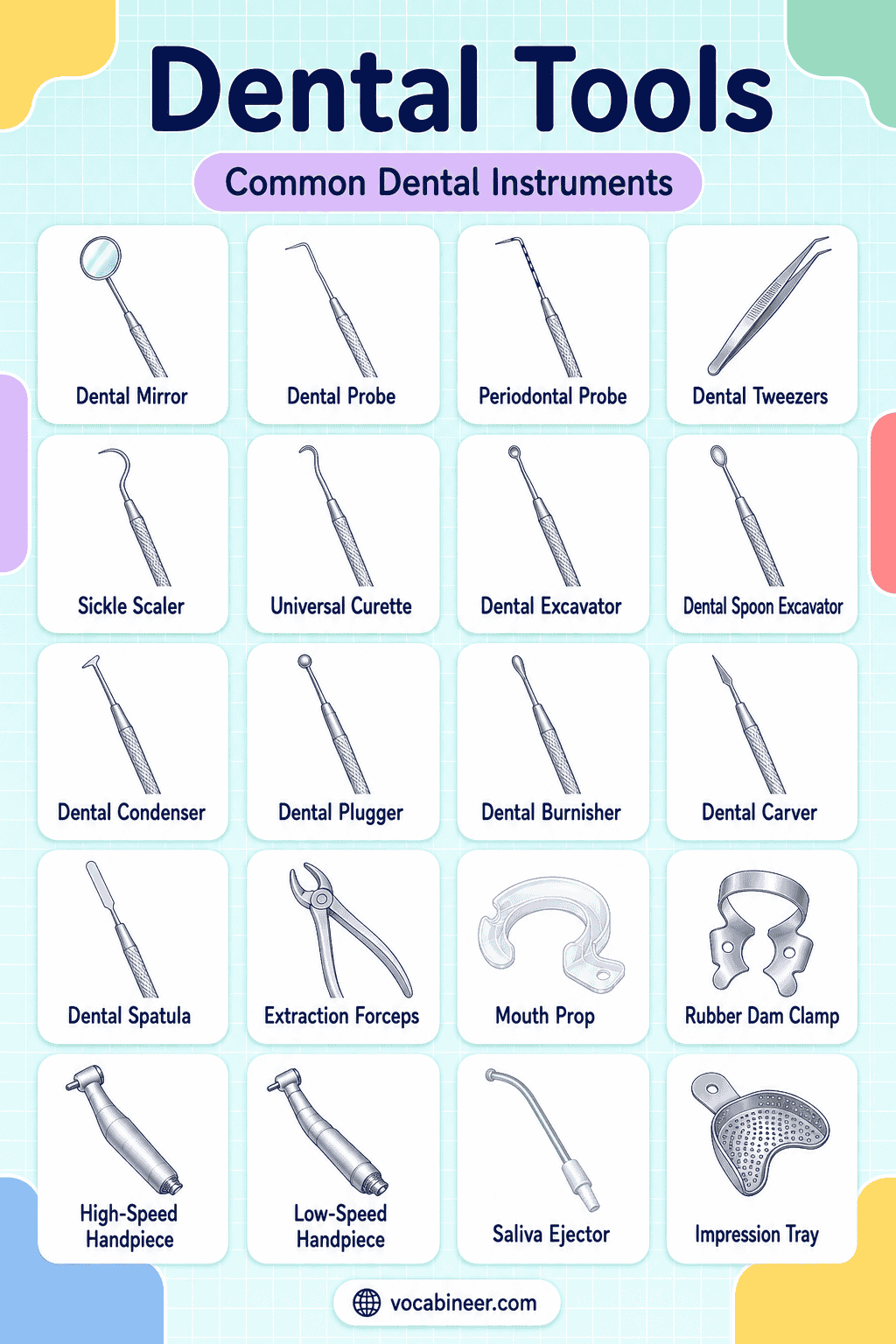
Sickle Scaler
A sickle scaler has a sharp, curved working end with a pointed tip. Dentists and dental hygienists use it to remove calculus from accessible tooth surfaces.
Curette
A curette has a curved working end with a more rounded profile than a sickle scaler. Dental professionals use it during periodontal cleaning, especially around and below the gumline.
Ultrasonic Scaler
An ultrasonic scaler uses a powered handpiece with a narrow vibrating tip. As the tip moves rapidly, it helps loosen deposits while water cools and flushes the working area.
Tools Used for Fillings and Tooth Repair
Restorative dentistry uses small instruments to remove softened material, place restorative materials, shape fillings, and rebuild natural tooth contours. Their handles may look similar, but their tips and functions differ considerably.
Spoon Excavator
A spoon excavator has a small spoon-shaped cutting end. Dentists use it to remove softened or decayed dentin during certain restorative procedures.
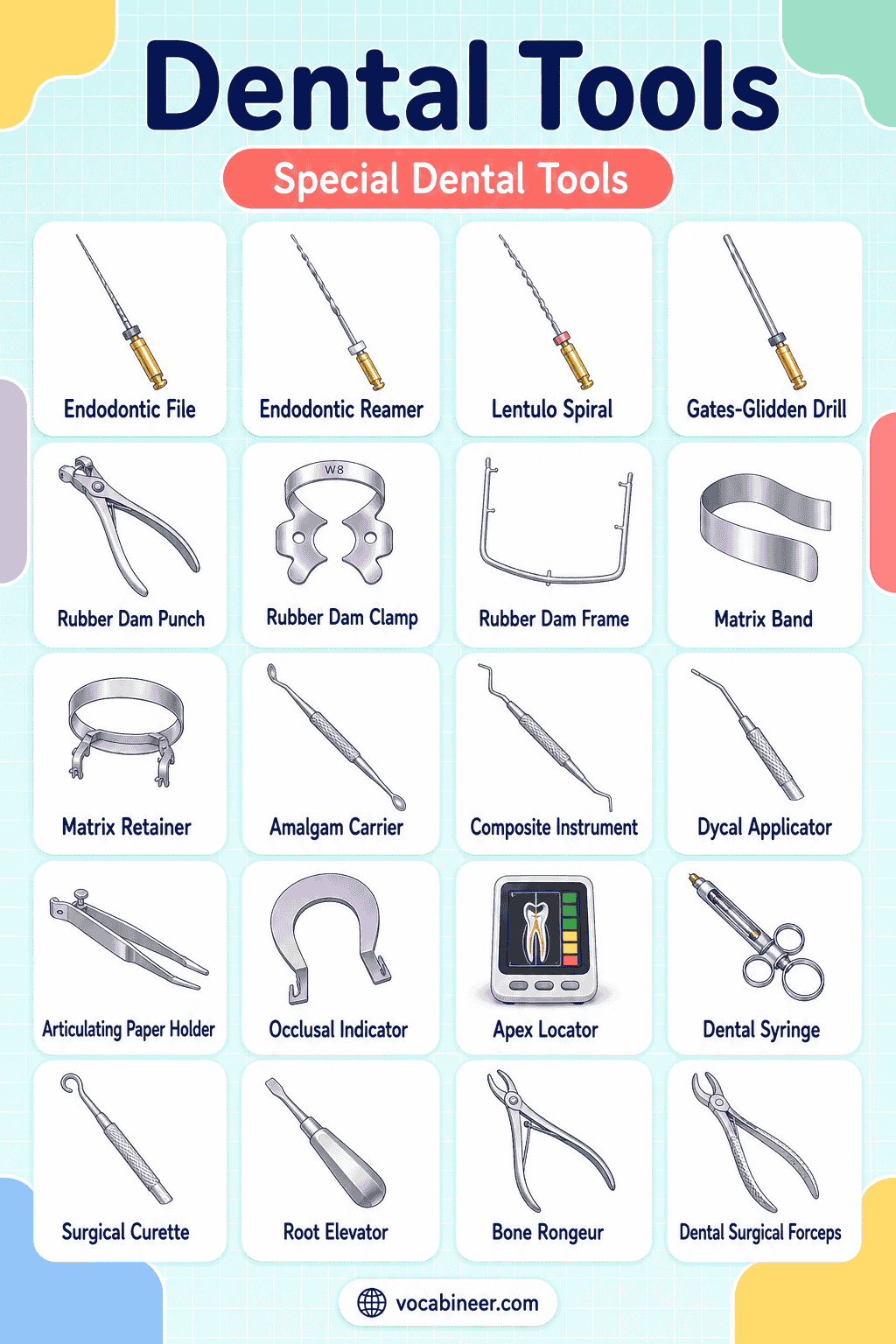
Amalgam Carrier
An amalgam carrier has a small barrel-like tip and a mechanism for carrying restorative amalgam. The dentist loads the material into the carrier and transfers it to the prepared tooth.
Condenser (Plugger)
A condenser, also called a plugger, has a flat or rounded working end. Dentists use it to press and compact restorative material into a prepared area.
Burnisher
A burnisher has a smooth, rounded working tip. It helps dentists smooth, contour, or refine the surface of restorative material.
Dental Carver
A dental carver has a narrow shaped blade or carving tip. Dentists use it to shape restorative material and reproduce natural contours on the tooth surface.
Matrix Retainer
A matrix retainer holds a matrix band in position around a tooth. It helps create a temporary wall when the dentist places certain restorative materials.
Matrix Band
A matrix band is a thin strip that fits around part of a tooth during restoration. It helps contain the filling material and form the side of the restored tooth.
Composite Placement Instrument
A composite placement instrument helps carry, position, and shape tooth-colored restorative material. Its working ends vary depending on the type of composite work.
Dental Anesthetic Tools
Dentists use anesthetic instruments when they need to numb an area before treatment. The most recognizable tool in this group is the dental syringe.
Dental Syringe
A dental syringe, often called an aspirating syringe, has a metal body with finger rings and holds an anesthetic cartridge and needle. Dentists use it to deliver local anesthetic before procedures that may cause discomfort.
Tools Used for Tooth Extraction
Tooth extraction often involves one instrument that loosens or mobilizes the tooth and another that grasps it. Elevators and forceps may appear together, but their shapes and roles differ.
Dental Elevator
A dental elevator has a solid handle with a narrow working end. Dentists use it to help loosen or mobilize a tooth before or during extraction.
Extraction Forceps
Extraction forceps resemble strong pliers with specially shaped beaks. Dentists use them to grasp a tooth securely and remove it after sufficient loosening.
Root Tip Pick
A root tip pick has a fine, pointed working end. Dentists use it during some extraction procedures to help remove small root fragments that remain in the socket.
Rotary Dental Tools
Rotary tools help dentists cut, shape, polish, or finish teeth and restorative materials. Although people often use the word “drill,” the handpiece and bur are actually two separate parts.
Dental Handpiece
A dental handpiece is the powered instrument that the dentist holds during rotary procedures. Patients often call it a dental drill, although “handpiece” is the more precise professional term.
Dental Bur
A dental bur is a small rotary attachment that fits into a compatible handpiece. Burs come in different shapes and materials for cutting, shaping, smoothing, or finishing surfaces.
Dental Tools for Suction and Moisture Control
Dentists need a clear working area during examination and treatment. Therefore, suction and moisture-control tools remove saliva, water, and debris so the dentist can see the tooth more clearly.
Saliva Ejector
A saliva ejector is a thin suction tube that rests inside the mouth. It gently removes saliva and small amounts of fluid during treatment.
High-Volume Evacuator
A high-volume evacuator, often shortened to HVE, has a wider suction opening than a saliva ejector. Because it removes larger amounts of air and fluid, dental teams often use it during procedures that create more water or debris.
Air-Water Syringe
An air-water syringe has a narrow tip and controls for air, water, or a combined spray. Dentists use it to rinse tooth surfaces, clear debris, and dry areas during examination or treatment.
Dental Isolation Tools
Isolation tools help keep one or more teeth dry and separated from the rest of the mouth during certain procedures. Rubber dam instruments are among the most recognizable tools in this group.
Rubber Dam Clamp
A rubber dam clamp fits around a tooth and helps hold the rubber dam securely in place. Different clamp shapes suit different teeth and clinical situations.
Rubber Dam Punch
A rubber dam punch has a plier-like design with a rotating plate. Dentists use it to create correctly sized holes in the rubber dam sheet.
Rubber Dam Forceps
Rubber dam forceps have long handles and specially shaped tips that engage a rubber dam clamp. Dentists use them to place and remove the clamp.
Common Dental Surgical Tools
Dental surgical procedures may require instruments that retract tissue, hold needles, cut sutures, or lift soft tissue. These tools are more specialized than basic examination instruments but still appear frequently in dental surgery.
Dental Retractor
A dental retractor helps move the cheek, lip, tongue, or soft tissue away from the working area. This gives the dentist better visibility and access.
Needle Holder
A needle holder resembles a small locking forceps. Dentists use it to grip and control a surgical needle while placing sutures.
Surgical Scissors
Dental surgical scissors have short cutting blades designed for oral surgical work. Dentists may use them to cut soft tissue or trim sutures, depending on the procedure.
Periosteal Elevator
A periosteal elevator has a firm metal working end that helps lift soft tissue away from bone. Dentists use it during some oral surgical procedures.
Surgical Curette
A surgical curette has a spoon-shaped working end. Dentists use it in certain surgical procedures to remove tissue or debris from an area.
Dental Tool Names That Have More Than One Name
Dental terminology can vary between clinics, textbooks, manufacturers, and regions. As a result, one instrument may appear under more than one name.
| Common Name | Other Name or Wording | Note |
|---|---|---|
| Mouth Mirror | Intra-Oral Mirror | “Mouth mirror” is common everyday wording, while intra-oral mirror is more formal. |
| Cotton Pliers | Cotton Forceps | Both names may refer to the tweezer-like tool used to handle small materials. |
| Condenser | Plugger | These terms commonly overlap for tools used to compact restorative material. |
| Dental Syringe | Aspirating Syringe | Aspirating syringe is a more specific professional term for a common dental anesthetic syringe. |
| Dental Handpiece | Dental Drill | “Dental drill” is common patient wording, while handpiece is the more precise instrument name. |
Dental Tools People Often Confuse
Several dental tools look similar because they share metal handles or narrow working ends. However, their shapes and functions make the differences much easier to understand.
| Tools | Main Difference | Easy Recognition Clue |
|---|---|---|
| Dental Explorer vs Periodontal Probe | The explorer helps examine tooth surfaces, while the periodontal probe measures around the gums. | Explorer has a fine pointed tip; periodontal probe has measurement markings. |
| Scaler vs Curette | Both remove deposits, but they have different blade shapes and periodontal uses. | Scalers often have a sharper pointed profile; curettes have a more rounded working end. |
| Dental Handpiece vs Dental Bur | The handpiece powers the rotary system, while the bur is the small attachment that performs cutting or finishing. | Handpiece is the larger device held in the hand; bur is the tiny removable attachment. |
| Dental Elevator vs Extraction Forceps | The elevator helps loosen or mobilize a tooth, while forceps grasp it for removal. | Elevator has a solid narrow end; forceps look like pliers with shaped beaks. |
| Cotton Pliers vs Extraction Forceps | Cotton pliers handle small materials, while extraction forceps grasp teeth. | Cotton pliers resemble tweezers; extraction forceps have larger handles and beaks. |
FAQs
Dentists use a mouth mirror, also called an intra-oral mirror. It helps them view areas inside the mouth that are difficult to see directly.
The pointed instrument may be a dental explorer, although other dental tools can also have narrow tips. A periodontal probe looks similar but usually has visible measurement markings.
Dentists and dental hygienists commonly use scalers and curettes to remove calculus deposits. Ultrasonic scalers also help loosen deposits with a rapidly moving powered tip.
Dentists commonly use dental elevators to loosen teeth and extraction forceps to grasp and remove them. They may use other instruments when a tooth or root fragment requires additional access.
People often call a dental handpiece a dental drill, so the terms overlap in everyday language. However, dental handpiece is the more precise name for the powered instrument, while the bur is the small rotary attachment fitted into it.
Read More