

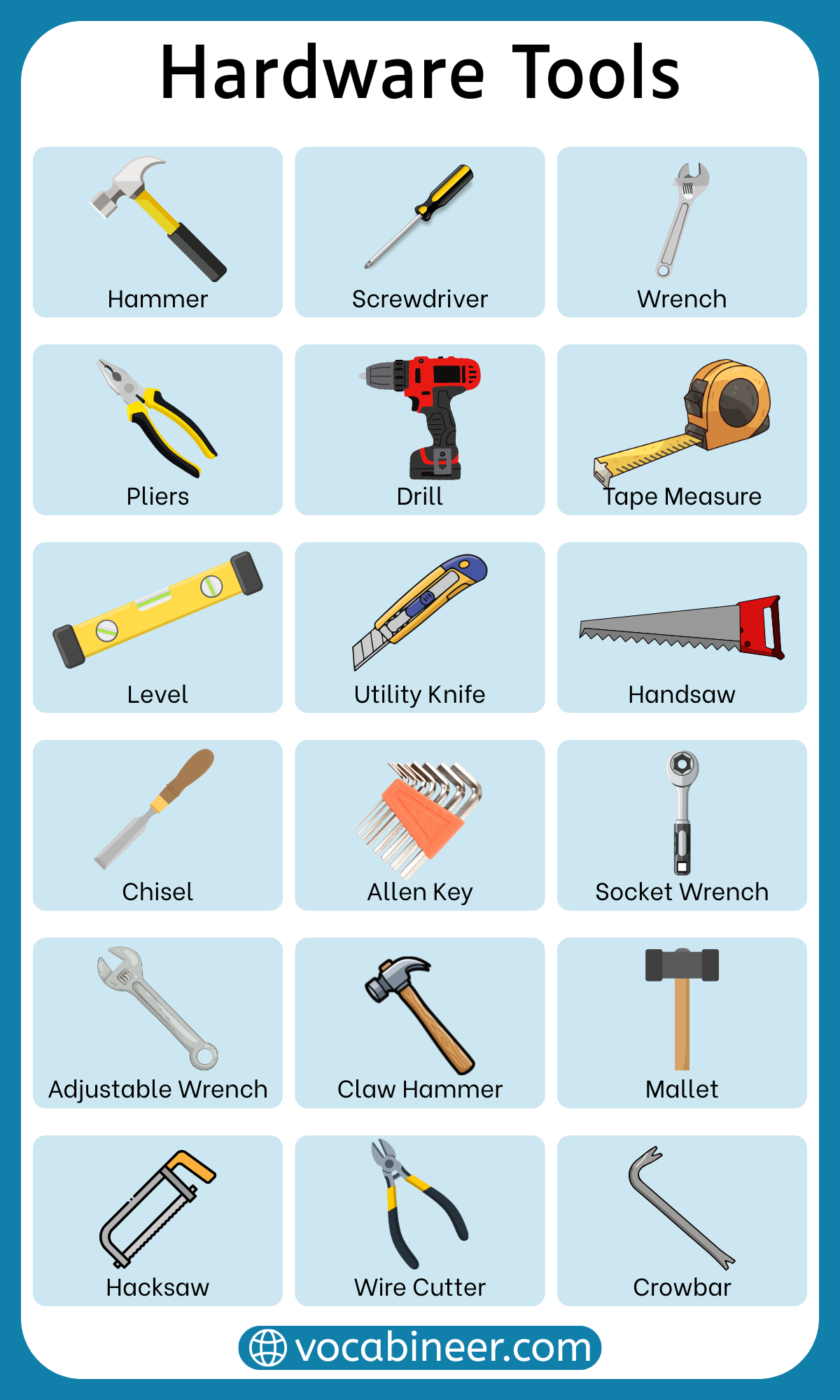
Hardware tools are used for tasks like cutting, fastening, measuring, gripping, and shaping materials during everyday work. In homes and workshops, people use these tools while assembling furniture, fixing loose parts, or handling small repair jobs. Since each tool is designed for a specific purpose, its shape and use make more sense once the name is familiar.
Learning hardware tools names matters because it helps people recognize tools quickly and follow instructions without confusion. When the names and uses are known, choosing the right tool feels more natural, and small home or workshop tasks can be completed with greater confidence.
In This Page
Basic Hardware Tools You Should Know
Basic hardware tools are the tools people usually learn first when handling small repairs, assembly work, or simple fixing tasks. These tools perform everyday actions like striking, tightening, cutting, measuring, marking, and holding materials steady, which makes them easy to recognize and practical to use.
- Hammer: A hammer strikes objects, mainly for driving nails or tapping parts into position.
- Screwdriver: A screwdriver tightens or loosens screws in furniture, fixtures, and devices.
- Adjustable wrench: An adjustable wrench changes jaw size to turn nuts and bolts of different widths.
- Open end wrench: An open end wrench fits specific nut sizes for quick turning.
- Socket wrench: A socket wrench turns bolts using removable sockets.
- Pliers: Pliers grip, bend, or pull small objects that are hard to hold by hand.
- Needle nose pliers: Needle nose pliers reach tight spaces and handle small parts.
- Measuring tape: A measuring tape checks length, width, or distance before fitting parts.
- Steel ruler: A steel ruler measures short lengths and helps draw straight lines.
- Utility knife: A utility knife cuts thin materials like cardboard, plastic, or rubber.
- Handsaw: A handsaw cuts wood using a toothed blade and manual force.
- Hacksaw: A hacksaw cuts metal rods, pipes, and bolts.
- Clamp: A clamp holds materials firmly during cutting, gluing, or joining work.
- Level: A level checks whether a surface is straight or even.
- Chisel: A chisel shapes or removes small amounts of material, especially from wood.
- Allen key: An Allen key tightens or loosens hex shaped screws.
- Putty knife: A putty knife spreads filler or scrapes surfaces clean.
- File: A file smooths rough edges on wood or metal.
- Punch: A punch marks or drives pins into material.
- Mallet: A mallet delivers softer blows to avoid surface damage.
Common Hardware Tool Names Used Every Day
Hardware tools help people build, repair, measure, cut, fasten, tighten, and maintain things around the home, workshop, or job site. Learning common hardware tool names helps children, beginners, and English learners build practical vocabulary and recognize everyday tools more easily.
Hammer
A hammer drives nails into wood and helps remove them with its claw. People also use it for light breaking, fitting, and repair work.
Screwdriver
A screwdriver turns screws during assembly and repair tasks. Different tip shapes fit different screw heads.
Phillips Screwdriver
A Phillips screwdriver has a cross-shaped tip that fits matching screws. People commonly use it for furniture, appliances, and household repairs.
Flathead Screwdriver
A flathead screwdriver has a straight, flat tip that fits screws with a single slot across the head.
Pliers
Pliers grip, bend, twist, and hold wires or small objects. Their strong jaws make them useful for many repair tasks.
Adjustable Wrench
An adjustable wrench has a movable jaw that fits nuts and bolts of different sizes.
Combination Wrench
A combination wrench usually has an open end on one side and a ring-shaped end on the other. It helps tighten and loosen nuts and bolts.
Socket Wrench
A socket wrench uses removable sockets that fit different nut and bolt sizes. Its ratcheting action makes repeated turning easier.
Tape Measure
A tape measure uses a flexible marked strip to measure length, width, height, and distance.
Utility Knife
A utility knife has a sharp retractable or replaceable blade. People use it to cut cardboard, plastic, rope, flooring materials, and packaging.
Hand Saw
A hand saw has a toothed blade for cutting wood and similar materials by hand.
Hacksaw
A hacksaw uses a fine-toothed blade to cut metal, plastic pipes, and other hard materials.
Spirit Level
A spirit level helps check whether a surface sits perfectly horizontal or vertical.
Drill
A drill rotates drill bits to make holes in wood, metal, plastic, and other materials. Many drills also drive screws with the right attachment.
Drill Bit
A drill bit fits into a drill and cuts holes of specific sizes and shapes.
Chisel
A chisel has a sharp cutting edge that removes or shapes wood, stone, or metal when pushed or struck.
Allen Key
An Allen key, or hex key, is an L-shaped tool that turns screws and bolts with hexagonal sockets.
Clamp
A clamp holds materials firmly together while someone cuts, drills, glues, or repairs them.
Wire Cutter
A wire cutter uses sharp jaws to cut electrical wire, cable, and other thin metal materials.
Toolbox
A toolbox stores and organizes hand tools, fasteners, measuring tools, and repair accessories so they stay easy to find and carry.
Hardware Tools Used Most Often at Home
Some hardware tools are used more often at home because they help with small fixes, furniture assembly, and basic maintenance. These tools are easy to handle and usually kept in drawers or toolboxes for quick access.
- Hammer: A hammer is used at home for nailing, fixing loose parts, or light tapping work.
- Screwdriver: A screwdriver tightens or loosens screws on doors, shelves, and appliances.
- Adjustable wrench: An adjustable wrench fits different nut sizes for simple household repairs.
- Pliers: Pliers grip, bend, or pull small items like wires or pins.
- Measuring tape: A measuring tape checks length and spacing before cutting or placing items.
- Utility knife: A utility knife opens packages and cuts thin materials.
- Level: A level helps hang frames or shelves straight.
- Clamp: A clamp holds parts steady during small home projects.
Hardware Tools by Function
Hardware tools can be grouped by the kind of action they perform. This makes it easier to understand why a tool is used and what task it supports during work.
Cutting Tools
Cutting tools remove or separate material during hardware tasks.
- Handsaw: A handsaw cuts wood using a toothed blade.
- Hacksaw: A hacksaw cuts metal rods and pipes.
- Utility knife: A utility knife slices thin materials cleanly.
- Tin snips: Tin snips cut thin metal sheets.
Fastening Tools
Fastening tools tighten or loosen screws, bolts, and nuts.
- Screwdriver: A screwdriver turns screws for fastening.
- Wrench: A wrench grips and turns nuts and bolts.
- Socket wrench: A socket wrench tightens bolts using sockets.
- Allen key: An Allen key turns hex screws.
Measuring and Checking Tools
Measuring and checking tools help ensure accuracy and alignment.
- Measuring tape: A measuring tape checks length and distance.
- Ruler: A ruler measures short lengths.
- Level: A level checks straightness.
- Square: A square checks right angles.
Hardware Tools by Power Source
Hardware tools are also grouped by how they get power. Some rely on hand force, while others use electricity or batteries.
Hand Tools
Hand tools work using physical effort and give direct control.
- Hammer: A hammer strikes objects.
- Screwdriver: A screwdriver turns screws by hand.
- Pliers: Pliers grip and bend parts.
- Handsaw: A handsaw cuts wood manually.
Power Tools
Power tools use electricity or batteries to reduce effort.
- Electric drill: An electric drill drills holes and drives screws.
- Cordless drill: A cordless drill works without a power cord.
- Circular saw: A circular saw cuts materials quickly.
- Angle grinder: An angle grinder cuts and smooths surfaces.
Hardware Tools Used in Small Repairs
Small repair tasks often need tools that allow quick fixes without heavy setup. These tools help tighten loose parts, replace damaged items, and adjust fittings during everyday repair work.
- Screwdriver: A screwdriver fixes loose screws on furniture, switches, and fixtures.
- Adjustable wrench: An adjustable wrench tightens or loosens small nuts and bolts.
- Pliers: Pliers pull out nails, bend wires, or hold small parts firmly.
- Hammer: A hammer taps parts back into place or removes small nails.
- Utility knife: A utility knife trims materials during quick fixes.
- Measuring tape: A measuring tape checks size before replacing parts.
Hardware Tools by Material Use
Some hardware tools are chosen based on the material being worked on. Using the right tool for each material helps prevent damage and improves results.
Tools Used for Wood
Wood tools shape, cut, and fasten wooden parts.
- Handsaw: A handsaw cuts wooden boards and panels.
- Chisel: A chisel shapes wood joints and edges.
- Hammer: A hammer drives nails into wood.
- Wood clamp: A wood clamp holds wooden pieces during joining.
Tools Used for Metal
Metal tools handle hard surfaces and strong materials.
- Hacksaw: A hacksaw cuts metal rods and pipes.
- File: A file smooths sharp metal edges.
- Wrench: A wrench turns metal nuts and bolts.
- Tin snips: Tin snips cut thin metal sheets.
Tools Used for Plastic
Plastic tools cut and shape plastic parts carefully.
- Utility knife: A utility knife slices plastic sheets.
- Plastic pipe cutter: A plastic pipe cutter makes clean cuts.
- Measuring tape: A measuring tape checks plastic part length.
- Clamp: A clamp holds plastic pieces during work.
Hardware Tools Names by Shape
Some tools are easier to recognize by their shape. Grouping tools this way helps readers match names with appearance.
Flat Shaped Tools
Flat shaped tools have thin or wide flat surfaces.
- Screwdriver: A screwdriver has a flat or shaped tip for screws.
- Putty knife: A putty knife spreads filler or removes material.
- Chisel: A chisel has a flat cutting edge.
Long Shaped Tools
Long shaped tools reach deeper or provide leverage.
- Screwdriver: A screwdriver reaches recessed screws.
- Measuring tape: A measuring tape extends for long measurements.
- Handsaw: A handsaw has a long blade for cutting.
Round Shaped Tools
Round shaped tools grip or rotate parts.
- Wrench: A wrench grips round or hex fittings.
- Pipe wrench: A pipe wrench holds round pipes firmly.
- Drill: A drill rotates bits to make holes.
Hardware Tools That Look Similar but Have Different Uses
Some hardware tools look alike at first glance, yet they perform different jobs. Understanding these differences helps readers pick the right tool and avoid damage during work.
- Hammer: A hammer is used for striking nails or tapping parts into place.
- Mallet: A mallet looks similar to a hammer but delivers softer blows to avoid surface damage.
- Screwdriver: A screwdriver turns screws using a shaped tip.
- Nut driver: A nut driver looks like a screwdriver but tightens small hex nuts.
- Pliers: Pliers grip, bend, or pull objects.
- Wire cutter: A wire cutter cuts wires and does not grip parts.
| Tool | Similar tool | Main difference |
|---|---|---|
| Hammer | Mallet | Hard strike vs soft strike |
| Screwdriver | Nut driver | Screws vs nuts |
| Pliers | Wire cutter | Gripping vs cutting |
Hardware Tool Names People Often Confuse
Some tool names are often mixed up because the tools are stored together or used in similar situations. Clearing these confusions helps readers understand instructions more clearly.
- Wrench: A wrench turns nuts and bolts by gripping their sides.
- Spanner: A spanner usually fits one fixed nut size.
- Drill: A drill makes holes or drives screws using rotation.
- Impact driver: An impact driver delivers short bursts of force for tight screws.
- Clamp: A clamp holds materials together firmly.
- Vise: A vise holds objects permanently on a workbench.
| Tool | Often confused with | Purpose |
|---|---|---|
| Wrench | Spanner | Adjustable vs fixed size |
| Drill | Impact driver | Drilling vs driving force |
| Clamp | Vise | Temporary vs fixed holding |
Conclusion
Hardware tools help people cut, fasten, measure, grip, shape, and repair different materials. Each tool serves a specific purpose, so learning the names of hardware tools makes everyday repair and building tasks easier to understand.
Knowing how common hardware tools differ also helps readers follow instructions, identify the right tool for each job, and complete basic tasks with greater accuracy and confidence.
FAQs
The most common hardware tools include hammers, screwdrivers, wrenches, pliers, measuring tapes, utility knives, and drills. These tools are used frequently for basic fixing, assembling, and measuring tasks at home and in workshops.
Hardware tools are commonly classified by function, power source, material use, or shape. This grouping helps people understand what each tool does and when it should be used.
Hand tools work using manual effort, while power tools use electricity or batteries. Hand tools offer more control, whereas power tools save time and effort.
Tools like hammers, screwdrivers, adjustable wrenches, pliers, measuring tapes, levels, and utility knives are most often used at home for small repairs and maintenance.
Some tools share a similar shape but are designed for different tasks. Knowing their names and uses helps avoid confusion and prevents using the wrong tool for a job.
Read More