Body posture means the way a person holds their body while sitting, standing, walking, resting, or moving. Some postures look balanced and upright, while others may look slouched, bent, tense, relaxed, open, or closed.
This guide explains 20 body posture names with simple meanings and picture-friendly descriptions. You will learn good postures, poor alignment postures, spine and pelvis postures, everyday body positions, and body-language postures in easy words.
In This Page
Body Posture Chart
| Posture Name | Simple Meaning |
|---|---|
| Neutral Posture | A balanced body position with natural alignment. |
| Upright Posture | A straight and lifted body position. |
| Standing Posture | The way the body is held while standing. |
| Sitting Posture | The way the body is held while sitting. |
| Slouched Posture | A bent or collapsed posture with rounded back or shoulders. |
| Forward Head Posture | A posture where the head moves forward from the body line. |
| Rounded Shoulders | Shoulders that curve forward instead of staying open. |
| Kyphosis Posture | An exaggerated upper-back curve. |
| Lordosis Posture | An exaggerated inward curve in the lower back. |
| Swayback Posture | A posture where the hips move forward and the upper body leans back. |
| Flatback Posture | A posture with reduced natural curve in the lower spine. |
| Anterior Pelvic Tilt | A posture where the pelvis tilts forward. |
| Relaxed Posture | A loose and natural body position. |
| Leaning Posture | A posture where the body shifts or tilts to one side or direction. |
| Crossed-Leg Posture | A sitting posture with one leg crossed over the other. |
| Hunched Posture | A posture with the upper body bent forward. |
| Open Posture | A body-language posture with uncrossed arms and open body position. |
| Closed Posture | A body-language posture with crossed arms or closed body position. |
| Confident Posture | A steady posture that looks calm and self-assured. |
| Defensive Posture | A tense or guarded posture that may show discomfort or protection. |
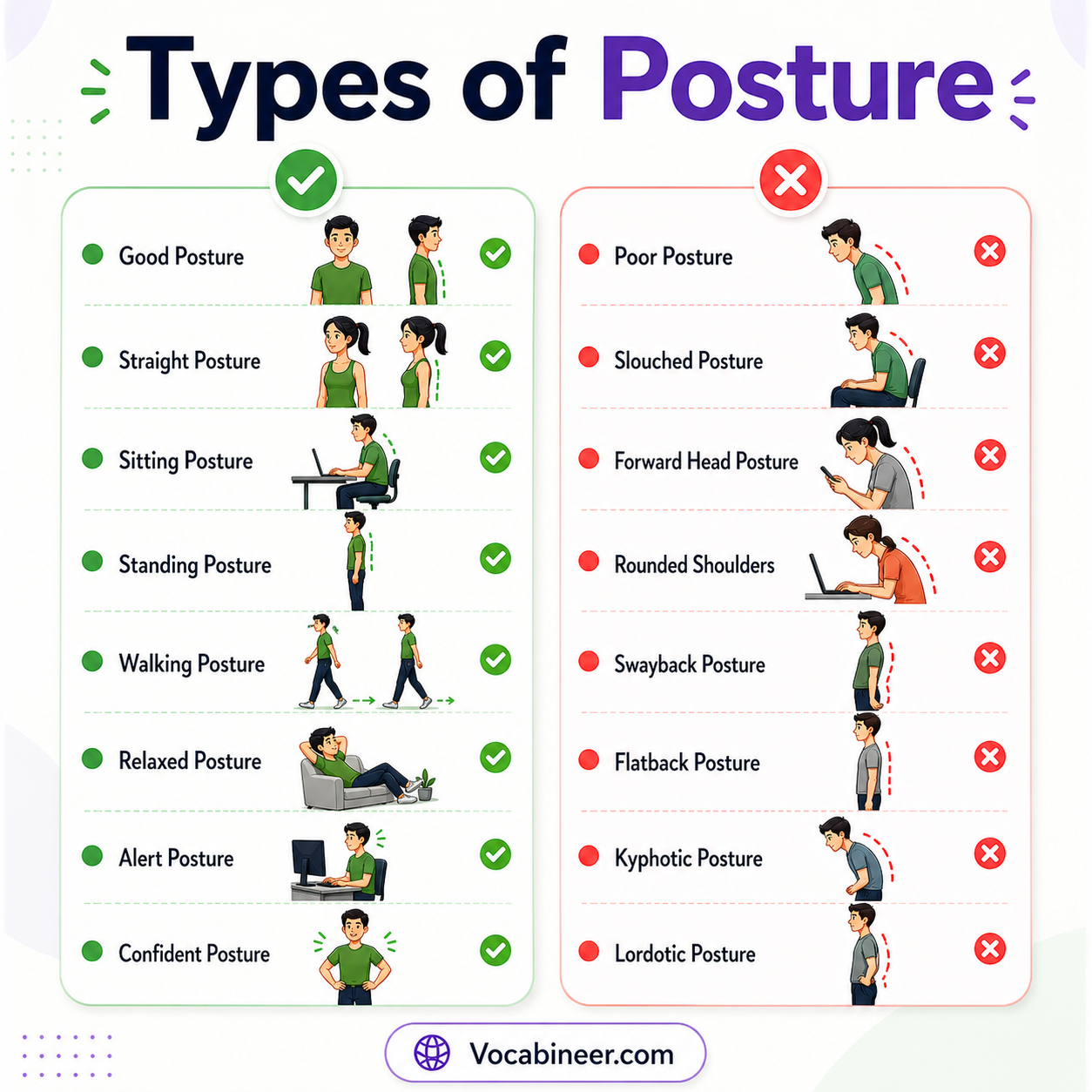
Good and Neutral Postures
Good and neutral postures keep the body balanced and supported. These positions usually look straight, natural, and comfortable without too much strain.
Neutral Posture
Neutral posture means the body is in a balanced position with natural alignment. The head, shoulders, spine, hips, knees, and feet stay in a comfortable and supported position.
Upright Posture
Upright posture means standing or sitting tall without slouching. The chest stays open, the shoulders are relaxed, and the head stays above the body instead of leaning forward.
Standing Posture
Standing posture is the way a person holds the body while standing. A balanced standing posture keeps the feet steady, shoulders relaxed, and body weight evenly placed.
Sitting Posture
Sitting posture is the way a person holds the body while sitting. A good sitting posture keeps the back supported, shoulders relaxed, and feet placed comfortably.
Poor Alignment Postures
Poor alignment postures may place extra stress on the neck, back, shoulders, or hips. These positions often happen from long sitting, phone use, weak posture habits, or repeated body positions.
Slouched Posture
Slouched posture happens when the upper body collapses forward or downward. The shoulders may round, the back may curve, and the head may drop forward.
Forward Head Posture
Forward head posture happens when the head moves forward from the natural body line. It is common during phone use, desk work, or long screen time.
Rounded Shoulders
Rounded shoulders happen when the shoulders roll forward. This posture can make the chest look closed and the upper back look curved.
Kyphosis Posture
Kyphosis posture means the upper back has an exaggerated outward curve. It may make the back look rounded or hunched.
Spine and Pelvis Postures
Spine and pelvis postures are based on how the back, hips, and pelvis line up. These postures can change the natural curve of the spine.
Lordosis Posture
Lordosis posture means the lower back has an exaggerated inward curve. It may make the stomach and hips appear pushed forward.
Swayback Posture
Swayback posture happens when the hips move forward and the upper body leans backward. The body may look like it is resting behind the natural center line.
Flatback Posture
Flatback posture means the lower spine has less natural curve than usual. The body may look straighter but less balanced or flexible.
Anterior Pelvic Tilt
Anterior pelvic tilt happens when the pelvis tilts forward. This can increase the curve in the lower back and make the hips look tipped forward.
Everyday Body Postures
Everyday body postures are common positions people use while sitting, standing, resting, or moving. These postures may be relaxed, casual, or based on habit.
Relaxed Posture
Relaxed posture is a loose and natural body position. The body does not look stiff or forced, and the shoulders, arms, and back appear comfortable.
Leaning Posture
Leaning posture happens when the body shifts toward one side, forward, or backward. A person may lean on a wall, chair, desk, or one leg.
Crossed-Leg Posture
Crossed-leg posture is a sitting position where one leg crosses over the other. It is common during casual sitting, conversation, or resting.
Hunched Posture
Hunched posture happens when the upper body bends forward. It may look similar to slouching, but the curve is often more focused around the shoulders and upper back.
Body Language Postures
Body language postures can show mood, comfort, confidence, or tension. Their meaning depends on the situation, facial expression, and overall behavior.
Open Posture
Open posture means the body looks relaxed and welcoming. The arms are usually uncrossed, the chest is open, and the person may appear more comfortable.
Closed Posture
Closed posture means the body looks guarded or less open. Crossed arms, turned shoulders, or a closed chest may make the person seem reserved or uncomfortable.
Confident Posture
Confident posture looks steady, balanced, and relaxed. The head is lifted, the shoulders are open, and the body does not look tense or collapsed.
Defensive Posture
Defensive posture may look tense, guarded, or protective. A person may cross the arms, turn the body away, lower the head, or keep the body closed.
Static vs Dynamic Posture
Static posture means the body position is held still. Sitting, standing, or lying down are common examples of static posture.
Dynamic posture means the body position changes during movement. Walking, running, lifting, bending, or reaching are examples of dynamic posture.
| Type | Meaning | Examples |
|---|---|---|
| Static Posture | Body position while still | Sitting, standing, lying down |
| Dynamic Posture | Body position during movement | Walking, running, lifting, bending |
Good Posture vs Poor Posture
Good posture keeps the body balanced and supported. Poor posture usually places the body in a less balanced position and may make the neck, shoulders, back, or hips work harder.
| Feature | Good Posture | Poor Posture |
|---|---|---|
| Body Line | Balanced and aligned | Bent, collapsed, or uneven |
| Head Position | Head stays above the body | Head may move forward |
| Shoulders | Relaxed and open | Rounded or tense |
| Back | Natural spine curve | Too rounded, too arched, or too flat |
| Example | Neutral posture | Slouched posture |
FAQs
The main types of body posture include neutral posture, upright posture, sitting posture, standing posture, slouched posture, forward head posture, rounded shoulders, kyphosis posture, lordosis posture, swayback posture, open posture, and closed posture.
Neutral posture is a balanced body position where the head, shoulders, spine, hips, knees, and feet stay naturally aligned. It helps the body look stable and supported without forcing a stiff position.
Poor posture means the body is held in a less balanced position, such as slouching, hunching, leaning forward, or rounding the shoulders. It may happen during long sitting, phone use, desk work, or repeated habits.
Forward head posture happens when the head moves forward from the natural body line. It is often seen when someone looks down at a phone, laptop, or desk for a long time.
Static posture is the body position while staying still, such as sitting or standing. Dynamic posture is the body position during movement, such as walking, bending, reaching, or running.
Summary
Different types of body posture include neutral posture, upright posture, sitting posture, standing posture, slouched posture, forward head posture, rounded shoulders, kyphosis posture, lordosis posture, swayback posture, flatback posture, open posture, closed posture, confident posture, and defensive posture. Learning these posture names helps you describe body alignment, everyday positions, and body language more clearly.
Read More
- Types of Eyebrows
- Human Parts of Body
- Types of Body Movements
- Types of Feelings & Emotions
- Facial Expressions Names