

Leafy vegetables include familiar greens such as spinach, lettuce, kale, and cabbage along with many Asian and regional vegetables. Their leaves vary widely in shape, color, texture, and flavor, making pictures especially useful for identifying unfamiliar greens.
This article covers 36 leafy vegetable names with pictures, grouped by type for easier learning. You will also find useful comparisons, regional names, and a clear distinction between leafy vegetables and culinary herbs.
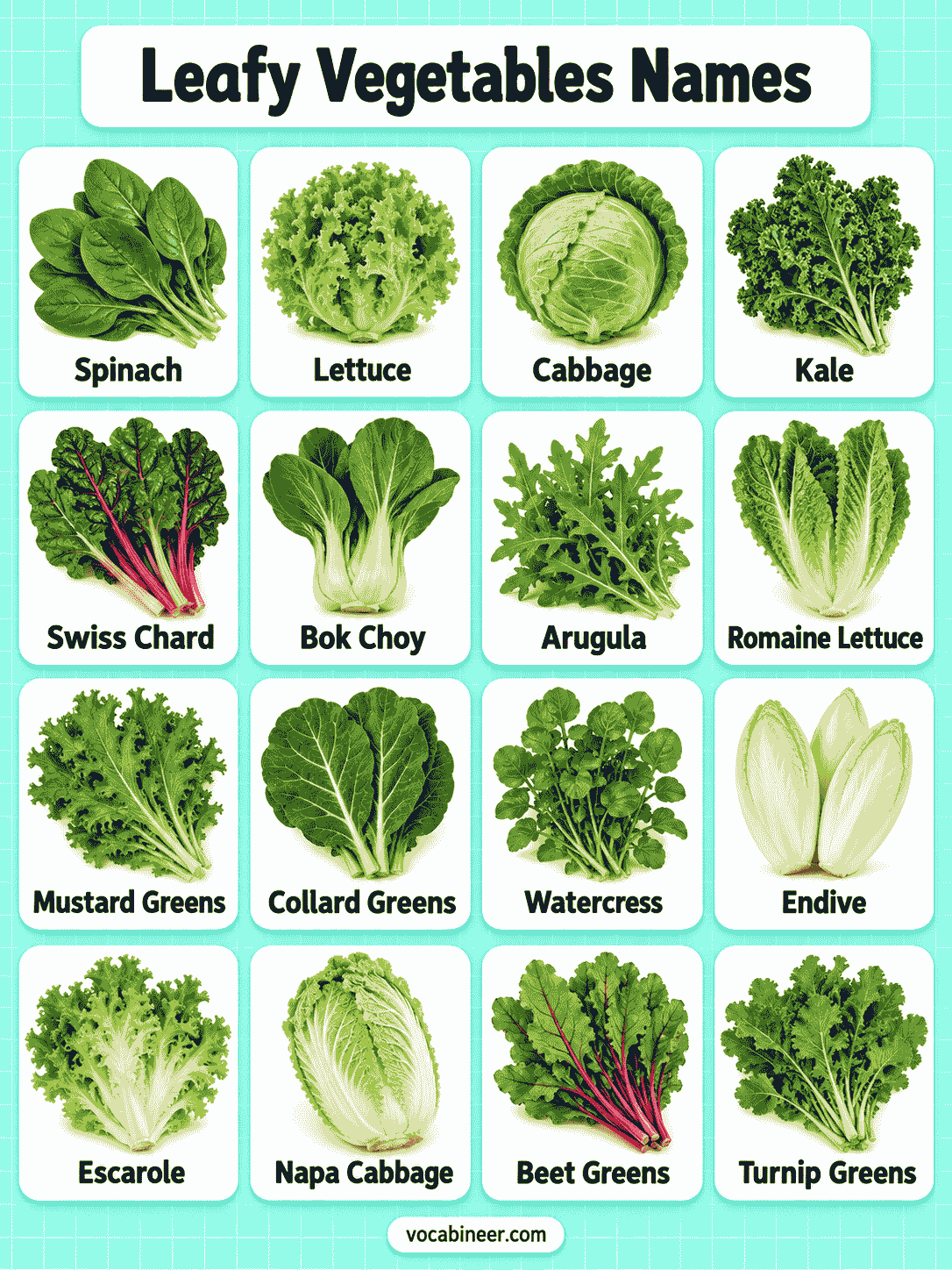
In This Page
Leafy Vegetables With Recognizable Shapes and Colors
Several leafy vegetables stand out because of their leaf shape, stalk color, texture, or growth pattern.
| Leafy Vegetable | Easy Recognition Clue |
|---|---|
| Spinach | Soft dark-green oval leaves |
| Kale | Curly or heavily textured leaves |
| Swiss Chard | Broad leaves with thick colorful stalks |
| Bok Choy | Pale thick stems with spoon-shaped leaves |
| Napa Cabbage | Long head of pale crinkled leaves |
| Mizuna | Narrow deeply cut leaves |
| Tatsoi | Dark spoon-shaped leaves forming a low rosette |
| Moringa Leaves | Many small oval leaflets on slender stems |
| Purslane | Small thick succulent leaves |
| Water Spinach | Long narrow leaves on hollow stems |
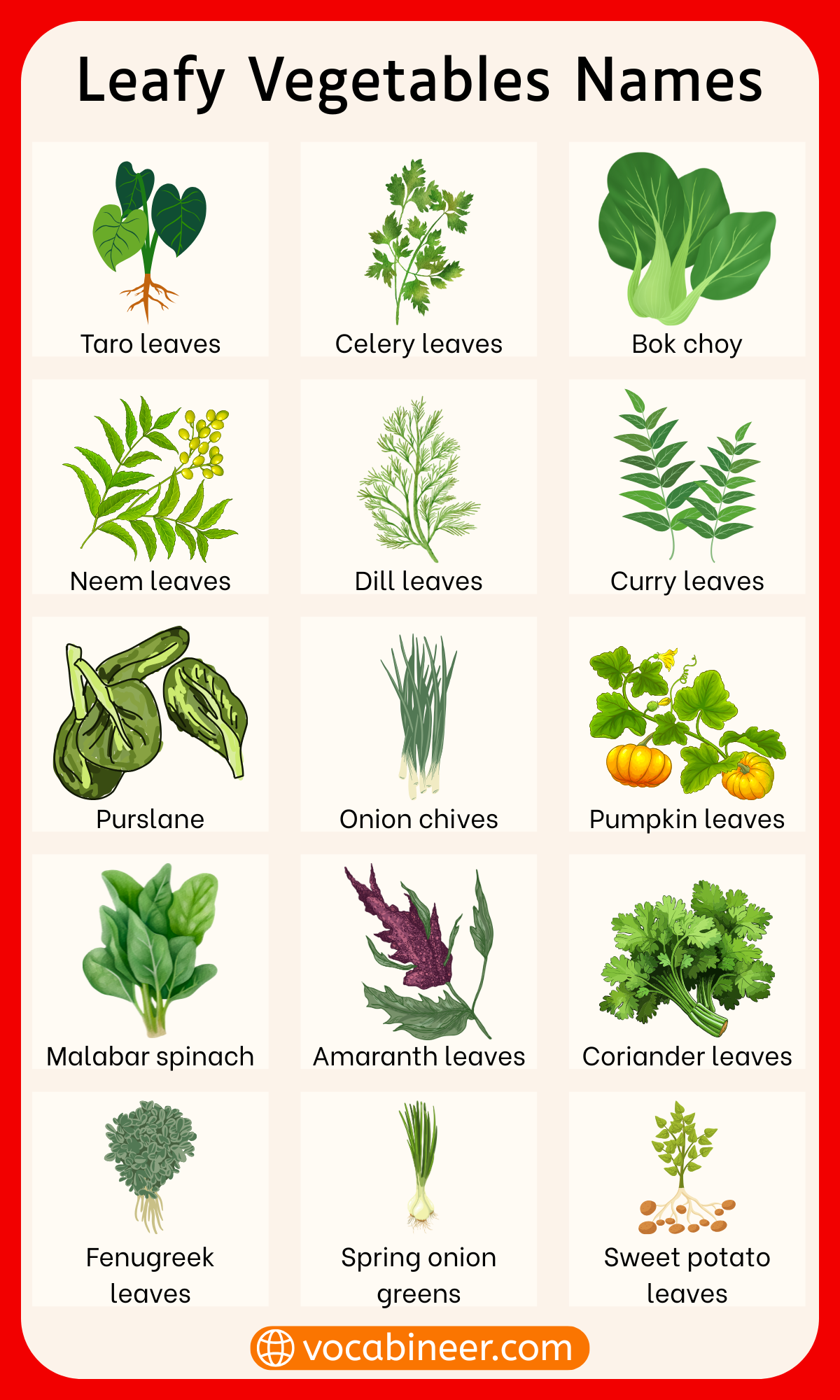
List of Leafy Vegetables Names
These are the most familiar leafy vegetables students often see in kitchens, markets, or textbooks:
- Spinach
- Lettuce
- Cabbage
- Coriander leaves
- Mint leaves
- Fenugreek leaves (Methi)
- Mustard greens
- Spring onion greens
- Kale
- Collard greens
- Swiss chard
- Arugula (Rocket)
- Parsley
- Basil
- Watercress
- Bok choy
- Amaranth leaves
- Sorrel leaves
- Dill leaves
- Beet greens
- Turnip greens
- Radish leaves
- Malabar spinach
- Curry leaves
- Drumstick leaves (Moringa)
- Taro leaves
- Neem leaves
- Pumpkin leaves
- Sissoo spinach
- Iceberg lettuce
- Romaine lettuce
- Red leaf lettuce
- Napa cabbage
- Savoy cabbage
- Chinese cabbage
- Patra leaves
- Celery leaves
- Chives
- Endive
- Dandelion greens
Common Green Leafy Vegetables with Pictures
Green leafy vegetables are edible leaves commonly used in salads, soups, curries, stir-fries, and other everyday dishes. They vary in flavor, texture, and size, and many are eaten either raw or cooked.
Spinach
Spinach is a soft green leafy vegetable with tender leaves and a mild, slightly earthy taste. It is commonly used in salads, soups, curries, pasta dishes, and cooked vegetable recipes.
Kale
Kale is a dark green leafy vegetable with firm, curly or flat leaves and a slightly bitter flavor. It is often added to salads, soups, smoothies, stir-fries, and baked dishes.
Lettuce
Lettuce is a crisp leafy vegetable with mild flavor and tender green leaves. It is widely used in salads, sandwiches, wraps, burgers, and other fresh dishes.
Swiss Chard
Swiss chard has broad green leaves with thick, colorful stems and a mild earthy taste. It is usually cooked in soups, sautés, pasta dishes, and vegetable sides.
Collard Greens
Collard greens have large, sturdy dark green leaves with a strong, slightly bitter flavor. They are commonly cooked slowly in soups, stews, and traditional vegetable dishes.
Mustard Greens
Mustard greens are leafy vegetables with a sharp, peppery taste and tender green leaves. They are often cooked in curries, stir-fries, soups, and savory side dishes.
Turnip Greens
Turnip greens are the leafy tops of turnip plants and have a slightly bitter, earthy flavor. They are commonly boiled, sautéed, or added to soups and stews.
Beet Greens
Beet greens are the edible leaves of beet plants and have a mild, earthy taste. They can be cooked like spinach or added to soups, salads, and vegetable dishes.
Arugula
Arugula is a tender leafy green with a distinctive peppery and slightly bitter flavor. It is commonly eaten raw in salads, sandwiches, wraps, and as a topping for pizza.
Watercress
Watercress is a small leafy vegetable with a fresh, peppery taste and tender stems. It is often used in salads, sandwiches, soups, and garnishes.
Bok Choy
Bok choy is a leafy green vegetable with dark green leaves and thick, crisp white or pale green stalks. It is widely used in stir-fries, soups, noodle dishes, and steamed recipes.
Napa Cabbage
Napa cabbage has pale green leaves with thick white ribs and a mild, slightly sweet flavor. It is commonly used in salads, stir-fries, soups, dumplings, and fermented dishes.
Romaine Lettuce
Romaine lettuce has long, crisp green leaves with firm central ribs and a mild taste. It is especially popular in salads, sandwiches, wraps, and fresh vegetable dishes.
Butter Lettuce
Butter lettuce has soft, round leaves with a smooth texture and mild, slightly sweet flavor. It is commonly used in salads, sandwiches, wraps, and light appetizers.
Endive
Endive is a leafy vegetable with crisp leaves and a slightly bitter taste. It can be eaten raw in salads or cooked in soups, sautés, and baked dishes.
Escarole
Escarole has broad green leaves with a mildly bitter flavor and tender texture. It is often used in soups, salads, sautés, and Mediterranean-style dishes.
Dandelion Greens
Dandelion greens are long, jagged leaves with a noticeably bitter taste. They are eaten raw in salads or cooked in sautés, soups, and vegetable dishes.
Mizuna
Mizuna is a Japanese leafy vegetable with thin, feathery green leaves and a mild peppery taste. It is often used in salads, stir-fries, soups, and noodle dishes.
Tatsoi
Tatsoi is an Asian leafy green with small, dark green spoon-shaped leaves and a mild mustard-like flavor. It can be eaten raw or cooked in stir-fries, soups, and salads.
Fenugreek Leaves
Fenugreek leaves are small green leaves with a distinctive slightly bitter and aromatic flavor. They are commonly used fresh or dried in curries, flatbreads, vegetable dishes, and other South Asian recipes.
Leafy Vegetable Names Grouped by Type
The following groups organize leafy vegetables according to how people commonly recognize and use them. Each description focuses on the leaves, texture, flavor, or preparation that makes the vegetable distinctive.
Common Leafy Greens
These vegetables appear widely in salads, cooked dishes, soups, stir-fries, and everyday meals.
Spinach
Spinach has tender dark-green leaves with a mild earthy flavor. People eat the young leaves raw or cook mature leaves in soups, curries, pasta, and many other dishes.
Lettuce
Lettuce has tender leaves that range from crisp and tightly packed to soft and loose. Romaine, iceberg, butterhead, and leaf lettuce are common types.
Cabbage
Cabbage forms a compact head of overlapping leaves. Green, red, and savoy forms vary in color and texture but belong under the same general vegetable name here.
Kale
Kale develops firm green or purple leaves that may appear curly, ruffled, or flat. Its thicker texture holds up well in soups, sautés, salads, and baked dishes.
Swiss Chard
Large green leaves grow from thick stalks that may appear white, yellow, orange, pink, or red. Both the leaves and tender stems are commonly cooked.
Collard Greens
Collards have broad, smooth, sturdy leaves with thick central veins. Cooking softens their firm texture and mild cabbage-like flavor.
Mustard Greens
Mustard greens produce broad or frilly leaves with a peppery, slightly sharp taste. Cooking usually mellows their stronger flavor.
Arugula (Rocket)
Arugula has elongated deeply lobed leaves and a distinct peppery taste. Rocket is another common name for the same leafy vegetable.
Watercress
Small rounded leaves grow along tender stems, often in or near water. Watercress has a fresh peppery flavor that works well in salads, sandwiches, and soups.
Endive
Endive commonly has narrow, curly leaves with a pleasantly bitter taste. Its crisp texture works well in salads and cooked dishes.
Escarole
Escarole has broader and flatter leaves than curly endive. The outer leaves taste more bitter, while the paler inner leaves have a milder flavor.
Chicory Greens
Chicory produces firm green leaves with a noticeable bitter taste. People use the greens raw when young or cook them to soften their texture and flavor.
Asian Leafy Vegetables
Asian cuisines use many leafy vegetables with distinctive stems, rosettes, or finely divided leaves.
Bok Choy (Pak Choi)
Bok choy forms an upright cluster of broad green leaves attached to thick white or pale-green stalks. The crisp stems and tender leaves are both edible.
Napa Cabbage
Napa cabbage forms an elongated head of pale-green, crinkled leaves with thick white ribs. Unlike bok choy, it develops a more tightly packed head.
Choy Sum
Choy sum has tender green stems, oval leaves, and small yellow flower buds. Stir-frying and steaming help preserve its mild flavor and soft-crisp texture.
Tatsoi
Dark glossy leaves form a low, spreading rosette. Tatsoi has spoon-shaped leaves and a mild mustard-like flavor.
Komatsuna
Komatsuna produces smooth green leaves on upright stems. Its mild flavor sits between spinach and mustard greens.
Gai Lan
Also called Chinese broccoli, gai lan has thick stems, flat blue-green leaves, and small flowering shoots. Both the stems and leaves are commonly cooked.
Mizuna
Mizuna has narrow, deeply cut leaves that create a feathery appearance. The flavor is mild with a light peppery note.
Water Spinach
Water spinach develops long narrow leaves on hollow trailing stems. It is widely cooked in stir-fries, soups, and other dishes.
Malabar Spinach
Malabar spinach is a climbing leafy vegetable with thick, glossy, fleshy leaves. Despite the name, it is a different plant from true spinach.
Leaves From Other Vegetable Crops
Several plants grown mainly for roots, fruits, or other parts also produce edible leaves that people use as vegetables.
Beet Greens
Beet greens grow above beet roots and have broad leaves with noticeable red or green veins. Their tender young leaves work raw or cooked.
Turnip Greens
Turnip greens have broad leaves with a slightly peppery flavor. Cooking softens their texture and reduces some of the sharpness.
Radish Greens
Radish leaves have a rougher surface and a fresh peppery taste. Young leaves can go into salads, while mature leaves work well cooked.
Pumpkin Leaves
Pumpkin vines produce broad green leaves that people cook as vegetables in many cuisines. Tender shoots and younger leaves usually provide the best texture.
Sweet Potato Leaves
Heart-shaped or lobed leaves grow along sweet potato vines. People commonly boil, steam, or sauté these nutritious greens.
Moringa Leaves (Drumstick Leaves)
Small oval leaflets grow in clusters along slender stems. WHO food guidance recognizes moringa or drumstick greens among edible dark-green leafy vegetables.
Taro Leaves
Large heart-shaped leaves grow on taro plants and become tender after cooking. Taro leaves require proper cooking before eating because raw or undercooked leaves contain irritating compounds.
Regional and Traditional Leafy Greens
Many cuisines rely on locally familiar greens that may be less recognizable internationally but still serve as important vegetables.
Amaranth Leaves
Amaranth plants produce tender green or reddish leaves with a mild spinach-like flavor. The leaves cook quickly and appear in many regional dishes.
Fenugreek Leaves (Methi)
Fenugreek leaves have small green leaflets and a distinctive slightly bitter aroma. Fresh methi works especially well in curries, flatbreads, and vegetable dishes.
Lamb’s Quarters (Bathua)
Bathua has soft triangular to diamond-shaped leaves with a mild earthy flavor. People commonly cook the leaves in seasonal vegetable dishes.
Purslane
Purslane grows close to the ground and has small fleshy leaves on reddish stems. Its succulent texture and lightly tangy flavor make it easy to recognize.
Sorrel
Sorrel has smooth green leaves with a sharp lemony taste. Its natural acidity makes it useful in soups, sauces, salads, and cooked greens.
Dandelion Greens
Long jagged leaves form a rosette close to the ground. Younger leaves taste less bitter than mature ones and work well in salads or cooked dishes.
New Zealand Spinach
New Zealand spinach develops thick triangular leaves on spreading stems. It tolerates warmer weather better than true spinach and is usually cooked in similar ways.
Garden Cress
Garden cress has small tender leaves with a sharp, peppery flavor. Young shoots often appear in salads, sandwiches, and garnishes.
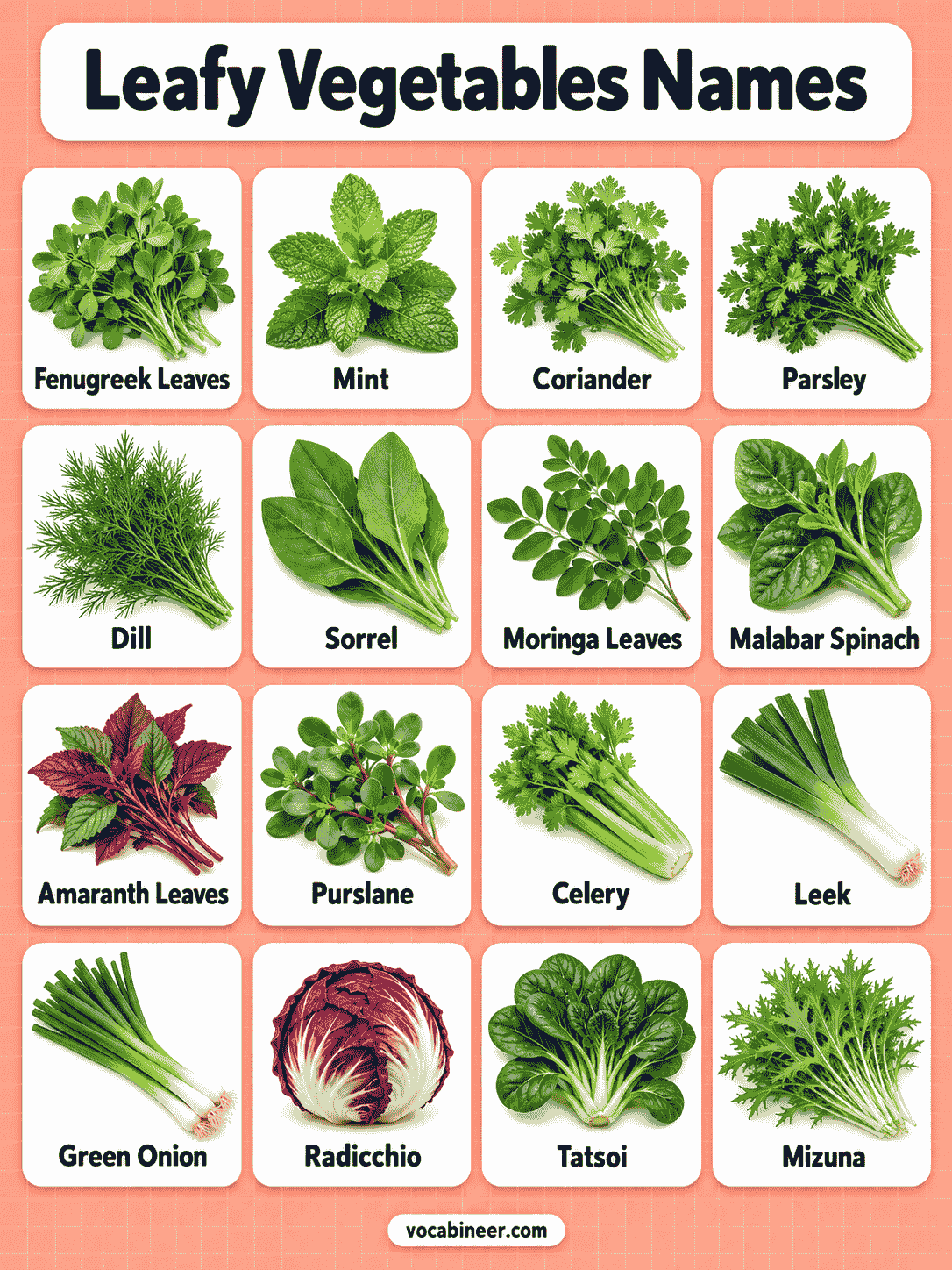
Spinach vs. Malabar Spinach
These vegetables share the word spinach, but they come from different plants and grow under different conditions.
| Vegetables | Main Difference |
|---|---|
| Spinach | Tender cool-season leafy green with soft leaves and a low growth habit. |
| Malabar Spinach | Heat-loving climbing vegetable with thicker, glossy, fleshy leaves. |
Quick takeaway: Spinach is a low-growing cool-weather green, while Malabar spinach is a climbing warm-weather plant used in similar dishes.
Bok Choy vs. Napa Cabbage
Bok choy and napa cabbage both belong to the wider Chinese brassica group, but their shapes make them easy to distinguish.
| Vegetables | Main Difference |
|---|---|
| Bok Choy | Forms an open upright rosette with broad leaves and thick fleshy stalks. |
| Napa Cabbage | Develops a dense elongated head of pale, crinkled leaves with thick ribs. |
Quick takeaway: Bok choy stays open with prominent stalks, while napa cabbage forms a compact leafy head.
Leafy Vegetables vs. Culinary Herbs
Leafy vegetables and herbs both provide edible leaves, but people generally use them differently.
| Leafy Vegetables | Culinary Herbs |
|---|---|
| Usually eaten in larger portions | Usually added in smaller amounts |
| Often form a main part of salads or cooked dishes | Mainly add flavor or aroma |
| Examples include spinach, kale, chard, and bok choy | Examples include coriander, mint, basil, parsley, and dill |
This distinction is why herbs such as coriander, mint, basil, parsley, dill, and curry leaves do not appear among the 36 main leafy vegetables.
FAQs
Spinach, lettuce, cabbage, kale, Swiss chard, collard greens, mustard greens, arugula, watercress, and bok choy are common examples.
Spinach is a low-growing cool-season vegetable with tender leaves, while Malabar spinach is a heat-loving climbing plant with thick fleshy leaves.
No. Bok choy forms an open cluster of thick stalks and leaves, while napa cabbage develops an elongated compact head of crinkled leaves.
They have edible leaves, but people normally classify them as culinary herbs because they are mainly used in smaller amounts for flavor and aroma.
Lettuce, spinach, arugula, watercress, young kale, endive, escarole, garden cress, and tender beet or radish greens can be eaten raw when properly cleaned. Other greens may taste better or require cooking, especially taro leaves.
Read More
