Walking can happen in many ways, depending on speed, mood, purpose, and body movement. Some walks are slow and relaxed, while others are fast, tired, careful, confident, or used for exercise. These words help describe how a person moves.
This guide explains 25 types of walks with names, meanings, and picture-friendly descriptions. You will learn everyday walking words, slow and tired walks, fast and purposeful walks, careful walking styles, outdoor fitness walks, and descriptive walking words in simple English.
In This Page
Walk Names Chart
| Walk Name | Simple Meaning |
|---|---|
| Walk | To move on foot at a normal speed. |
| Stroll | A slow and relaxed walk. |
| Saunter | A slow, easy walk without hurry. |
| Stride | A confident walk with long steps. |
| Wander | To walk around without a clear direction. |
| Pace | To walk back and forth repeatedly. |
| Trudge | To walk slowly because of tiredness. |
| Shuffle | To walk with short dragging steps. |
| Limp | To walk unevenly because of pain or injury. |
| Creep | To walk very slowly and quietly. |
| Brisk Walk | A quick and energetic walk. |
| Power Walk | A fast walk used for exercise. |
| March | To walk with steady, strong steps. |
| Race Walk | A competitive fast walking style. |
| Tiptoe | To walk quietly on the toes. |
| Heel Walk | To walk using the heels. |
| Toe Walk | To walk on the toes. |
| Reverse Walk | To walk backward. |
| Nordic Walk | A fitness walk using walking poles. |
| Hill Walk | A walk on hills or slopes. |
| Hike | A long walk, usually on trails or in nature. |
| Nature Walk | A walk outside to enjoy nature. |
| Confident Walk | A strong walk that shows confidence. |
| Nervous Walk | A tense or unsure way of walking. |
| Lazy Walk | A slow, relaxed, or careless walk. |
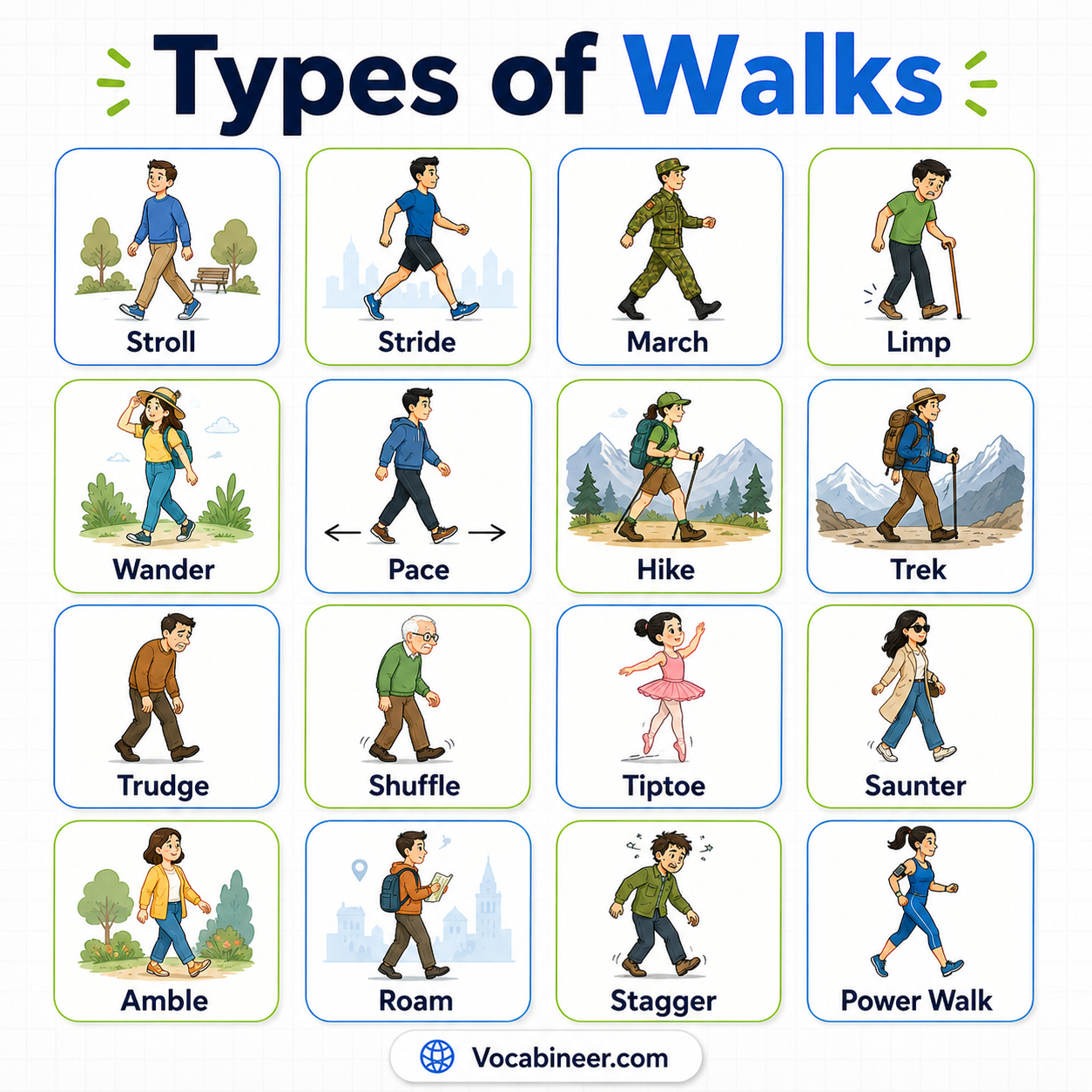
Everyday Walking Styles
Everyday walking styles are common words used to describe normal walking in daily life. These words are useful in English speaking, writing, and storytelling.
Walk
A walk means moving on foot at a normal speed. It is the most general word for going from one place to another using your feet.
Stroll
A stroll is a slow and relaxed walk. People often stroll in a park, garden, street, or quiet place when they are not in a hurry.
Saunter
A saunter is a slow, easy walk with a relaxed attitude. It often suggests that the person is walking calmly and casually.
Stride
A stride is a walk with long, confident steps. It often shows energy, purpose, or confidence.
Wander
To wander means to walk around without a fixed direction or clear purpose. A person may wander through a market, city, forest, or park.
Pace
To pace means to walk back and forth repeatedly. People often pace when they feel worried, impatient, or deep in thought.
Slow and Tired Walks
Slow and tired walks describe movement that is heavy, weak, careful, or low in energy. These words are useful for describing mood and physical condition.
Trudge
To trudge means to walk slowly and heavily, usually because of tiredness. For example, a tired worker may trudge home after a long day.
Shuffle
To shuffle means to walk with short dragging steps. The feet may not lift fully from the ground.
Limp
To limp means to walk unevenly because of pain, injury, or weakness in one leg or foot.
Creep
To creep means to walk very slowly and quietly. A person may creep across a room to avoid making noise.
Fast and Purposeful Walks
Fast and purposeful walks show speed, energy, discipline, or clear direction. These walking styles are often used for exercise, work, or formal movement.
Brisk Walk
A brisk walk is a quick and energetic walk. It is faster than a normal walk but not as fast as running.
Power Walk
A power walk is a fast walking style used for fitness. It often includes strong arm movement and a steady pace.
March
To march means to walk with strong, regular steps. Soldiers, students, or groups may march in lines during events or parades.
Race Walk
Race walking is a competitive walking style. It is very fast, but one foot must stay in contact with the ground according to race walking rules.
Careful and Special Walks
Some walks are named by how the feet move. These styles may be used for balance, silence, exercise, or special movement practice.
Tiptoe
To tiptoe means to walk quietly on the toes. People tiptoe when they do not want to make noise.
Heel Walk
A heel walk means walking mainly on the heels. It may be used in exercises, balance practice, or movement checks.
Toe Walk
A toe walk means walking on the toes or front part of the feet. Children may sometimes toe walk while playing.
Reverse Walk
A reverse walk means walking backward. It may be used in exercise, training, or balance practice.
Outdoor and Fitness Walks
Outdoor and fitness walks are used for health, exercise, travel, or enjoying nature. These walks may be short, long, easy, or challenging.
Nordic Walk
A Nordic walk is a fitness walk that uses walking poles. The poles help move the arms and support a stronger full-body walking rhythm.
Hill Walk
A hill walk means walking on hills or slopes. It can be more challenging than walking on flat ground.
Hike
A hike is a long walk, usually on trails, mountains, forests, or natural paths. It is often done for exercise, travel, or outdoor enjoyment.
Nature Walk
A nature walk is a walk outside to enjoy plants, animals, fresh air, and natural surroundings.
Descriptive Walks for Writing
Descriptive walk names help show emotion, attitude, or personality. These words are useful in stories, essays, and character descriptions.
Confident Walk
A confident walk is steady, strong, and relaxed. It may show that a person feels sure of themselves.
Nervous Walk
A nervous walk may look tense, quick, uneven, or restless. It can show worry, fear, or uncertainty.
Lazy Walk
A lazy walk is slow and relaxed, sometimes with little energy or care. It may show tiredness, boredom, or a casual mood.
Walking vs Gait
Walking is the general action of moving on foot. It is the everyday word people use when talking about going somewhere by foot.
Gait means a person’s walking pattern. It is often used in medical, sports, or movement discussions. For example, a doctor may check someone’s gait to see how they move, balance, or place their feet.
| Term | Meaning | Example |
|---|---|---|
| Walk | General movement on foot. | She went for a walk. |
| Gait | A person’s walking pattern. | The doctor checked his gait. |
Common Walking Examples
- She took a slow stroll through the garden.
- He walked with a confident stride.
- The tired hikers began to trudge up the hill.
- The child tried to tiptoe across the room.
- The soldiers marched in a straight line.
- She went for a brisk walk after lunch.
- He had a slight limp after the injury.
- They enjoyed a peaceful nature walk in the forest.
FAQs
The main types of walks include normal walking, strolling, sauntering, striding, wandering, pacing, trudging, shuffling, limping, brisk walking, power walking, marching, hiking, and tiptoeing.
A brisk walk is a quick and energetic walk. It is faster than a normal walk and is often used for exercise, fitness, or healthy daily movement.
A walk is a general movement on foot, while a stroll is slower and more relaxed. People usually stroll when they are enjoying a place or walking without hurry.
To limp means to walk unevenly, usually because one leg or foot hurts or feels weak. A limp may happen after an injury, pain, or physical difficulty.
Gait means a person’s walking pattern. It describes how someone moves their legs and feet while walking, including balance, step length, and posture.
Summary
Types of walks include everyday walking styles, slow walks, fast walks, careful walks, outdoor walks, and descriptive walking words. Common walk names include stroll, saunter, stride, wander, pace, trudge, shuffle, limp, tiptoe, brisk walk, power walk, march, hike, and nature walk. Learning these words helps you describe movement clearly in English, writing, fitness, and daily life.
Read More
- Types of Eyebrows
- Human Parts of Body
- Types of Body Movements
- Facial Expressions Names
- Body Language Gestures