Learning purple flower names helps learners recognize many beautiful flowers that bloom in shades ranging from soft lavender to deep violet. These flowers differ in shape, size, fragrance, and growing style, which makes each one easy to identify with the right vocabulary.
In this post, you’ll learn different types of purple flowers and their names in English with pictures. Knowing these names can help you describe gardens, plants, floral arrangements, and decorations more clearly in everyday English.
In This Page
Common Purple Flower Names
Purple flowers come in many shades, from soft lavender and lilac to deep violet and plum. Learning common purple flower names helps children, gardeners, and English learners identify familiar blooms and build useful plant vocabulary.
Lavender
Lavender produces slender spikes of small purple flowers above narrow, fragrant leaves. Gardeners often grow it for its color, scent, and attractive appearance.
Violet
Violets are small flowers that commonly appear in purple, blue-violet, or lilac shades. Their delicate petals and low-growing habit make them easy to recognize.
Iris
Many iris varieties produce large purple flowers with distinctive upright and drooping petals. Their unusual shape makes them popular in gardens and floral displays.
Orchid
Purple orchids produce elegant blooms in shades ranging from pale lavender to deep violet. Their unusual petal shapes make them especially distinctive.
Lilac
Lilac shrubs produce clusters of small purple or lavender flowers with a strong, pleasant fragrance. They commonly bloom during spring.
Petunia
Purple petunias grow trumpet-shaped flowers in soft or rich violet shades. Gardeners often plant them in beds, pots, and hanging baskets.
Verbena
Verbena produces clusters of small purple flowers on branching stems. Its long blooming period makes it a common choice for borders and containers.
Aster
Purple asters develop daisy-like flowers with narrow petals surrounding a yellow center. Many varieties bloom during late summer and autumn.
Clematis
Clematis is a climbing plant that produces large purple flowers in many shapes and shades. Gardeners often train it over fences, walls, and trellises.
Allium
Ornamental alliums form round flower heads made from many tiny purple blossoms. Their tall stems and globe-shaped blooms create a striking garden display.
Salvia
Purple salvia produces upright spikes filled with small tubular flowers. Bees and other pollinators commonly visit these colorful blooms.
Bellflower
Bellflowers develop purple or blue-violet blossoms with a bell-like shape. Different varieties grow as low ground covers or taller garden plants.
Hyacinth
Purple hyacinths produce dense clusters of fragrant, star-shaped flowers on upright stems. These spring bulbs often appear in gardens and decorative pots.
Pansy
Purple pansies display broad, rounded petals with contrasting centers or markings. Their compact size makes them popular for borders, containers, and cool-season gardens.
Phlox
Purple phlox produces clusters of small, five-petaled flowers on leafy stems. Gardeners grow different varieties as ground covers or taller flowering plants.
Wisteria
Wisteria produces long hanging clusters of purple or lavender flowers on climbing vines. Its cascading blooms often cover pergolas, walls, and garden structures.
Lupine
Lupines develop tall flower spikes packed with pea-like blossoms in shades of purple, blue, pink, and white. Their upright growth adds height to flower beds.
Morning Glory
Purple morning glory flowers have a funnel-shaped form and grow on fast-climbing vines. Many blooms open in the morning and close later in the day.
Foxglove
Purple foxgloves produce tall spikes lined with tubular, bell-shaped flowers. Their dramatic height makes them a noticeable feature in garden borders.
Purple Coneflower
Purple coneflowers have pink-purple petals that surround a raised orange-brown center. Their sturdy stems and long blooming season make them popular in sunny gardens.
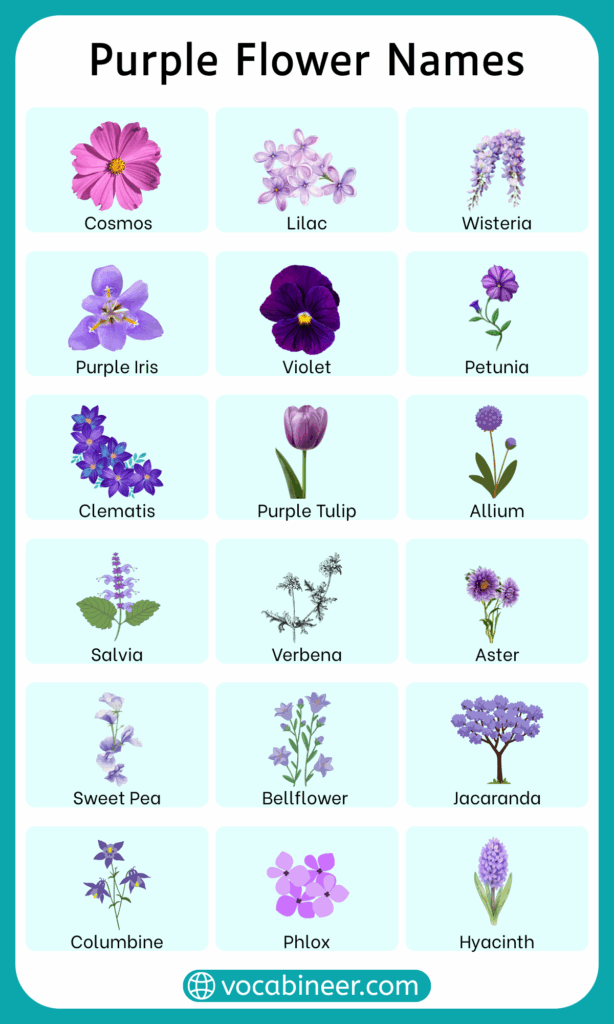
Purple Flower Garden Varieties
Garden flowers with purple shades are easy to recognize and often planted for beauty and fragrance. Here is a wide selection of purple flowers often grown in gardens.
- Lavender: Known for its calming scent, it grows in long stalks covered in small purple blooms.
- Lilac: A shrub that produces clusters of purple blossoms in spring, with a soft sweet fragrance.
- Wisteria: Climbing vines with drooping clusters of violet flowers that look almost like waterfalls.
- Clematis: Vines with large, star-shaped blossoms that can range from light lavender to deep violet.
- Salvia: Tall spikes filled with small purple flowers, often attracting bees and butterflies in gardens.
- Verbena: Low-growing plants with clusters of tiny purple flowers that bloom from spring until frost.
- Ageratum: Compact bedding plants that produce fluffy lavender-blue blooms, often used for borders.
- Catmint (Nepeta): Hardy perennials with spikes of bluish-purple flowers that grow well in dry soils.
- Balloon Flower (Platycodon): Buds open into balloon-like shapes before turning into starry violet flowers.
- Campanula (Bellflower): Bell-shaped blossoms that range from pale lilac to deep purple shades.
- Foxglove (Digitalis): Tall spikes of tubular blossoms with purple patterns that are loved by pollinators.
- Hyacinth: Bulb flowers with tight clusters of fragrant blooms in shades of purple and lavender.
Purple Flower Trees Names
Trees with purple blossoms stand out in landscapes and city streets. The following are well-known purple flowering trees.
- Jacaranda: A tall tree covered in trumpet-shaped violet blooms that create a carpet when they fall.
- Crape Myrtle: A smaller tree with purple clusters that bloom in summer and last for several weeks.
- Royal Empress Tree (Paulownia): Fast-growing tree producing lavender blossoms before its leaves appear.
- Purple Robe Locust: A tree with hanging clusters of rich purple flowers in early summer.
- Chaste Tree (Vitex agnus-castus): Shrub-like tree with long spikes of lilac-colored blossoms in midsummer.
- Bauhinia (Purple Orchid Tree): Tropical tree with orchid-like blossoms that carry bright violet shades.
Types of Seasonal Purple Flowers
Purple flowers appear across all seasons, from spring bulbs to winter blooms. Learning their names by season helps you recognize them more easily. Below is a list of types of seasonal purple flowers.
- Spring: Crocus, Iris, Hyacinth, Bluebell
- Summer: Verbena, Petunia, Larkspur, Delphinium, Balloon Flower
- Autumn: Aster, Chrysanthemum, Michaelmas Daisy, Autumn Crocus
- Winter: Heather, Pansy, Cyclamen, Hellebore
Rare Purple Flowers
Some purple flowers are unusual and admired for their striking looks. The following examples are less common but highly valued.
- Orchids: Exotic flowers with intricate patterns that include shades of lavender and deep violet.
- Passionflower: A complex blossom with purple filaments and unique shapes that look almost unreal.
- Monkshood (Aconitum): Tall spiky flowers in deep purple shades that bloom in cooler climates.
- Tibouchina (Glory Bush): Shrubs with bold, velvety blossoms in rich purple hues.
- Lisianthus: Elegant flowers with ruffled petals often used in bouquets and arrangements.
- Bat Flower (Tacca chantrieri): Dark purple blooms with wing-like petals and long whiskers.
Indoor Purple Flowers Plants
Certain purple flowering plants thrive indoors and bring color to homes. The following are common indoor choices.
- African Violet: Compact plants with fuzzy leaves and clusters of purple blossoms that bloom year-round.
- Gloxinia: Houseplants producing large bell-shaped blooms in purple shades with velvety petals.
- Streptocarpus (Cape Primrose): Long-blooming plants with tubular blossoms in lavender and violet shades.
- Purple Shamrock (Oxalis triangularis): Small plants with purple leaves and delicate pink-purple flowers.
- Purple Heart (Tradescantia pallida): A trailing plant with violet stems and small purple blossoms.
FAQs on Purple Flower Names
Some familiar purple flowers include Lavender, Lilac, Wisteria, Clematis, Salvia, Hyacinth, Balloon Flower, and Petunia. These names help you recognize purple blossoms in gardens or bouquets.
Look at the plant’s size, bark, and branching: trees usually have a single trunk that becomes woody and taller over time. Shrubs are lower, often multi-stemmed. For example, Jacaranda and Crape Myrtle are purple flower trees; Lilac is usually a shrub.
Flowers known for deep or dark purple tones include Monkshood, Bat Flower (Tacca chantrieri), Dark Salvia, Royal Empress Tree blooms, and Purple Orchid Tree blossoms.
Indoor plants with purple flowers include African Violet, Gloxinia, Streptocarpus (Cape Primrose), Purple Shamrock (Oxalis triangularis), and Purple Heart vine.
Yes. Some bloom in spring and summer like Iris, Allium, Hyacinth, Bluebell. Others bloom in autumn or winter such as Aster, Cyclamen, Pansy, Heather.
Read More