

Heels are one of the most popular footwear styles in fashion. They can change the look of an outfit, add height, improve posture, and make shoes appear more stylish or formal. Different types of heels have different shapes, heights, comfort levels, and uses.
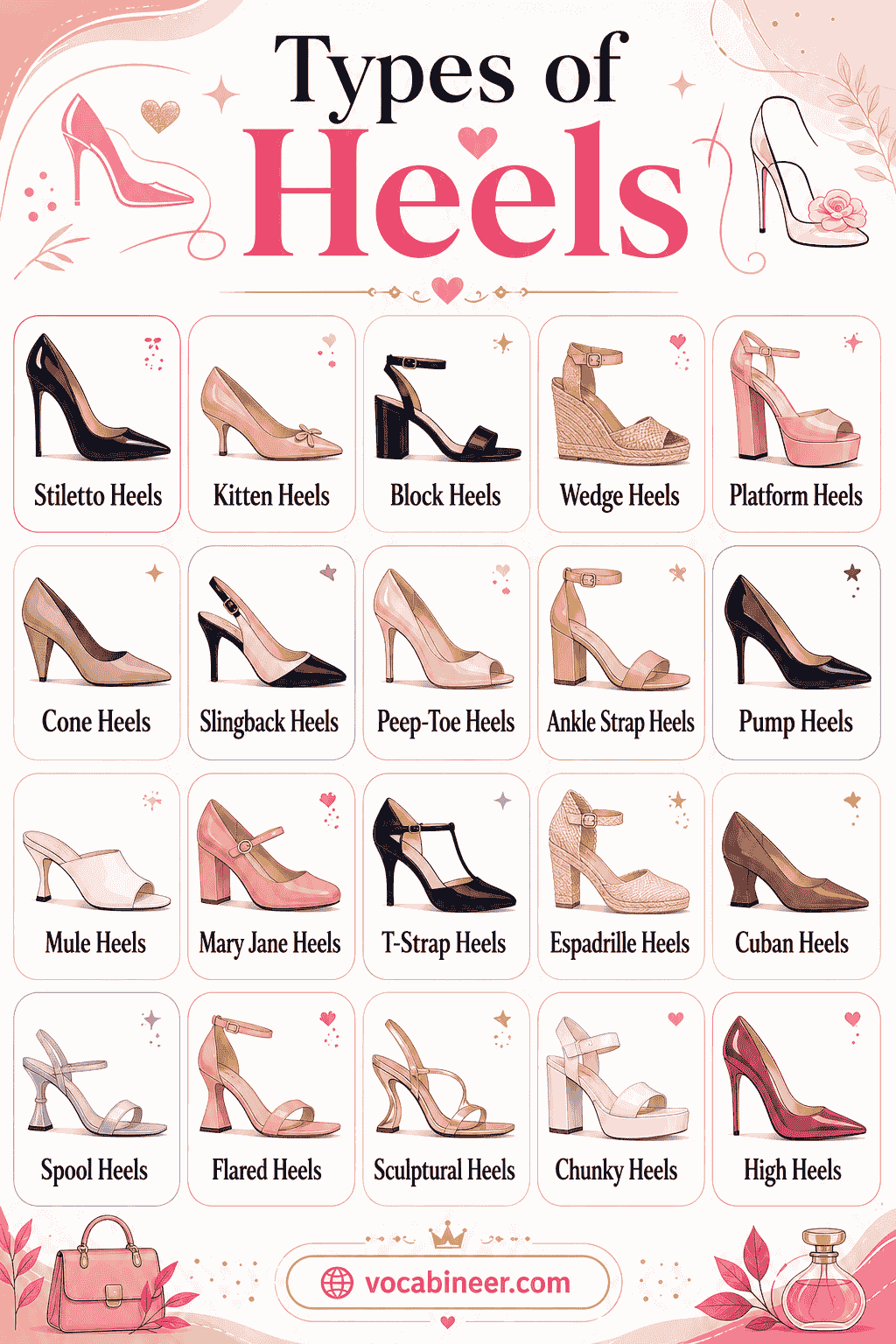
Common types of heels include stiletto heels, block heels, kitten heels, wedge heels, platform heels, cone heels, spool heels, chunky heels, Cuban heels, and stacked heels. This guide explains types of heels with names, uses, comfort tips, comparisons, and picture ideas.
In This Page
What Are Heels?
Heels are raised parts under the back of shoes. They lift the heel of the foot higher than the toes and can be found on pumps, sandals, boots, mules, and many other shoe styles.
Some heels are thin and high, while others are thick, low, or solid. The right heel type depends on comfort, walking support, outfit style, and occasion.
Common Types of Heels
These are the most common types of heels to know in English. They are useful for fashion vocabulary, shopping, outfit planning, and footwear descriptions.
- Stiletto Heels — very thin and high heels often worn with formal, party, or evening outfits.
- Block Heels — thick square-shaped heels that give better balance and support.
- Kitten Heels — short, slim heels that offer a small lift and a comfortable formal look.
- Wedge Heels — solid heels that run from the back of the shoe toward the sole.
- Platform Heels — heels with a raised front sole that adds height and reduces foot angle.
- Cone Heels — heels that are wider at the sole and narrower near the ground.
- Spool Heels — heels with a curved shape, wider at the top and bottom and narrower in the middle.
- Chunky Heels — thick heels that feel more stable than very thin heels.
- Cuban Heels — medium-height heels often seen on boots, loafers, and western-style shoes.
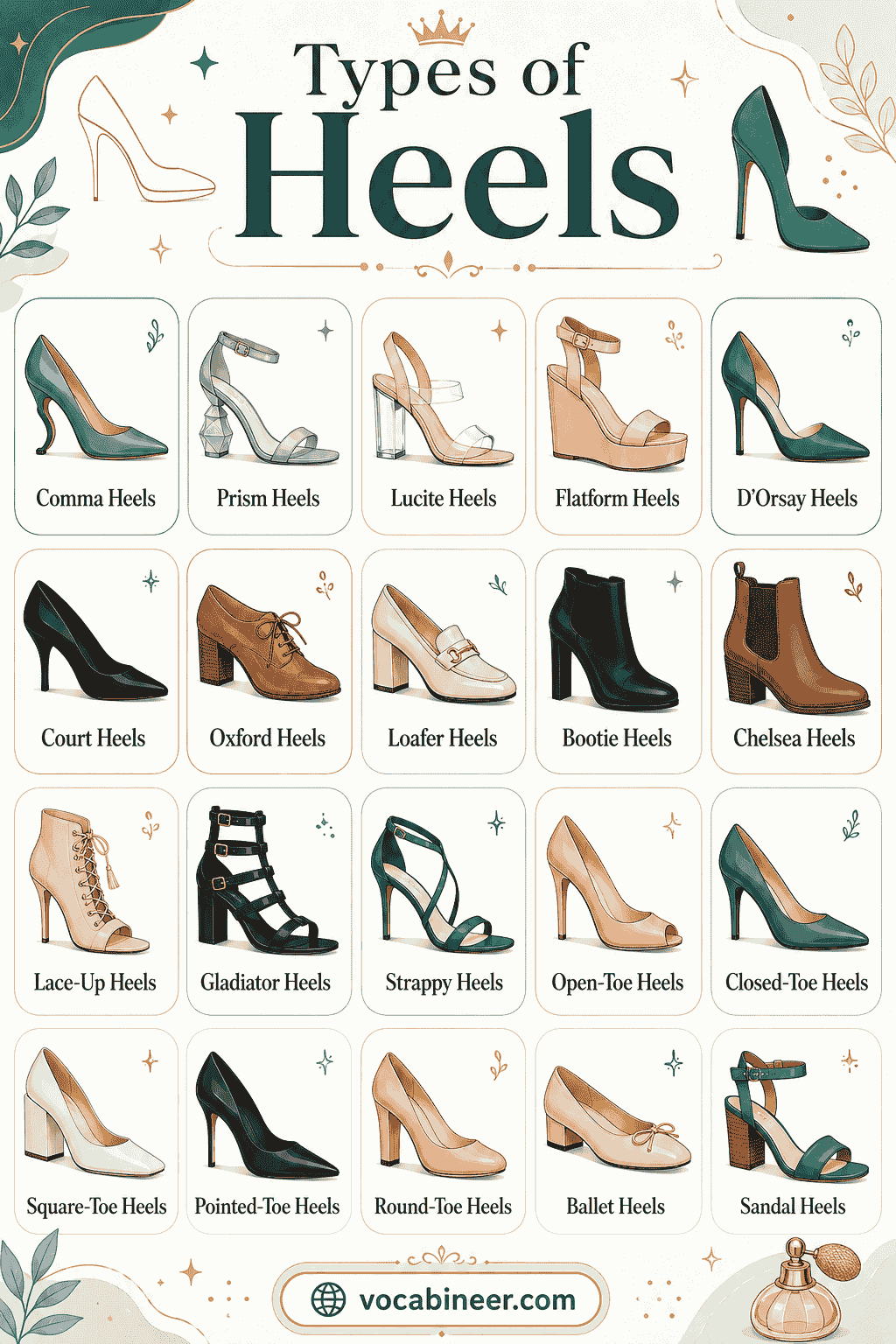
- Comma Heels — curved heels shaped like a comma, often used in fashion-forward shoes.
- Flared Heels — heels that become wider at the bottom for extra style and stability.
- Stacked Heels — heels made to look like layers of stacked material, usually seen on boots and sandals.
- Sculptural Heels — decorative heels with artistic or unusual shapes.
- Slim Heels — narrow heels that look elegant but may offer less support.
- Needle Heels — extremely thin heels similar to stilettos, often used in dressy footwear.
Types of Heels by Shape
Heel shape affects style, balance, comfort, and walking support. Some shapes look elegant and formal, while others feel more stable for daily wear.
Thin Heels
Thin heels create a sleek and dressy look. They are common in formal shoes and evening footwear.
- Stiletto Heels
- Slim Heels
- Needle Heels
Thick Heels
Thick heels offer better support and are easier to walk in than very thin heels.
- Block Heels
- Chunky Heels
- Stacked Heels
- Cuban Heels
Curved and Decorative Heels
Curved and decorative heels are often used in stylish, vintage, or fashion-focused shoe designs.
- Spool Heels
- Comma Heels
- Sculptural Heels
- Cone Heels
- Flared Heels
Types of Heels by Height
Heel height is one of the biggest factors in comfort and style. Low heels are easier for daily use, while high heels are often chosen for parties, formal wear, and fashion looks.
Low Heels
Low heels give a small lift without putting too much pressure on the feet.
- Kitten Heels
- Low Block Heels
- Low Wedge Heels
Medium Heels
Medium heels offer more height while still feeling easier to manage than very high heels.
- Mid Heels
- Cone Heels
- Stacked Heels
High Heels
High heels create a taller and dressier look. They are common in party shoes, evening shoes, and formal footwear.
- Stiletto Heels
- Platform Heels
- High Block Heels
- High Wedge Heels
Types of Shoes with Heels
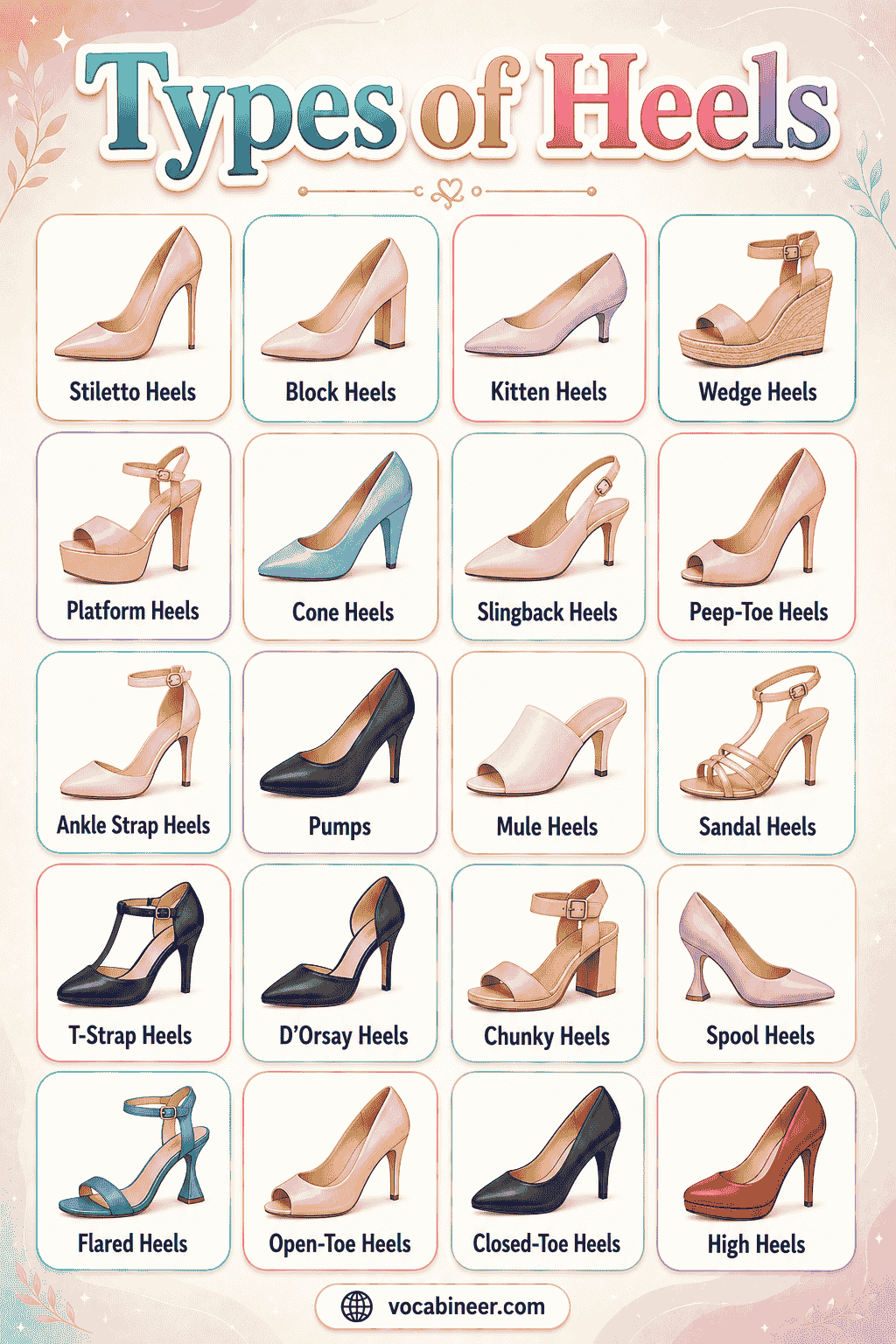
Heel shoes come in many styles. The heel shape and the shoe design together decide how formal, casual, comfortable, or fashionable the footwear looks.
- Pumps — closed-toe shoes with heels, often worn for office, formal, or dressy outfits.
- Slingback Heels — heels with a strap around the back of the ankle or heel.
- Peep-Toe Heels — heels with a small opening at the front that shows the toes.
- Ankle Strap Heels — heels with a strap around the ankle for extra support and style.
- T-Strap Heels — heels with a T-shaped strap across the foot.
- Mary Jane Heels — heels with a strap across the top of the foot.
- Mule Heels — backless heeled shoes that are easy to slip on.
- Court Shoes — classic closed shoes with heels, often worn in formal or office settings.
- Heeled Sandals — open shoes with heels, usually worn in warm weather or dressy casual looks.
- Heeled Boots — boots with heels, often used in winter outfits, western looks, or fashion styling.
- Platform Shoes — shoes with a raised front sole and added height.
- Wedge Sandals — sandals with a wedge-shaped heel for support and casual styling.
Comfortable Types of Heels
Comfortable heels usually have a wider base, lower height, better support, or a front platform that reduces pressure on the feet.
- Block Heels — stable and supportive for office wear, events, and daily outfits.
- Wedge Heels — supportive because the heel connects with the sole.
- Kitten Heels — low and easy to wear for formal or office looks.
- Platform Heels — add height while reducing the steep angle of the foot.
- Low Heels — better for long wear and simple daily outfits.
- Stacked Heels — usually stronger and more stable than thin heels.
Formal Types of Heels
Formal heels are usually worn with dresses, suits, evening outfits, partywear, and office clothing.
- Stiletto Heels
- Pumps
- Slingback Heels
- Ankle Strap Heels
- Court Shoes
- Slim Heels
Casual Types of Heels
Casual heels are easier to style with jeans, skirts, summer dresses, relaxed outfits, and everyday looks.
- Wedge Heels
- Block Heels
- Mule Heels
- Heeled Sandals
- Low Heels
- Platform Heels
Types of Heels for Different Occasions
Different occasions need different heel styles. Comfort matters for daily wear, while elegance matters more for parties, weddings, and formal events.
Heels for Office Wear
Office heels should look neat and feel comfortable enough for long hours.
- Kitten Heels
- Block Heels
- Court Shoes
- Low Pumps
Heels for Parties
Party heels often focus on height, style, shine, and fashion appeal.
- Stiletto Heels
- Platform Heels
- Ankle Strap Heels
- Peep-Toe Heels
Heels for Weddings
Wedding heels should match the outfit, venue, and walking needs. Block heels are useful for outdoor weddings, while pumps and slingbacks suit formal settings.
- Pumps
- Slingback Heels
- Embellished Heels
- Block Heels
Heels for Daily Wear
Daily wear heels should be easy to walk in and stable enough for regular movement.
- Wedge Heels
- Low Heels
- Mule Heels
- Comfort Block Heels
Types of Heels and Their Uses
| Type of Heel | Main Use |
|---|---|
| Stiletto heels | Formal outfits, parties, evening wear, and dressy looks |
| Block heels | Daily wear, office outfits, weddings, and comfortable walking |
| Kitten heels | Office wear, formal events, and low-height comfort |
| Wedge heels | Casual outfits, summer wear, outdoor events, and extra support |
| Platform heels | Parties, fashion looks, and added height with front support |
| Cone heels | Stylish outfits, semi-formal looks, and unique shoe designs |
| Spool heels | Vintage looks, dressy outfits, and classic feminine styling |
| Cuban heels | Boots, loafers, formal shoes, and western-inspired styles |
Difference Between Popular Heel Types
| Heel Type | Shape | Comfort Level | Best For |
|---|---|---|---|
| Stiletto heels | Very thin and high | Low to medium | Parties and formal looks |
| Block heels | Thick and square | High | Daily wear and office outfits |
| Kitten heels | Short and slim | High | Work and simple formal wear |
| Wedge heels | Solid heel from back to sole | High | Casual wear and outdoor events |
| Platform heels | Raised front sole with high heel | Medium | Fashion looks and parties |
How to Choose the Right Type of Heels
How to Choose the Right Type of Heels
Choosing the right type of heels depends on comfort, height, occasion, outfit style, and walking support. For daily wear or long hours, block heels, wedges, kitten heels, and low heels are better because they give more balance and reduce foot pressure. For formal events, parties, or evening outfits, stilettos, pumps, slingback heels, and platform heels can create a dressier look. If you need to walk or stand for a long time, choose heels with a wider base, cushioned soles, ankle straps, or a lower height. The best heels should match your outfit while still feeling stable and comfortable.
Tips for Wearing Heels Comfortably
Small changes can make heels easier to wear, especially if you need to stand, walk, or attend an event for several hours.
- Start with lower heels — kitten heels, low block heels, or low wedges are easier for beginners.
- Choose wider heels — block heels, wedges, chunky heels, and stacked heels give better balance.
- Use cushioned insoles — soft insoles reduce pressure on the balls of the feet.
- Break in new heels — wear new heels for short periods before using them all day.
- Pick the right size — tight heels cause pain, while loose heels make walking unstable.
- Use ankle straps — ankle strap heels help keep the foot secure.
- Match the occasion — wear wedges or block heels outdoors and dressier heels indoors.
- Avoid very high heels for long walking — lower or wider heels are better for comfort.
Types of Heels Chart with Pictures
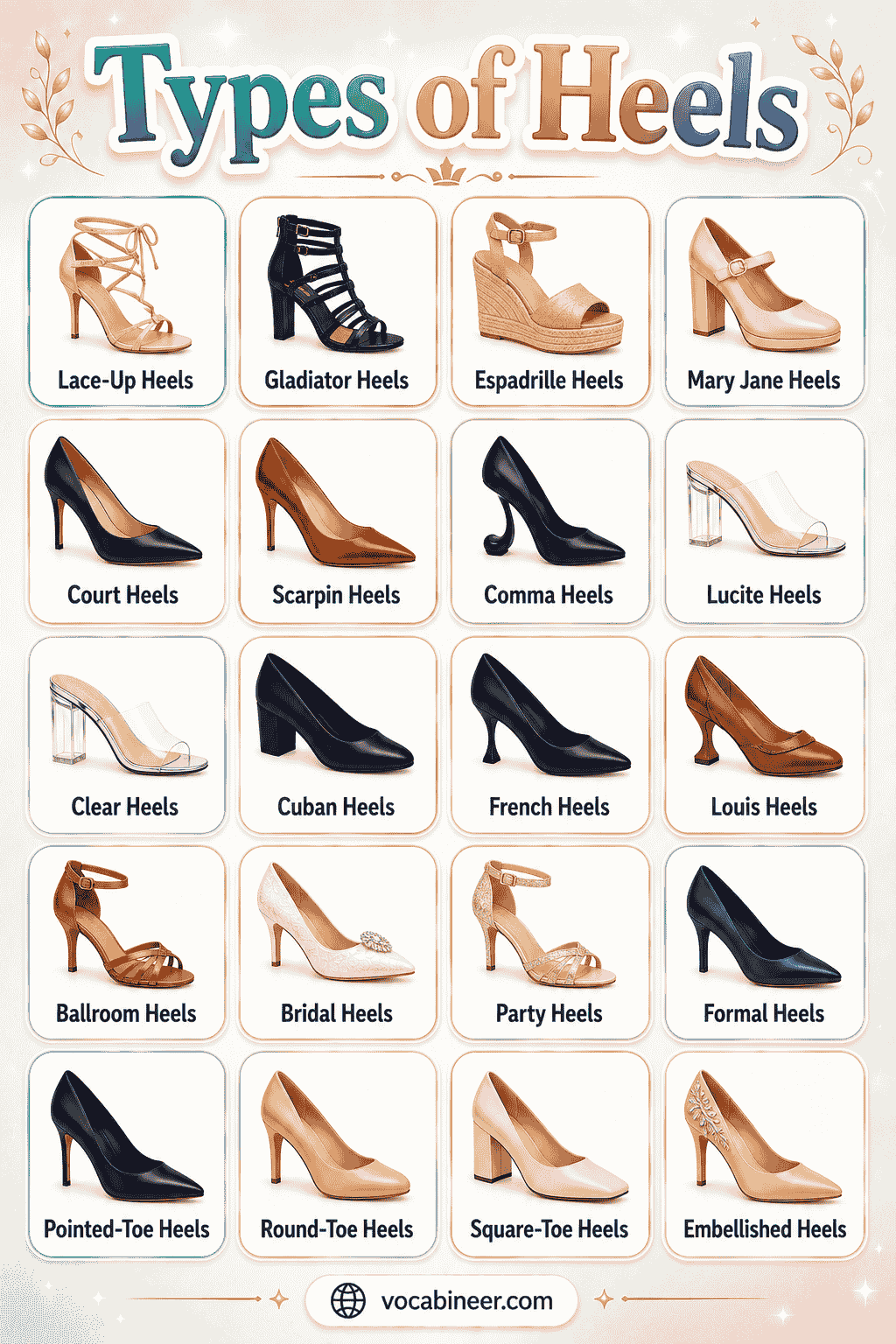
A heel chart helps learners compare heel groups quickly. This mobile-friendly table is useful for fashion vocabulary, shopping guides, ESL learning, and footwear lessons.
| Heel Group | Details |
|---|---|
| Classic heels | Best for: formal wear and dressy outfits Examples: stiletto heels, pumps, kitten heels |
| Comfort heels | Best for: walking, office wear, and daily use Examples: block heels, wedge heels, low heels |
| Fashion heels | Best for: parties and stylish outfits Examples: platform heels, sculptural heels, cone heels |
| Casual heels | Best for: relaxed outfits and everyday styling Examples: mule heels, heeled sandals, wedge sandals |
| Boot heels | Best for: boots, winter outfits, and western looks Examples: Cuban heels, stacked heels, block-heel boots |
FAQ
The most common types of heels include stiletto heels, block heels, kitten heels, wedge heels, platform heels, cone heels, spool heels, Cuban heels, and chunky heels.
Block heels, wedge heels, kitten heels, low heels, and stacked heels are usually more comfortable because they give better support and balance.
High thin heels are usually called stiletto heels or needle heels. They have a very slim heel and are often worn with formal, party, or evening outfits.
Block heels have a thick separate heel under the back of the shoe, while wedge heels have one solid raised piece that runs from the heel toward the sole.
Block heels, wedge heels, kitten heels, mule heels, low heels, and comfort block heels are better for daily wear because they are easier to walk in than very thin high heels.
Read More
- Different Types of Shoes
- Types Of Shoes For Kids
- Types of Boots for Men
- Types of Sports Shoes
- Boots for Women