Pots are deep cooking vessels used for boiling, simmering, steaming, stewing, braising, and cooking foods with liquid. A stockpot can make broth, a soup pot can cook lentils, a saucepan can warm milk, and a Dutch oven can cook stew or slow-cooked meals.
Learning pot names helps beginners, home cooks, students, and English learners understand kitchen vocabulary more clearly. This guide explains common types of pots, their uses, materials, parts, sizes, food matching, safety tips, confusing terms, and beginner examples.
In This Page
What Is a Pot?
A pot is a deep cooking vessel usually used for foods that need liquid, steam, or longer cooking. Most pots have tall sides, handles, and a lid. Some pots are small for sauces or milk, while others are large for soup, pasta, stock, or seafood boils.
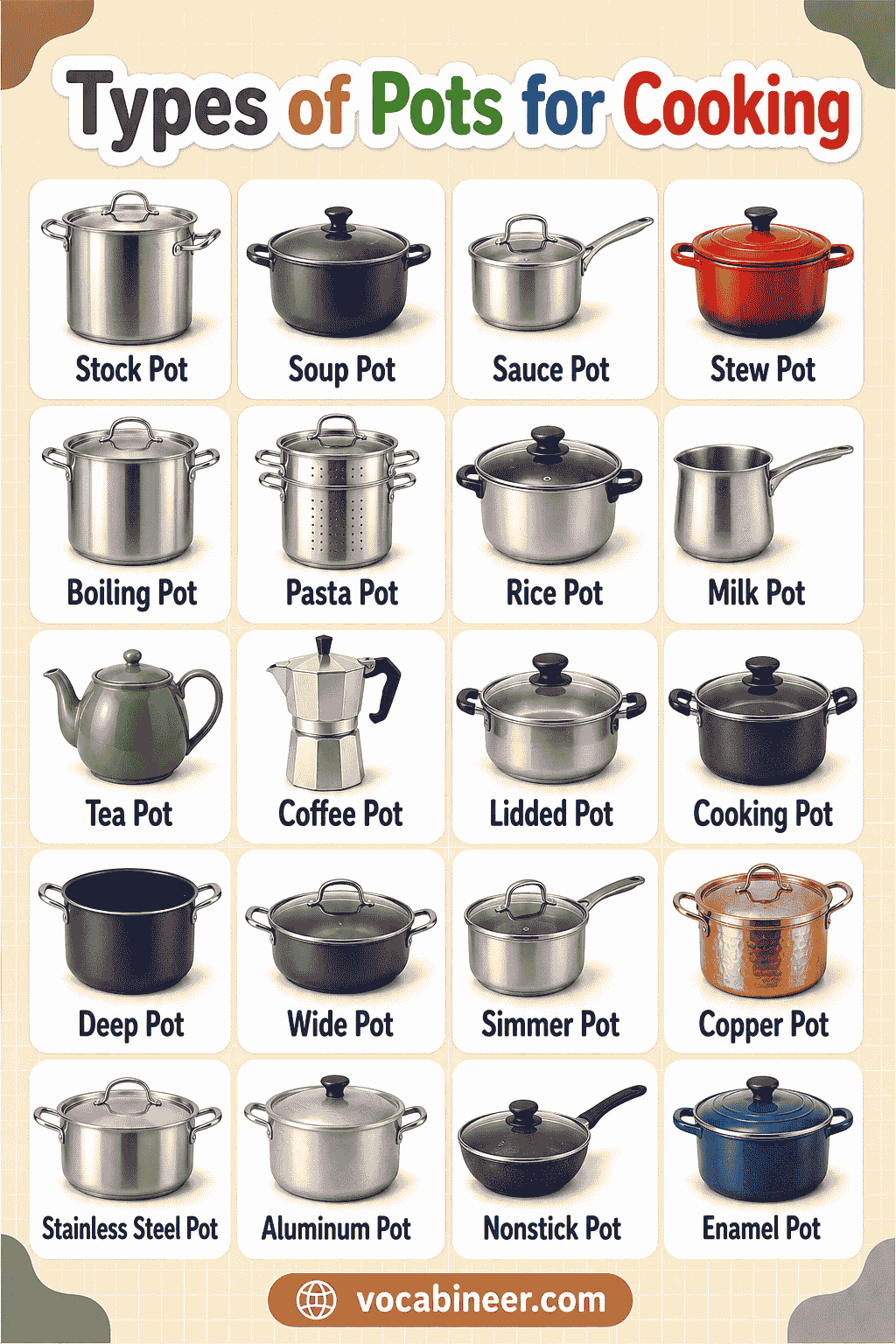
Common pots include:
- Stockpot — A large deep pot used for stock, broth, soup, pasta, and boiling.
- Soup pot — A deep pot used for soups, stews, lentils, beans, and warm liquid dishes.
- Saucepot — A smaller deep pot used for sauces, soups, grains, and everyday cooking.
- Saucepan — A handled pot-like pan used for sauces, milk, tea, soup, and small portions.
- Dutch oven — A heavy covered pot used for stews, braising, baking, and slow cooking.
- Pasta pot — A deep pot used for boiling pasta, noodles, and large amounts of water.
- Steamer pot — A pot with an insert or basket used to steam vegetables, fish, dumplings, or buns.
- Pressure cooker — A sealed pot that cooks food quickly using pressure and steam.
Pot vs Pan vs Cookware: What Is the Difference?
The words pot, pan, and cookware are related, but they do not mean the same thing.
| Term | Simple Meaning | Examples |
|---|---|---|
| Pot | A deeper cooking vessel used for boiling, simmering, soups, sauces, steaming, and liquids | Stockpot, soup pot, saucepot |
| Pan | A wider or shallower cooking vessel used for frying, sautéing, searing, baking, or roasting | Frying pan, skillet, sheet pan |
| Cookware | A broad word for cooking vessels used in the kitchen | Pots, pans, skillets, woks |
Essential Pots Every Kitchen Needs
A kitchen does not need every type of pot, but a few basic pots can handle most daily cooking tasks.
- Stockpot — Useful for soup, stock, broth, pasta, boiling, and large family meals.
- Soup pot — Useful for soups, stews, beans, lentils, curries, and one-pot meals.
- Saucepan — Useful for sauces, milk, tea, oatmeal, noodles, and small portions.
- Saucepot — Useful for sauces, grains, small soups, and everyday simmering.
- Dutch oven — Useful for stew, braising, slow cooking, roasting, and oven-to-table meals.
- Pasta pot — Useful for boiling pasta, noodles, corn, potatoes, and large water-based foods.
- Steamer pot — Useful for vegetables, fish, dumplings, buns, and gentle steam cooking.
- Pressure cooker — Useful for beans, meat, rice, lentils, stews, and fast cooking.
Common Pot Names and Uses
These are some of the most common pot names in English.
- Stockpot — A large deep pot used for stock, broth, soup, pasta, seafood boils, and large batches.
- Soup pot — A deep pot used for soups, stews, lentils, beans, and warm liquid meals.
- Saucepot — A medium or small pot used for sauces, grains, vegetables, and small soups.
- Saucepan — A small deep pan with a long handle, used for sauces, milk, tea, soup, and oatmeal.
- Dutch oven — A heavy lidded pot used for stew, braising, roasting, baking bread, and slow cooking.
- Pasta pot — A tall pot used for boiling pasta, noodles, and other foods in plenty of water.
- Steamer pot — A pot with a steaming basket or insert, used for steam cooking.
- Pressure cooker — A sealed pot that cooks food quickly with trapped steam and pressure.
- Double boiler — A pot setup used for gentle heating, often for chocolate, custard, or delicate sauces.
- Milk pot — A small pot used for heating milk, tea, coffee, or small liquids.
- Tea pot — A pot used for brewing or serving tea.
- Rice pot — A pot used for cooking rice and grain dishes.
- Hot pot — A pot used for shared cooking at the table or simmering broth-based meals.
- Clay pot — A traditional pot made from clay, often used for slow cooking and earthy flavors.
- Bean pot — A pot used for cooking beans, lentils, and slow-cooked dishes.
- Canning pot — A large pot used for preserving jars of food.
- Stew pot — A deep pot used for stews, meat, vegetables, and slow simmering.
- Braising pot — A wide lidded pot used for cooking food slowly with a small amount of liquid.
- Seafood boil pot — A large pot used for seafood, corn, potatoes, and boiling large portions.
- Casserole pot — A covered pot used for baked or slow-cooked meals.
Pot Parts and Features
Pot parts and features affect how a pot cooks food, handles heat, and works with different recipes.
- Lid — A cover that traps heat, steam, and moisture.
- Handles — Side grips used to lift or move the pot.
- Helper handles — Extra handles that make heavy pots easier to carry.
- Base — The bottom part that touches the heat source.
- Thick bottom — A heavy base that helps reduce burning and improves heat control.
- Rim — The top edge of the pot.
- Sides — The walls of the pot, usually tall and deep.
- Capacity — The amount of food or liquid the pot can hold.
- Pour spout — A small shaped edge used for pouring liquid neatly.
- Steam vent — A small hole that lets steam escape.
- Insert basket — A removable basket used for pasta, steaming, or draining.
- Nonstick coating — A surface that helps food release more easily.
- Oven-safe design — A feature that allows the pot to go into the oven.
- Induction-safe base — A base that works on induction cooktops.
Types of Cooking Pots
Cooking pots can be grouped by everyday kitchen use. Some work best for liquids, while others work well for slow cooking, steaming, or large batches.
- Stockpot — Best for broth, stock, pasta, soup, and boiling large amounts of food.
- Soup pot — Best for soup, stew, lentils, beans, and warm family meals.
- Saucepot — Best for sauces, grains, vegetables, and smaller simmered foods.
- Saucepan — Best for milk, tea, sauce, oatmeal, and small portions.
- Dutch oven — Best for braising, slow cooking, stews, roasts, and oven cooking.
- Stew pot — Best for thick stews, meat, vegetables, and slow simmering.
- Pasta pot — Best for pasta, noodles, corn, potatoes, and foods boiled in water.
- Rice pot — Best for rice, grains, and simple one-pot meals.
- Bean pot — Best for beans, lentils, chickpeas, and slow-cooked legumes.
- Braising pot — Best for covered cooking with meat, vegetables, and a small amount of liquid.
Soup, Stock, and Stew Pots
Soup, stock, and stew pots are usually deep enough to hold liquid, meat, bones, vegetables, beans, or grains. They help food simmer evenly and reduce spills.
- Stockpot — Best for stock, broth, large soups, pasta, boiling, and big batches.
- Soup pot — Best for everyday soup, lentils, beans, vegetables, and stews.
- Stew pot — Best for thick stews, meat, potatoes, carrots, and slow cooking.
- Dutch oven — Best for rich stews, braised meat, chili, and slow-cooked dishes.
- Bean pot — Best for beans, lentils, chickpeas, and slow-simmered legumes.
- Seafood boil pot — Best for seafood, corn, potatoes, and large boiling meals.
- Broth pot — Best for broth, stock, bones, vegetables, and long simmering.
Sauce, Milk, and Small Cooking Pots
Small pots are useful for quick cooking, warming liquids, and making small portions. They are easier to handle than large pots and heat up quickly.
- Saucepan — Best for sauces, milk, tea, oatmeal, soup, noodles, and small boiling tasks.
- Saucepot — Best for small soups, sauces, grains, vegetables, and everyday simmering.
- Milk pot — Best for heating milk, tea, coffee, or small amounts of liquid.
- Butter warmer — Best for melting butter, chocolate, or small sauce portions.
- Small boiling pot — Best for eggs, noodles, potatoes, and quick boiling.
- Tea pot — Best for brewing or serving tea.
- Saucier — Best for whisked sauces, custards, gravies, and creamy mixtures.
Specialty Pots and Their Uses
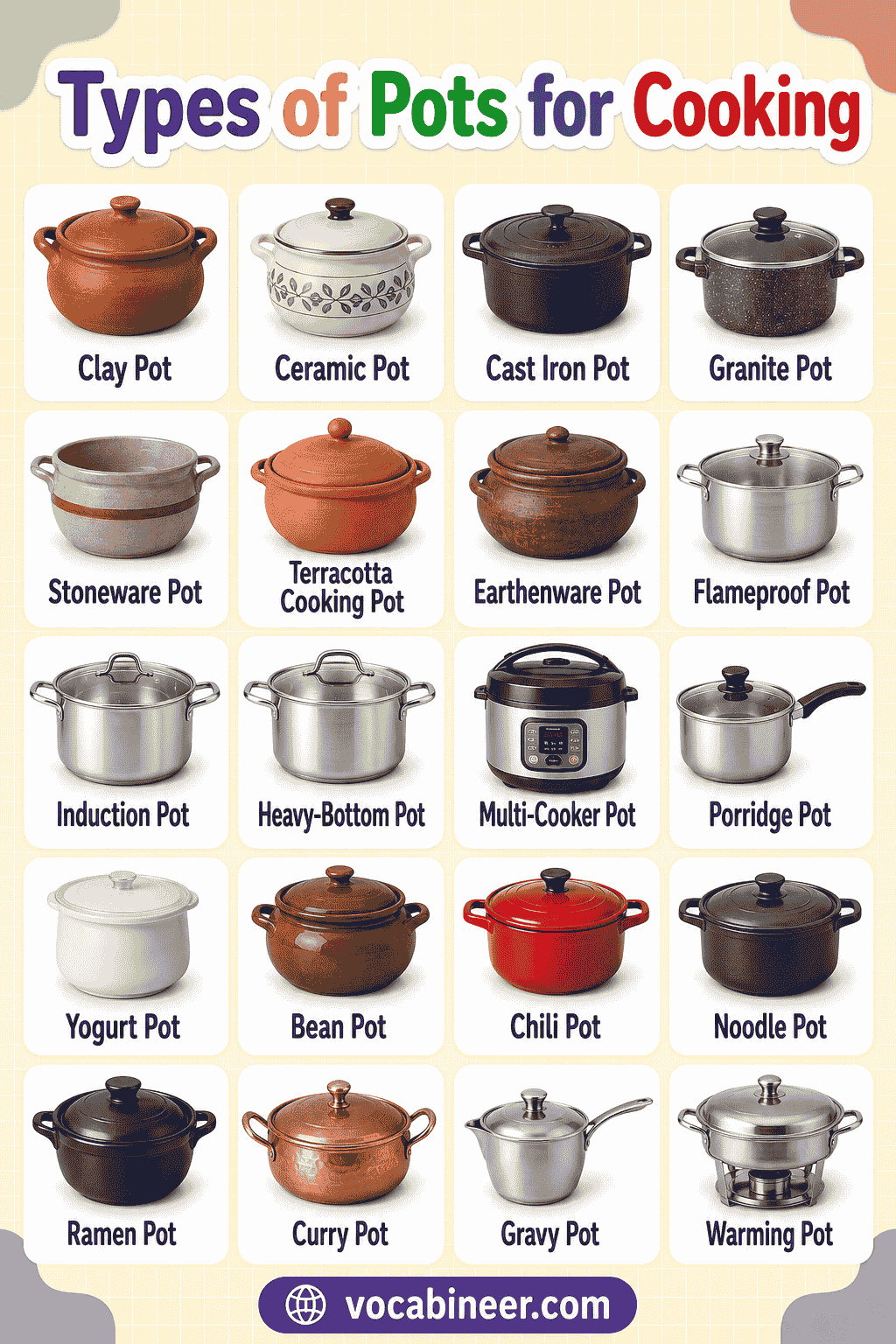
Specialty pots are designed for specific cooking methods, foods, or traditions.
- Dutch oven — Best for stew, braising, baking bread, roasting, and slow cooking.
- Pressure cooker — Best for beans, meat, lentils, rice, stews, and fast cooking.
- Steamer pot — Best for vegetables, dumplings, fish, buns, and steam cooking.
- Double boiler — Best for chocolate, custards, delicate sauces, and gentle heating.
- Pasta pot — Best for pasta, noodles, corn, potatoes, and large boiling tasks.
- Hot pot — Best for shared broth-based cooking at the table.
- Clay pot — Best for slow cooking, rice dishes, stews, and traditional meals.
- Canning pot — Best for preserving jars of fruits, vegetables, sauces, and jams.
- Seafood boil pot — Best for seafood, corn, potatoes, sausage, and large outdoor meals.
- Tajine — Best for slow-cooked North African-style dishes.
- Cocotte — Best for braising, roasting, stews, and oven-to-table cooking.
- Bean pot — Best for beans, lentils, and slow-cooked legumes.
- Fondue pot — Best for melted cheese, chocolate, or shared dipping foods.
- Electric hot pot — Best for soups, noodles, hot pot meals, and quick tabletop cooking.
- Slow cooker insert — Best for slow-cooked soups, stews, meat, and beans.
Pots by Cooking Method
Different cooking methods need different pot shapes, sizes, and materials.
- Boiling — Stockpots, pasta pots, and large deep pots work well.
- Simmering — Soup pots, saucepots, Dutch ovens, and saucepans work well.
- Steaming — Steamer pots and pots with insert baskets work well.
- Stewing — Stew pots, Dutch ovens, soup pots, and bean pots work well.
- Braising — Dutch ovens, braising pots, cocottes, and heavy lidded pots work well.
- Pressure cooking — Pressure cookers work well for fast cooking.
- Double boiling — Double boilers work well for gentle indirect heating.
- Canning — Canning pots work well for preserving food in jars.
- Slow cooking — Dutch ovens, clay pots, bean pots, and slow cooker inserts work well.
- Tabletop cooking — Hot pots and electric hot pots work well.
Stovetop Pots vs Oven-Safe Pots
Some pots work only on the stovetop, while others can go into the oven. A few electric pots work separately from both stove and oven.
| Pot Type | Best Use | Examples |
|---|---|---|
| Stovetop pots | Boiling, simmering, steaming, and sauce making | Stockpot, saucepan, soup pot, pasta pot |
| Oven-safe pots | Braising, roasting, baking, and slow cooking | Dutch oven, cocotte, oven-safe cast iron pot |
| Electric pots | Plug-in cooking, pressure cooking, or tabletop meals | Electric hot pot, electric pressure cooker, slow cooker insert |
Common Pot Materials
Pot material affects heat control, cooking speed, weight, cleaning, and durability.
- Stainless steel pots — Durable pots used for boiling, simmering, soup, pasta, and everyday cooking.
- Aluminum pots — Lightweight pots that heat quickly.
- Hard-anodized aluminum pots — Strong aluminum pots with a tougher cooking surface.
- Cast iron pots — Heavy pots that hold heat well and work for slow cooking.
- Enameled cast iron pots — Cast iron pots with enamel coating, often used for Dutch ovens and cocottes.
- Ceramic pots — Pots used for gentle cooking, serving, or decorative kitchen use.
- Clay pots — Traditional pots used for slow cooking and earthy flavor.
- Copper pots — Pots known for quick heat response, often used by experienced cooks.
- Nonstick pots — Pots with a coating that helps reduce sticking.
- Glass pots — Pots or oven vessels that let you see the food while cooking.
Pot Shapes, Sizes, and Capacity
Pot shape, size, and capacity affect how food cooks. A small pot works well for sauce or milk, while a large stockpot works better for soup, pasta, stock, or boiling.
- Small pots — Best for sauces, milk, tea, oatmeal, and small portions.
- Medium pots — Best for rice, vegetables, soup, grains, and everyday cooking.
- Large pots — Best for pasta, stock, seafood boils, soup, and large batches.
- Deep pots — Best for boiling, soups, stews, and foods with liquid.
- Wide pots — Best for braising, reducing sauces, and cooking food in a single layer.
- Tall pots — Best for pasta, stock, broth, and boiling.
- Narrow pots — Best for small liquid tasks and compact stovetop use.
- Lidded pots — Best for simmering, steaming, rice, and slow cooking.
- Handled pots — Best for lifting, pouring, and carrying safely.
- Thick-bottom pots — Best for sauces, milk, stews, and foods that can burn easily.
- Heavy-bottom pots — Best for even heating and slow cooking.
Best Pots for Different Foods
Choosing a pot becomes easier when you match the pot to the food.
- Soup — Soup pot, stockpot, or Dutch oven.
- Stock and broth — Stockpot or large deep pot.
- Pasta — Pasta pot or stockpot.
- Rice — Rice pot, saucepan, or medium saucepot.
- Curry — Dutch oven, saucepot, deep pot, or heavy-bottom pot.
- Stew — Dutch oven, stew pot, soup pot, or braising pot.
- Beans and lentils — Bean pot, stockpot, Dutch oven, or pressure cooker.
- Milk and tea — Milk pot, saucepan, or small pot.
- Sauces — Saucepan, saucepot, or saucier.
- Steamed vegetables — Steamer pot or pot with steamer insert.
- Seafood boil — Seafood boil pot or large stockpot.
- Canning — Canning pot.
- Slow-cooked meals — Dutch oven, clay pot, bean pot, or slow cooker insert.
- Hot pot meals — Hot pot or electric hot pot.
Pot Safety and Care Tips
Good pot care helps pots last longer and keeps cooking safer.
- Use oven-safe pots only in the oven.
- Check handles and lids before using a pot with high heat.
- Do not overfill pots with boiling water, soup, or oil.
- Use oven mitts for hot handles and lids.
- Dry cast iron or carbon steel parts after washing.
- Avoid sudden temperature changes that can damage some materials.
- Use gentle utensils on nonstick coatings.
- Match pot size to burner size.
- Store lids safely to avoid cracks or chips.
- Clean clay pots according to their material care instructions.
- Do not leave milk, sauces, or thick foods unattended on high heat.
- Lift large pots carefully when they contain hot liquid.
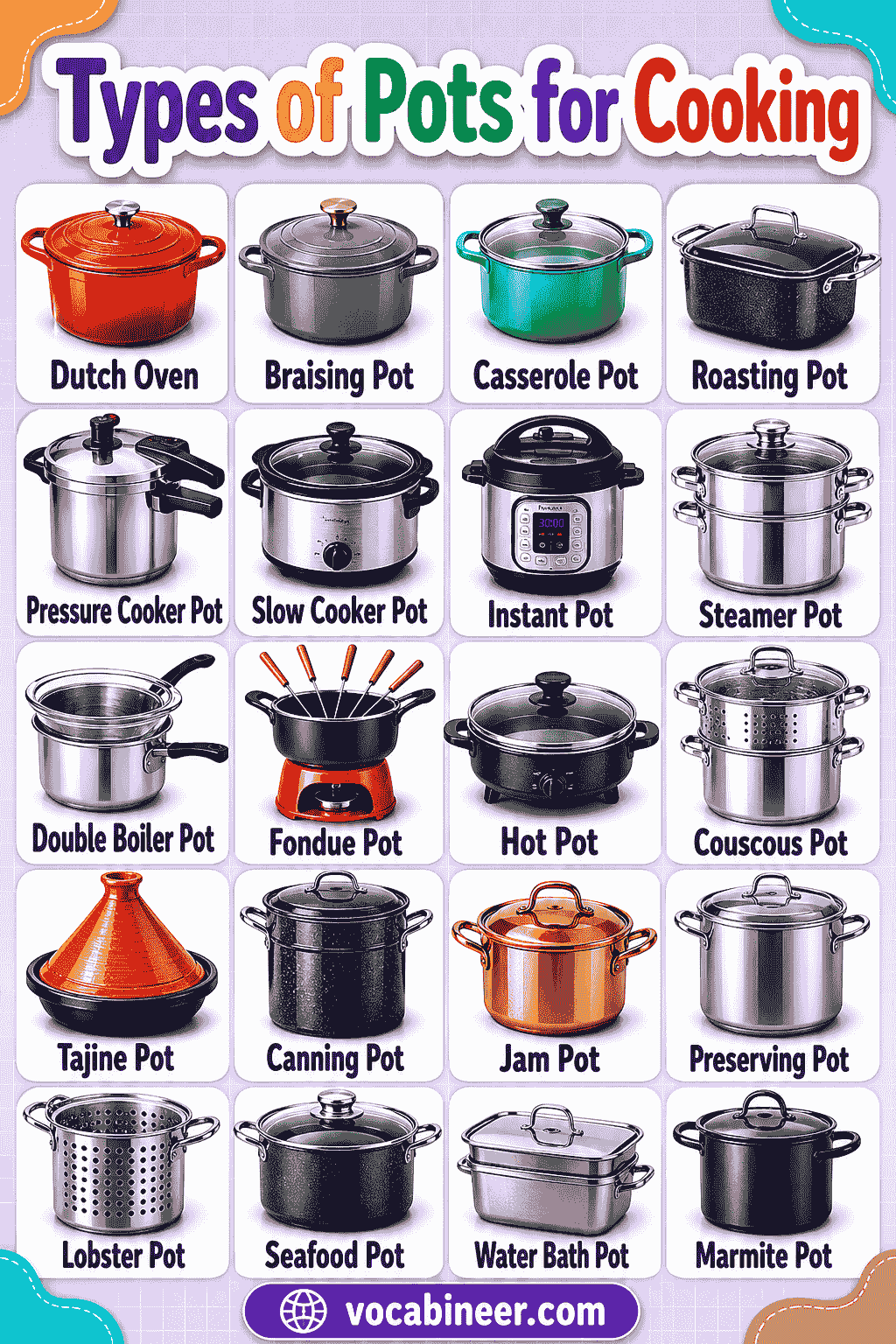
Types of Pots Chart
| Pot Type | Best Used For |
|---|---|
| Stockpot | Stock, broth, soup, pasta, boiling, and large batches |
| Soup pot | Soup, stew, lentils, beans, and warm liquid dishes |
| Saucepot | Sauces, grains, vegetables, and small soups |
| Saucepan | Sauce, milk, tea, oatmeal, and small portions |
| Dutch oven | Stew, braising, roasting, baking, and slow cooking |
| Pasta pot | Pasta, noodles, corn, potatoes, and boiling |
| Steamer pot | Vegetables, dumplings, fish, and buns |
| Pressure cooker | Beans, meat, lentils, rice, and fast cooking |
| Double boiler | Chocolate, custard, and delicate sauces |
| Milk pot | Milk, tea, coffee, and small liquids |
| Clay pot | Slow cooking, rice dishes, and traditional meals |
| Canning pot | Preserving jars of food |
Confusing Pot Terms Explained
Some pot terms sound similar. This table explains the differences simply.
| Terms | Simple Difference |
|---|---|
| Pot vs Pan | A pot is usually deeper and better for liquids. A pan is usually wider or shallower. |
| Pot vs Cookware | A pot is one type of cookware. Cookware includes pots, pans, skillets, and woks. |
| Stockpot vs Soup Pot | A stockpot is usually larger and deeper. A soup pot is often used for everyday soups and stews. |
| Saucepan vs Saucepot | A saucepan usually has one long handle. A saucepot often has two side handles and more depth. |
| Dutch Oven vs Stockpot | A Dutch oven is heavy and covered for slow cooking. A stockpot is taller and better for large liquids. |
| Dutch Oven vs Cocotte | Both are heavy covered pots. Cocotte is often used for a French-style Dutch oven. |
| Steamer Pot vs Double Boiler | A steamer pot cooks food with steam. A double boiler heats food gently over hot water. |
| Pressure Cooker vs Stockpot | A pressure cooker uses sealed pressure to cook faster. A stockpot cooks with normal boiling or simmering. |
| Clay Pot vs Metal Pot | A clay pot cooks gently and holds earthy flavors. A metal pot heats faster and is common for daily cooking. |
| Canning Pot vs Stockpot | A canning pot is made for preserving jars. A stockpot is a general large cooking pot. |
How to Choose the Right Pot
Choose the right pot by matching it to the food, cooking method, and portion size. A stockpot works well for pasta, soup, broth, and large batches, while a saucepan is better for milk, tea, sauces, and small portions. Use a Dutch oven for stew, braising, and slow cooking; choose a steamer pot for vegetables and dumplings; use a pressure cooker when you want beans, lentils, rice, or meat to cook faster.
Material and size also matter. Stainless steel is durable for everyday cooking, enameled cast iron holds heat well for slow meals, and aluminum heats quickly for light kitchen tasks. Choose a small pot for sauces, a medium pot for daily meals, and a large pot for stock, pasta, or family portions. For daily use, pick pots that feel safe to lift, clean easily, fit your stove, and match the foods you cook most often.
Easy Pot Names for Beginners
These pot names are useful for beginners, students, and English learners.
- Pot — A deep kitchen vessel used for cooking food.
- Soup pot — A pot used for soup, stew, and lentils.
- Stockpot — A large deep pot used for stock, broth, pasta, and boiling.
- Saucepan — A small deep pan-like pot used for sauces, milk, and tea.
- Dutch oven — A heavy covered pot used for stew and slow cooking.
- Pasta pot — A pot used for boiling pasta and noodles.
- Steamer pot — A pot used to steam vegetables, fish, buns, or dumplings.
- Pressure cooker — A sealed pot used for fast cooking.
- Rice pot — A pot used for cooking rice.
- Milk pot — A small pot used for heating milk or tea.
Simple sentences:
- Cook soup in a soup pot.
- Boil pasta in a pasta pot.
- Make sauce in a saucepan.
- Use a steamer pot for vegetables.
- Cook stew in a Dutch oven.
- Heat milk in a milk pot.
- Use a pressure cooker for beans.
FAQs
The main types of pots include stockpots, soup pots, saucepots, saucepans, Dutch ovens, pasta pots, steamer pots, pressure cookers, double boilers, milk pots, rice pots, clay pots, and canning pots.
A pot is usually deeper and works well for boiling, simmering, soups, sauces, steaming, and cooking with liquid. A pan is usually wider or shallower and works better for frying, sautéing, searing, baking, or roasting.
A stockpot is used for making stock, broth, soup, pasta, seafood boils, and large batches of food. Its deep shape helps hold plenty of liquid.
A medium saucepan or saucepot is useful for everyday cooking because it can handle sauces, soup, oatmeal, noodles, vegetables, rice, tea, and small meals.
Stainless steel is a good beginner-friendly pot material because it is durable and useful for many foods. Nonstick pots can also help with easy cleanup, while enameled cast iron works well for slow cooking.
Read More
- Types of Drinking Glasses
- Types of Cups with Names
- Different Types of Bowls
- Different Types of Baskets
- Types of Keys with Names