Rugs are movable floor coverings that add comfort, warmth, color, and texture to a room. People use them in living rooms, bedrooms, hallways, dining rooms, kitchens, offices, patios, and entryways.
There are many types of rugs, and each rug name usually describes its material, shape, texture, construction, style, or purpose. This guide explains common rug names, simple meanings, room uses, rug materials, and helpful comparisons.
In This Page
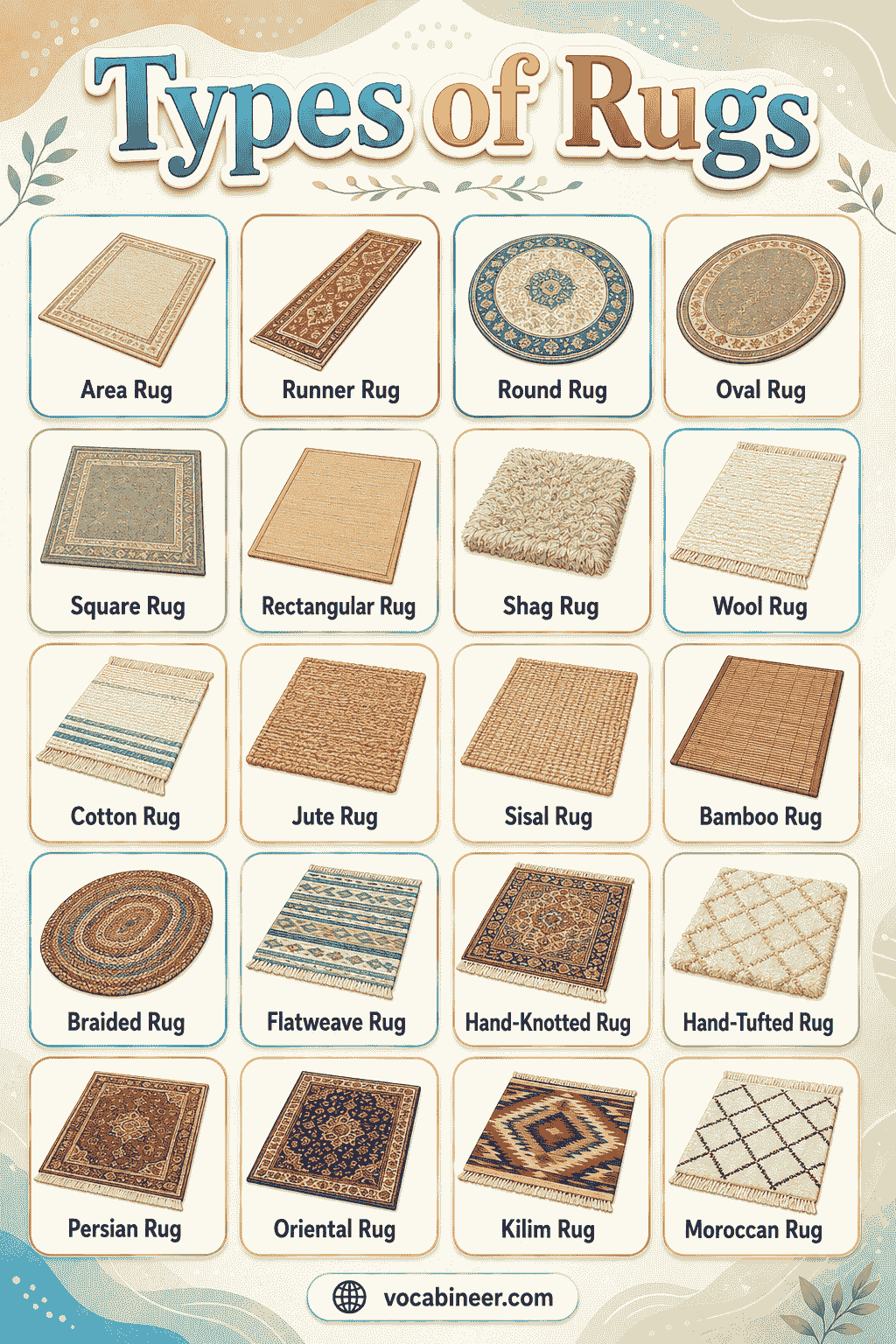
Common Types of Rugs
- Area Rug — a large rug that covers part of a room and helps define a seating, dining, or bedroom area.
- Runner Rug — a long, narrow rug used in hallways, kitchens, entryways, and beside beds.
- Accent Rug — a small decorative rug that adds color, pattern, or texture to a space.
- Shag Rug — a soft rug with long, fluffy fibers and a thick surface.
- Flatweave Rug — a thin rug with a flat surface and little or no pile.
- Persian Rug — a traditional rug known for detailed patterns, rich colors, and classic designs.
- Oriental Rug — a decorative rug style with traditional patterns from several Asian regions.
- Braided Rug — a rug made by braiding fabric strips, yarn, or natural fibers.
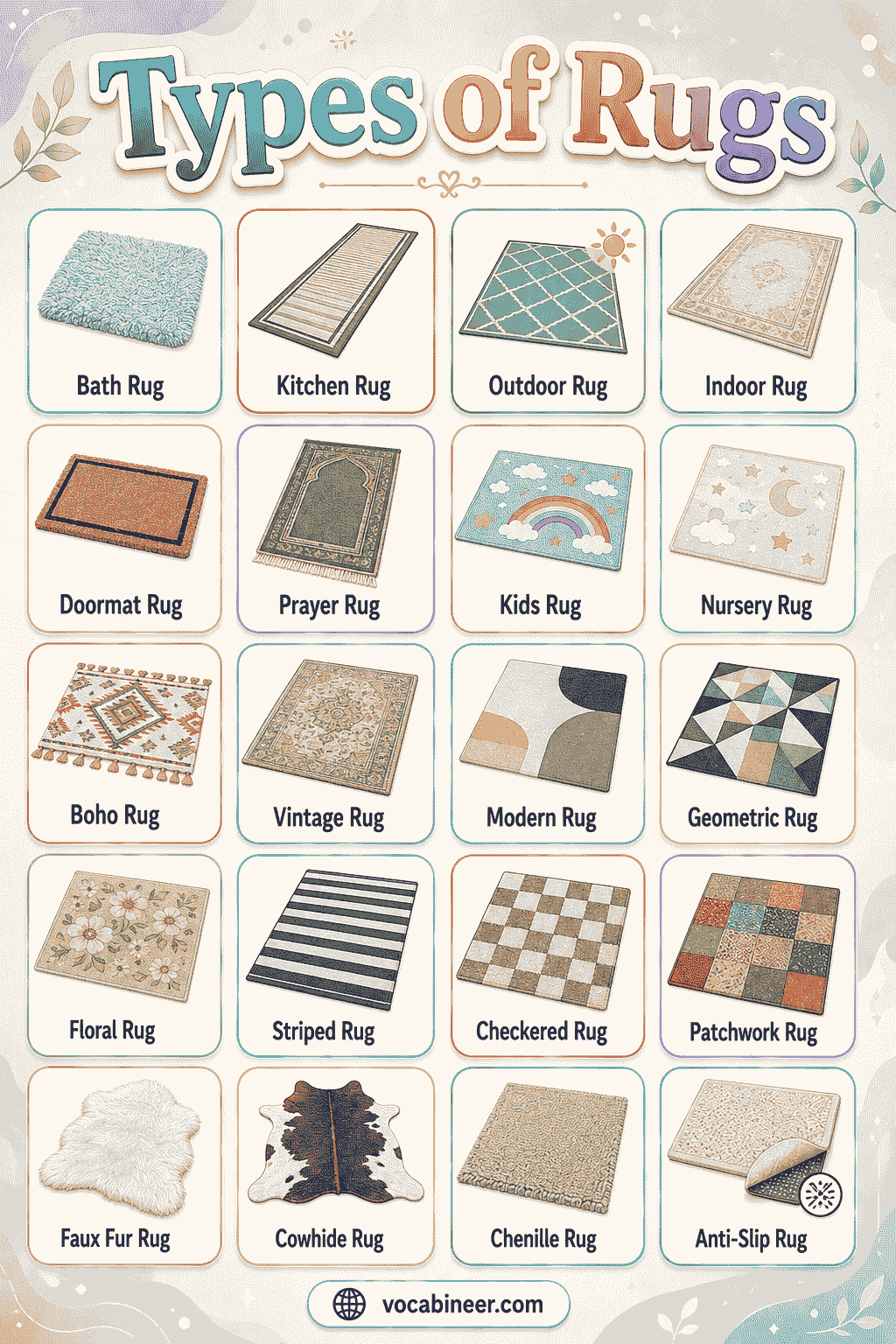
- Outdoor Rug — a durable rug made for patios, balconies, decks, and porches.
- Washable Rug — a rug designed for easier cleaning in busy homes.
Types of Rugs by Material
Rug material affects softness, durability, cleaning, price, and appearance. Some materials feel warm and soft, while others work better in busy or outdoor areas.
- Wool Rug — a soft, warm, and durable rug made from wool fibers.
- Cotton Rug — a lightweight rug that works well in casual rooms and relaxed spaces.
- Jute Rug — a natural fiber rug with an earthy, textured look.
- Sisal Rug — a strong natural fiber rug suitable for high-traffic areas.
- Seagrass Rug — a firm natural rug with a smooth woven surface.
- Silk Rug — a fine and smooth rug often used for luxury decoration.
- Polypropylene Rug — a synthetic rug that is popular for easy cleaning and outdoor use.
- Polyester Rug — a soft synthetic rug known for bright colors and modern designs.
- Nylon Rug — a strong synthetic rug that handles busy rooms well.
- Leather Rug — a rug made from leather pieces, hides, or woven leather strips.
Types of Rugs by Weave and Construction
Rug construction explains how a rug is made. This section helps readers understand common rug labels such as hand-knotted, hand-tufted, woven, and machine-made.
- Hand-Knotted Rug — a rug made by tying individual knots by hand.
- Hand-Tufted Rug — a rug made by pushing yarn into a backing with a tufting tool.
- Machine-Made Rug — a rug produced by machines, often in large quantities.
- Flatweave Rug — a woven rug without a thick raised pile.
- Hooked Rug — a rug made by pulling loops of yarn through a backing.
- Braided Rug — a rug made from braided strips arranged into a round, oval, or rectangular shape.
- Loom-Woven Rug — a rug woven on a loom using threads or yarns.
- Needlepoint Rug — a decorative rug made with stitched patterns.
Types of Rugs for Different Rooms
Different rooms need different rug types. For example, a bedroom rug should feel soft, while an entryway rug should handle dirt, shoes, and regular foot traffic.
- Living Room Rug — usually an area rug placed under or near sofas, chairs, and a coffee table.
- Bedroom Rug — a soft rug placed under the bed or beside it for warmth and comfort.
- Dining Room Rug — a large rug placed under a dining table and chairs.
- Kitchen Rug — a small rug or runner used near the sink, island, or cooking area.
- Hallway Rug — usually a runner rug that fits a long and narrow space.
- Entryway Rug — a durable rug placed near the front door.
- Bathroom Rug — a small absorbent rug used near a sink, shower, or bathtub.
- Patio Rug — an outdoor rug used in open-air seating areas.
- Office Rug — a rug placed under a desk, chair, or small meeting area.
Types of Rugs by Shape
Rug shape affects how the rug fits with furniture and room layout. Also, the right shape can make a space look more balanced.
- Rectangular Rug — the most common rug shape for living rooms, bedrooms, and dining rooms.
- Round Rug — a circular rug that works well under round tables or in small seating areas.
- Oval Rug — a curved rug often used in traditional, country, or farmhouse-style rooms.
- Square Rug — a balanced rug shape for square rooms and centered furniture layouts.
- Irregular Rug — a rug with an uneven or natural shape, such as a hide rug.
- Half-Round Rug — a semi-circular rug often placed near doors, corners, or small entry spaces.
Rug Pile Types and Textures
Rug pile means the raised fibers on the rug surface. Some rugs feel flat and firm, while others feel thick, soft, and fluffy.
- Low-Pile Rug — a rug with short fibers that is easier to clean and move furniture over.
- Medium-Pile Rug — a rug with moderate fiber height and a balanced feel.
- High-Pile Rug — a rug with longer fibers and a softer surface.
- Shag Rug — a high-pile rug with long, fluffy strands.
- Plush Rug — a soft rug with a smooth and cushioned surface.
- Loop-Pile Rug — a rug with looped fibers on the surface.
- Cut-Pile Rug — a rug with cut fiber ends that create a softer feel.
- Flatweave Rug — a thin rug with little or no raised pile.
Best Rugs for High-Traffic and Easy-Clean Areas
High-traffic areas need rugs that can handle dirt, movement, shoes, pets, children, and regular cleaning. Entryways, hallways, kitchens, family rooms, and busy living rooms usually need stronger rug choices.
Flatweave, polypropylene, nylon, sisal, indoor-outdoor, runner, and washable rugs are practical options for these spaces. They usually work better than thick or delicate rugs because they are easier to maintain and less likely to trap dust.
- Best for entryways — sisal rugs, indoor-outdoor rugs, and washable rugs.
- Best for hallways — runner rugs, flatweave rugs, and nylon rugs.
- Best for kitchens — washable rugs, flatweave rugs, and polypropylene rugs.
- Best for family rooms — nylon rugs, wool rugs, and easy-clean synthetic rugs.
- Best for patios — outdoor rugs and polypropylene rugs.
Popular Rug Styles and Patterns
Rug style affects the mood of a room. Some rug styles look traditional, while others feel modern, relaxed, bold, or artistic.
- Persian Rug — a detailed traditional rug with rich colors, borders, and classic patterns.
- Oriental Rug — a decorative rug style with traditional motifs and detailed designs.
- Moroccan Rug — a rug style often known for geometric patterns and soft textures.
- Boho Rug — a relaxed rug style with mixed patterns, warm colors, or natural textures.
- Vintage Rug — a rug with an aged, faded, or old-style appearance.
- Modern Rug — a rug with clean lines, simple shapes, or abstract designs.
- Geometric Rug — a rug with shapes such as lines, diamonds, squares, or triangles.
- Floral Rug — a rug decorated with flower, vine, or plant patterns.
Confusing Rug Terms Explained
| Rug Terms | Difference |
|---|---|
| Rug vs Carpet | A rug usually covers part of the floor and can be moved, while carpet often covers the whole room and may be fixed in place. |
| Area Rug vs Accent Rug | An area rug covers a larger floor area, while an accent rug is smaller and mainly decorative. |
| Runner Rug vs Area Rug | A runner rug is long and narrow, while an area rug is wider and covers more open floor space. |
| Persian Rug vs Oriental Rug | Persian rugs are linked with Iran, while Oriental rugs include traditional rug styles from several Asian regions. |
| Shag Rug vs Flatweave Rug | A shag rug has long, fluffy fibers, while a flatweave rug has a thin and flat surface. |
| Jute Rug vs Sisal Rug | Jute usually feels softer, while sisal is stronger and better for high-traffic areas. |
| Indoor Rug vs Outdoor Rug | Indoor rugs focus more on comfort and decoration, while outdoor rugs use tougher materials for weather exposure. |
| Hand-Knotted Rug vs Hand-Tufted Rug | A hand-knotted rug is made by tying knots, while a hand-tufted rug is made by pushing yarn into a backing. |
Types of Rugs Chart with Pictures
A rug chart helps learners compare rug groups quickly.
| Rug Group | Details |
|---|---|
| Material-Based Rugs | Best for: comparing softness, durability, and cleaning needsExamples: wool rug, jute rug, polypropylene rug |
| Construction-Based Rugs | Best for: understanding how rugs are madeExamples: hand-knotted rug, hand-tufted rug, machine-made rug |
| Room-Based Rugs | Best for: choosing rugs by locationExamples: living room rug, bedroom rug, hallway rug |
| Shape-Based Rugs | Best for: matching rugs with room layoutsExamples: rectangular rug, round rug, oval rug |
| Texture-Based Rugs | Best for: comparing comfort and surface feelExamples: low-pile rug, shag rug, plush rug |
| Style-Based Rugs | Best for: matching home décorExamples: Persian rug, Moroccan rug, geometric rug |
How to Choose the Right Rug
Choosing the right rug depends on room size, furniture layout, foot traffic, cleaning needs, comfort, material, and décor style. A living room usually needs an area rug that fits the seating layout, while a hallway works better with a runner rug. Bedrooms often feel warmer with wool, plush, or shag rugs.
Also, think about daily use before choosing a rug. Busy homes need durable and easy-clean rugs, especially in entryways, kitchens, family rooms, and pet areas. However, decorative spaces can use softer or more delicate rugs if they do not receive heavy foot traffic.
FAQ
The most common types of rugs include area rugs, runner rugs, accent rugs, shag rugs, flatweave rugs, Persian rugs, Oriental rugs, braided rugs, outdoor rugs, and washable rugs.
An area rug is usually best for a living room because it helps define the seating area. Wool rugs, Persian rugs, flatweave rugs, and modern rugs are also popular living room choices.
A rug usually covers part of the floor and can be moved. A carpet usually covers the whole floor of a room and may be installed more permanently.
Polypropylene rugs, nylon rugs, flatweave rugs, indoor-outdoor rugs, and washable rugs are often easier to clean than thick or delicate rugs.
Flatweave rugs, nylon rugs, polypropylene rugs, sisal rugs, runner rugs, and indoor-outdoor rugs are good choices for high-traffic areas.
Read More
- Types of Flooring
- Types of Cabinets
- Types of Windows
- Popular Types of Tiles
- Different Types of Fences
- Different Types of Houses
- Different Types of Doors