Flooring is an important part of every home, office, shop, school, and building. It affects comfort, style, cleaning, safety, durability, and the overall look of a room. Different types of flooring are made from different materials, so each one works better for certain rooms and uses.
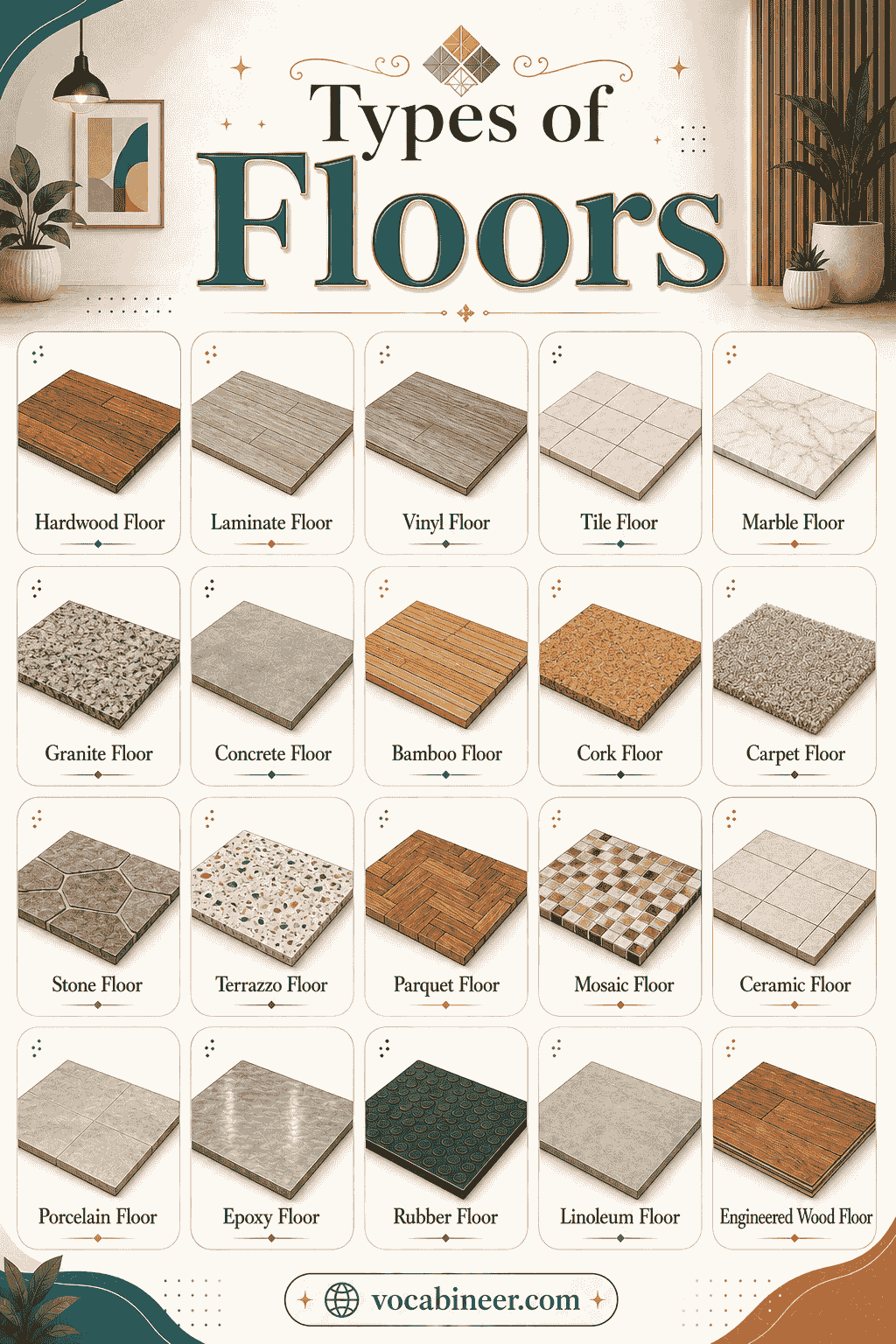
Common types of flooring include hardwood flooring, laminate flooring, vinyl flooring, tile flooring, carpet flooring, engineered wood flooring, stone flooring, bamboo flooring, cork flooring, concrete flooring, rubber flooring, and epoxy flooring. This guide explains flooring names, materials, uses, room ideas, comparisons, choosing tips, and picture ideas.
In This Page
What Is Flooring?
Flooring is the finished surface that covers the floor of a room or space. It can be made from wood, tile, stone, carpet, vinyl, rubber, concrete, or other materials.
Some flooring types are soft and warm, while others are hard, waterproof, durable, or easy to clean. The right flooring choice depends on the room, foot traffic, budget, comfort, moisture level, and interior style.
Common Types of Flooring
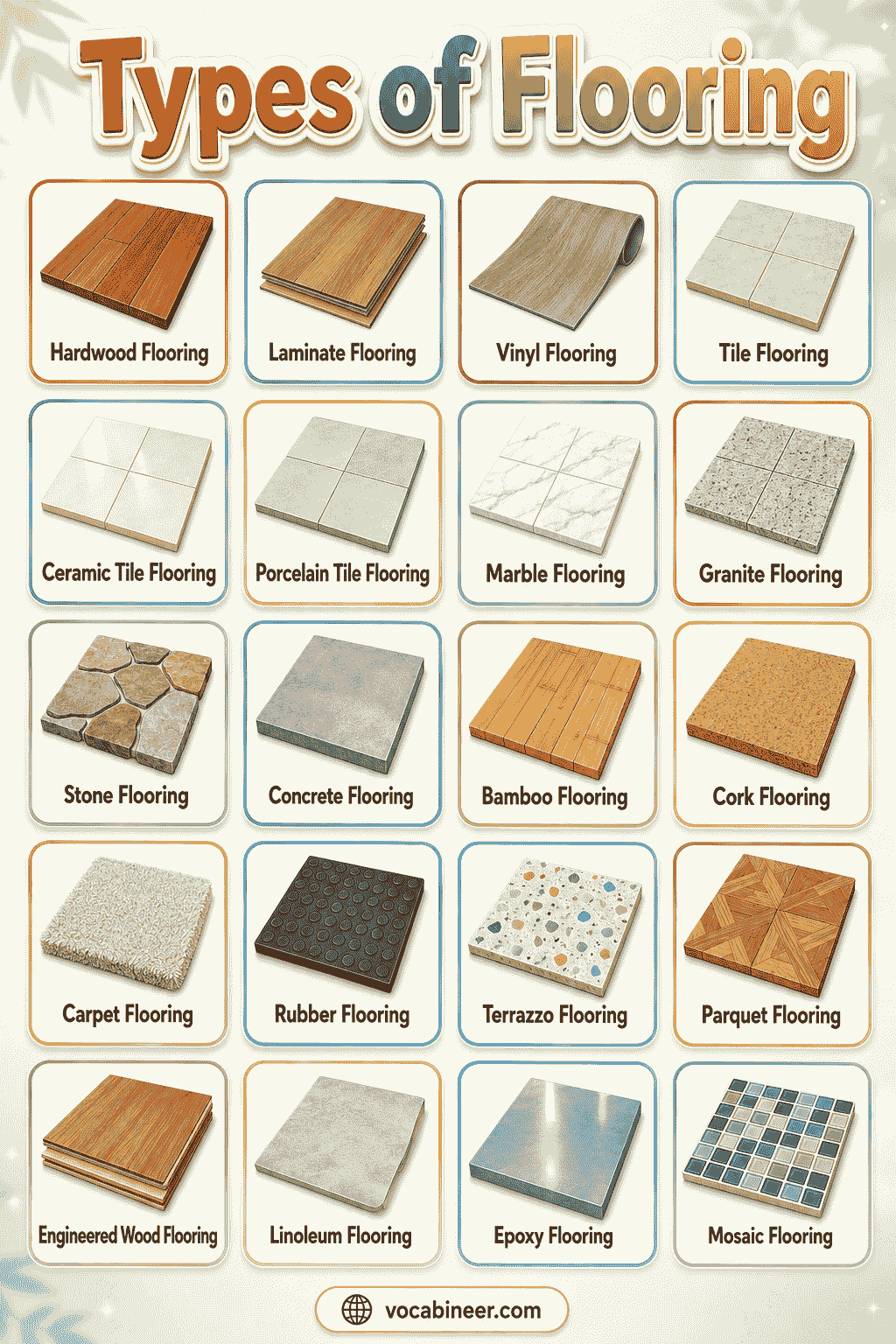
These are the most common types of flooring used in homes, offices, shops, and public spaces. They are useful for home improvement vocabulary, renovation planning, interior design, and building lessons.
- Hardwood Flooring — natural wood flooring known for its warm look, strength, and long-term value.
- Laminate Flooring — budget-friendly flooring with a wood-like surface and layered construction.
- Vinyl Flooring — flexible, water-resistant flooring often used in kitchens, bathrooms, and laundry rooms.
- Tile Flooring — hard flooring made from ceramic, porcelain, stone, or other tile materials.
- Carpet Flooring — soft flooring that feels warm, quiet, and comfortable underfoot.
- Engineered Wood Flooring — wood flooring made with a real wood top layer and stable base layers.
- Stone Flooring — natural stone flooring used for luxury interiors, entryways, patios, and outdoor areas.
- Bamboo Flooring — flooring made from bamboo, often used as a wood-like flooring option.
- Cork Flooring — soft, warm flooring made from cork material.
- Concrete Flooring — hard and durable flooring used in garages, basements, modern homes, and commercial spaces.
- Marble Flooring — luxury stone flooring with a polished and elegant look.
- Granite Flooring — strong natural stone flooring used for durability and a premium finish.
- Terrazzo Flooring — flooring made with chips of stone, glass, marble, or other materials set into a smooth surface.
- Linoleum Flooring — resilient flooring made from natural materials, often used as a practical floor covering.
- Rubber Flooring — durable and shock-absorbing flooring often used in gyms, schools, playrooms, and commercial areas.
- Epoxy Flooring — smooth coated flooring used in garages, warehouses, kitchens, and industrial spaces.
- Brick Flooring — durable flooring made from brick, often used in rustic, outdoor, or traditional spaces.
- Mosaic Flooring — decorative flooring made from small pieces of tile, stone, or glass.
- Parquet Flooring — wood flooring arranged in decorative geometric patterns.
- SPC Flooring — stone plastic composite flooring known for water resistance and stability.
Types of Flooring by Material
Flooring can be grouped by material because material affects durability, comfort, water resistance, cleaning, and appearance.
Wood Flooring
Wood flooring gives rooms a warm and natural look. It is commonly used in living rooms, bedrooms, hallways, and formal areas.
- Hardwood Flooring
- Engineered Wood Flooring
- Bamboo Flooring
- Parquet Flooring
Tile and Stone Flooring
Tile and stone flooring are hard, durable, and often water-resistant. These floors are common in kitchens, bathrooms, entryways, patios, and luxury interiors.
- Ceramic Tile Flooring
- Porcelain Tile Flooring
- Marble Flooring
- Granite Flooring
- Slate Flooring
- Terrazzo Flooring
Synthetic and Resilient Flooring
Synthetic and resilient floors are practical choices for moisture, easy cleaning, and budget-friendly installation.
- Vinyl Flooring
- Laminate Flooring
- Linoleum Flooring
- Rubber Flooring
- SPC Flooring
- Epoxy Flooring
Soft Flooring
Soft flooring adds comfort, warmth, and noise reduction. It is often used in bedrooms, family rooms, nurseries, playrooms, and fitness areas.
- Carpet Flooring
- Carpet Tile Flooring
- Foam Flooring
Types of Flooring for Different Rooms
Different rooms need different flooring because each space has different comfort, moisture, cleaning, and traffic needs.
Flooring for Living Rooms
Living room flooring should look stylish, feel comfortable, and handle regular foot traffic.
- Hardwood Flooring
- Laminate Flooring
- Vinyl Flooring
- Engineered Wood Flooring
- Tile Flooring
Flooring for Kitchens
Kitchen flooring should resist spills, stains, moisture, and frequent cleaning.
- Porcelain Tile Flooring
- Vinyl Flooring
- SPC Flooring
- Ceramic Tile Flooring
- Stone Flooring
Flooring for Bathrooms
Bathroom flooring should handle water, humidity, and slippery surfaces.
- Porcelain Tile Flooring
- Ceramic Tile Flooring
- Vinyl Flooring
- SPC Flooring
- Stone Flooring
Flooring for Bedrooms
Bedroom flooring should feel warm, quiet, and comfortable underfoot.
- Carpet Flooring
- Hardwood Flooring
- Laminate Flooring
- Vinyl Flooring
- Engineered Wood Flooring
Flooring for Outdoor Areas
Outdoor flooring should be durable, weather-resistant, and easy to clean.
- Stone Flooring
- Concrete Flooring
- Brick Flooring
- Outdoor Tile Flooring
- Rubber Flooring
Types of Flooring by Use
Flooring can also be grouped by use. Some floors are better for homes, while others work better for commercial spaces, wet areas, or heavy traffic.
Residential Flooring
Residential flooring is used in homes, apartments, bedrooms, living rooms, kitchens, and family spaces.
- Hardwood Flooring
- Laminate Flooring
- Vinyl Flooring
- Carpet Flooring
- Tile Flooring
Commercial Flooring
Commercial flooring should handle heavy use, frequent cleaning, and high foot traffic.
- Vinyl Flooring
- Rubber Flooring
- Concrete Flooring
- Epoxy Flooring
- Carpet Tile Flooring
Waterproof Flooring
Waterproof flooring is useful for spaces where water, spills, or humidity are common.
- Vinyl Flooring
- SPC Flooring
- Porcelain Tile Flooring
- Ceramic Tile Flooring
- Epoxy Flooring
Durable Flooring
Durable flooring is a strong choice for busy areas, public spaces, garages, entryways, and commercial buildings.
- Concrete Flooring
- Stone Flooring
- Porcelain Tile Flooring
- Rubber Flooring
- Epoxy Flooring
Types of Flooring and Their Uses
| Type of Flooring | Main Use |
|---|---|
| Hardwood flooring | Living rooms, bedrooms, formal areas, and long-term home value |
| Laminate flooring | Budget-friendly homes, bedrooms, living rooms, and easy installation |
| Vinyl flooring | Kitchens, bathrooms, laundry rooms, and waterproof areas |
| Tile flooring | Bathrooms, kitchens, entryways, and high-moisture areas |
| Carpet flooring | Bedrooms, family rooms, nurseries, and soft comfort |
| Engineered wood flooring | Living rooms, bedrooms, and areas needing wood look with better stability |
| Stone flooring | Outdoor areas, entryways, patios, and luxury interiors |
| Concrete flooring | Garages, basements, commercial spaces, and modern interiors |
| Rubber flooring | Gyms, playrooms, schools, and high-impact areas |
| Epoxy flooring | Garages, warehouses, kitchens, and industrial spaces |
Difference Between Popular Flooring Types
| Flooring Type | Look and Feel | Durability | Best For |
|---|---|---|---|
| Hardwood flooring | Natural wood, warm, premium | High | Living rooms and bedrooms |
| Laminate flooring | Wood-like surface, budget-friendly | Medium to high | Affordable home flooring |
| Vinyl flooring | Flexible, smooth, waterproof options | High | Kitchens and bathrooms |
| Tile flooring | Hard, cool, water-resistant | High | Bathrooms and kitchens |
| Carpet flooring | Soft, warm, quiet | Medium | Bedrooms and family rooms |
| Concrete flooring | Hard, modern, industrial | Very high | Garages and commercial spaces |
How to Choose the Right Type of Flooring
Choosing the right type of flooring depends on room use, moisture level, budget, comfort, durability, and style. Kitchens and bathrooms usually need waterproof options such as vinyl, SPC, ceramic tile, or porcelain tile. Bedrooms feel warmer with carpet, hardwood, laminate, or engineered wood. High-traffic areas work better with tile, vinyl, concrete, rubber, or stone flooring because these materials can handle more wear. A good flooring choice should match the room’s function, cleaning needs, and interior style.
Tips for Choosing Flooring
- Check room moisture — use waterproof flooring in bathrooms, kitchens, and laundry areas.
- Think about foot traffic — choose durable flooring for busy rooms, hallways, and entryways.
- Match flooring to comfort — carpet feels soft, while tile and concrete feel harder underfoot.
- Consider cleaning needs — vinyl, tile, laminate, and concrete are usually easier to clean.
- Choose by budget — laminate and vinyl are often more affordable than hardwood or natural stone.
- Look at long-term durability — hardwood, tile, stone, concrete, and epoxy can last longer with proper care.
- Check maintenance needs — some floors need sealing, polishing, or special cleaning.
Types of Flooring Chart with Pictures
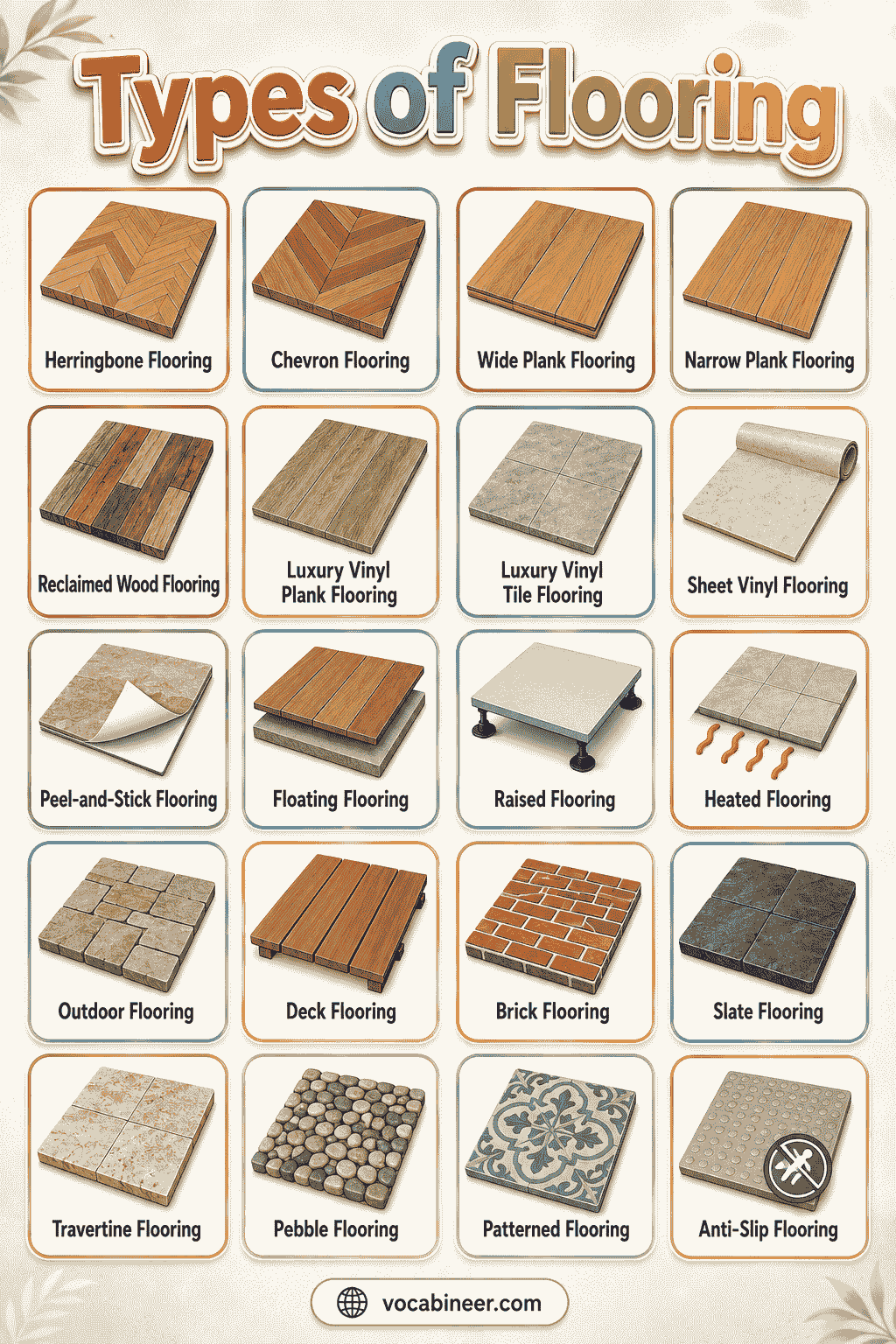
A flooring chart helps learners compare flooring groups quickly.
| Flooring Group | Details |
|---|---|
| Wood flooring | Best for: warm and natural interiors Examples: hardwood flooring, engineered wood flooring, bamboo flooring |
| Tile flooring | Best for: kitchens, bathrooms, and easy cleaning Examples: ceramic tile, porcelain tile, mosaic tile |
| Soft flooring | Best for: comfort, warmth, and quiet rooms Examples: carpet flooring, carpet tiles, foam flooring |
| Waterproof flooring | Best for: bathrooms, kitchens, and laundry roomsExamples: vinyl flooring, SPC flooring, porcelain tile |
| Outdoor flooring | Best for: patios, walkways, and open areas Examples: stone flooring, concrete flooring, brick flooring |
| Commercial flooring | Best for: heavy use and high-traffic spaces Examples: rubber flooring, epoxy flooring, concrete flooring |
FAQ
The most common types of flooring include hardwood flooring, laminate flooring, vinyl flooring, tile flooring, carpet flooring, engineered wood flooring, stone flooring, concrete flooring, and rubber flooring.
Porcelain tile, ceramic tile, vinyl flooring, SPC flooring, and epoxy flooring are good for bathrooms because they handle moisture better than many wood or carpet options.
Vinyl flooring, porcelain tile, ceramic tile, SPC flooring, and stone flooring are popular for kitchens because they are durable, easy to clean, and moisture-resistant.
Carpet flooring is usually the most comfortable because it feels soft, warm, and quiet underfoot. Cork flooring and some vinyl flooring can also feel comfortable.
Concrete flooring, porcelain tile, natural stone, epoxy flooring, and rubber flooring are some of the most durable flooring choices for heavy use.
Read More
- Types of Carpets
- Bedroom Decor Items
- Crockery Items Names
- Types of Drinking Glasses
- Living Room Items Names