Shades of blue are different versions of the color blue. Some blue shades are light and soft, while others are dark, deep, bright, grayish, greenish, or purple-toned.
Blue is one of the most popular colors in design, fashion, branding, home decor, art, and nature. Common shades of blue include sky blue, navy blue, royal blue, baby blue, teal, turquoise, cyan, denim blue, sapphire blue, and midnight blue.
In This Page
What Are Shades of Blue?
Shades of blue are created when blue is mixed with white, black, gray, green, purple, or other colors.
For example:
- Blue mixed with white creates lighter blue shades.
- Blue mixed with black creates darker blue shades.
- Blue mixed with gray creates muted blue shades.
- Blue mixed with green creates teal and turquoise shades.
- Blue mixed with purple creates violet-blue or indigo-like shades.
Popular Shades of Blue
Some blue shades are more common because they are used often in clothing, websites, logos, paintings, rooms, and everyday objects.
Popular shades of blue include:
- Sky blue — a light blue shade inspired by the daytime sky
- Baby blue — a soft pale blue often used in children’s designs
- Royal blue — a bright, rich blue used in fashion and branding
- Navy blue — a dark blue shade used in uniforms, suits, and logos
- Teal — a blue-green shade used in modern design and decor
- Turquoise — a bright blue-green shade inspired by the gemstone
- Cyan — a bright blue shade used in digital and print design
- Denim blue — a casual blue shade inspired by denim fabric
- Sapphire blue — a jewel-like deep blue shade
- Midnight blue — a very dark blue that looks close to black
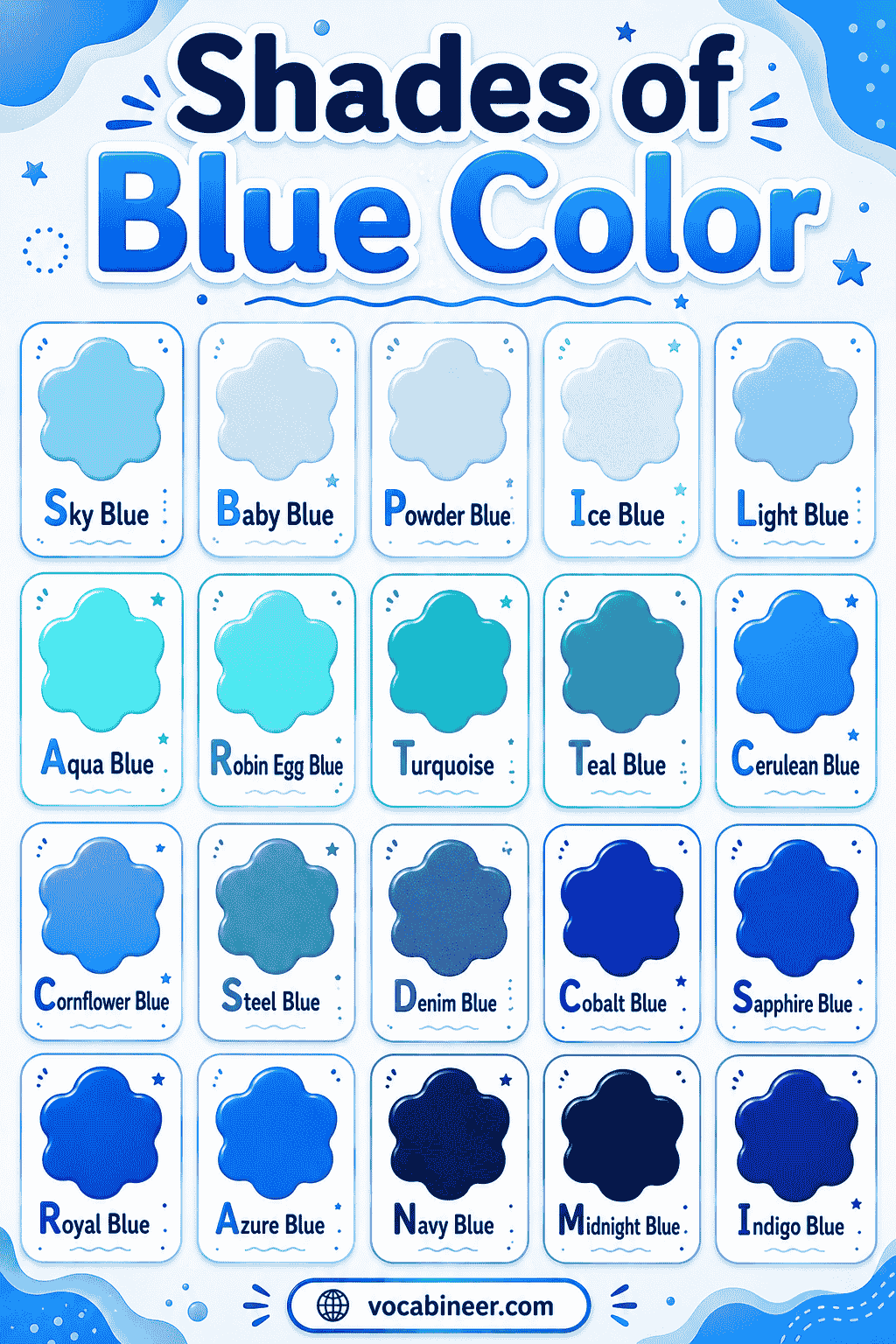
Blue Shades by Color Family
Blue shades can be grouped into color families. This makes it easier to understand how each shade looks and where it is commonly used.
Light Blue Shades
Light blue shades feel soft, clean, and peaceful.
Examples include:
- Baby blue
- Sky blue
- Powder blue
- Ice blue
- Alice blue
- Pale blue
Dark Blue Shades
Dark blue shades feel strong, serious, elegant, and professional.
Examples include:
- Navy blue
- Midnight blue
- Oxford blue
- Prussian blue
- Dark blue
- Deep blue
Bright Blue Shades
Bright blue shades are bold, clear, and eye-catching.
Examples include:
- Royal blue
- Electric blue
- Azure
- Cobalt blue
- Cerulean blue
- Dodger blue
Green-Blue Shades
Green-blue shades sit between blue and green. They often feel fresh, tropical, and modern.
Examples include:
- Teal
- Turquoise
- Aqua
- Cyan
- Blue-green
- Aquamarine
Gray-Blue Shades
Gray-blue shades are muted and calm. They are common in home decor, fashion, and minimalist design.
Examples include:
- Steel blue
- Slate blue
- Dusty blue
- Cadet blue
- Blue gray
- Misty blue
Shades of Blue Chart
| Shade of Blue | Color Family | Common Use |
|---|---|---|
| Sky Blue | Light blue | Kids design, sky themes, soft backgrounds |
| Baby Blue | Light blue | Baby products, soft decor, gentle graphics |
| Powder Blue | Light blue | Clothing, invitations, calm interiors |
| Royal Blue | Bright blue | Fashion, sports, branding |
| Cobalt Blue | Bright blue | Art, ceramics, bold design |
| Navy Blue | Dark blue | Business, uniforms, suits, logos |
| Midnight Blue | Dark blue | Elegant designs, formal wear, luxury branding |
| Teal | Green-blue | Modern decor, websites, branding |
| Turquoise | Green-blue | Jewelry, summer themes, tropical design |
| Steel Blue | Gray-blue | Interiors, technology, muted palettes |
| Denim Blue | Medium blue | Clothing, casual design, lifestyle branding |
| Sapphire Blue | Deep blue | Jewelry, luxury design, elegant fashion |
Light and Dark Shades of Blue
Light and dark blue shades create different moods. Softer blues often feel calm, fresh, and peaceful, while deeper blues can look strong, elegant, and professional.
| Type | Examples | Feeling |
|---|---|---|
| Light Blue Shades | Baby blue, sky blue, powder blue, ice blue | Soft, calm, fresh |
| Medium Blue Shades | Denim blue, azure, cerulean blue | Balanced, clear, natural |
| Dark Blue Shades | Navy blue, midnight blue, Prussian blue | Serious, elegant, strong |
Light blue shades work well for:
- baby products
- classroom designs
- soft backgrounds
- bedroom walls
- calm websites
Dark blue shades work well for:
- business branding
- formal clothing
- luxury designs
- office interiors
- professional websites
Modern and Aesthetic Blue Shades
Modern and aesthetic blue shades are often used in Pinterest-style designs, social media graphics, room decor, wallpapers, and digital art.
Popular aesthetic blue shades include:
- Ice blue for a clean and soft look
- Dusty blue for muted and elegant designs
- Powder blue for gentle and dreamy visuals
- Sky blue for fresh and open designs
- Slate blue for calm modern interiors
- Teal blue for stylish and creative themes
- Midnight blue for dark aesthetic designs
- Sapphire blue for rich and premium visuals
Aesthetic blue shades are common in:
- wallpapers
- Instagram graphics
- bedroom decor
- stationery
- website backgrounds
- digital illustrations
- fashion mood boards
Shades of Blue with Hex Codes
Hex codes help designers, developers, and artists use exact blue shades in websites, apps, graphics, and branding.
| Shade of Blue | Hex Code |
|---|---|
| Baby Blue | #89CFF0 |
| Sky Blue | #87CEEB |
| Powder Blue | #B0E0E6 |
| Ice Blue | #D6F6FF |
| Azure | #007FFF |
| Royal Blue | #4169E1 |
| Cobalt Blue | #0047AB |
| Navy Blue | #000080 |
| Midnight Blue | #191970 |
| Teal | #008080 |
| Turquoise | #40E0D0 |
| Cyan | #00FFFF |
| Steel Blue | #4682B4 |
| Denim Blue | #1560BD |
| Sapphire Blue | #0F52BA |
Blue Shade Names with Examples
Blue shade names become easier to understand when they are connected with real objects, materials, and places.
- Sky blue looks like a clear daytime sky.
- Navy blue looks like a dark military uniform or formal suit.
- Royal blue looks bright, rich, and bold.
- Baby blue looks soft, pale, and gentle.
- Turquoise looks like tropical water or turquoise stone.
- Teal looks like a deep mix of blue and green.
- Denim blue looks like classic blue jeans.
- Sapphire blue looks like a blue gemstone.
- Steel blue looks like a muted blue-gray metal tone.
- Midnight blue looks like a dark night sky.
Shades of Blue in Nature and Everyday Life
Blue appears in nature, clothes, food, home decor, and daily objects.
Examples include:
- sky blue in the daytime sky
- deep blue in ocean water
- navy blue in uniforms and suits
- denim blue in jeans and jackets
- sapphire blue in gemstones
- turquoise in stones and tropical water
- blue-gray in storm clouds
- ice blue in glaciers and frozen water
- cobalt blue in ceramics and glass
- violet-blue in some flowers
Shades of Blue in Fashion, Home Decor, and Branding
Blue is popular in fashion because it can look casual, formal, soft, or bold.
In fashion, blue shades are used in:
- denim jeans
- navy suits
- sky blue shirts
- royal blue dresses
- teal accessories
- powder blue scarves
- sapphire evening wear
In home decor, blue shades are often used for:
- bedroom walls
- bathroom tiles
- living room accents
- kitchen cabinets
- curtains
- cushions
- rugs
- wall art
In branding, blue is used by many businesses because it can feel trustworthy, clean, calm, and professional.
Common branding uses include:
- bank logos
- technology brands
- healthcare designs
- education websites
- corporate materials
- product packaging
Blue Shades for Websites and UI Design
Blue is one of the most used colors in website and app design. It works well because it feels clean, familiar, and easy to read when paired with the right background.
Blue shades can be used for:
- buttons
- links
- headers
- icons
- dashboards
- app screens
- landing pages
- backgrounds
- charts and graphs
Useful blue choices for UI design include:
- Royal blue for strong buttons and call-to-action areas
- Sky blue for light backgrounds and friendly interfaces
- Navy blue for headers, footers, and professional layouts
- Teal for modern health, wellness, and tech designs
- Cyan for bright digital accents
- Steel blue for muted dashboards and business tools
Blue Color Psychology and Meaning
Blue is often connected with calmness, trust, peace, and stability. Different blue shades can create different feelings.
| Blue Shade Type | Common Feeling |
|---|---|
| Light blue | Peaceful, soft, fresh |
| Bright blue | Energetic, clear, confident |
| Dark blue | Serious, professional, reliable |
| Gray-blue | Calm, muted, balanced |
| Green-blue | Fresh, creative, natural |
| Jewel blue | Rich, elegant, premium |
Common meanings of blue include:
- calmness
- trust
- loyalty
- peace
- confidence
- intelligence
- cleanliness
- professionalism
- freshness
Blue Color Combinations and Palettes
Blue works well with many other colors. The best combination depends on the mood you want to create.
Popular blue color combinations include:
- Blue + white for a clean and simple look
- Blue + gray for a modern and professional palette
- Blue + yellow for a bright and cheerful contrast
- Blue + green for a natural and fresh style
- Blue + gold for an elegant and premium look
- Blue + pink for a soft and playful design
- Blue + orange for a bold complementary contrast
- Blue + beige for calm home decor
- Navy + cream for classic branding and interiors
- Teal + coral for a trendy tropical palette
Warm Blue vs Cool Blue Shades
Most blue shades are cool colors, but some blues feel warmer when they have green, purple, or muted undertones.
| Type | Examples | Look |
|---|---|---|
| Cool Blue Shades | Ice blue, sky blue, cyan, powder blue | Fresh, clean, airy |
| Warm Blue Shades | Teal, turquoise, periwinkle, slate blue | Softer, richer, slightly warmer |
| Neutral Blue Shades | Denim blue, steel blue, navy blue | Balanced, practical, versatile |
Cool blue shades are common in:
- winter designs
- clean websites
- water themes
- healthcare visuals
- soft backgrounds
Warmer blue shades are common in:
- fashion palettes
- home decor
- creative branding
- beach themes
- modern interiors
Blue Shades vs Similar Colors
Some blue shades look similar, but they are not exactly the same.
| Colors Compared | Main Difference |
|---|---|
| Teal vs Turquoise | Teal is usually darker and greener; turquoise is brighter and lighter. |
| Navy vs Midnight Blue | Navy is dark blue; midnight blue is even darker and closer to black. |
| Cyan vs Aqua | Cyan is a bright digital blue; aqua is often softer and more water-like. |
| Sky Blue vs Baby Blue | Sky blue is clearer and brighter; baby blue is softer and paler. |
| Royal Blue vs Cobalt Blue | Royal blue is bright and rich; cobalt blue is deeper and slightly more intense. |
| Steel Blue vs Slate Blue | Steel blue has a stronger blue tone; slate blue looks more muted and grayish. |
Common Mistakes About Shades of Blue
Many people confuse blue shades because some names look very similar.
Common mistakes include:
- calling every dark blue shade navy blue
- confusing teal with turquoise
- using cyan and aqua as the same color
- thinking indigo is always a shade of blue only
- choosing hex codes without checking how they look on screen
- using too many bright blues in one design
- mixing cool blues with warm colors without balance
- using very light blue text on a white background
FAQs
The most popular shades of blue include navy blue, sky blue, royal blue, baby blue, teal, turquoise, cyan, denim blue, sapphire blue, and midnight blue. These shades are common in fashion, design, branding, websites, and home decor.
Midnight blue is one of the darkest common shades of blue. It is very deep and can look almost black in low light or dark designs.
Ice blue, Alice blue, baby blue, and powder blue are some of the lightest blue shades. These colors look soft, pale, and gentle.
Yes, teal is often considered a blue-green shade. It sits between blue and green and is commonly used in modern design, fashion, and decor.
Shades of blue often symbolize calmness, trust, peace, loyalty, confidence, and professionalism. Light blues feel soft and peaceful, while dark blues feel serious and reliable.
Summary
Shades of blue include light, dark, bright, muted, green-blue, and gray-blue colors. Popular blue shades include sky blue, navy blue, royal blue, baby blue, teal, turquoise, cyan, denim blue, sapphire blue, and midnight blue.
Blue shades are useful in fashion, branding, websites, home decor, art, nature learning, and digital design. Different blues can feel calm, professional, fresh, elegant, playful, or bold.
Read More
- Colours Names in English
- Gold Colored Things
- Primary Color Names
- Secondary Color Names
- Tertiary Colors Names
- Types of Dark Colors
- Bright Color Names