

Primary color names are the main color words used to explain how other colors are made. In basic art lessons, the primary colors are usually red, yellow, and blue.
These colors are important for kids, students, teachers, and beginner artists because they help explain color mixing. However, primary colors can change depending on the color system. Art often uses red, yellow, and blue, screens use red, green, and blue, and printing uses cyan, magenta, yellow, and black.
In This Page
What Are Primary Colors?
Primary colors are main colors that can be used to make many other colors. In simple school and art lessons, the primary colors are red, yellow, and blue.
These three colors are called traditional primary colors because they are often used in painting, drawing, classroom charts, and beginner color lessons.
Primary colors are useful because they help students understand how colors mix. For example, red and yellow can make orange, while blue and yellow can make green.
Primary Color Names for Kids
Kids usually learn three primary color names first:
- Red
- Yellow
- Blue
These colors are easy to understand because they appear in everyday objects.
| Primary Color | Easy Example |
|---|---|
| Red | Apple, rose, stop sign |
| Yellow | Sun, banana, lemon |
| Blue | Sky, sea, jeans |
A child can say red apple, yellow sun, or blue sky to practice these color names.
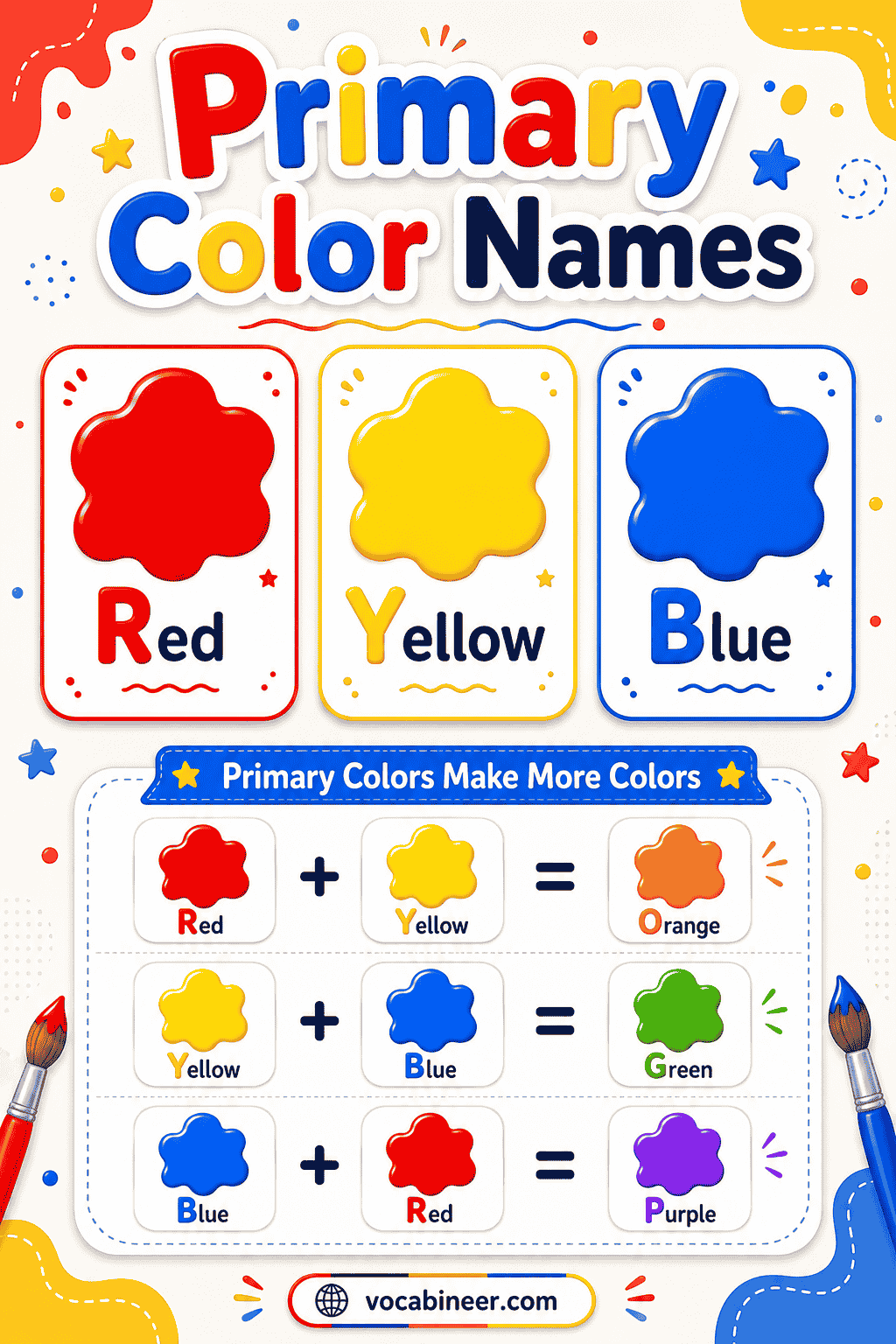
Red, Yellow, and Blue: Traditional Primary Colors
In traditional art lessons, the primary colors are red, yellow, and blue. This system is often called the RYB color model.
Traditional primary colors include:
- Red
Red is a strong and bright color often seen in apples, roses, hearts, and stop signs. - Yellow
Yellow is a bright and cheerful color linked with the sun, lemons, bananas, and flowers. - Blue
Blue is a cool and calm color often connected with the sky, sea, jeans, and water.
These colors are used in many beginner art lessons because they help students understand basic color mixing.
Primary Colors with Pictures and Examples
Primary color pictures help kids and beginners connect color names with real objects.
| Primary Color | Picture Example | Simple Sentence |
|---|---|---|
| Red | Apple | The apple is red. |
| Yellow | Sun | The sun is yellow. |
| Blue | Sky | The sky is blue. |
You can also use classroom objects, toys, clothes, crayons, fruits, and flashcards to teach these colors.
Primary Colors in Art and Painting
In art and painting, the traditional primary colors are red, yellow, and blue. Artists use them to mix many other colors.
Common art examples include:
- Red paint
- Yellow paint
- Blue paint
- Primary color wheels
- Color mixing charts
- Classroom painting activities
- Drawing and craft lessons
In a basic paint lesson, students may mix two primary colors to make a secondary color.
| Paint Mix | New Color |
|---|---|
| Red + Yellow | Orange |
| Yellow + Blue | Green |
| Blue + Red | Purple |
Primary Colors of Light: Red, Green, and Blue
Primary colors are different when we talk about light. Screens, phones, TVs, computers, and digital displays use red, green, and blue.
This system is called RGB.
RGB primary colors include:
- Red
- Green
- Blue
Digital screens mix light to create many colors. For example, red and green light can make yellow on a screen.
Primary Colors for Printing: Cyan, Magenta, Yellow, and Black
Printing uses a different color system. Printers usually use cyan, magenta, yellow, and black.
This system is called CMYK.
CMYK printing colors include:
- Cyan
- Magenta
- Yellow
- Black
Cyan, magenta, and yellow are the main printing colors. Black is added because it helps make text, shadows, and dark areas clearer in printed work.
RYB, RGB, and CMYK Primary Colors
Different color systems use different primary colors. This table shows the main difference.
| Color System | Primary Colors | Used For |
|---|---|---|
| RYB | Red, Yellow, Blue | Painting, school art, basic color mixing |
| RGB | Red, Green, Blue | Screens, phones, TVs, digital light |
| CMYK | Cyan, Magenta, Yellow, Black | Printing, ink, printed designs |
Primary Colors Mixing Chart
A primary colors mixing chart shows what happens when two traditional primary colors are mixed.
| Primary Colors Mixed | Result |
|---|---|
| Red + Yellow | Orange |
| Yellow + Blue | Green |
| Blue + Red | Purple |
These new colors are called secondary colors. Orange, green, and purple are made by mixing two primary colors in basic art lessons.
Primary Colors vs Secondary Colors
Primary and secondary colors are closely related, but they are not the same.
| Feature | Primary Colors | Secondary Colors |
|---|---|---|
| Meaning | Main colors | Colors made by mixing primary colors |
| Examples | Red, yellow, blue | Orange, green, purple |
| Use | Starting colors for mixing | Mixed colors in basic art |
| Learning level | First color group | Next color group |
In simple art lessons, primary colors come first. Secondary colors are made after mixing them.
Primary Colors vs Basic Colors
Primary colors and basic colors are different ideas. In color mixing, primary colors are the main starting colors. Basic colors, however, are common color names that beginners learn for everyday use.
| Feature | Primary Colors | Basic Colors |
|---|---|---|
| Meaning | Main mixing colors | Common everyday colors |
| Examples | Red, yellow, blue | Red, blue, green, yellow, black, white |
| Purpose | Color mixing | Basic vocabulary |
| Best for | Art lessons | Kids, students, ESL learners |
Red, yellow, and blue are both primary colors and basic color names. Black, white, pink, brown, and gray are basic colors, but they are not usually called primary colors in beginner art lessons.
Primary Color Names in Example Sentences
Example sentences help students use primary color names in English.
- The apple is red.
- The sun is yellow.
- The sky is blue.
- I used red paint for the flower.
- She colored the star yellow.
- He drew a blue boat.
- Red and yellow can make orange.
- Yellow and blue can make green.
- Blue and red can make purple.
- We learned primary colors in art class.
Primary Colors Activities for Kids
Primary color activities help kids learn through pictures, objects, and hands-on practice.
Useful activities include:
- Primary color flashcards
- Red, yellow, and blue object hunt
- Color sorting games
- Primary color painting
- Color wheel drawing
- Mixing paint to make new colors
- Matching colors with objects
- Primary color worksheets
- Classroom poster practice
- Crayon and marker activities
Common Mistakes About Primary Colors
Some learners get confused because primary colors are not the same in every color system.
| Mistake | Correct Idea |
|---|---|
| Primary colors are always red, yellow, and blue. | That is true for basic art, but screens use red, green, and blue. |
| Green is never a primary color. | Green is a primary color in the RGB light system. |
| Black is one of the three main primary colors. | Black is used in CMYK printing, but CMY are the main printing colors. |
| Primary colors and basic colors are the same. | Primary colors are for mixing; basic colors are common vocabulary words. |
| Red, yellow, and blue work the same in paint, light, and printing. | Different systems use different primary colors. |
FAQs
The traditional primary color names are red, yellow, and blue. These are the primary colors most kids learn in basic art lessons.
Yes, in traditional art and school lessons, the primary colors are red, yellow, and blue. This is called the RYB color model.
The primary colors of light are red, green, and blue. This system is called RGB and is used for screens, TVs, phones, and digital displays.
The primary colors used in printing are cyan, magenta, yellow, and black. This system is called CMYK.
In basic art, red and yellow make orange, yellow and blue make green, and blue and red make purple.
Summary
Primary color names are the main color names used to understand color mixing. In traditional art lessons, the primary colors are red, yellow, and blue. These colors help make secondary colors like orange, green, and purple. In light and screens, the primary colors are red, green, and blue. In printing, the main colors are cyan, magenta, yellow, and black. Learning these systems helps kids, students, artists, and designers understand colors more clearly.
Read More
- Colours Names in English
- Gold Colored Things
- Weird Color Names
- Types of Cool Colors
- Types of Dark Colors
- Pastel Colors Names
- Bright Color Names