

Shades of white are different variations of the color white. Some white shades are bright and crisp, while others are warm, creamy, soft, cool, or slightly tinted with gray, yellow, beige, or blue undertones.
White is often associated with cleanliness, simplicity, peace, purity, openness, and freshness. Popular shades of white include ivory, cream, snow white, pearl white, eggshell, alabaster, antique white, off-white, linen white, vanilla white, bone white, ghost white, seashell white, floral white, milk white, and cotton white.
In This Page
What Are Shades of White?
Shades of white are created by adding very small amounts of other colors to pure white. These undertones can make white appear warmer, cooler, softer, or more decorative.
For example:
- White mixed with yellow creates warm white shades.
- White mixed with beige creates creamy white tones.
- White mixed with gray creates soft neutral whites.
- White mixed with blue creates cool white shades.
- White mixed with pink creates delicate decorative whites.
- White mixed with brown creates natural off-white tones.
Different white shades can feel elegant, cozy, modern, luxurious, minimal, welcoming, or airy.
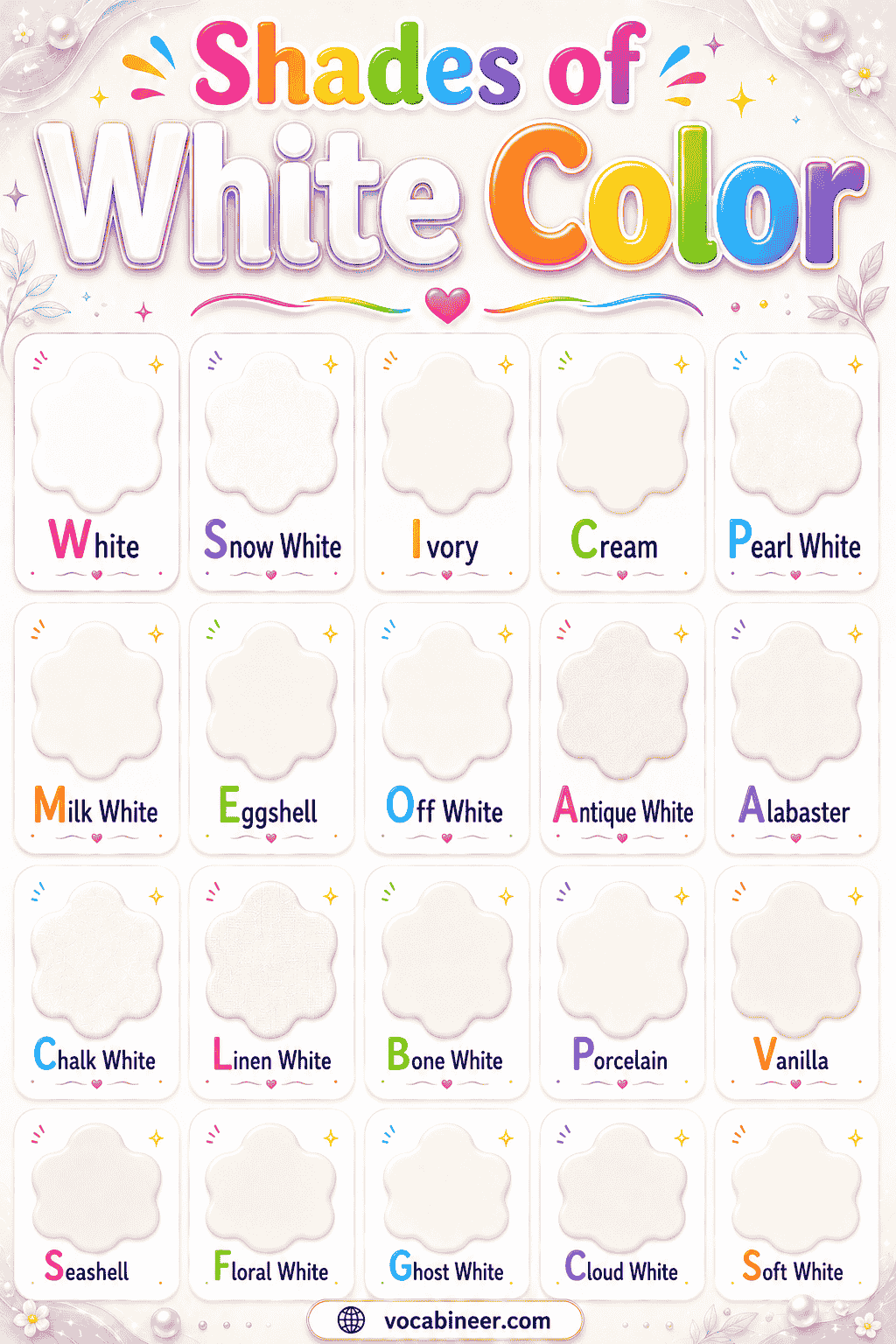
Popular Shades of White
Many white shades are popular because they work well in home decor, architecture, branding, websites, fashion, weddings, and interior design.
Popular shades of white include:
- Ivory — a warm white with creamy undertones
- Cream — a soft yellow-white shade
- Snow white — a bright crisp white
- Pearl white — a soft white with a subtle sheen
- Eggshell — a muted warm white
- Alabaster — a soft elegant off-white
- Antique white — a vintage-inspired warm white
- Off-white — a white with subtle undertones
- Linen white — a natural fabric-inspired shade
- Vanilla white — a warm creamy white
- Bone white — a soft beige-white color
- Ghost white — a cool pale white
- Seashell white — a gentle pink-white tone
- Floral white — a warm decorative white
- Milk white — a soft natural white
- Cotton white — a clean bright white
White Shades by Color Family
White shades can be grouped into color families based on their undertones. Some white shades belong to multiple families because they contain several subtle color influences.
Pure White Shades
Pure white shades feel bright, crisp, and clean.
Examples include:
- Snow white
- Cotton white
- Bright white
- Pure white
- Ultra white
- Arctic white
Warm White Shades
Warm white shades feel cozy, inviting, and comfortable.
Examples include:
- Ivory
- Cream
- Vanilla white
- Antique white
- Eggshell
- Alabaster
Cool White Shades
Cool white shades feel fresh, modern, and clean.
Examples include:
- Ghost white
- Ice white
- Frost white
- Blue-white
- Cool white
- Polar white
Off-White Shades
Off-white shades contain subtle undertones that soften bright white.
Examples include:
- Off-white
- Linen white
- Bone white
- Antique white
- Alabaster
- Parchment white
Decorative White Shades
Decorative whites are often used in luxury interiors, weddings, and premium designs.
Examples include:
- Pearl white
- Floral white
- Seashell white
- Champagne white
- Opal white
- Moon white
Shades of White Chart
| Shade of White | Color Family | Common Use |
|---|---|---|
| Ivory | Warm white | Decor, weddings, fashion |
| Cream | Warm white | Interiors, paint, textiles |
| Snow White | Pure white | Modern design, branding |
| Pearl White | Decorative white | Luxury products, weddings |
| Eggshell | Warm white | Wall paint, interiors |
| Alabaster | Off-white | Home decor, architecture |
| Antique White | Warm white | Traditional interiors |
| Off-White | Off-white | Walls, furniture, websites |
| Linen White | Off-white | Home decor, paint |
| Vanilla White | Warm white | Cozy interiors |
| Bone White | Off-white | Neutral decor |
| Ghost White | Cool white | Websites, modern design |
| Seashell White | Decorative white | Weddings, decor |
| Floral White | Decorative white | Elegant interiors |
| Cotton White | Pure white | Minimalist spaces |
Warm White vs Cool White Shades
Warm and cool white shades create very different moods. Warm whites feel inviting and comfortable, while cool whites often feel bright, crisp, and contemporary.
| Type | Examples | Feeling |
|---|---|---|
| Warm White Shades | Ivory, cream, eggshell, vanilla white | Cozy, welcoming, soft |
| Neutral White Shades | Alabaster, linen white, off-white | Balanced, versatile |
| Cool White Shades | Ghost white, ice white, frost white | Clean, fresh, modern |
Warm white shades work well for:
- living rooms
- bedrooms
- dining rooms
- traditional interiors
- rustic decor
Cool white shades work well for:
- kitchens
- bathrooms
- offices
- minimalist spaces
- modern websites
Ivory, Cream, and Off-White Shades
Ivory, cream, and off-white shades are among the most popular white tones because they feel softer and more comfortable than bright white.
Common soft white shades include:
- Ivory — warm and elegant
- Cream — soft and inviting
- Off-white — versatile and neutral
- Eggshell — gentle and understated
- Alabaster — sophisticated and timeless
- Linen white — natural and relaxed
- Bone white — subtle and earthy
- Vanilla white — warm and comforting
These shades are common in:
- wall paint
- furniture
- wedding decor
- textiles
- bedrooms
- living rooms
- luxury packaging
- neutral interiors
Beautiful and Trendy Shades of White
Beautiful white shades remain popular because they create bright, timeless, and elegant spaces.
Trendy white shades include:
- Alabaster for modern homes
- Ivory for luxury interiors
- Linen white for natural decor
- Ghost white for websites and UI design
- Cream for cozy rooms
- Pearl white for weddings
- Bone white for neutral palettes
- Antique white for vintage-inspired spaces
- Cotton white for minimal interiors
- Seashell white for elegant decor themes
Shades of White with Hex Codes
Hex codes help designers, artists, and developers use exact white shades in websites, branding, graphics, and digital projects.
| Shade of White | Hex Code |
|---|---|
| White | #FFFFFF |
| Ivory | #FFFFF0 |
| Cream | #FFFDD0 |
| Snow White | #FFFAFA |
| Pearl White | #F8F6F0 |
| Eggshell | #F0EAD6 |
| Alabaster | #FAFAF5 |
| Antique White | #FAEBD7 |
| Off-White | #F8F8F0 |
| Linen White | #FAF0E6 |
| Vanilla White | #F3E5AB |
| Bone White | #E3DAC9 |
| Ghost White | #F8F8FF |
| Seashell White | #FFF5EE |
| Floral White | #FFFAF0 |
| Cotton White | #FFFEFA |
White Shade Names with Examples
White shade names become easier to understand when linked with familiar materials, fabrics, objects, and natural elements.
- Ivory is inspired by ivory-colored decorative materials.
- Cream resembles fresh cream and dairy products.
- Snow white reflects fresh snow and bright winter scenes.
- Pearl white resembles natural pearls and luxury finishes.
- Eggshell resembles the color of eggshell surfaces.
- Alabaster reflects fine stone used in sculpture and architecture.
- Linen white is inspired by natural linen fabrics.
- Ghost white resembles pale mist and cool light.
- Seashell white reflects shells found on beaches.
- Bone white resembles natural bone and stone colors.
Shades of White in Nature and Everyday Life
White appears throughout nature and daily life.
Examples include:
- snow
- clouds
- pearls
- seashells
- cotton
- flowers
- marble
- milk
- feathers
- paper
- ceramic surfaces
- white sand
Specific white shades can also be seen in:
- Ivory in decorative materials and luxury interiors
- Cream in textiles and furniture
- Snow white in winter landscapes
- Pearl white in jewelry and automotive finishes
- Linen white in fabrics and wall paint
- Seashell white in beach-inspired decor
White Shades for Home Decor and Interior Design
White shades are widely used because they make spaces feel larger, brighter, and cleaner.
In home decor, white shades appear in:
- walls
- ceilings
- cabinets
- furniture
- bedding
- curtains
- flooring
- decorative accessories
Popular decor choices include:
- Alabaster for living rooms
- Cream for cozy bedrooms
- Linen white for natural interiors
- Pearl white for luxury spaces
- Off-white for modern homes
- Ivory for traditional decor
White Shades for Rooms and Interior Paint
White paint can dramatically influence the mood of a room. The right white depends on lighting, room size, furniture, and design style.
Room ideas include:
- Alabaster for living rooms
- Cream for bedrooms
- Snow white for kitchens
- Ghost white for modern offices
- Linen white for family rooms
- Pearl white for bathrooms
- Ivory for dining rooms
- Off-white for open-concept spaces
White paint works well on:
- walls
- ceilings
- trim
- cabinets
- doors
- furniture
- shelving
- decorative moldings
White Shades for Branding, Websites, and UI Design
White is widely used in branding because it feels clean, professional, and versatile.
White shades are common in:
- healthcare brands
- beauty companies
- technology brands
- luxury products
- minimalist websites
- wellness businesses
- fashion brands
- e-commerce stores
Useful white choices for websites and UI design include:
- Snow white for clean layouts
- Ghost white for soft backgrounds
- Off-white for comfortable reading
- Ivory for luxury branding
- Pearl white for premium designs
- Linen white for lifestyle brands
Rare and Historical White Shades
Some white shades have historical significance in art, architecture, design, and decorative materials.
Rare and historical white shades include:
- Navajo white — a warm cream-white shade
- Parchment white — inspired by traditional parchment paper
- Magnolia white — a soft creamy white
- Chalk white — inspired by natural chalk
- Rice white — a pale warm white
- Oyster white — a subtle gray-white shade
- Moon white — a decorative pale white
- Porcelain white — inspired by fine ceramics
White Color Psychology and Meaning
White is often associated with purity, cleanliness, simplicity, peace, openness, and clarity.
| White Shade Type | Common Feeling |
|---|---|
| Pure white | Clean, bright, fresh |
| Warm white | Cozy, welcoming, comfortable |
| Cool white | Crisp, modern, professional |
| Off-white | Soft, balanced, elegant |
| Decorative white | Luxurious, refined, graceful |
Common meanings of white include:
- purity
- peace
- cleanliness
- simplicity
- honesty
- openness
- clarity
- freshness
- balance
- renewal
White Color Combinations and Palettes
White works well with almost every color because it provides contrast and balance.
Popular white color combinations include:
- White + black for timeless contrast
- White + gray for modern interiors
- White + beige for warm neutral palettes
- White + navy blue for elegant design
- Ivory + gold for luxury styling
- Cream + brown for cozy interiors
- White + sage green for calm decor
- Pearl white + silver for sophisticated palettes
- Off-white + wood tones for natural spaces
- Linen white + olive green for earthy design
Bright White vs Soft White Shades
Bright white and soft white shades serve different purposes.
| Type | Examples | Look |
|---|---|---|
| Bright White Shades | Snow white, cotton white, pure white | Crisp, clean, modern |
| Soft White Shades | Ivory, cream, eggshell, alabaster | Warm, gentle, inviting |
| Neutral White Shades | Linen white, off-white, bone white | Balanced, versatile |
Bright white shades are common in:
- modern kitchens
- technology branding
- minimalist websites
- contemporary interiors
Soft white shades are common in:
- bedrooms
- living rooms
- traditional homes
- luxury decor
White Shades vs Similar Colors
Some white shades appear similar but have noticeable differences.
| Colors Compared | Main Difference |
|---|---|
| Ivory vs Cream | Ivory is slightly more neutral; cream is warmer and yellower. |
| Alabaster vs Off-White | Alabaster feels softer and more refined. |
| Snow White vs Cotton White | Snow white is brighter; cotton white feels slightly softer. |
| Pearl White vs Ivory | Pearl white has a subtle sheen; ivory is warmer. |
| Linen White vs Bone White | Linen white is lighter; bone white is earthier. |
| Ghost White vs Pure White | Ghost white has cool undertones; pure white is neutral. |
Common Mistakes About Shades of White
Many people assume all white shades look the same, but undertones can create noticeable differences.
Common mistakes include:
- treating every white as pure white
- choosing white paint without testing lighting
- confusing ivory and cream
- using cool whites in warm interiors without balance
- selecting white hex codes without checking screens
- ignoring undertones when matching furniture
- mixing multiple white shades without planning
- using bright white everywhere in a room
FAQs
Popular shades of white include ivory, cream, snow white, pearl white, eggshell, alabaster, antique white, off-white, linen white, vanilla white, bone white, and ghost white.
Pure white, snow white, cotton white, and bright white are among the brightest shades of white.
Cream, ivory, vanilla white, antique white, and eggshell are some of the warmest white shades.
Yes, ivory is a shade of white. It is a warm white color with creamy undertones and is commonly used in decor, fashion, and weddings.
White shades often symbolize purity, peace, cleanliness, simplicity, openness, and freshness.
Alabaster, cream, ivory, off-white, and linen white are among the most popular wall paint choices because they feel soft and comfortable in different lighting conditions.
Summary
Shades of white include pure white, warm white, cool white, off-white, and decorative white tones. Popular examples include ivory, cream, snow white, pearl white, eggshell, alabaster, antique white, linen white, ghost white, and seashell white.
White shades are widely used in home decor, interior design, branding, websites, architecture, weddings, and color palette creation because they create brightness, simplicity, elegance, and timeless appeal.
Read More
- Colours Names in English
- Shades of Brown Color
- Shades of Purple Color
- Shades of Black Color
- Shades of Green Color
- Shades of Orange Color
- Primary Color Names
- Secondary Color Names
- Tertiary Colors Names