

Shades of purple are different versions of the color purple. Some purple shades are soft and light, while others are dark, rich, blue-toned, pink-toned, muted, or jewel-like.
Purple is often connected with royalty, creativity, luxury, mystery, wisdom, imagination, and elegance. Popular shades of purple include lavender, lilac, violet, royal purple, plum, mauve, orchid, amethyst, grape purple, eggplant purple, periwinkle, thistle, mulberry, wisteria, and heliotrope.
In This Page
What Are Shades of Purple?
Shades of purple are created when purple is mixed with white, black, gray, blue, red, pink, or other colors.
For example:
- Purple mixed with white creates lighter purple shades.
- Purple mixed with black creates darker purple shades.
- Purple mixed with gray creates muted purple tones.
- Purple mixed with blue creates cool blue-purple shades.
- Purple mixed with pink creates soft pink-purple shades.
- Purple mixed with red creates warmer purple shades.
Different purple shades can feel elegant, dreamy, creative, royal, calm, romantic, mysterious, or luxurious.
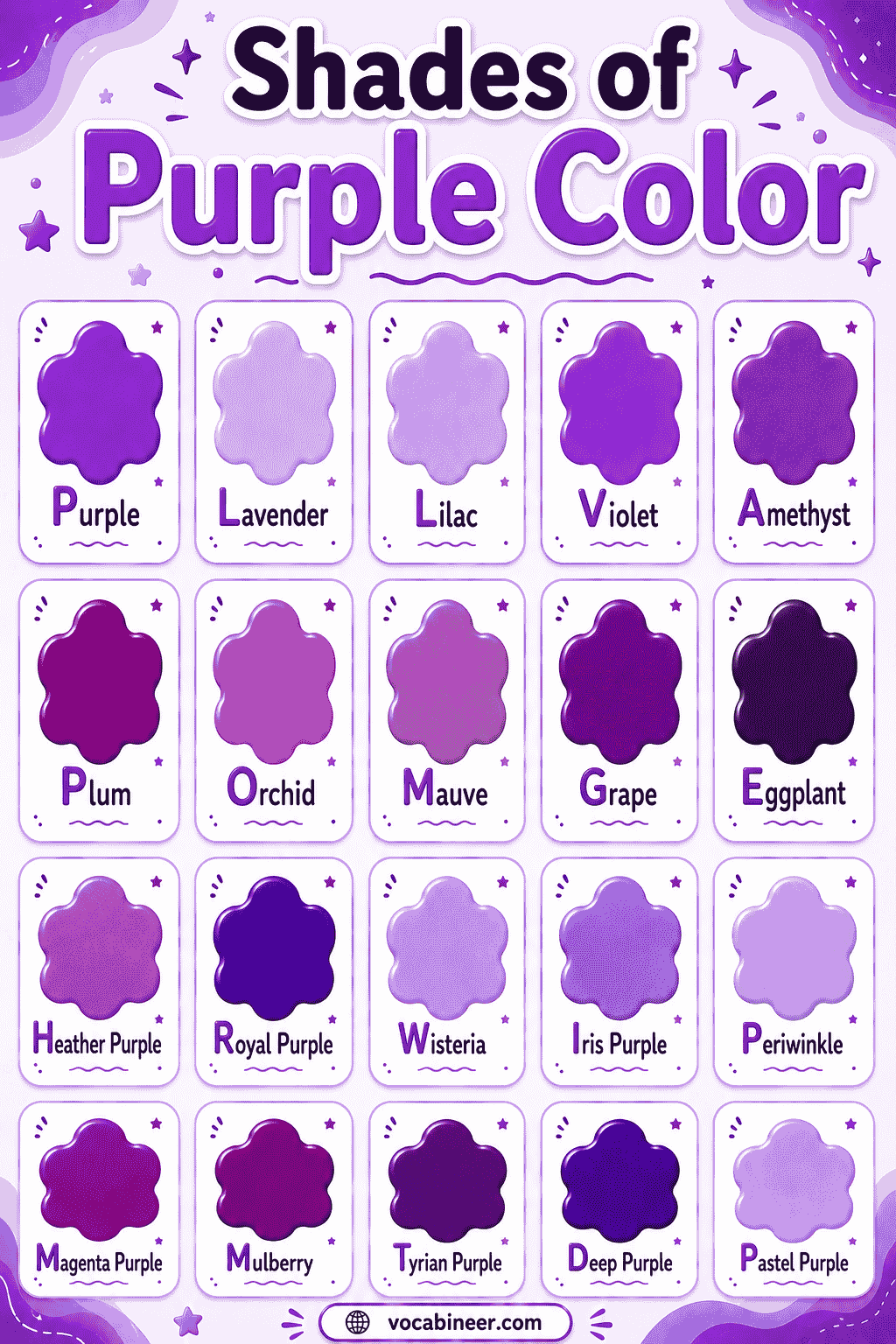
Popular Shades of Purple
Many purple shades are popular because they are widely used in fashion, beauty, home decor, branding, websites, weddings, and digital design.
Popular shades of purple include:
- Lavender — a soft light purple inspired by lavender flowers
- Lilac — a pale floral purple with a gentle look
- Violet — a rich purple-blue shade
- Royal purple — a deep purple linked with luxury and royalty
- Plum — a dark reddish-purple shade
- Mauve — a muted purple-pink tone
- Orchid — a bright flower-inspired purple
- Amethyst — a gemstone-inspired purple shade
- Grape purple — a rich fruit-like purple
- Eggplant purple — a very dark purple shade
- Periwinkle — a soft blue-purple color
- Thistle — a pale gray-purple shade
- Mulberry — a deep berry-purple tone
- Wisteria — a soft floral purple
- Heliotrope — a vivid purple-pink shade
Purple Shades by Color Family
Purple shades can be grouped into color families based on their undertones and depth. Some purple shades fit into more than one family because they contain blue, red, pink, or gray undertones.
Light Purple Shades
Light purple shades feel soft, gentle, and dreamy.
Examples include:
- Lavender
- Lilac
- Thistle
- Wisteria
- Pale purple
- Light mauve
Dark Purple Shades
Dark purple shades feel rich, dramatic, and elegant.
Examples include:
- Eggplant purple
- Plum
- Dark violet
- Deep purple
- Wine purple
- Midnight purple
Blue-Purple Shades
Blue-purple shades feel cool, calm, and creative.
Examples include:
- Violet
- Periwinkle
- Indigo purple
- Blue violet
- Iris purple
- Amethyst
Pink-Purple Shades
Pink-purple shades feel romantic, playful, and expressive.
Examples include:
- Mauve
- Orchid
- Heliotrope
- Magenta purple
- Fuchsia purple
- Mulberry
Royal Purple Shades
Royal purple shades feel bold, elegant, and luxurious.
Examples include:
- Royal purple
- Imperial purple
- Tyrian purple
- Byzantine purple
- Amethyst purple
- Deep purple
Shades of Purple Chart
| Shade of Purple | Color Family | Common Use |
|---|---|---|
| Lavender | Light purple | Weddings, decor, beauty |
| Lilac | Light purple | Floral designs, spring themes |
| Violet | Blue-purple | Art, fashion, creative branding |
| Royal Purple | Royal purple | Luxury design, formal fashion |
| Plum | Dark purple | Makeup, clothing, interiors |
| Mauve | Pink-purple | Decor, fashion, beauty |
| Orchid | Pink-purple | Floral designs, branding |
| Amethyst | Blue-purple | Jewelry, beauty, premium design |
| Grape Purple | Dark purple | Food branding, playful designs |
| Eggplant Purple | Dark purple | Fashion, interiors, luxury styling |
| Periwinkle | Blue-purple | Soft graphics, bedrooms, weddings |
| Thistle | Light purple | Gentle decor, soft palettes |
| Mulberry | Pink-purple | Fashion, lipstick, rich palettes |
| Wisteria | Light purple | Floral themes, wedding design |
| Heliotrope | Pink-purple | Creative graphics, bold designs |
Light and Dark Shades of Purple
Light and dark purple shades create different moods. Softer purples often feel peaceful, romantic, and gentle, while deeper purples can look royal, dramatic, and luxurious.
| Type | Examples | Feeling |
|---|---|---|
| Light Purple Shades | Lavender, lilac, thistle, wisteria | Soft, dreamy, calm |
| Bright Purple Shades | Orchid, heliotrope, violet | Creative, playful, expressive |
| Dark Purple Shades | Plum, eggplant purple, deep purple | Rich, elegant, dramatic |
Light purple shades work well for:
- weddings
- bedrooms
- beauty packaging
- spring designs
- soft digital graphics
Dark purple shades work well for:
- luxury branding
- formal fashion
- dramatic interiors
- evening makeup
- premium packaging
Lavender, Lilac, and Soft Purple Shades
Lavender, lilac, and soft purple shades are among the most popular purple tones. These colors feel calm, floral, elegant, and easy to use in both modern and romantic designs.
Common soft purple shades include:
- Lavender — soft and floral with a calming feel
- Lilac — pale purple inspired by lilac flowers
- Wisteria — gentle purple with a delicate floral look
- Thistle — pale gray-purple with a muted tone
- Periwinkle — soft blue-purple and airy
- Light mauve — muted purple-pink with a gentle look
- Pastel purple — light, soft, and dreamy
- Pale violet — gentle violet with a soft finish
These shades are common in:
- wedding themes
- bedroom decor
- floral designs
- beauty packaging
- stationery
- baby products
- spring fashion
- soft website backgrounds
Beautiful and Trendy Shades of Purple
Beautiful purple shades are often used in modern design, fashion, social media graphics, makeup palettes, and interior trends.
Trendy purple shades include:
- Lavender for soft aesthetic designs
- Lilac for spring fashion and decor
- Mauve for muted modern interiors
- Plum for elegant fashion looks
- Orchid for beauty and floral branding
- Amethyst for gemstone-inspired designs
- Periwinkle for soft blue-purple palettes
- Royal purple for luxury styling
- Wisteria for romantic floral themes
- Eggplant purple for dramatic interiors and formal wear
Shades of Purple with Hex Codes
Hex codes help designers, artists, and developers use exact purple shades in websites, graphics, branding, and digital projects.
| Shade of Purple | Hex Code |
|---|---|
| Purple | #800080 |
| Lavender | #E6E6FA |
| Lilac | #C8A2C8 |
| Violet | #8F00FF |
| Royal Purple | #7851A9 |
| Plum | #673147 |
| Mauve | #E0B0FF |
| Orchid | #DA70D6 |
| Amethyst | #9966CC |
| Grape Purple | #6F2DA8 |
| Eggplant Purple | #614051 |
| Periwinkle | #CCCCFF |
| Thistle | #D8BFD8 |
| Mulberry | #C54B8C |
| Wisteria | #BDB5D5 |
| Heliotrope | #DF73FF |
Purple Shade Names with Examples
Purple shade names become easier to understand when linked with flowers, fruits, gemstones, fabrics, and everyday objects.
- Lavender is inspired by lavender flowers and calming herbal themes.
- Lilac resembles soft lilac blossoms and spring decorations.
- Violet reflects violet flowers and rich blue-purple tones.
- Royal purple is linked with crowns, robes, and luxury design.
- Plum resembles dark plums and deep makeup shades.
- Mauve has a muted floral look often seen in decor and fashion.
- Orchid comes from orchid flowers and bright beauty palettes.
- Amethyst resembles purple gemstones and jewelry.
- Grape purple is inspired by grapes, candy, and playful packaging.
- Eggplant purple resembles the deep skin of eggplants.
Shades of Purple in Nature and Everyday Life
Purple appears in flowers, fruits, gemstones, sunsets, clothing, cosmetics, and decorative objects.
- Lavender appears in lavender fields, soaps, candles, and beauty products.
- Lilac is seen in lilac flowers, spring decor, and soft fabrics.
- Violet appears in violets, artwork, and fashion designs.
- Plum is common in fruits, lipstick, dresses, and nail colors.
- Amethyst appears in gemstones, jewelry, glass, and spiritual decor.
- Orchid is seen in orchids, floral arrangements, and beauty packaging.
- Periwinkle appears in flowers, soft interiors, and wedding palettes.
- Eggplant purple is found in vegetables, formal clothing, and deep decor shades.
Purple Shades for Fashion and Beauty
Purple shades are popular in fashion and beauty because they can look soft, elegant, bold, or luxurious.
In fashion, purple shades appear in:
- dresses
- scarves
- handbags
- shoes
- suits
- sweaters
- accessories
- evening wear
Popular fashion choices include:
- lavender for soft spring outfits
- lilac for romantic fashion
- plum for formal wear
- royal purple for luxury styling
- mauve for muted modern looks
- orchid for statement pieces
- eggplant purple for elegant winter outfits
In beauty, purple shades appear in:
- lipstick
- nail polish
- eyeshadow palettes
- blush packaging
- hair color inspiration
- skincare branding
- perfume packaging
Purple Shades for Rooms and Interior Design
Purple shades can make a room feel calm, romantic, creative, elegant, or dramatic.
Room ideas include:
- Lavender for bedrooms and calm spaces
- Lilac for nurseries and soft rooms
- Mauve for modern living rooms
- Plum for dramatic accent walls
- Eggplant purple for formal interiors
- Periwinkle for airy bedrooms
- Amethyst for luxury accents
- Thistle for soft minimalist decor
- Royal purple for bold statement pieces
Purple paint works well on:
- accent walls
- bedroom walls
- reading corners
- furniture pieces
- decorative shelving
- curtains
- cushions
- bedding
Purple Shades for Branding, Websites, and UI Design
Purple is widely used in branding because it can feel creative, luxurious, imaginative, and premium.
Purple shades are common in:
- beauty brands
- wellness companies
- luxury businesses
- technology brands
- creative agencies
- spiritual brands
- fashion stores
- personal brands
Useful purple choices for design include:
- Lavender for soft wellness websites
- Royal purple for luxury branding
- Violet for creative digital graphics
- Plum for elegant packaging
- Mauve for modern lifestyle brands
- Orchid for beauty campaigns
- Periwinkle for calm app layouts
- Amethyst for premium website accents
Rare and Historical Purple Shades
Some purple shades have long histories in art, textiles, royalty, and pigments. These names add depth to color vocabulary and design writing.
Rare and historical purple shades include:
- Tyrian purple — a famous ancient purple dye linked with royalty
- Imperial purple — a rich purple associated with power and status
- Byzantine purple — a deep historical purple tone
- Han purple — an ancient synthetic purple pigment from China
- Murex purple — purple dye made from sea snails in ancient times
- Pansy purple — a flower-inspired purple shade
- Palatinate purple — a traditional academic purple
- Mountbatten pink — a grayish pink-purple shade with historical use
Purple Color Psychology and Meaning
Purple is often connected with luxury, creativity, mystery, wisdom, imagination, spirituality, and royalty.
| Purple Shade Type | Common Feeling |
|---|---|
| Light purple | Calm, gentle, dreamy |
| Bright purple | Creative, playful, expressive |
| Dark purple | Luxury, mystery, drama |
| Blue-purple | Cool, peaceful, artistic |
| Pink-purple | Romantic, soft, stylish |
Common meanings of purple include:
- royalty
- luxury
- creativity
- wisdom
- mystery
- spirituality
- elegance
- imagination
- ambition
- romance
Purple Color Combinations and Palettes
Purple pairs well with many colors depending on the mood and style.
Popular purple color combinations include:
- Purple + white for clean elegance
- Purple + gold for luxury styling
- Purple + silver for modern glamour
- Lavender + sage green for soft decor
- Lilac + cream for romantic interiors
- Plum + blush pink for wedding palettes
- Violet + black for dramatic branding
- Mauve + beige for muted modern design
- Royal purple + navy for formal styling
- Periwinkle + white for airy bedrooms
- Orchid + teal for creative graphics
- Amethyst + gray for premium interiors
Warm Purple vs Cool Purple Shades
Purple shades can appear warm or cool depending on their undertones.
| Type | Examples | Look |
|---|---|---|
| Warm Purple Shades | Plum, mauve, mulberry, orchid | Red or pink undertones |
| Cool Purple Shades | Lavender, violet, periwinkle, amethyst | Blue undertones |
| Neutral Purple Shades | Royal purple, thistle, wisteria | Balanced and versatile |
Warm purple shades are common in:
- beauty products
- romantic palettes
- fashion styling
- wedding themes
- rich interiors
Cool purple shades are common in:
- calm bedrooms
- wellness branding
- digital design
- artistic graphics
- soft decor
Purple Shades vs Similar Colors
Some purple shades look similar, but they have different undertones and uses.
| Colors Compared | Main Difference |
|---|---|
| Lavender vs Lilac | Lavender is cooler and softer; lilac is slightly warmer and floral. |
| Violet vs Purple | Violet is more blue-toned; purple can include redder tones. |
| Plum vs Eggplant Purple | Plum is fruit-like and reddish; eggplant is darker and more muted. |
| Mauve vs Dusty Purple | Mauve is pink-purple; dusty purple is more muted and grayish. |
| Amethyst vs Royal Purple | Amethyst is gemstone-like and softer; royal purple feels deeper and more formal. |
| Periwinkle vs Lavender | Periwinkle is more blue; lavender is more balanced and floral. |
Common Mistakes About Shades of Purple
Many people confuse purple shades because several names are close in tone.
Common mistakes include:
- calling every soft purple lavender
- confusing lilac with lavender
- using violet and purple as the same color in every context
- treating plum and eggplant purple as identical
- choosing purple hex codes without checking screen appearance
- mixing too many dark purples in one design
- ignoring blue, red, or pink undertones
- using pale purple text on a white background
FAQs
Popular shades of purple include lavender, lilac, violet, royal purple, plum, mauve, orchid, amethyst, grape purple, eggplant purple, periwinkle, thistle, mulberry, and wisteria. These shades are common in fashion, beauty, branding, home decor, and digital design.
Eggplant purple, plum, deep purple, wine purple, and midnight purple are among the darkest purple shades. These colors often look rich, dramatic, and elegant.
Lavender, lilac, thistle, wisteria, pale purple, and periwinkle are some of the lightest purple shades. These colors feel soft, calm, and dreamy.
Yes, lavender is a shade of purple. It is a soft light purple inspired by lavender flowers and is often used in decor, beauty, and wedding designs.
Purple shades often symbolize royalty, luxury, creativity, wisdom, mystery, imagination, and elegance. Light purples feel calm and dreamy, while dark purples feel rich and dramatic.
Summary
Shades of purple include light, dark, blue-purple, pink-purple, royal, and muted purple tones. Popular examples include lavender, lilac, violet, royal purple, plum, mauve, orchid, amethyst, grape purple, eggplant purple, periwinkle, and thistle.
Purple shades are widely used in fashion, beauty, branding, websites, home decor, interior design, weddings, and color palette creation because they can feel elegant, creative, luxurious, romantic, or mysterious.
Read More
- Colours Names in English
- Shades of Blue Color
- Shades of Red Color
- Shades of Green Color
- Shades of Yellow Color
- Primary Color Names
- Secondary Color Names
- Tertiary Colors Names