

Shades of pink are different variations of the color pink. Some pink shades are soft and delicate, while others are bright, bold, romantic, pastel, or vibrant.
Pink is often associated with love, kindness, compassion, femininity, creativity, and warmth. Popular shades of pink include blush pink, baby pink, hot pink, rose pink, pastel pink, coral pink, bubblegum pink, dusty pink, fuchsia, salmon pink, magenta, cotton candy pink, mauve pink, flamingo pink, and cherry blossom pink.
In This Page
What Are Shades of Pink?
Shades of pink are created by mixing red with white and then adjusting the color using purple, orange, gray, brown, or other tones.
For example:
- Pink mixed with white creates lighter pink shades.
- Pink mixed with red creates deeper pink tones.
- Pink mixed with purple creates cool pink shades.
- Pink mixed with orange creates warm pink shades.
- Pink mixed with gray creates muted pink colors.
- Pink mixed with brown creates earthy pink shades.
Different pink shades can feel elegant, playful, romantic, calming, youthful, modern, or sophisticated.
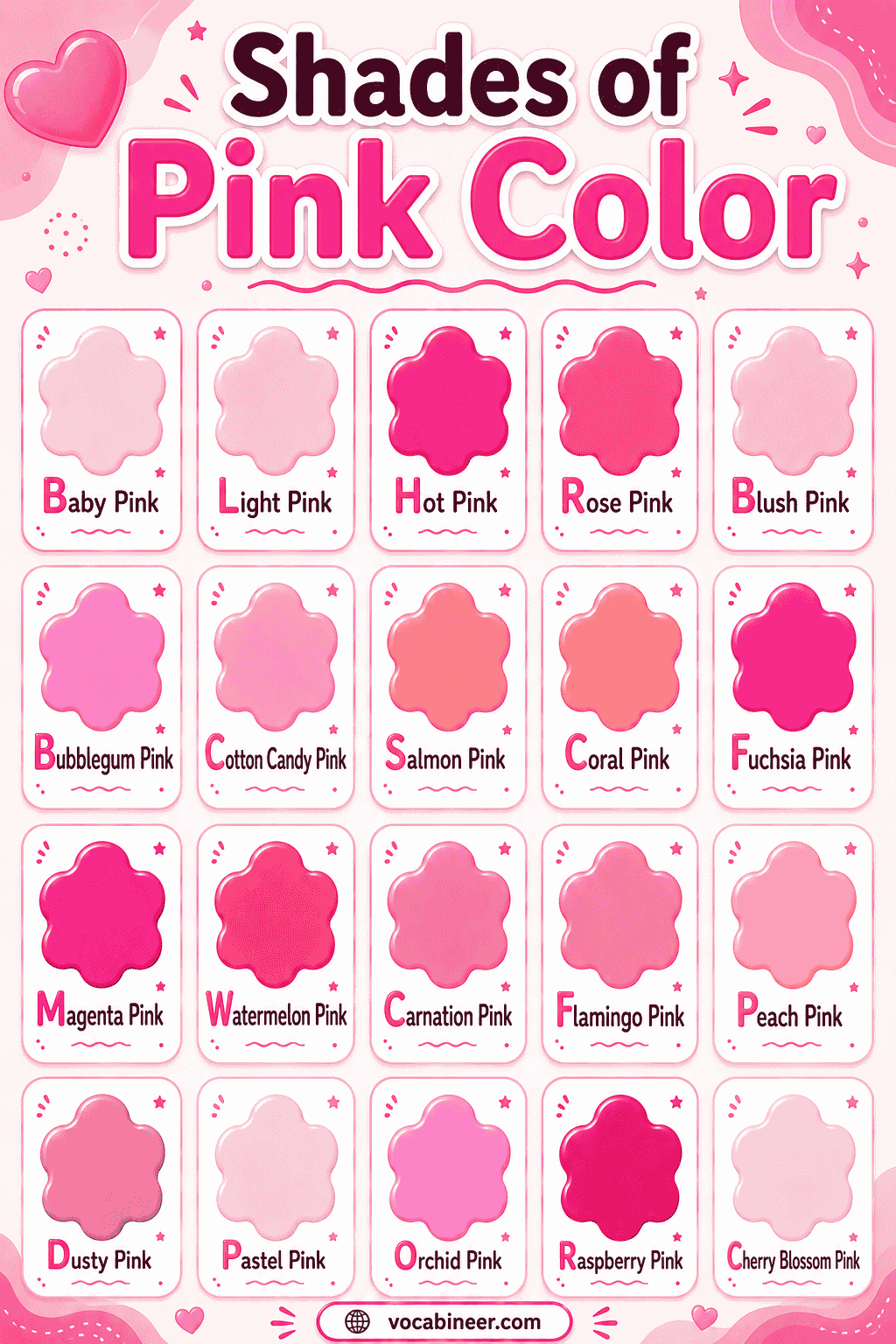
Popular Shades of Pink
Many pink shades are popular because they are widely used in fashion, beauty, home decor, branding, weddings, and digital design.
Popular shades of pink include:
- Blush pink — a soft romantic pink shade
- Baby pink — a delicate light pink color
- Hot pink — a bright and energetic pink
- Rose pink — a flower-inspired pink shade
- Pastel pink — a soft and airy pink tone
- Coral pink — a pink-orange color with warmth
- Bubblegum pink — a playful bright pink
- Dusty pink — a muted vintage-inspired shade
- Fuchsia — a bold pink-purple color
- Salmon pink — a soft orange-pink shade
- Magenta — a vivid pink-purple tone
- Cotton candy pink — a sweet pastel pink
- Mauve pink — a muted pink with purple undertones
- Flamingo pink — a bright tropical pink
- Cherry blossom pink — a soft floral pink
Pink Shades by Color Family
Pink shades can be grouped into color families based on their undertones and appearance. Some pink shades belong to more than one family because they contain multiple undertones.
Light Pink Shades
Light pink shades feel soft, gentle, and delicate.
Examples include:
- Baby pink
- Pastel pink
- Cotton candy pink
- Pale pink
- Powder pink
- Cherry blossom pink
Bright Pink Shades
Bright pink shades feel energetic, playful, and eye-catching.
Examples include:
- Hot pink
- Bubblegum pink
- Flamingo pink
- Neon pink
- Electric pink
- Vivid pink
Rose Pink Shades
Rose pink shades feel romantic and elegant.
Examples include:
- Rose pink
- Tea rose pink
- Antique rose
- Blush rose
- Deep rose
- Garden rose pink
Purple-Pink Shades
Purple-pink shades feel creative and sophisticated.
Examples include:
- Fuchsia
- Magenta
- Mauve pink
- Orchid pink
- Raspberry pink
- Violet pink
Coral Pink Shades
Coral pink shades feel warm, cheerful, and tropical.
Examples include:
- Coral pink
- Salmon pink
- Peach pink
- Apricot pink
- Sunset pink
- Watermelon pink
Shades of Pink Chart
| Shade of Pink | Color Family | Common Use |
|---|---|---|
| Blush Pink | Rose pink | Weddings, fashion, decor |
| Baby Pink | Light pink | Baby products, nurseries |
| Hot Pink | Bright pink | Fashion, branding, graphics |
| Rose Pink | Rose pink | Beauty, floral themes |
| Pastel Pink | Light pink | Invitations, soft designs |
| Coral Pink | Coral pink | Summer branding, fashion |
| Bubblegum Pink | Bright pink | Kids products, playful graphics |
| Dusty Pink | Muted pink | Vintage decor, weddings |
| Fuchsia | Purple-pink | Fashion, beauty branding |
| Salmon Pink | Coral pink | Interiors, apparel |
| Magenta | Purple-pink | Creative branding, design |
| Mauve Pink | Purple-pink | Home decor, fashion |
| Flamingo Pink | Bright pink | Tropical themes, marketing |
| Cherry Blossom Pink | Light pink | Floral designs, weddings |
Light and Dark Shades of Pink
Light and dark pink shades create very different moods. Softer pinks often feel calm and elegant, while deeper pinks can appear bold, luxurious, or dramatic.
| Type | Examples | Feeling |
|---|---|---|
| Light Pink Shades | Baby pink, pastel pink, cotton candy pink | Soft, gentle, peaceful |
| Bright Pink Shades | Hot pink, bubblegum pink, flamingo pink | Energetic, playful, vibrant |
| Dark Pink Shades | Magenta, deep rose, raspberry pink | Bold, rich, dramatic |
Light pink shades work well for:
- weddings
- nurseries
- invitations
- beauty packaging
- feminine branding
Dark pink shades work well for:
- fashion campaigns
- statement interiors
- luxury branding
- beauty products
- creative projects
Blush, Rose, and Soft Pink Shades
Blush, rose, and soft pink shades are among the most popular pink tones. These colors feel elegant, timeless, and versatile.
Common soft pink shades include:
- Blush pink — delicate and romantic
- Rose pink — inspired by rose petals
- Baby pink — light and youthful
- Pastel pink — airy and soft
- Cherry blossom pink — floral and elegant
- Powder pink — subtle and refined
- Dusty pink — muted and vintage-inspired
- Tea rose pink — warm floral pink
These shades are commonly used in:
- wedding decor
- beauty branding
- bedrooms
- fashion collections
- stationery
- floral arrangements
- gift packaging
Beautiful and Trendy Shades of Pink
Modern pink trends include both soft pastel tones and bold statement colors.
Popular trendy shades include:
- Blush pink for weddings and decor
- Dusty pink for modern interiors
- Mauve pink for fashion and beauty
- Coral pink for summer designs
- Cherry blossom pink for floral themes
- Hot pink for bold branding
- Fuchsia for creative visuals
- Bubblegum pink for playful projects
- Rose pink for timeless elegance
- Flamingo pink for tropical aesthetics
Shades of Pink with Hex Codes
Hex codes help designers, artists, and developers use exact pink shades in digital and print projects.
| Shade of Pink | Hex Code |
|---|---|
| Pink | #FFC0CB |
| Blush Pink | #F9C6C9 |
| Baby Pink | #F4C2C2 |
| Hot Pink | #FF69B4 |
| Rose Pink | #FF66CC |
| Pastel Pink | #FFD1DC |
| Coral Pink | #F88379 |
| Bubblegum Pink | #FF77FF |
| Dusty Pink | #D8A7B1 |
| Fuchsia | #FF00FF |
| Salmon Pink | #FF91A4 |
| Magenta | #FF00CC |
| Mauve Pink | #E0B0FF |
| Flamingo Pink | #FC8EAC |
| Cherry Blossom Pink | #FFB7C5 |
| Powder Pink | #FADADD |
Pink Shade Names with Examples
Pink shade names become easier to remember when linked with familiar flowers, foods, fabrics, and objects.
- Rose pink resembles rose petals.
- Cherry blossom pink is inspired by spring blossoms.
- Salmon pink resembles the color of salmon fish.
- Coral pink reflects coral reefs and tropical themes.
- Bubblegum pink resembles chewing gum and playful designs.
- Blush pink resembles a soft natural blush tone.
- Cotton candy pink resembles carnival treats and pastel themes.
- Flamingo pink reflects the bright feathers of flamingos.
- Fuchsia is inspired by the fuchsia flower.
- Mauve pink resembles muted floral tones.
Shades of Pink in Nature and Everyday Life
Pink appears in flowers, birds, sunsets, gemstones, clothing, beauty products, and decorative items.
- Rose pink appears in roses and floral arrangements.
- Cherry blossom pink is seen in flowering trees.
- Flamingo pink appears in flamingos and tropical imagery.
- Coral pink is common in coral reefs and marine-inspired designs.
- Salmon pink appears in seafood, fabrics, and decor.
- Sunset pink can be seen in colorful evening skies.
- Blush pink appears in cosmetics and fashion collections.
- Dusty pink is common in modern interiors and wedding themes.
Pink Shades for Fashion and Beauty
Pink shades are widely used because they can feel elegant, youthful, romantic, or bold.
In fashion, pink shades appear in:
- dresses
- sweaters
- handbags
- shoes
- scarves
- activewear
- accessories
- formal wear
Popular fashion choices include:
- blush pink for weddings
- rose pink for classic outfits
- hot pink for statement looks
- mauve pink for sophisticated styling
- coral pink for summer fashion
In beauty, pink shades appear in:
- lipstick
- blush
- nail polish
- eyeshadow palettes
- skincare packaging
- cosmetics branding
Pink Shades for Rooms and Interior Design
Pink shades can make a room feel cozy, elegant, cheerful, or sophisticated.
Room ideas include:
- Blush pink for bedrooms and nurseries
- Dusty pink for living rooms and modern decor
- Mauve pink for elegant interiors
- Coral pink for playful accent spaces
- Cherry blossom pink for soft bedrooms
- Rose pink for feminine decor themes
- Powder pink for minimalist rooms
- Salmon pink for warm contemporary spaces
Pink paint works well on:
- accent walls
- furniture
- decorative shelving
- nursery walls
- reading corners
- statement pieces
Pink Shades for Branding, Websites, and UI Design
Pink is widely used in branding because it can feel friendly, creative, modern, luxurious, or approachable.
Pink shades are common in:
- beauty brands
- skincare companies
- fashion businesses
- lifestyle brands
- wedding services
- children’s products
- creative agencies
- e-commerce stores
Useful pink choices for design include:
- Blush pink for elegant branding
- Hot pink for bold call-to-action elements
- Coral pink for friendly websites
- Mauve pink for luxury brands
- Fuchsia for vibrant marketing campaigns
- Dusty pink for modern minimalist layouts
- Rose pink for timeless branding
Rare and Historical Pink Shades
Several pink shades have historical significance in fashion, art, and design.
Rare and historical pink shades include:
- Baker-Miller pink — a famous calming pink tone
- Cameo pink — a soft traditional pink
- China pink — a delicate historical shade
- French pink — a bright elegant pink
- Persian pink — a vivid cultural pink tone
- Spanish pink — a warm traditional pink
- Carnation pink — inspired by carnation flowers
Pink Color Psychology and Meaning
Pink is often associated with love, kindness, compassion, romance, and emotional warmth.
| Pink Shade Type | Common Feeling |
|---|---|
| Light pink | Gentle, calm, caring |
| Bright pink | Energetic, playful, youthful |
| Rose pink | Romantic, elegant, warm |
| Purple-pink | Creative, luxurious, artistic |
| Coral pink | Friendly, cheerful, welcoming |
Common meanings of pink include:
- love
- kindness
- compassion
- romance
- femininity
- creativity
- warmth
- comfort
- affection
- joy
Pink Color Combinations and Palettes
Pink pairs beautifully with many colors depending on the desired style.
Popular pink color combinations include:
- Pink + white for soft elegance
- Pink + gray for modern decor
- Pink + gold for luxury styling
- Pink + navy blue for contrast
- Blush pink + sage green for weddings
- Coral pink + turquoise for tropical themes
- Mauve pink + cream for sophisticated interiors
- Rose pink + burgundy for romantic palettes
- Dusty pink + beige for modern decor
- Fuchsia + black for bold branding
Warm Pink vs Cool Pink Shades
Pink shades can appear warm or cool depending on their undertones.
| Type | Examples | Look |
|---|---|---|
| Warm Pink Shades | Coral pink, salmon pink, peach pink | Cozy, cheerful, inviting |
| Cool Pink Shades | Fuchsia, magenta, mauve pink | Modern, vibrant, elegant |
| Neutral Pink Shades | Blush pink, rose pink, dusty pink | Balanced, versatile |
Warm pink shades are common in:
- beauty branding
- summer fashion
- wedding decor
- tropical themes
Cool pink shades are common in:
- luxury branding
- modern websites
- creative campaigns
- fashion editorials
Pink Shades vs Similar Colors
Some pink shades look similar but have noticeable differences.
| Colors Compared | Main Difference |
|---|---|
| Blush Pink vs Baby Pink | Blush pink is warmer; baby pink is lighter. |
| Rose Pink vs Dusty Pink | Rose pink is brighter; dusty pink is muted. |
| Coral Pink vs Salmon Pink | Coral pink is more vibrant; salmon pink is softer. |
| Hot Pink vs Fuchsia | Hot pink is brighter; fuchsia contains stronger purple undertones. |
| Mauve Pink vs Rose Pink | Mauve pink is cooler; rose pink is warmer. |
| Cherry Blossom Pink vs Pastel Pink | Cherry blossom pink has floral undertones; pastel pink is softer. |
Common Mistakes About Shades of Pink
Many people confuse pink shades because several tones appear similar at first glance.
Common mistakes include:
- calling every soft pink blush pink
- confusing coral pink with salmon pink
- using hot pink and fuchsia interchangeably
- treating dusty pink and mauve pink as identical colors
- selecting pink hex codes without checking displays
- mixing too many bright pinks in one palette
- ignoring undertones when choosing decor colors
FAQs
Popular shades of pink include blush pink, baby pink, hot pink, rose pink, pastel pink, coral pink, bubblegum pink, dusty pink, fuchsia, salmon pink, magenta, mauve pink, and cherry blossom pink.
Magenta, deep rose pink, raspberry pink, and fuchsia are among the darkest pink shades.
Baby pink, pastel pink, cotton candy pink, powder pink, and pale pink are some of the lightest pink shades.
Yes, blush pink is a shade of pink. It is a soft and romantic pink tone often used in weddings, decor, and fashion.
Pink shades commonly symbolize love, kindness, compassion, romance, warmth, creativity, and emotional comfort.
Summary
Shades of pink include light, bright, rose, coral, and purple-pink tones. Popular examples include blush pink, baby pink, hot pink, rose pink, pastel pink, coral pink, dusty pink, fuchsia, magenta, and cherry blossom pink.
Pink shades are widely used in fashion, beauty, branding, websites, interior design, weddings, and color palette creation because they can feel elegant, romantic, playful, modern, or luxurious.
Read More
- Colours Names in English
- Shades of Blue Color
- Shades of Red Color
- Shades of Green Color
- Primary Color Names
- Secondary Color Names
- Tertiary Colors Names
- Types of Dark Colors
- Bright Color Names