Shades of orange are different variations of the color orange. Some orange shades are bright and vibrant, while others are soft, earthy, golden, reddish, or muted.
Orange is often associated with warmth, creativity, enthusiasm, energy, and friendliness. Popular shades of orange include burnt orange, peach, coral, tangerine, amber, pumpkin orange, apricot, carrot orange, copper orange, rust orange, terracotta orange, mango orange, and sunset orange.
In This Page
What Are Shades of Orange?
Shades of orange are created by mixing orange with white, black, red, yellow, brown, or other colors.
For example:
- Orange mixed with white creates lighter orange shades.
- Orange mixed with red creates deeper red-orange tones.
- Orange mixed with yellow creates brighter yellow-orange shades.
- Orange mixed with brown creates earthy orange colors.
- Orange mixed with black creates darker orange shades.
- Orange mixed with gray creates muted orange tones.
Different orange shades can feel warm, cheerful, energetic, cozy, playful, elegant, or rustic.
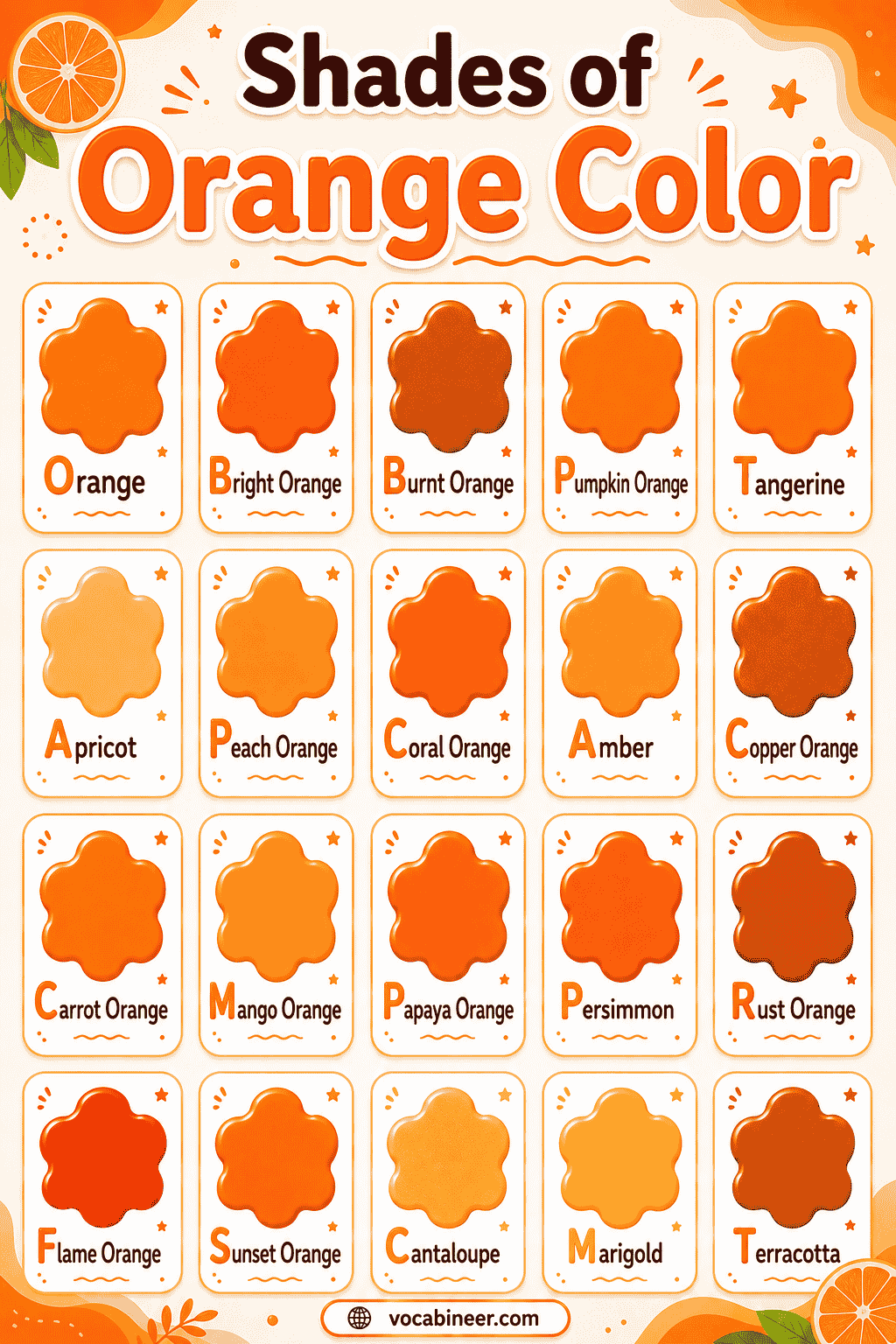
Popular Shades of Orange
Some orange shades are popular because they are widely used in fashion, home decor, branding, art, websites, and seasonal designs.
Popular shades of orange include:
- Burnt orange — a deep earthy orange shade
- Peach — a soft pink-orange color
- Coral — a bright orange-pink shade
- Tangerine — a vivid citrus-inspired orange
- Amber — a rich golden-orange color
- Pumpkin orange — a warm autumn-inspired shade
- Apricot — a soft yellow-orange color
- Carrot orange — a bright natural orange
- Copper orange — a metallic-inspired orange shade
- Rust orange — a brownish-orange tone
- Terracotta orange — a clay-inspired earthy orange
- Mango orange — a tropical fruit-inspired shade
- Sunset orange — a warm orange-red tone
- Persimmon orange — a rich reddish-orange shade
Orange Shades by Color Family
Orange shades can be grouped into color families. Some shades look bright and playful, while others appear earthy, elegant, or bold.
Light Orange Shades
Light orange shades feel soft, fresh, and welcoming.
Examples include:
- Peach
- Apricot
- Pastel orange
- Melon orange
- Creamsicle orange
- Soft coral
Bright Orange Shades
Bright orange shades feel energetic, cheerful, and eye-catching.
Examples include:
- Tangerine
- Carrot orange
- Vivid orange
- Neon orange
- Bright coral
- Safety orange
Earthy Orange Shades
Earthy orange shades feel warm, rustic, and natural.
Examples include:
- Burnt orange
- Rust orange
- Terracotta orange
- Clay orange
- Cinnamon orange
- Desert orange
Red-Orange Shades
Red-orange shades feel bold, dramatic, and vibrant.
Examples include:
- Sunset orange
- Vermilion
- Persimmon orange
- Scarlet orange
- Red-orange
- Flame orange
Golden Orange Shades
Golden orange shades feel rich, warm, and luxurious.
Examples include:
- Amber
- Honey orange
- Golden orange
- Marigold orange
- Saffron orange
- Copper orange
Shades of Orange Chart
| Shade of Orange | Color Family | Common Use |
|---|---|---|
| Burnt Orange | Earthy orange | Fashion, decor, autumn palettes |
| Peach | Light orange | Weddings, beauty, soft designs |
| Coral | Light orange | Fashion, branding, summer themes |
| Tangerine | Bright orange | Packaging, sports, advertising |
| Amber | Golden orange | Luxury design, decor, branding |
| Pumpkin Orange | Earthy orange | Seasonal decor, autumn themes |
| Apricot | Light orange | Fashion, baby products, interiors |
| Copper Orange | Golden orange | Home decor, premium branding |
| Rust Orange | Earthy orange | Rustic interiors, fashion |
| Terracotta Orange | Earthy orange | Pottery, paint, decor |
| Mango Orange | Bright orange | Food branding, tropical themes |
| Sunset Orange | Red-orange | Art, fashion, creative design |
Light and Dark Shades of Orange
Light and dark orange shades create different moods. Softer oranges often feel calm and welcoming, while deeper shades can look warm, sophisticated, and dramatic.
| Type | Examples | Feeling |
|---|---|---|
| Light Orange Shades | Peach, apricot, pastel orange | Soft, gentle, fresh |
| Bright Orange Shades | Tangerine, carrot orange, coral | Energetic, cheerful, lively |
| Dark Orange Shades | Burnt orange, rust orange, terracotta | Warm, earthy, rich |
Light orange shades work well for:
- nurseries
- wedding themes
- spring designs
- beauty products
- soft branding
Dark orange shades work well for:
- autumn decor
- accent walls
- fashion collections
- rustic interiors
- seasonal marketing
Burnt, Copper, and Earthy Orange Shades
Burnt, copper, and earthy orange shades are among the most popular orange tones. These colors feel mature, warm, and versatile.
Common earthy orange shades include:
- Burnt orange — deep orange with brown undertones
- Rust orange — earthy orange inspired by oxidized metal
- Terracotta orange — clay-inspired orange shade
- Copper orange — metallic orange with warmth and richness
- Cinnamon orange — spice-inspired earthy tone
- Desert orange — muted natural orange
- Pumpkin orange — autumn-inspired orange
- Amber — rich golden-orange shade
These shades are common in:
- sweaters
- cushions
- pottery
- wall paint
- seasonal decor
- furniture accents
- branding
- packaging
Beautiful and Trendy Shades of Orange
Beautiful orange shades often appear in modern design, fashion, social media graphics, and interior trends.
Trendy orange shades include:
- Peach for soft aesthetic designs
- Burnt orange for autumn-inspired styling
- Terracotta orange for modern interiors
- Coral for fashion and beauty themes
- Tangerine for energetic branding
- Amber for elegant and warm palettes
- Apricot for soft pastel designs
- Mango orange for tropical visuals
- Sunset orange for creative artwork
- Copper orange for luxury-inspired decor
Shades of Orange with Hex Codes
Hex codes help designers, artists, and developers use exact orange shades in digital and print projects.
| Shade of Orange | Hex Code |
|---|---|
| Orange | #FFA500 |
| Burnt Orange | #CC5500 |
| Peach | #FFE5B4 |
| Coral | #FF7F50 |
| Tangerine | #F28500 |
| Amber | #FFBF00 |
| Pumpkin Orange | #FF7518 |
| Apricot | #FBCEB1 |
| Copper Orange | #B87333 |
| Rust Orange | #B7410E |
| Terracotta Orange | #E2725B |
| Mango Orange | #FDBE02 |
| Sunset Orange | #FD5E53 |
| Persimmon Orange | #EC5800 |
| Vermilion | #E34234 |
Orange Shade Names with Examples
Orange shade names become easier to remember when linked with familiar objects and experiences.
- Peach resembles the skin of ripe peaches.
- Coral is inspired by coral reefs and tropical themes.
- Tangerine resembles citrus fruits and bright packaging.
- Amber is linked with amber gemstones and warm lighting.
- Pumpkin orange resembles pumpkins and autumn decorations.
- Copper orange reflects the color of polished copper.
- Terracotta orange resembles clay pots and rustic architecture.
- Rust orange is inspired by weathered metal surfaces.
- Mango orange reflects the color of ripe mangoes.
- Sunset orange resembles colorful evening skies.
Shades of Orange in Nature and Everyday Life
Orange appears in fruits, flowers, sunsets, leaves, foods, clothing, and decorative items.
- Tangerine orange appears in citrus fruits and beverages.
- Pumpkin orange is common in pumpkins, autumn decor, and harvest festivals.
- Coral orange appears in tropical fish, flowers, and summer fashion.
- Amber orange can be seen in gemstones, lamps, and decorative glass.
- Terracotta orange appears in clay pots, tiles, and pottery.
- Mango orange is found in tropical fruits and food packaging.
- Sunset orange appears in evening skies and landscape photography.
- Rust orange is visible on aged metal and autumn leaves.
Orange Shades for Fashion and Home Decor
Orange shades are popular because they add warmth, personality, and visual interest.
In fashion, orange shades appear in:
- dresses
- jackets
- sweaters
- scarves
- handbags
- shoes
- activewear
- accessories
Popular fashion choices include:
- burnt orange for autumn outfits
- coral for summer fashion
- peach for soft feminine styles
- copper orange for statement accessories
- tangerine for bold streetwear
In home decor, orange shades are used in:
- cushions
- curtains
- rugs
- wall art
- bedding
- accent chairs
- decorative vases
- lamps
Orange Shades for Rooms and Interior Paint
Orange shades can make a room feel warm, inviting, energetic, or cozy.
Room ideas include:
- Peach for bedrooms and nurseries
- Terracotta orange for living rooms and rustic interiors
- Burnt orange for accent walls and reading spaces
- Amber for dining rooms and warm lighting schemes
- Coral for cheerful guest rooms
- Apricot for bright kitchens
- Rust orange for farmhouse-style interiors
- Copper orange for luxury accents
Orange paint works well on:
- accent walls
- entryways
- kitchens
- reading corners
- decorative furniture
- built-in shelving
Orange Shades for Branding, Websites, and UI Design
Orange is widely used in branding because it feels energetic, friendly, and attention-grabbing.
Orange shades are common in:
- food brands
- sports brands
- travel companies
- entertainment businesses
- creative agencies
- mobile apps
- online stores
- promotional campaigns
Useful orange choices for design include:
- Tangerine for call-to-action buttons
- Coral for lifestyle brands
- Burnt orange for earthy branding
- Amber for premium designs
- Peach for soft and welcoming layouts
- Copper orange for luxury visuals
- Mango orange for food-related branding
Rare and Historical Orange Shades
Several orange shades have historical importance in art, textiles, and decorative design.
Rare and historical orange shades include:
- Vermilion — a bright red-orange pigment used in art
- Persimmon orange — a traditional orange shade inspired by persimmon fruit
- Cadmium orange — a vivid artist pigment
- International orange — used in engineering and safety applications
- Safety orange — high-visibility orange used for warnings
- Harlequin orange — a vivid yellow-orange shade
- Spanish orange — a bright traditional orange tone
Orange Color Psychology and Meaning
Orange is often associated with enthusiasm, creativity, friendliness, warmth, confidence, and energy.
| Orange Shade Type | Common Feeling |
|---|---|
| Light orange | Soft, welcoming, cheerful |
| Bright orange | Energetic, playful, exciting |
| Earthy orange | Warm, cozy, grounded |
| Golden orange | Rich, inviting, optimistic |
| Red-orange | Bold, passionate, dramatic |
Common meanings of orange include:
- creativity
- enthusiasm
- warmth
- confidence
- friendliness
- adventure
- energy
- positivity
- excitement
- communication
Orange Color Combinations and Palettes
Orange pairs well with many colors depending on the desired mood and style.
Popular orange color combinations include:
- Orange + white for clean modern designs
- Orange + navy blue for strong contrast
- Orange + gray for contemporary branding
- Orange + cream for soft interiors
- Burnt orange + olive green for earthy palettes
- Coral + turquoise for tropical themes
- Amber + gold for luxury styling
- Peach + blush pink for romantic designs
- Terracotta + beige for rustic interiors
- Mango orange + teal for vibrant branding
Warm Orange vs Cool Orange Shades
Most orange shades feel warm, but some appear cooler when they contain pink or coral undertones.
| Type | Examples | Look |
|---|---|---|
| Warm Orange Shades | Burnt orange, amber, pumpkin orange, terracotta | Cozy, rich, earthy |
| Cool Orange Shades | Coral, peach, soft apricot | Fresh, light, modern |
| Neutral Orange Shades | Tangerine, mango orange, copper orange | Balanced, versatile |
Warm orange shades are common in:
- autumn palettes
- rustic decor
- food branding
- seasonal marketing
Cool orange shades are common in:
- beauty products
- summer fashion
- lifestyle branding
- modern interiors
Orange Shades vs Similar Colors
Some orange shades look similar but have noticeable differences.
| Colors Compared | Main Difference |
|---|---|
| Burnt Orange vs Rust Orange | Burnt orange is brighter; rust orange is browner. |
| Peach vs Apricot | Peach is pinker; apricot is more yellow-orange. |
| Coral vs Tangerine | Coral contains pink undertones; tangerine is brighter and more citrus-like. |
| Amber vs Gold | Amber is more orange; gold appears more metallic and yellow. |
| Terracotta vs Pumpkin Orange | Terracotta is earthier; pumpkin orange is brighter. |
| Copper Orange vs Burnt Orange | Copper has a metallic feel; burnt orange looks more matte. |
Common Mistakes About Shades of Orange
Many people confuse orange shades because several names are visually similar.
Common mistakes include:
- calling every dark orange shade burnt orange
- confusing coral with peach
- using amber and gold interchangeably
- treating terracotta and rust orange as identical colors
- selecting orange hex codes without checking screen appearance
- mixing too many bright oranges in one design
- ignoring undertones when creating palettes
FAQs
Popular shades of orange include burnt orange, peach, coral, tangerine, amber, pumpkin orange, apricot, copper orange, rust orange, terracotta orange, mango orange, and sunset orange.
Burnt orange, rust orange, terracotta orange, and deep copper orange are among the darkest orange shades.
Peach, apricot, pastel orange, and soft coral are some of the lightest orange shades.
Yes, burnt orange is a shade of orange. It is a deep earthy orange with brown undertones.
Orange shades commonly symbolize creativity, warmth, enthusiasm, confidence, friendliness, and energy.
Summary
Shades of orange include light, bright, earthy, golden, and red-orange tones. Popular examples include burnt orange, peach, coral, tangerine, amber, pumpkin orange, apricot, copper orange, rust orange, terracotta orange, and sunset orange.
Orange shades are widely used in fashion, branding, websites, home decor, interior paint, art, and color palette design because they create warmth, energy, and visual appeal.
Read More
- Colours Names in English
- Shades of Blue Color
- Shades of Red Color
- Shades of Green Color
- Primary Color Names
- Secondary Color Names
- Tertiary Colors Names
- Types of Dark Colors
- Bright Color Names