Shades of green are different versions of the color green. Some green shades are light and fresh, while others are dark, earthy, yellow-toned, blue-toned, grayish, or jewel-like.
Green is strongly connected with nature, growth, freshness, balance, health, and calmness. Popular shades of green include sage green, olive green, emerald green, forest green, mint green, lime green, sea green, hunter green, moss green, jade green, pistachio green, avocado green, fern green, eucalyptus green, and bottle green.
In This Page
What Are Shades of Green?
Shades of green are created when green is mixed with white, black, gray, yellow, blue, brown, or other colors.
For example:
- Green mixed with white creates lighter green shades.
- Green mixed with black creates darker green shades.
- Green mixed with gray creates muted green shades.
- Green mixed with yellow creates yellow-green shades.
- Green mixed with blue creates blue-green shades.
- Green mixed with brown creates earthy green shades.
Different green shades can feel natural, modern, calming, bold, fresh, earthy, elegant, or playful.
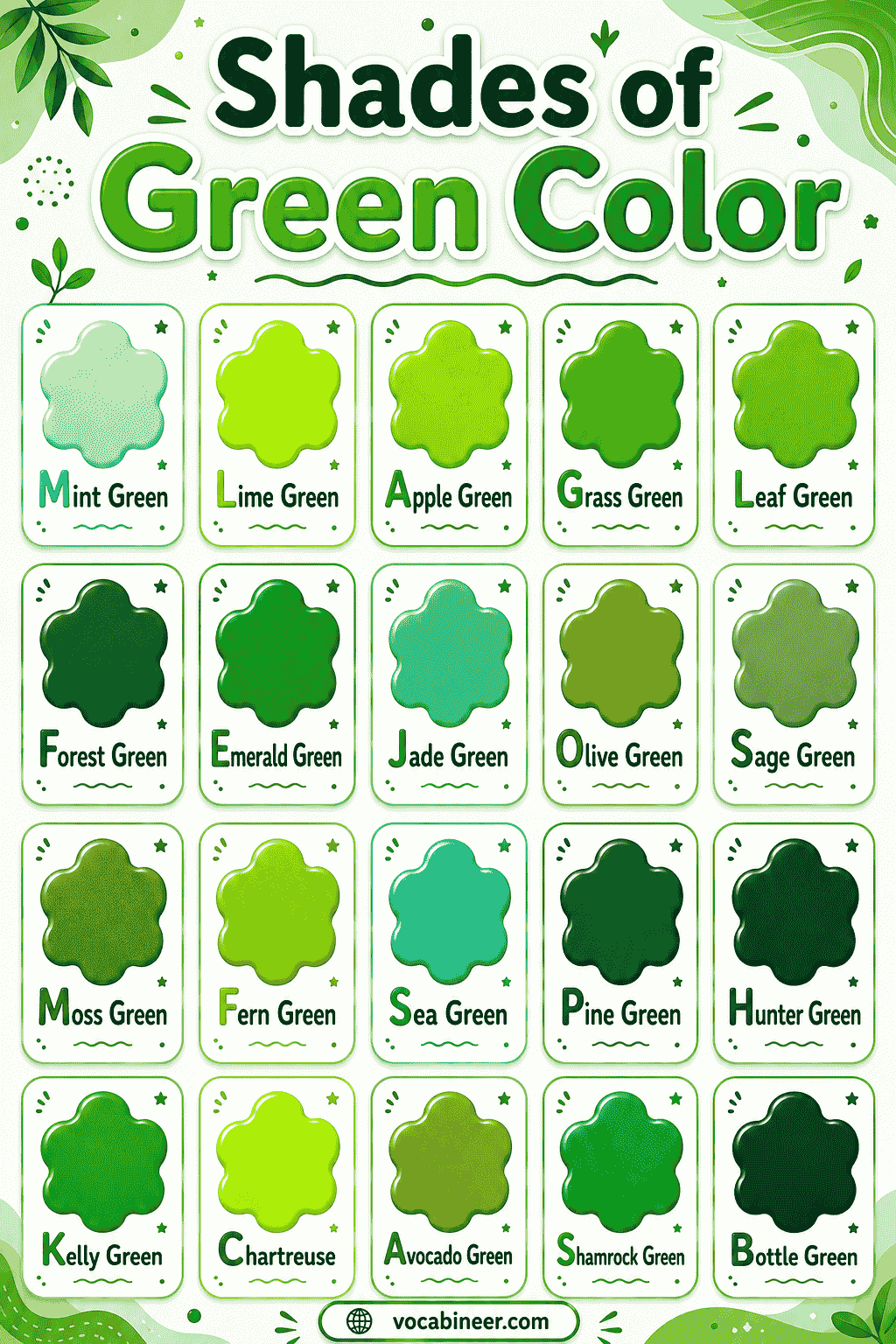
Popular Shades of Green
Some green shades are popular because they are widely used in home decor, fashion, branding, website design, art, and nature-inspired palettes.
Popular shades of green include:
- Sage green — a soft gray-green shade used in decor and fashion
- Olive green — an earthy yellow-green shade often used in clothing
- Emerald green — a rich jewel green used in luxury design
- Forest green — a deep natural green inspired by forests
- Mint green — a light fresh green used in soft designs
- Lime green — a bright yellow-green shade
- Sea green — a blue-green shade inspired by ocean water
- Hunter green — a dark green used in classic fashion and interiors
- Moss green — an earthy green inspired by moss
- Jade green — a gemstone-inspired green shade
- Pistachio green — a soft yellow-green shade
- Avocado green — a muted yellow-green shade
- Fern green — a natural leaf-like green
- Eucalyptus green — a muted gray-green shade
- Bottle green — a deep green shade often used in glass and formal design
Green Shades by Color Family
Green shades can be grouped into color families. This makes it easier to understand the difference between soft greens, dark greens, earthy greens, yellow-greens, and blue-greens.
Light Green Shades
Light green shades feel fresh, soft, and clean.
Examples include:
- Mint green
- Pistachio green
- Tea green
- Celadon
- Pale green
- Honeydew green
Dark Green Shades
Dark green shades feel rich, serious, natural, and elegant.
Examples include:
- Forest green
- Hunter green
- Bottle green
- Pine green
- Deep green
- British racing green
Earthy Green Shades
Earthy green shades feel muted, natural, and grounded.
Examples include:
- Olive green
- Moss green
- Avocado green
- Sage green
- Eucalyptus green
- Army green
Yellow-Green Shades
Yellow-green shades feel bright, lively, and energetic.
Examples include:
- Lime green
- Chartreuse
- Apple green
- Spring green
- Pear green
- Grass green
Blue-Green Shades
Blue-green shades feel fresh, aquatic, modern, and calm.
Examples include:
- Sea green
- Jade green
- Teal green
- Aquamarine
- Viridian
- Tropical green
Gray-Green Shades
Gray-green shades feel soft, modern, and elegant.
Examples include:
- Sage green
- Eucalyptus green
- Dusty green
- Seafoam green
- Ash green
- Muted green
Shades of Green Chart
| Shade of Green | Color Family | Common Use |
|---|---|---|
| Sage Green | Gray-green | Home decor, fashion, weddings |
| Olive Green | Earthy green | Clothing, military style, interiors |
| Emerald Green | Jewel green | Luxury design, jewelry, dresses |
| Forest Green | Dark green | Nature themes, branding, interiors |
| Mint Green | Light green | Soft graphics, baby items, fresh designs |
| Lime Green | Yellow-green | Posters, sports, bright accents |
| Sea Green | Blue-green | Coastal decor, wellness design |
| Hunter Green | Dark green | Formal fashion, traditional interiors |
| Moss Green | Earthy green | Nature palettes, rustic decor |
| Jade Green | Blue-green | Gemstone designs, beauty, decor |
| Pistachio Green | Light green | Food branding, soft interiors |
| Avocado Green | Earthy green | Retro decor, kitchen themes |
| Fern Green | Natural green | Plant themes, botanical graphics |
| Eucalyptus Green | Gray-green | Minimal decor, spa designs |
| Bottle Green | Dark green | Glassware, luxury packaging, formal design |
Light and Dark Shades of Green
Light and dark green shades create different moods. Softer greens often feel fresh, peaceful, and gentle, while deeper greens can look elegant, classic, and grounded.
| Type | Examples | Feeling |
|---|---|---|
| Light Green Shades | Mint green, pistachio green, pale green, tea green | Soft, fresh, gentle |
| Bright Green Shades | Lime green, chartreuse, apple green | Energetic, lively, bold |
| Dark Green Shades | Forest green, hunter green, bottle green, pine green | Rich, elegant, natural |
Light green shades work well for:
- spring designs
- baby products
- wellness graphics
- soft room decor
- fresh website backgrounds
Dark green shades work well for:
- luxury branding
- formal clothing
- accent walls
- traditional interiors
- nature-inspired logos
Sage, Olive, and Earthy Green Shades
Sage green, olive green, and earthy green shades are very popular in modern design and home decor. These colors feel natural, calm, and easy to pair with neutral tones.
Common earthy green shades include:
- Sage green — soft, muted, and gray-green
- Olive green — earthy, warm, and yellow-green
- Moss green — natural and forest-inspired
- Avocado green — muted yellow-green with a retro feel
- Eucalyptus green — soft gray-green used in calm interiors
- Army green — muted green often used in fashion
- Khaki green — green-brown tone used in casual clothing
- Fern green — leafy green inspired by plants
Earthy greens are common in:
- bedrooms
- living rooms
- kitchen cabinets
- curtains
- bedding
- jackets
- wedding palettes
- botanical graphics
Beautiful and Trendy Shades of Green
Beautiful green shades are often used in stylish, nature-inspired, modern, and aesthetic designs. These colors work well in mood boards, social media graphics, interiors, fashion, and digital art.
Trendy green shades include:
- Sage green for soft modern interiors
- Emerald green for luxury and elegance
- Olive green for earthy fashion
- Mint green for fresh and clean designs
- Forest green for rich natural themes
- Lime green for bold and playful graphics
- Sea green for coastal and calm visuals
- Jade green for gemstone-inspired designs
- Eucalyptus green for spa and wellness themes
- Pistachio green for soft food and lifestyle branding
Shades of Green with Hex Codes
Hex codes help designers, artists, and developers use exact green shades in websites, graphics, branding, and digital projects.
| Shade of Green | Hex Code |
|---|---|
| Green | #008000 |
| Sage Green | #9CAF88 |
| Olive Green | #808000 |
| Emerald Green | #50C878 |
| Forest Green | #228B22 |
| Mint Green | #98FF98 |
| Lime Green | #32CD32 |
| Sea Green | #2E8B57 |
| Hunter Green | #355E3B |
| Moss Green | #8A9A5B |
| Jade Green | #00A86B |
| Pistachio Green | #93C572 |
| Avocado Green | #568203 |
| Fern Green | #4F7942 |
| Eucalyptus Green | #5F8575 |
| Bottle Green | #006A4E |
| Chartreuse | #7FFF00 |
| Viridian | #40826D |
Green Shade Names with Examples
Green shade names are easier to understand when they are linked with real objects, plants, materials, and places.
- Sage green is linked with sage leaves, soft interiors, and muted wedding palettes.
- Olive green resembles olives, military clothing, and earthy outfits.
- Emerald green is inspired by emerald gemstones and luxury fashion.
- Forest green resembles deep forests, pine trees, and natural landscapes.
- Mint green has a fresh look often connected with mint leaves and soft packaging.
- Lime green is bright like lime fruit and neon accents.
- Sea green is close to ocean water, coastal decor, and spa themes.
- Moss green is inspired by moss, forest floors, and rustic nature palettes.
- Jade green resembles jade stones, jewelry, and polished decorative items.
- Bottle green is similar to deep green glass and formal packaging.
Shades of Green in Nature and Everyday Life
Green appears in plants, trees, vegetables, fruits, gemstones, clothing, decor, and daily objects.
- Forest green appears in trees, forests, leaves, and outdoor gear.
- Grass green is seen in lawns, fields, gardens, and sports grounds.
- Moss green appears on rocks, tree bark, forest floors, and old walls.
- Olive green is found in olives, military clothing, jackets, and bags.
- Emerald green appears in gemstones, jewelry, dresses, and luxury decor.
- Mint green is common in candies, packaging, kitchens, and soft textiles.
- Lime green appears in limes, sportswear, toys, and bright graphics.
- Sea green is seen in ocean water, beach decor, glass, and spa visuals.
- Sage green appears in herbs, soft fabrics, wall paint, and wedding decor.
Green Shades for Fashion and Home Decor
Green shades are popular in fashion because they can look casual, elegant, earthy, fresh, or bold.
In fashion, green shades appear in:
- olive jackets
- emerald dresses
- sage green shirts
- mint green scarves
- forest green coats
- lime green sportswear
- jade accessories
- hunter green formal wear
Common fashion choices include:
- olive green for casual outfits
- emerald green for evening wear
- sage green for soft modern looks
- forest green for winter fashion
- lime green for bold streetwear
- mint green for spring outfits
In home decor, green shades are used in:
- cushions
- curtains
- rugs
- sofas
- bedding
- lamps
- wall art
- indoor plants
- accent furniture
Green Shades for Rooms and Interior Paint
Green shades can make a room feel calm, fresh, natural, or dramatic. The best green shade depends on the room, light, furniture, and mood.
Room ideas include:
- Sage green for bedrooms, nurseries, and calm living rooms
- Olive green for earthy kitchens, reading corners, and rustic rooms
- Emerald green for luxury dining rooms, accent walls, and statement decor
- Forest green for cozy studies, bedrooms, and classic interiors
- Mint green for bathrooms, kitchens, and soft children’s rooms
- Eucalyptus green for spa-style bathrooms and minimalist bedrooms
- Moss green for nature-inspired living rooms and warm decor
- Bottle green for dramatic walls, cabinets, and formal spaces
Green paint works well on:
- accent walls
- kitchen cabinets
- bathroom walls
- bedroom walls
- entry doors
- built-in shelves
- furniture pieces
- decorative trims
Green Shades for Branding, Websites, and UI Design
Green is powerful in branding because it is connected with nature, health, growth, freshness, and trust. Many brands use green to create a clean, organic, eco-friendly, or calming identity.
Green shades are common in:
- wellness brands
- health products
- organic food packaging
- eco-friendly companies
- finance brands
- plant shops
- skincare packaging
- fitness apps
- education websites
Useful green choices for websites and UI design include:
- Emerald green for premium buttons and bold brand accents
- Sage green for calm wellness websites
- Mint green for fresh app screens and soft backgrounds
- Forest green for nature brands and outdoor companies
- Lime green for energetic buttons and playful graphics
- Sea green for healthcare, spa, and coastal designs
- Olive green for earthy lifestyle brands
- Eucalyptus green for minimalist and wellness-focused layouts
Rare and Historical Green Shades
Some green shades have long histories in art, pigments, ceramics, fashion, and decoration. These names add depth to color vocabulary and design writing.
Rare and historical green shades include:
- Viridian — a deep blue-green pigment used by artists
- Malachite green — a bright green inspired by the mineral malachite
- Verdigris — a blue-green color formed on aged copper
- Paris green — a historical green pigment
- Celadon — a soft green shade linked with ceramics
- Hooker’s green — an artist’s green used for landscapes
- Scheele’s green — a historical green pigment
- Chrome green — a strong green pigment used in paints
- Sap green — a natural-looking green used in botanical painting
Green Color Psychology and Meaning
Green is often connected with nature, growth, health, peace, balance, and renewal. Different green shades create different feelings.
| Green Shade Type | Common Feeling |
|---|---|
| Light green | Fresh, soft, gentle |
| Dark green | Rich, stable, elegant |
| Earthy green | Natural, calm, grounded |
| Yellow-green | Energetic, bright, playful |
| Blue-green | Cool, clean, refreshing |
| Gray-green | Muted, peaceful, modern |
Common meanings of green include:
- nature
- growth
- health
- balance
- harmony
- freshness
- renewal
- peace
- safety
- sustainability
Green Color Combinations and Palettes
Green works well with many colors. The best combination depends on whether you want a natural, modern, luxury, fresh, or earthy look.
Popular green color combinations include:
- Green + white for a clean and fresh look
- Green + beige for soft natural decor
- Green + brown for earthy and rustic palettes
- Green + gold for luxury and elegance
- Green + black for bold modern design
- Green + cream for calm interiors
- Sage green + blush pink for soft wedding palettes
- Olive green + tan for earthy fashion
- Emerald green + navy for rich formal styling
- Mint green + white for fresh and simple design
- Forest green + copper for warm luxury decor
Warm Green vs Cool Green Shades
Green shades can feel warm or cool depending on their undertones.
| Type | Examples | Look |
|---|---|---|
| Warm Green Shades | Olive green, lime green, chartreuse, avocado green | Yellow-toned, earthy, lively |
| Cool Green Shades | Sea green, jade green, teal green, viridian | Blue-toned, fresh, calm |
| Neutral Green Shades | Sage green, forest green, moss green, eucalyptus green | Balanced, natural, muted |
Warm green shades are common in:
- earthy fashion
- food branding
- autumn palettes
- rustic interiors
- playful graphics
Cool green shades are common in:
- spa branding
- ocean themes
- healthcare websites
- modern interiors
- clean digital designs
Green Shades vs Similar Colors
Some green shades look similar, but they are not exactly the same.
| Colors Compared | Main Difference |
|---|---|
| Sage Green vs Eucalyptus Green | Sage is usually softer and grayer; eucalyptus is often cooler and slightly deeper. |
| Olive Green vs Moss Green | Olive is more yellow-brown; moss green looks more natural and plant-like. |
| Emerald Green vs Jade Green | Emerald is richer and more jewel-like; jade is softer and more blue-green. |
| Mint Green vs Pistachio Green | Mint is fresher and cooler; pistachio is warmer and more yellow-green. |
| Lime Green vs Chartreuse | Lime is bright green; chartreuse has a stronger yellow tone. |
| Forest Green vs Hunter Green | Forest green is nature-inspired; hunter green is darker and more traditional. |
| Teal Green vs Sea Green | Teal is darker and bluer; sea green is softer and more natural. |
Common Mistakes About Shades of Green
Many people confuse green shades because several names are close in tone.
Common mistakes include:
- calling every muted green shade sage green
- confusing olive green with moss green
- using mint green and pistachio green as the same color
- thinking teal is only blue and not blue-green
- choosing green hex codes without checking screen brightness
- using too many bright greens in one design
- mixing warm greens and cool greens without balance
- using pale green text on a white background
FAQs
The most popular shades of green include sage green, olive green, emerald green, forest green, mint green, lime green, sea green, hunter green, moss green, jade green, pistachio green, and bottle green. These shades are common in fashion, branding, home decor, websites, and nature-inspired designs.
Bottle green, hunter green, forest green, pine green, and British racing green are some of the darkest green shades. These colors often look rich, formal, and elegant.
Mint green, tea green, honeydew green, pale green, and celadon are some of the lightest green shades. These colors feel soft, fresh, and gentle.
Yes, sage green is a shade of green. It is a soft gray-green color often used in home decor, weddings, fashion, and calm interior designs.
Green shades often symbolize nature, growth, health, balance, freshness, peace, and renewal. Dark greens can feel elegant and stable, while light greens feel fresh and soft.
Summary
Shades of green include light, dark, earthy, yellow-green, blue-green, and gray-green tones. Popular examples include sage green, olive green, emerald green, forest green, mint green, lime green, sea green, moss green, jade green, and bottle green.
Green shades are useful in fashion, branding, websites, home decor, interior paint, art, nature learning, and color palette design.
Read More
- Colours Names in English
- Shades of Blue Color
- Shades of Red Color
- Primary Color Names
- Secondary Color Names
- Tertiary Colors Names
- Types of Dark Colors
- Bright Color Names