Shades of brown are different variations of the color brown. Some brown shades are light and soft, while others are dark, rich, earthy, golden, reddish, or cool-toned.
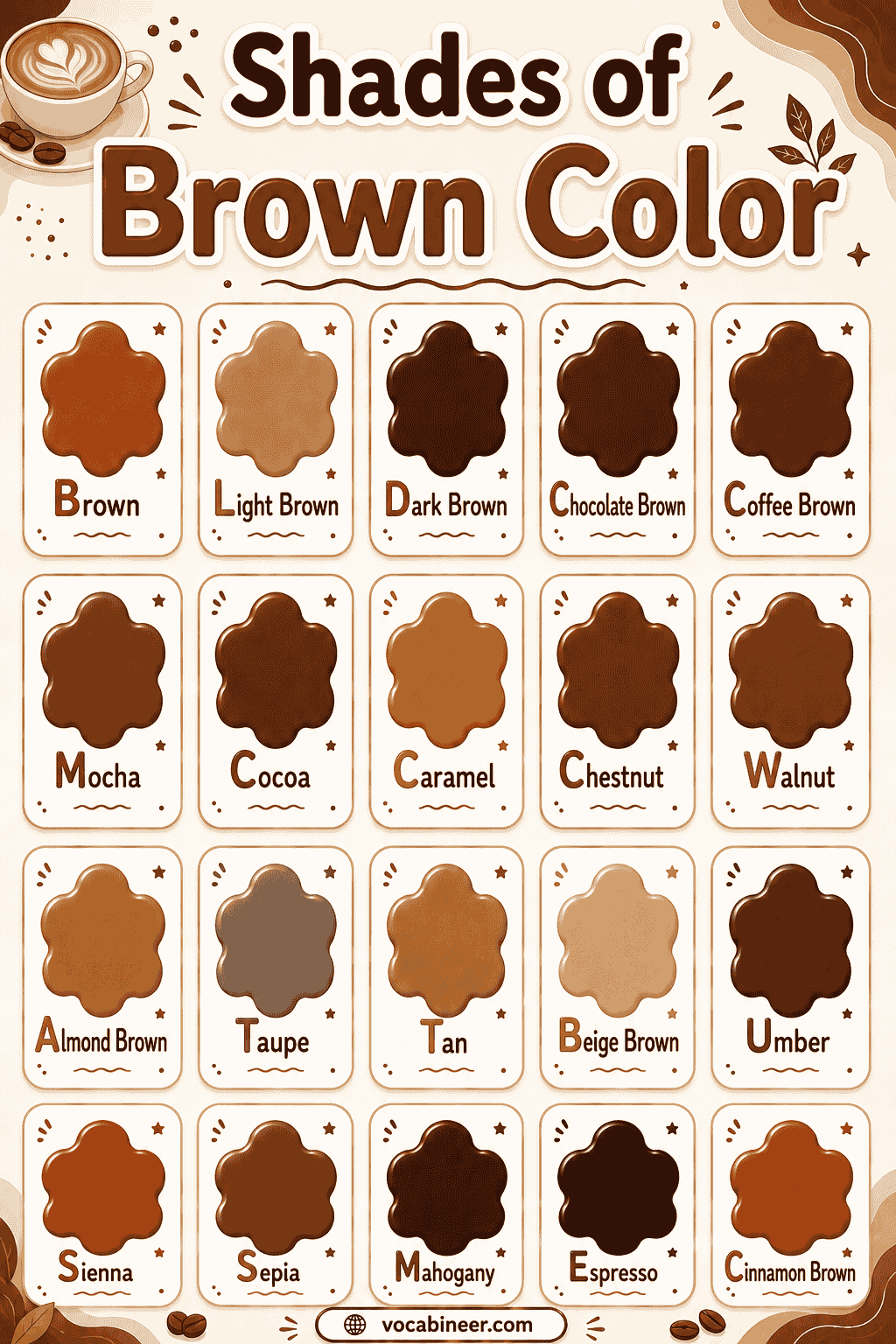
Brown is often associated with nature, stability, warmth, comfort, reliability, and strength. Popular shades of brown include chocolate brown, coffee brown, caramel brown, walnut brown, chestnut brown, mahogany brown, mocha brown, cocoa brown, espresso brown, cinnamon brown, bronze brown, tan, beige, taupe, and sandy brown.
In This Page
What Are Shades of Brown?
Shades of brown are created by mixing red, yellow, and blue in different amounts. Additional colors such as black, white, gray, orange, or red can create lighter, darker, warmer, or cooler brown tones.
For example:
- Brown mixed with white creates lighter brown shades.
- Brown mixed with black creates darker brown shades.
- Brown mixed with red creates reddish-brown tones.
- Brown mixed with yellow creates golden brown shades.
- Brown mixed with gray creates cooler brown colors.
- Brown mixed with orange creates warm earthy browns.
Different brown shades can feel cozy, natural, elegant, rustic, modern, luxurious, or grounded.
Popular Shades of Brown
Many brown shades are popular because they work well in fashion, interior design, branding, furniture, architecture, and nature-inspired color palettes.
Popular shades of brown include:
- Chocolate brown — a rich dark brown inspired by chocolate
- Coffee brown — a deep brown inspired by roasted coffee beans
- Caramel brown — a warm golden-brown shade
- Walnut brown — a medium-dark wood-inspired brown
- Chestnut brown — a reddish-brown tone
- Mahogany brown — a deep red-brown color
- Mocha brown — a coffee-inspired medium brown
- Cocoa brown — a soft chocolate-like brown
- Espresso brown — an almost black dark brown
- Cinnamon brown — a warm spice-inspired brown
- Bronze brown — a metallic-inspired brown shade
- Tan — a light warm brown
- Beige — a pale neutral brown
- Taupe — a gray-brown shade
- Sandy brown — a light earth-toned brown
Brown Shades by Color Family
Brown shades can be grouped into color families based on their undertones and depth. Some shades belong to multiple families because they contain red, yellow, orange, or gray undertones.
Light Brown Shades
Light brown shades feel soft, natural, and welcoming.
Examples include:
- Beige
- Tan
- Sandy brown
- Light taupe
- Camel brown
- Wheat brown
Dark Brown Shades
Dark brown shades feel rich, elegant, and sophisticated.
Examples include:
- Chocolate brown
- Espresso brown
- Coffee brown
- Dark walnut
- Deep cocoa brown
- Ebony brown
Reddish-Brown Shades
Reddish-brown shades feel warm, earthy, and traditional.
Examples include:
- Chestnut brown
- Mahogany brown
- Auburn brown
- Brick brown
- Redwood brown
- Copper brown
Golden Brown Shades
Golden brown shades feel warm, bright, and inviting.
Examples include:
- Caramel brown
- Honey brown
- Amber brown
- Golden oak
- Butterscotch brown
- Toffee brown
Cool Brown Shades
Cool brown shades contain gray or muted undertones.
Examples include:
- Taupe
- Mushroom brown
- Ash brown
- Stone brown
- Greige brown
- Smoky brown
Earthy Brown Shades
Earthy brown shades are inspired by soil, wood, clay, and nature.
Examples include:
- Cocoa brown
- Mocha brown
- Walnut brown
- Clay brown
- Rustic brown
- Earth brown
Shades of Brown Chart
| Shade of Brown | Color Family | Common Use |
|---|---|---|
| Chocolate Brown | Dark brown | Fashion, furniture, branding |
| Coffee Brown | Dark brown | Packaging, interiors, decor |
| Caramel Brown | Golden brown | Beauty, fashion, food branding |
| Walnut Brown | Earthy brown | Furniture, flooring, decor |
| Chestnut Brown | Reddish-brown | Hair color, fashion |
| Mahogany Brown | Reddish-brown | Luxury furniture, interiors |
| Mocha Brown | Earthy brown | Decor, beauty, websites |
| Cocoa Brown | Earthy brown | Packaging, design, decor |
| Espresso Brown | Dark brown | Luxury branding, interiors |
| Cinnamon Brown | Reddish-brown | Fashion, beauty, decor |
| Bronze Brown | Golden brown | Premium branding, accents |
| Beige | Light brown | Walls, interiors, websites |
| Taupe | Cool brown | Modern decor, branding |
| Sandy Brown | Light brown | Nature-inspired designs |
| Camel Brown | Light brown | Fashion, accessories |
Light and Dark Shades of Brown
Light and dark brown shades create different moods. Lighter browns often feel open, calm, and natural, while darker browns can appear elegant, luxurious, and dramatic.
| Type | Examples | Feeling |
|---|---|---|
| Light Brown Shades | Beige, tan, sandy brown, camel brown | Soft, natural, welcoming |
| Medium Brown Shades | Walnut brown, mocha brown, cocoa brown | Balanced, warm, versatile |
| Dark Brown Shades | Chocolate brown, espresso brown, coffee brown | Rich, elegant, sophisticated |
Light brown shades work well for:
- walls
- minimalist interiors
- websites
- neutral fashion
- natural decor
Dark brown shades work well for:
- luxury branding
- furniture
- accent walls
- premium packaging
- formal fashion
Chocolate, Coffee, and Earthy Brown Shades
Chocolate, coffee, and earthy brown shades are among the most popular brown tones because they feel warm, comforting, and timeless.
Common earthy brown shades include:
- Chocolate brown — rich and luxurious
- Coffee brown — deep and bold
- Mocha brown — smooth and balanced
- Cocoa brown — soft and natural
- Walnut brown — inspired by natural wood
- Espresso brown — dark and dramatic
- Chestnut brown — warm with red undertones
- Rustic brown — earthy and organic
These shades are common in:
- furniture
- leather goods
- kitchen decor
- flooring
- fashion accessories
- coffee branding
- rustic interiors
- premium packaging
Beautiful and Trendy Shades of Brown
Beautiful brown shades continue to trend in fashion, home decor, branding, and social media design because they feel warm and timeless.
Popular trendy shades include:
- Caramel brown for cozy interiors
- Mocha brown for modern branding
- Chocolate brown for luxury fashion
- Beige for minimalist decor
- Taupe for contemporary interiors
- Walnut brown for furniture and wood finishes
- Cinnamon brown for beauty and hair color inspiration
- Camel brown for fashion styling
- Espresso brown for premium packaging
- Honey brown for warm color palettes
Shades of Brown with Hex Codes
Hex codes help designers, artists, and developers use exact brown shades in websites, graphics, branding, and digital projects.
| Shade of Brown | Hex Code |
|---|---|
| Brown | #A52A2A |
| Chocolate Brown | #7B3F00 |
| Coffee Brown | #6F4E37 |
| Caramel Brown | #C68E17 |
| Walnut Brown | #5D432C |
| Chestnut Brown | #954535 |
| Mahogany Brown | #C04000 |
| Mocha Brown | #967969 |
| Cocoa Brown | #D2691E |
| Espresso Brown | #4B3621 |
| Cinnamon Brown | #7B3F00 |
| Bronze Brown | #88540B |
| Beige | #F5F5DC |
| Taupe | #483C32 |
| Sandy Brown | #F4A460 |
| Camel Brown | #C19A6B |
Brown Shade Names with Examples
Brown shade names become easier to remember when linked with foods, woods, natural materials, and everyday objects.
- Chocolate brown is inspired by dark chocolate and desserts.
- Coffee brown resembles roasted coffee beans and brewed coffee.
- Walnut brown reflects the color of walnut wood and furniture.
- Chestnut brown comes from chestnuts and autumn tones.
- Caramel brown resembles melted caramel and sweet treats.
- Mocha brown combines coffee-inspired richness with softer undertones.
- Espresso brown reflects strong coffee and deep dark tones.
- Beige resembles sand, stone, and light natural materials.
- Taupe reflects muted earth tones and contemporary decor.
- Camel brown resembles camel-colored fabrics and leather goods.
Shades of Brown in Nature and Everyday Life
Brown appears throughout nature and daily life.
Examples include:
- tree bark
- wooden furniture
- soil
- coffee beans
- chocolate
- nuts
- autumn leaves
- animal fur
- clay
- leather
Specific brown shades can also be seen in:
- Walnut brown in wooden cabinets and flooring
- Sandy brown in beaches and deserts
- Chestnut brown in tree nuts and hair colors
- Cocoa brown in chocolate products
- Espresso brown in coffee branding
- Beige in stone, sand, and home decor
Brown Shades for Fashion and Home Decor
Brown shades are popular because they create warmth, sophistication, and versatility.
In fashion, brown shades appear in:
- jackets
- boots
- handbags
- belts
- coats
- sweaters
- leather accessories
- formal shoes
Popular fashion choices include:
- Camel brown for coats
- Chocolate brown for luxury accessories
- Chestnut brown for boots
- Mocha brown for knitwear
- Beige for neutral outfits
- Espresso brown for formal styling
In home decor, brown shades are used in:
- furniture
- rugs
- flooring
- curtains
- wall paint
- cushions
- cabinets
- decorative accents
Brown Shades for Rooms and Interior Paint
Brown shades can make a room feel cozy, grounded, elegant, or welcoming.
Room ideas include:
- Beige for living rooms and open spaces
- Taupe for modern interiors
- Walnut brown for libraries and offices
- Chocolate brown for accent walls
- Caramel brown for dining rooms
- Mocha brown for bedrooms
- Espresso brown for dramatic statement areas
- Sandy brown for relaxed spaces
Brown paint works well on:
- accent walls
- wood trim
- furniture
- shelving
- office spaces
- dining rooms
Brown Shades for Branding, Websites, and UI Design
Brown is widely used in branding because it feels reliable, natural, warm, and trustworthy.
Brown shades are common in:
- coffee brands
- outdoor companies
- furniture businesses
- organic products
- handmade goods
- luxury packaging
- lifestyle brands
- restaurants
Useful brown choices for design include:
- Chocolate brown for premium branding
- Beige for clean website backgrounds
- Walnut brown for rustic branding
- Taupe for minimalist layouts
- Espresso brown for luxury products
- Caramel brown for food-related brands
- Mocha brown for lifestyle websites
Rare and Historical Brown Shades
Some brown shades have historical importance in art, architecture, textiles, and decorative design.
Rare and historical brown shades include:
- Raw umber — a natural earth pigment used in painting
- Burnt umber — a dark brown artist pigment
- Sepia brown — historically used in photography and ink
- Bistre — a brown pigment made from wood soot
- Van Dyke brown — a rich dark brown artist color
- Mummy brown — a historical pigment used by painters
- Sienna brown — an earth-based brown pigment
- Russet brown — a reddish-brown shade used in textiles
Brown Color Psychology and Meaning
Brown is often associated with stability, reliability, comfort, warmth, nature, and security.
| Brown Shade Type | Common Feeling |
|---|---|
| Light brown | Calm, natural, welcoming |
| Medium brown | Warm, balanced, dependable |
| Dark brown | Strong, luxurious, sophisticated |
| Earthy brown | Grounded, rustic, organic |
| Cool brown | Modern, subtle, refined |
Common meanings of brown include:
- stability
- reliability
- comfort
- security
- warmth
- strength
- nature
- honesty
- resilience
- dependability
Brown Color Combinations and Palettes
Brown pairs well with many colors depending on the desired mood and style.
Popular brown color combinations include:
- Brown + cream for classic interiors
- Brown + beige for warm neutral palettes
- Brown + white for clean contrast
- Chocolate brown + gold for luxury styling
- Walnut brown + olive green for earthy decor
- Taupe + gray for modern interiors
- Caramel brown + ivory for elegant spaces
- Espresso brown + copper for premium branding
- Sandy brown + blue for coastal themes
- Mocha brown + blush pink for contemporary decor
Warm Brown vs Cool Brown Shades
Brown shades can appear warm or cool depending on their undertones.
| Type | Examples | Look |
|---|---|---|
| Warm Brown Shades | Caramel brown, chestnut brown, cinnamon brown | Yellow, orange, or red undertones |
| Cool Brown Shades | Taupe, ash brown, smoky brown | Gray undertones |
| Neutral Brown Shades | Walnut brown, mocha brown, cocoa brown | Balanced and versatile |
Warm brown shades are common in:
- rustic interiors
- autumn palettes
- fashion accessories
- food branding
- cozy spaces
Cool brown shades are common in:
- modern homes
- minimalist branding
- contemporary websites
- office interiors
Brown Shades vs Similar Colors
Some brown shades look similar but have different undertones and uses.
| Colors Compared | Main Difference |
|---|---|
| Beige vs Tan | Beige is lighter; tan is warmer and deeper. |
| Chocolate Brown vs Coffee Brown | Chocolate brown feels richer; coffee brown is slightly cooler. |
| Walnut Brown vs Mahogany Brown | Walnut is more neutral; mahogany has red undertones. |
| Taupe vs Gray-Brown | Taupe is softer and warmer than many gray-browns. |
| Caramel Brown vs Honey Brown | Caramel is deeper; honey brown is brighter and more golden. |
| Mocha Brown vs Cocoa Brown | Mocha is smoother and muted; cocoa appears warmer. |
Common Mistakes About Shades of Brown
Many people confuse brown shades because several tones appear very similar.
Common mistakes include:
- calling every dark brown chocolate brown
- confusing beige with tan
- using taupe and gray-brown interchangeably
- treating walnut brown and mahogany brown as identical
- selecting brown hex codes without checking screen appearance
- mixing warm and cool browns without balance
- ignoring undertones when choosing paint colors
- using very dark browns in small spaces without enough contrast
FAQs
Popular shades of brown include chocolate brown, coffee brown, caramel brown, walnut brown, chestnut brown, mahogany brown, mocha brown, cocoa brown, espresso brown, cinnamon brown, beige, taupe, and sandy brown.
Espresso brown, dark walnut, ebony brown, deep coffee brown, and chocolate brown are among the darkest brown shades.
Beige, sandy brown, wheat brown, camel brown, and light taupe are some of the lightest brown shades.
Yes, chocolate brown is a shade of brown. It is a rich dark brown inspired by dark chocolate and is commonly used in fashion, interiors, and branding.
Brown shades often symbolize stability, comfort, reliability, warmth, security, strength, and a connection to nature.
Summary
Shades of brown include light, dark, reddish, golden, earthy, and cool-toned brown colors. Popular examples include chocolate brown, coffee brown, caramel brown, walnut brown, chestnut brown, mahogany brown, mocha brown, cocoa brown, beige, taupe, and sandy brown.
Brown shades are widely used in fashion, branding, websites, home decor, interior design, furniture, and color palette creation because they create warmth, stability, sophistication, and timeless appeal.
Read More
- Colours Names in English
- Shades of Gray Color
- Shades of Red Color
- Shades of Green Color
- Shades of Orange Color
- Primary Color Names
- Secondary Color Names
- Tertiary Colors Names